




















































Why Use Modular Bathroom Pods: 2026 Builder’s Guide
TL;DR:
- Modular bathroom pods are prefabricated units that accelerate construction schedules by 20 to 50 percent. They improve quality, reduce waste, and lower indirect costs, especially in repetitive projects like hotels and housing. However, they require early design finalization and are less suited for highly customized or complex layouts.
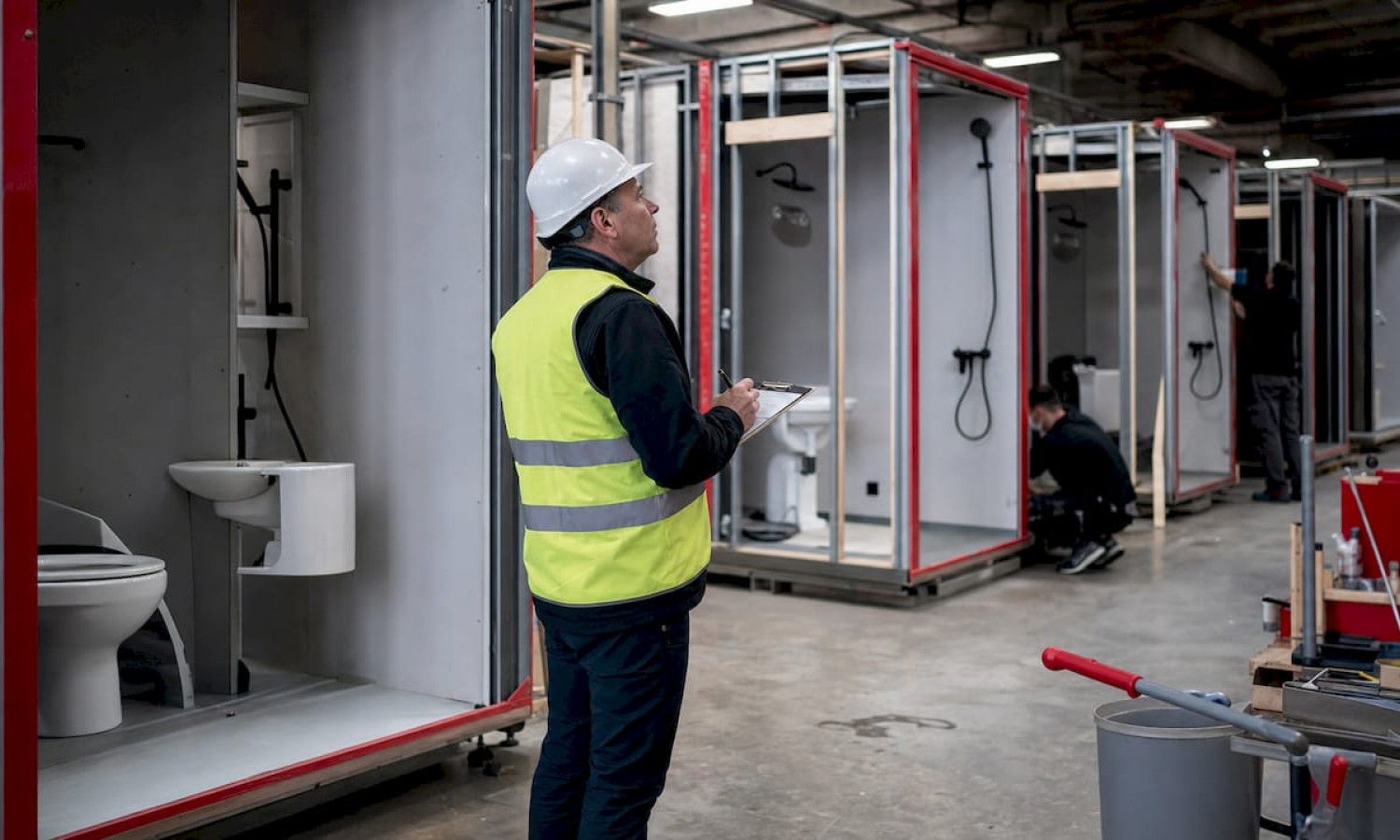
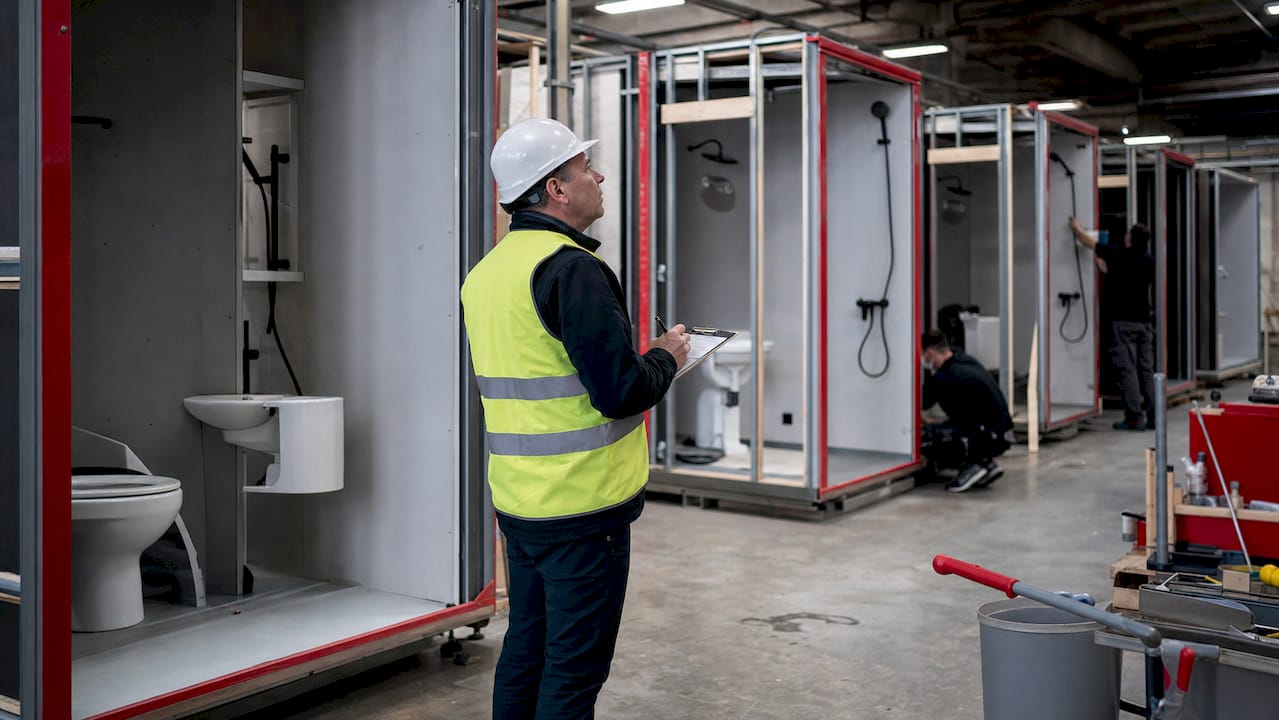
Modular bathroom pods are fully factory-built, pre-tested bathroom units that reduce construction schedules by 20–50% by removing complex onsite bathroom fit-outs from the critical path. Each pod arrives on site with plumbing, electrical, waterproofing, tile, and fixtures already installed and inspected. The result: faster project delivery, fewer defects, and predictable costs across hotels, multifamily housing, healthcare facilities, and student housing.
Key reasons to choose modular bathroom pods:
- Schedule compression: Pods are manufactured while site crews build the structure, converting months of sequential trade work into days of crane setting.
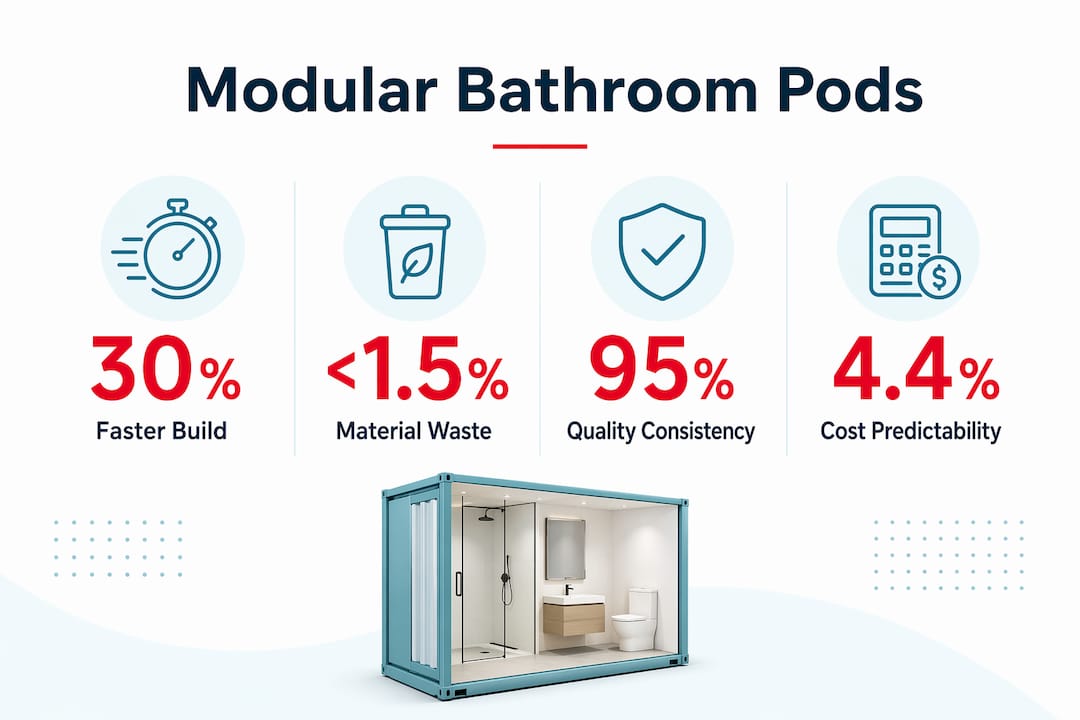
- Material efficiency: Factory production generates less than 1.5% material waste versus over 7% with traditional onsite methods.
- Risk reduction: A single pod manufacturer replaces the need to coordinate 5–15 specialty trades in confined spaces, cutting scheduling conflicts and damage disputes.
- Quality control: Every pod undergoes water testing, electrical testing, and dimensional checks before leaving the factory.
- Best fit: Projects with repetitive layouts gain the most value. Unique configurations reduce cost efficiency because each design requires a separate production setup.
The National Institute of Building Sciences identifies bathroom pods as a proven method for improving construction speed, quality, and cost predictability. Research from Aalto University confirms that modular bathrooms deliver total project cost savings even when direct unit costs run slightly higher, primarily through reduced indirect costs and earlier project completion.
Why use modular bathroom pods: key advantages explained
Schedule and labor savings
Parallel off-site production is the core schedule advantage. While site crews pour foundations and erect structure, the factory is finishing bathrooms. On a traditional project, bathroom construction starts after rough-ins are complete and runs sequentially through 5–15 trades. With pods, that entire sequence is compressed into crane placement and utility connections.
Bathroom work on average involves multiple trades and spans considerable time per floor. A single pod installation can be completed in a very short time once it is set in place.
Material efficiency and sustainability
Factory production generates less than 1.5% material waste compared to over 7% with conventional onsite construction. Offcuts are reused, materials are stored properly, and defective components are caught before installation rather than after. Reduced site activity also means fewer delivery trips, lower emissions, and less congestion, which supports BREEAM targets and ESG reporting requirements.
Quality consistency
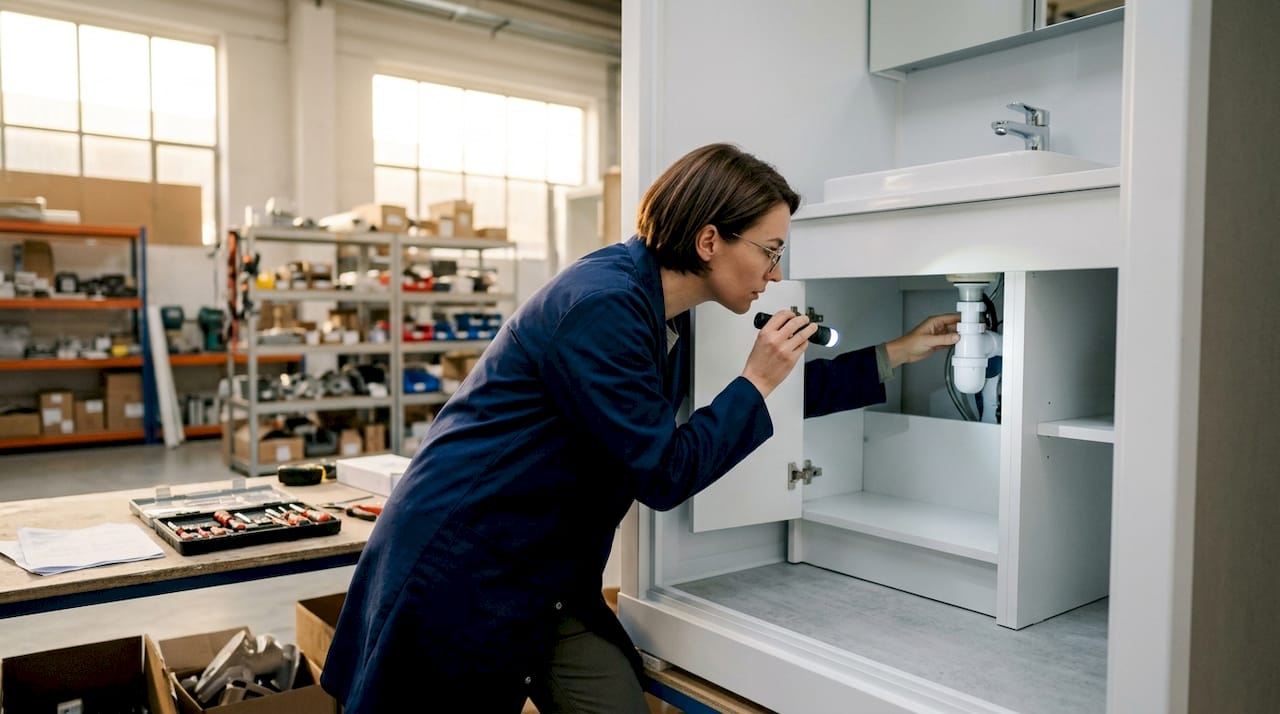
The National Institute of Building Sciences notes that bathrooms built in a factory setting produce fewer defects because repeatable processes can be monitored and scrutinized for consistency. Factory testing catches problems before the pod ships. Field rework on a leaking shower pan or a plumbing connection behind a finished wall is expensive; factory rework is comparatively straightforward.
Cost predictability
Research published in Construction Innovation found that even though direct pod costs ran 4.41% higher than conventional construction in one residential case study, total project costs came in 4% lower when indirect savings were included, equivalent to savings of 16.0% compared to direct conventional bathroom costs. The primary drivers: earlier project completion, reduced waste, and fewer defects.
Pro Tip: When evaluating pod costs, always compare total installed cost including labor, waste, rework, and schedule savings, not just the unit price of the pod itself.
Trade-offs and limitations to plan for
Modular pods deliver strong results on the right projects. On the wrong ones, the limitations are real.
- Reduced design flexibility: Modifications after production starts are costly. Each unique bathroom configuration requires its own factory setup, so extensive customization erodes the cost advantage.
- Early design lock-in: MEP specifications, utility connection points, and structural rough-in locations must be finalized before production begins. Late changes are expensive.
- Crane access requirement: Pods cannot be installed after building envelope closure. Hoisting access must be planned and maintained throughout the installation window.
- Structural load considerations: Pods weigh significantly more than stick-built bathrooms because all finishes and fixtures are in place at delivery. Structural engineers must account for concentrated loads.
- Repetition dependency: High repetition enhances modular pod benefits. A project with one bathroom configuration repeated 200 times is ideal. A project with 50 unique layouts is not.
- Capital cost perception: The upfront pod cost may appear higher than materials alone. Savings emerge through labor, schedule, and reduced rework, not through lower line-item procurement costs.
Projects with fewer than 20–30 identical bathroom layouts often see diminishing returns. The more variety in the floor plan, the less the factory efficiency advantage applies.
Best practices for successful implementation
Fix MEP specs early
Every design change after production starts costs time and money. Finalize utility connection locations, rough-in dimensions, and fixture selections before the factory begins work. Treat the factory as an extension of the job site: tight coordination between the design team, MEP engineers, pod manufacturer, and site superintendent is not optional.
Plan crane logistics before pod delivery
Pods require hoisting access before building envelope closure. Map crane positions, delivery sequences, and floor-by-floor installation windows during preconstruction. A missed crane window can stall an entire floor’s installation schedule.
- Confirm crane capacity for pod weight (typically 3,000–8,000 pounds depending on size and materials).
- Coordinate delivery sequencing with the pod manufacturer to match site readiness floor by floor.
- Verify that structural rough-in locations align precisely with pod connection points before the first delivery.
Standardize layouts wherever possible
The fewer unique configurations, the lower the production cost per unit and the faster the factory throughput. Work with the architect early to consolidate bathroom types. Even reducing from five layout variants to two can produce measurable savings.
Pro Tip: Request a prototype pod before full production begins. Reviewing a physical sample catches dimensional, finish, and MEP coordination issues before they are replicated across hundreds of units.
For guidance on plumbing code compliance and MEP specification requirements, Santehnikasveikals provides detailed 2026 regulatory guidance relevant to modular bathroom projects.
Selecting plumbing fixtures compatible with modular bathroom pods
Fixture selection for modular pods is more constrained than for conventional construction. Dimensions, rough-in locations, and installation methods must match the pod’s factory-set configuration exactly.
Key fixture selection criteria:
- Dimensional consistency: Toilet bowls, sinks, and shower valves must fit the pod’s pre-framed openings. Verify rough-in distances and wall clearances against the pod manufacturer’s specifications.
- Water efficiency: WaterSense-certified fixtures reduce water consumption and support green building certifications. Factory-installed fixtures are tested before delivery, so selecting proven, code-compliant products avoids post-installation compliance issues.
- Installation compatibility: Concealed-tank toilets and wall-hung fixtures require specific structural backing built into the pod frame. Confirm backing locations with the manufacturer before finalizing fixture selections.
- Durability: High-cycle fixtures suited for hospitality or healthcare applications perform better in high-occupancy settings where pod bathrooms are most common.
- Supplier consistency: Sourcing fixtures from a single supplier across all units reduces variation and simplifies warranty management.
Santehnikasveikals carries a full catalog of toilet bowls, sinks, shower enclosures, and faucets suited for modular bathroom configurations. The KOLO SOLO toilet bowl is one example of a compact, floor-outlet fixture with consistent dimensions that integrates cleanly into pod layouts. For broader fixture sourcing and interior plumbing design guidance, Santehnikasveikals provides product catalogs and technical specifications to support both homeowners and construction professionals.
Long-term maintenance and durability of modular bathroom pods
Factory-built pods tend to outperform site-built bathrooms over time. Standardized production ensures consistent quality and reduces the defects that generate the most expensive maintenance calls: waterproofing failures, plumbing leaks behind finished walls, and cracked tile from uneven substrate work.
Waterproofing is applied and tested under controlled conditions before the pod ships. This matters because waterproofing failures are the most common cause of post-construction bathroom defects in conventional builds. Factory application eliminates the variability of onsite conditions, including temperature, humidity, and trade sequencing.
Plumbing connections within the pod are pressure-tested at the factory. Connections between the pod and the building’s utility rough-ins are made onsite, but the internal pod plumbing arrives verified. Fewer post-occupancy leaks mean lower warranty callback rates and reduced maintenance costs over the building’s lifecycle.
For high-occupancy applications like hotels and student housing, the durability advantage compounds. A building with 200 identical pod bathrooms, each built to the same factory standard, produces a far more predictable maintenance profile than 200 bathrooms built by rotating site crews under variable conditions.
Key Takeaways
Modular bathroom pods reduce total project costs and construction time by shifting bathroom production to a controlled factory environment, delivering consistent quality, less waste, and faster schedules than conventional onsite methods.
| Point | Details |
|---|---|
| Schedule reduction | Factory-built pods reduce construction programs by 20–50% by removing bathroom fit-out from the critical path. |
| Material waste | Factory production generates less than 1.5% material waste versus over 7% with traditional onsite construction. |
| Trade coordination | A single pod manufacturer replaces the need to coordinate 5–15 specialty trades in confined spaces. |
| Design lock-in | MEP specs and utility connections must be finalized before production starts; late changes are costly. |
| Best-fit projects | Hotels, multifamily housing, healthcare, and student housing with repetitive layouts gain the strongest benefits. |
Recommended
- Plumbing Regulations 2026: What Builders Must Know | Santehnikasveikals.lv
- Why Comply With Plumbing Standards: A 2026 Guide | Santehnikasveikals.lv
- Step by Step Interior Plumbing Design for Homeowners | Santehnikasveikals.lv
- Must-Have Plumbing Tools for DIY Homeowners in 2026 | Santehnikasveikals.lv
Palikite komentarą