





















































Why Upgrade Old Radiators: Efficiency and Savings

TL;DR:
- Upgrading old radiators improves heating efficiency and reduces costs by replacing corroded, outdated units with modern, high-output models. Proper sizing, the addition of thermostatic radiator valves, and compatibility with new heating systems like heat pumps are crucial for optimal performance. Planning and accurate heat loss calculations help homeowners avoid costly mistakes and ensure long-term comfort.
Upgrading old radiators is one of the most direct ways to cut heating costs and improve comfort in any home or rental property. Aging radiators lose efficiency through internal corrosion, sludge buildup, and outdated materials that waste energy every heating cycle. Modern replacements, paired with thermostatic radiator valves (TRVs), deliver measurably better heat output at lower running costs. This article covers the key reasons to replace inefficient radiators, what to look for when choosing new units, and how to avoid the most common and costly installation mistakes.
Why upgrade old radiators: signs your system is failing
Old radiators fail in predictable ways. Steel panel radiators last 15–25 years, and units older than 15–20 years showing persistent problems almost always need replacement rather than repair. The most common failure signs are cold patches, visible rust, pinhole leaks, and a gurgling or banging sound when the heating runs.
Cold patches are the clearest warning. They form when iron oxide sludge settles at the bottom of the radiator and blocks water flow. A single cold patch means the radiator is no longer heating the room evenly, which forces your boiler to run longer to compensate. That longer run time shows up directly on your energy bill.
Corrosion is the other major issue. Once a radiator develops internal rust, the metal walls thin and pinhole leaks become likely. Flushing a heavily corroded radiator can actually make things worse by loosening debris and accelerating blockages. At that stage, replacement is the more cost-effective path.
Here are the most common signs that replacement is overdue:
- Cold patches that persist after bleeding the radiator
- Visible rust or discoloration on the outer surface
- Pinhole leaks or damp patches on the wall behind the unit
- Uneven room temperatures despite the boiler running at full output
- Radiators older than 15–20 years with no prior replacement
Pro Tip: Bleed your radiators at the start of each heating season. If cold patches return within weeks, sludge buildup is the likely cause and a power flush or replacement should be your next step.
What are the real benefits of a radiator upgrade?
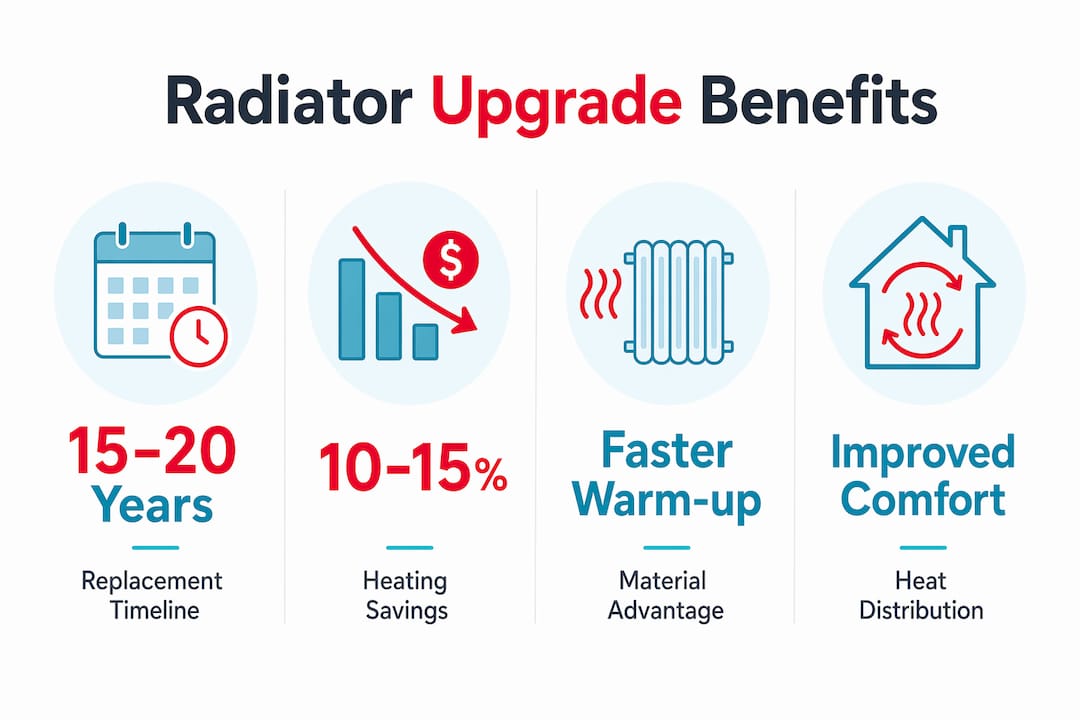
The benefits of a radiator upgrade go well beyond fixing a leak. TRVs reduce heating bills by 10–15% by preventing rooms from overheating. That saving compounds across every room in the property, making TRV installation one of the highest-return upgrades available to homeowners.
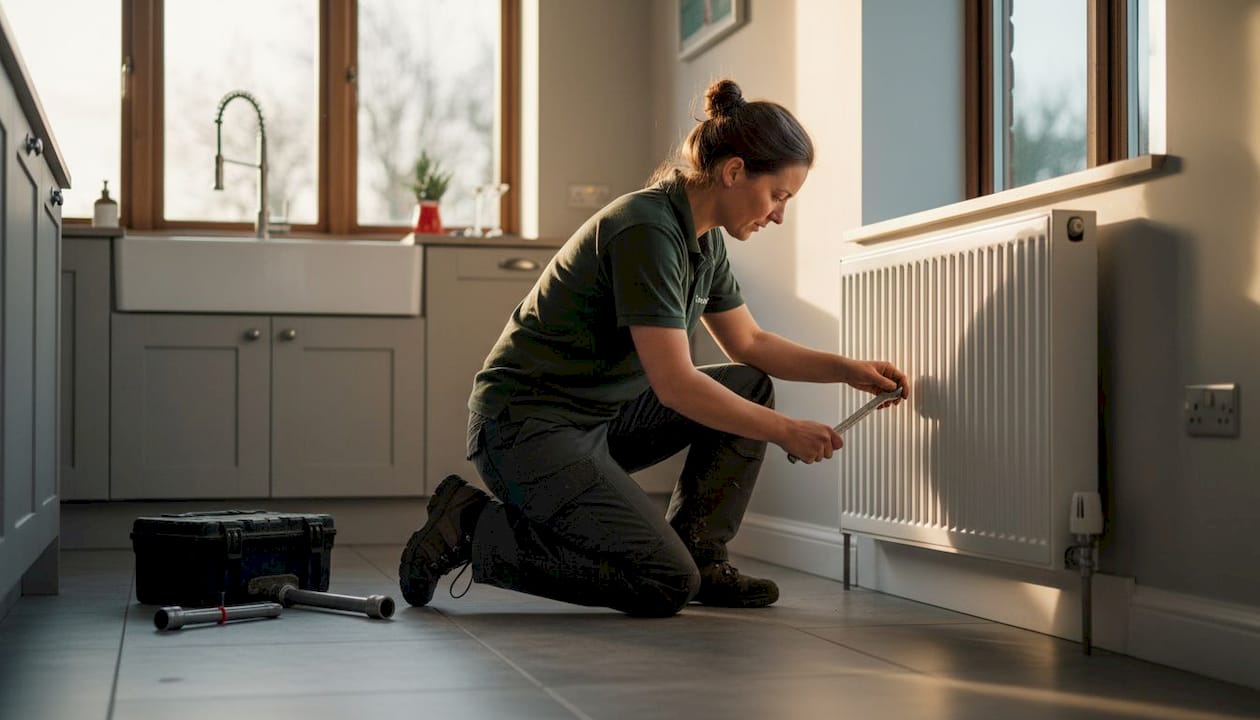
Modern materials make a significant difference in performance. Aluminum radiators heat up faster and resist corrosion better than traditional steel models. That faster heat-up time means the boiler runs for shorter bursts, which reduces fuel consumption and extends boiler life.
Heat distribution also improves with modern designs. Older single-panel radiators push heat unevenly, creating warm spots near the unit and cold corners across the room. Double-panel and column radiators circulate heat more evenly, which raises the overall comfort level without raising the thermostat setting.
The aesthetic benefits are real too. Modern designer radiators refresh interiors while improving warmth, replacing bulky old units with slimmer or vertical designs that free up wall space. For property managers, updated radiators signal a well-maintained property and can support higher rental valuations.
Key advantages of upgrading heating systems with modern radiators:
- Lower energy bills through TRV control and reduced boiler run time
- Faster room warm-up with aluminum or high-output steel panels
- Even heat distribution across the full room, not just near the unit
- Longer system lifespan due to corrosion-resistant materials
- Improved interior appearance with slimmer, contemporary designs
Are older radiators compatible with modern heating systems?
Compatibility is the most underestimated issue in radiator upgrades. Older radiators designed for high-temperature boilers are often undersized for modern low-temperature heat pumps, which operate at flow temperatures of around 45–55°C rather than the 70–80°C typical of gas boilers. A radiator that worked fine with a gas boiler may deliver only half the heat output when connected to a heat pump.
The output gap is significant. Radiators sized for heat pumps typically need roughly 1.5–2 times the output of those sized for gas boilers. That means a room that previously needed one standard panel radiator may now need a larger unit, a double-panel model, or an additional radiator on a second wall.
| Heating system | Typical flow temperature | Radiator requirement |
|---|---|---|
| Gas boiler | 70–80°C | Standard-output panel radiator |
| Condensing boiler | 55–65°C | Standard or slightly larger panel |
| Air source heat pump | 45–55°C | High-output or oversized radiator |
| Ground source heat pump | 35–45°C | Large-format or underfloor heating |
In homes upgrading to heat pumps, radiator upgrades are often essential because older units lack sufficient output at lower flow temperatures. Skipping the radiator upgrade when switching to a heat pump is one of the most common and expensive mistakes homeowners make. The heat pump runs constantly trying to compensate, which eliminates the expected efficiency gains.
Pro Tip: Before buying any new radiator, commission a professional heat loss calculation for each room. This calculation accounts for room volume, insulation, window area, and external wall exposure. Guessing the size based on the old radiator’s dimensions is the single biggest cause of chronic underheating after an upgrade.
What does a radiator upgrade actually cost?
Cost is where many homeowners get surprised. A like-for-like replacement, where the new radiator matches the existing pipe centers, keeps costs manageable. Mismatching pipe centers can double or triple installation costs because the plumber must reroute pipework and repair walls or floors afterward.
The steps for a cost-controlled upgrade look like this:
- Measure existing pipe centers before ordering any radiator. The distance between the two pipe connections on the floor or wall must match the new unit.
- Order the correct valve type. Side-entry and bottom-entry valves are not interchangeable without additional pipework.
- Assess the system for sludge. If multiple radiators show cold patches, a power flush before installation protects the new units. Power flushes typically cost £300–£600, so factor that into the total budget.
- Balance the system after installation. New radiators alter flow rates across the whole circuit. A plumber should balance all radiators after any replacement to prevent some rooms from overheating while others stay cold.
- Replace valves at the same time. Old valves corrode and fail. Fitting a new radiator with old valves negates much of the efficiency gain.
The biggest cost trap is buying a radiator based on looks without checking the output rating. Incorrect radiator sizing leads to chronic underheating or wasted energy, regardless of how attractive the unit looks. Output is measured in BTUs or watts, and the number must match the room’s calculated heat demand.
How to choose the right radiator for your home
Choosing the right radiator starts with heat demand, not design. The best radiator for a room is the one correctly sized for heat loss, not the one that looks most impressive. Wrong choices cause chronic underheating regardless of aesthetics.
Use these criteria to narrow your selection:
- Room heat demand: Calculate BTU or watt requirements based on room size, ceiling height, insulation quality, and window area.
- Radiator type: Panel radiators suit most standard rooms. Column radiators offer higher output in a period-style format. Vertical radiators work well in narrow spaces or hallways where wall width is limited.
- Material: Aluminum heats faster and suits modern condensing boilers and heat pumps. Steel is durable and widely available in a range of output ratings, such as the Termolux Compact Type 22 500x700mm model, which suits mid-sized rooms with side connections.
- Valve compatibility: Always upgrade to TRVs when fitting new radiators. TRVs give room-by-room temperature control and deliver the 10–15% bill reduction cited above.
- Future-proofing: If you plan to switch to a heat pump within five years, size the new radiators for heat pump flow temperatures now. Oversizing slightly costs little extra at installation but avoids a full replacement later.
For larger rooms or open-plan spaces, a Type 22 panel radiator with double panels and double fins delivers significantly more output per meter of wall space than a single-panel unit.
Key Takeaways
Replacing old radiators with correctly sized modern units, fitted with TRVs, is the most cost-effective single upgrade available to homeowners seeking lower heating bills and better comfort.
| Point | Details |
|---|---|
| Replace after 15–20 years | Steel panel radiators degrade past this point; persistent cold patches confirm replacement is due. |
| TRVs cut bills by 10–15% | Fitting thermostatic radiator valves prevents overheating and reduces boiler run time. |
| Match pipe centers to control costs | Mismatched connections require pipework changes that can double or triple installation costs. |
| Size for your heating system | Radiators for heat pumps need 1.5–2x the output of those sized for gas boilers. |
| Prioritize output over appearance | A radiator sized correctly for heat loss always outperforms an attractive but undersized unit. |
What I’ve learned from watching homeowners get this wrong
Most homeowners wait until a radiator leaks before replacing it. That reactive approach costs more than a planned upgrade because a leak forces an emergency call-out, often in the middle of winter, when plumbers are at their busiest and prices reflect that.
The other mistake I see constantly is buying radiators based on photos online. A vertical designer radiator looks striking in a hallway, but if its output rating is 800 watts and the room needs 1,400 watts, the boiler will run nonstop and the room will never feel warm. Output numbers are not optional reading.
Sludge damage is also consistently underestimated. Homeowners assume a power flush will solve everything. It often does, but in a radiator with advanced internal corrosion, flushing loosens debris that then blocks the new valves or the boiler heat exchanger. The smarter sequence is to assess corrosion first, replace the worst radiators, then flush the whole system before commissioning the new units.
The most valuable thing you can do before any upgrade is get a heat loss calculation done room by room. It takes an hour and costs very little compared to the price of buying the wrong radiators and living with the consequences for a decade.
— Renate
Radiator upgrades made simple with Santehnikasveikals
Santehnikasveikals carries a wide selection of modern steel panel radiators, column radiators, and electric heating units suited to every room size and heating system type.

Whether you are replacing a single aging unit or upgrading an entire property, the full heating catalog at Santehnikasveikals includes radiators from trusted brands in multiple output ratings, sizes, and connection types. The range covers both side-connection and bottom-connection models, so you can match existing pipe centers and keep installation costs down. For rooms where a wet system is not practical, the ADAX NEO electric convector range offers a clean, wall-mounted alternative with precise temperature control. Santehnikasveikals delivers across Latvia, making it straightforward to order the right unit and get it installed without delay.
FAQ
Why upgrade old radiators instead of just repairing them?
Radiators older than 15–20 years with persistent cold patches or corrosion cost more to repair repeatedly than to replace. A new radiator fitted with a TRV also delivers 10–15% lower heating bills, which a repaired old unit cannot match.
How do I know if my radiators are undersized for a heat pump?
Radiators sized for a gas boiler typically need 1.5–2 times more output to perform at the lower flow temperatures a heat pump uses. A professional heat loss calculation confirms whether your existing radiators are adequate.
What is a TRV and why does it matter?
A thermostatic radiator valve (TRV) controls the flow of hot water into a radiator based on room temperature. TRVs prevent overheating and reduce heating bills by an estimated 10–15% compared to manual valves.
Does replacing radiators require a power flush?
A power flush is recommended when multiple radiators show sludge-related cold patches, but it should not be done on heavily corroded units. In those cases, replacement first and then a system flush is the safer and more cost-effective sequence.
What radiator type suits a small or narrow room?
Vertical radiators work well in hallways and narrow rooms where wall width is limited. The key requirement is that the output rating matches the room’s calculated heat demand, regardless of the radiator’s shape or style.
Recommended
- Cost-Saving Plumbing Ideas That Actually Work in 2026 | Santehnikasveikals.lv
- Smart Plumbing Advantages for Homeowners in 2026 | Santehnikasveikals.lv
- Apkures Radiators Termolux Compact Tips 11 500x500mm Ar Sānu Pieslēgumu - 9015005
- Apkures Radiators Termolux Compact Tips 11 500x600mm Ar Sānu Pieslēgumu - 9015006
Atstājiet komentāru