





















































Water Pressure Explained: A Homeowner’s Complete Guide

TL;DR:
- Water pressure is the force water exerts on pipes, affecting fixtures, appliances, and overall system health.
- Maintaining pressure between 36 and 51 PSI prevents damage, improves performance, and reduces leak risks.
Water pressure is defined as the force water exerts on the walls of your pipes as it moves through your plumbing system, measured in pounds per square inch (PSI). Getting this force right determines whether your shower feels satisfying or pathetic, whether your dishwasher fills on time, and whether your pipes survive the next decade. Residential systems operate best between 40 and 60 PSI. Too low and appliances malfunction. Too high and fittings fail. With water pressure explained clearly, you can diagnose problems yourself, make smart repairs, and protect your home’s plumbing for years.
What is the typical range of water pressure in homes?
Ideal residential water pressure sits between 2.5 and 3.5 bar, which equals 36–51 PSI. Standard domestic systems operate in the 2–4 bar range, giving most fixtures enough force to function properly without stressing pipes or fittings.
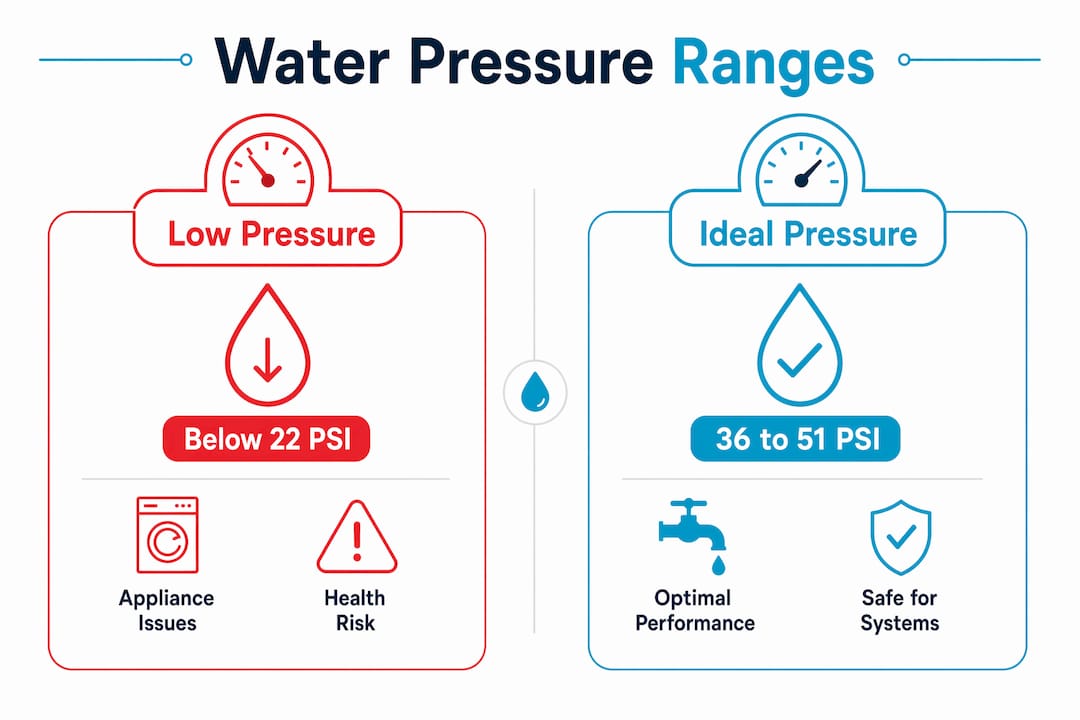
Pressure below 1.5 bar (22 PSI) causes appliances to malfunction. Dishwashers fail to fill correctly, washing machines take longer to cycle, and showers produce a trickle instead of a stream. At the other extreme, pressure above 5 bar (72 PSI) risks physical damage to fittings, joints, and seals, and a pressure-reducing valve becomes necessary.
| Pressure Level | PSI Range | What It Means |
|---|---|---|
| Too low | Below 22 PSI | Appliances malfunction; showers underperform |
| Acceptable low | 22–36 PSI | Functional but not ideal for multi-fixture homes |
| Ideal | 36–51 PSI | Best balance of performance and system safety |
| High | 51–72 PSI | Acceptable with monitoring; stress begins on fittings |
| Dangerous | Above 72 PSI | Immediate risk of leaks, bursts, and appliance damage |
Plumbing regulations in many countries set a maximum residential supply pressure of 80 PSI. Anything above that threshold accelerates wear on every component in your system, from faucet washers to water heater connections. Understanding where your home sits on this scale is the first step toward protecting your plumbing infrastructure.
Pro Tip: Attach a pressure gauge to an outdoor hose bib first thing in the morning before any fixtures run. That reading gives you the truest static pressure your system receives from the municipal supply.
How does water pressure physically work?
Water pressure follows the physics of hydrostatics. Hydrostatic pressure increases by 9.81 kPa per meter of water column height, which equals roughly 1.42 PSI per meter. A water tower 30 meters tall generates approximately 42.6 PSI at ground level from gravity alone. That is why homes at the bottom of a hill often receive higher pressure than homes near the top.
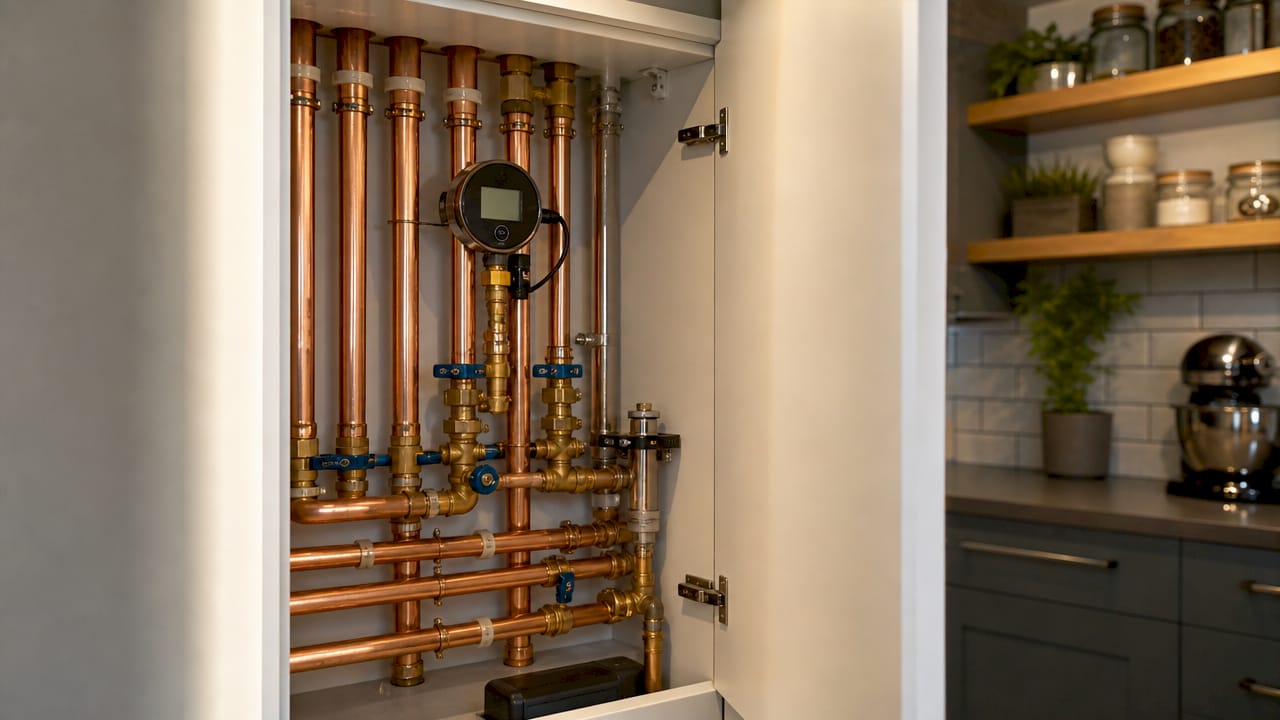
Homeowners frequently confuse pressure with flow rate. These are two separate measurements. Pressure is the force pushing water. Flow rate is the volume that moves through a pipe per minute. You can have strong pressure and poor flow if a pipe is partially blocked, or adequate flow and low pressure if your pipes are oversized for the supply.
Here are the key physical factors that affect how water pressure works in your home:
- Elevation. Every meter of height your water must climb reduces pressure by 1.42 PSI. Upper floors in multi-story homes always receive lower pressure than ground-floor fixtures.
- Pipe diameter. Narrower pipes increase water velocity but reduce static pressure. Bernoulli’s principle explains this directly: higher velocity through a restricted path lowers local pressure.
- Pipe length and friction. Longer pipe runs lose pressure through friction. Older galvanized steel pipes lose more than copper or PEX because corrosion narrows the interior diameter over time.
- Blockages and sediment. Mineral deposits from hard water narrow pipe interiors gradually, reducing both pressure and flow at fixtures even when the municipal supply is adequate.
- Pump operation. Homes on well systems depend entirely on pump output. A failing pump or a waterlogged pressure tank produces erratic pressure throughout the day.
Understanding these factors tells you where to look when something feels off. A weak shower on the top floor of a two-story home is almost always an elevation and pipe-size issue, not a supply problem.
What are common causes of low water pressure at home?
Low water pressure shows up as weak showers, slow-filling appliances, and noticeable pressure drops when two or more fixtures run at the same time. Pressure below 40 PSI is considered low, and 50–60 PSI is the ideal range for a balanced, comfortable home.
The causes follow a predictable pattern. Start with the most common ones before calling a plumber:
- Corroded or sediment-clogged supply lines. Older galvanized steel pipes develop internal rust and mineral buildup that choke water flow over decades. The pipe looks fine from outside but is nearly blocked inside.
- Faulty or partially closed pressure regulator. A pressure-reducing valve set too low, or one that has failed in a partially closed position, starves the entire system. Regulators degrade over time and can cause creeping pressure loss without any obvious external sign.
- Partially closed shutoff valves. A main shutoff valve left slightly closed after a repair is one of the most overlooked causes of whole-house low pressure. Check that every shutoff valve in the system is fully open.
- Active leaks in supply lines. A leak diverts water before it reaches your fixtures, reducing pressure at every tap. Leaks inside walls are silent but show up as unexplained spikes in your water bill.
- Municipal supply issues. Peak demand hours, nearby construction, or a main break can temporarily reduce pressure at the street. If your neighbors report the same problem, the cause is upstream of your property.
Pro Tip: Run a cold tap at the fixture farthest from your main shutoff and check the pressure there. If it is significantly lower than at a nearby fixture, the problem is localized to that branch of your system, not the whole house.
Low pressure also carries a health risk that most homeowners overlook. The EPA warns that sudden pressure loss creates back-siphonage conditions, where contaminated water can be pulled backward into the potable supply. This is not a theoretical risk. It is the reason municipal systems maintain minimum pressure standards.
What are the risks and signs of high water pressure?
Pressure above 80 PSI is defined as the threshold for potential catastrophic failure in residential plumbing. The EPA sets the typical safe residential range at 40–60 PSI. Anything above 80 PSI accelerates damage to joints, seals, and appliances in ways that are not immediately visible.
Excessive pressure damages plumbing gradually through microscopic leaks and seal degradation. A faucet you repair repeatedly is not defective. It is being destroyed by force. The same applies to toilet fill valves, washing machine hoses, and water heater connections. High pressure shortens the lifespan of every component it touches.
The signs of high pressure are specific and recognizable:
- Water hammer. A loud banging or thudding sound when you shut off a tap is water slamming to a stop inside the pipe. It happens because high-pressure water carries more momentum.
- Dripping faucets that return after repair. If you replace a washer and the drip comes back within weeks, high pressure is eroding the new seal just as it destroyed the old one.
- Running toilets. High pressure forces water past the fill valve, causing the toilet to run continuously or cycle on and off without being flushed.
- Shortened appliance lifespan. Washing machines, dishwashers, and water heaters all carry pressure ratings. Operating above those ratings wears out internal components years ahead of schedule.
- Sudden unexplained leaks. A pipe joint that was fine yesterday can fail overnight when pressure spikes push it past its tolerance.
One underappreciated cause of pressure spikes is thermal expansion. When a water heater heats water in a closed system, thermal expansion can raise pressure by 50–75 PSI above the static supply pressure. In extreme cases, blocked return flow creates spikes reaching 120–150 PSI. A thermal expansion tank absorbs this surge and protects the entire system. If your home has a check valve or backflow preventer on the supply line, a thermal expansion tank is not optional.
How to measure and maintain safe water pressure
Testing your home’s water pressure takes about five minutes and costs less than a basic pressure gauge. Follow these steps to get an accurate reading and keep your system in range:
- Buy a pressure gauge with a standard hose bib fitting. These are widely available at hardware stores and attach directly to an outdoor spigot or washing machine connection.
- Test at static conditions. Turn off all fixtures and appliances inside the home. Attach the gauge and open the spigot fully. The reading you see is your static pressure, which is the baseline supply pressure from the street or well.
- Test under dynamic conditions. Run one or two fixtures while watching the gauge. A significant drop (more than 10–15 PSI) under load points to undersized pipes, a weak supply, or a partially blocked line.
- Locate your pressure-reducing valve. Most homes built after the 1980s have a PRV installed near the main shutoff. It looks like a bell-shaped fitting with an adjustment screw on top. Check the current setting and compare it to your gauge reading.
- Adjust or replace the PRV. Turning the adjustment screw clockwise raises pressure; counterclockwise lowers it. PRVs fail gradually and should be inspected every five years. A stuck or worn PRV causes pressure fluctuations that no amount of adjustment will fix. Replacement is the correct solution.
- Call a licensed plumber if your static pressure consistently exceeds 80 PSI and adjusting the PRV does not bring it down. Some municipal supplies run high, and a new or larger PRV may be required. For cost-saving plumbing repairs, catching pressure problems early is far cheaper than replacing burst pipes or failed appliances.
Key Takeaways
Safe residential water pressure sits between 36 and 51 PSI, and staying within that range protects every fixture, appliance, and pipe joint in your home.
| Point | Details |
|---|---|
| Ideal pressure range | Keep home pressure between 36 and 51 PSI for best performance and system safety. |
| Low pressure health risk | Pressure below 22 PSI risks back-siphonage contamination per EPA guidelines. |
| High pressure threshold | Pressure above 80 PSI accelerates seal failure, water hammer, and appliance damage. |
| Thermal expansion danger | Water heaters in closed systems can spike pressure by 50–75 PSI without an expansion tank. |
| PRV maintenance | Inspect and service your pressure-reducing valve every five years to prevent silent pressure drift. |
What I’ve learned from watching homeowners ignore water pressure
Most homeowners treat water pressure as a comfort issue, not a structural one. That is the wrong frame. A home running at 90 PSI is not just inconvenient. It is actively destroying itself, one washer and joint at a time.
The mistake I see most often is confusing pressure with flow. A homeowner notices weak output at a single showerhead, assumes low pressure, and calls for a pressure boost. The actual problem is a clogged aerator or a partially blocked branch line. Boosting system pressure to fix a localized flow problem is like turning up the heat in your whole house because one room feels cold. It solves nothing and creates new damage elsewhere.
The second mistake is ignoring PRV maintenance. A PRV that fails open lets full municipal pressure into your home. A PRV that fails closed starves every fixture. Neither failure announces itself loudly. You notice it weeks later when faucets drip or showers disappoint. Annual pressure checks with a $15 gauge catch both problems before they become expensive.
My honest advice: test your pressure today. Write the number down. Test it again in six months. If it has shifted more than 10 PSI in either direction without any plumbing work, your PRV is drifting and needs attention. Proactive monitoring costs nothing. Reactive pipe replacement costs a great deal.
— Renate
Plumbing supplies for managing water pressure at Santehnikasveikals
Knowing your pressure range is only useful if you have the right tools to act on it.

Santehnikasveikals carries a full range of plumbing supplies for homeowners managing water pressure, including pressure gauges, pressure-reducing valves, thermal expansion tanks, and pipe fittings. Whether you are diagnosing a pressure problem for the first time or replacing a worn PRV, the catalog covers the components you need. Every product listing includes specifications so you can match parts to your system without guesswork. Santehnikasveikals delivers across Latvia, making it practical to order the right part and complete the repair on your own schedule.
FAQ
What is the ideal water pressure for a home?
The ideal residential water pressure is 36–51 PSI (2.5–3.5 bar). Pressure in this range supports strong fixture performance without stressing pipes, fittings, or appliances.
What causes low water pressure in a house?
Low water pressure is most commonly caused by corroded supply lines, a faulty pressure-reducing valve, partially closed shutoff valves, or active leaks. Municipal supply issues during peak demand hours can also reduce pressure temporarily.
Is high water pressure dangerous?
Pressure above 80 PSI is unsafe and causes accelerated wear on seals, joints, and appliances. Signs include water hammer, recurring dripping faucets, running toilets, and unexplained leaks.
How do I test my home’s water pressure?
Attach a standard pressure gauge to an outdoor hose bib with all fixtures off. The reading is your static pressure. A reading above 80 PSI or below 36 PSI requires adjustment or professional inspection.
What is a pressure-reducing valve and do I need one?
A pressure-reducing valve (PRV) is a device installed on the main supply line that limits incoming pressure to a safe level. Most homes with municipal supply pressure above 60 PSI benefit from one, and PRVs should be replaced every five years as they degrade over time.
Atstājiet komentāru