










SCOP 3.0–3.5 Means Heat Pumps Win for Well Insulated Latvian Homes
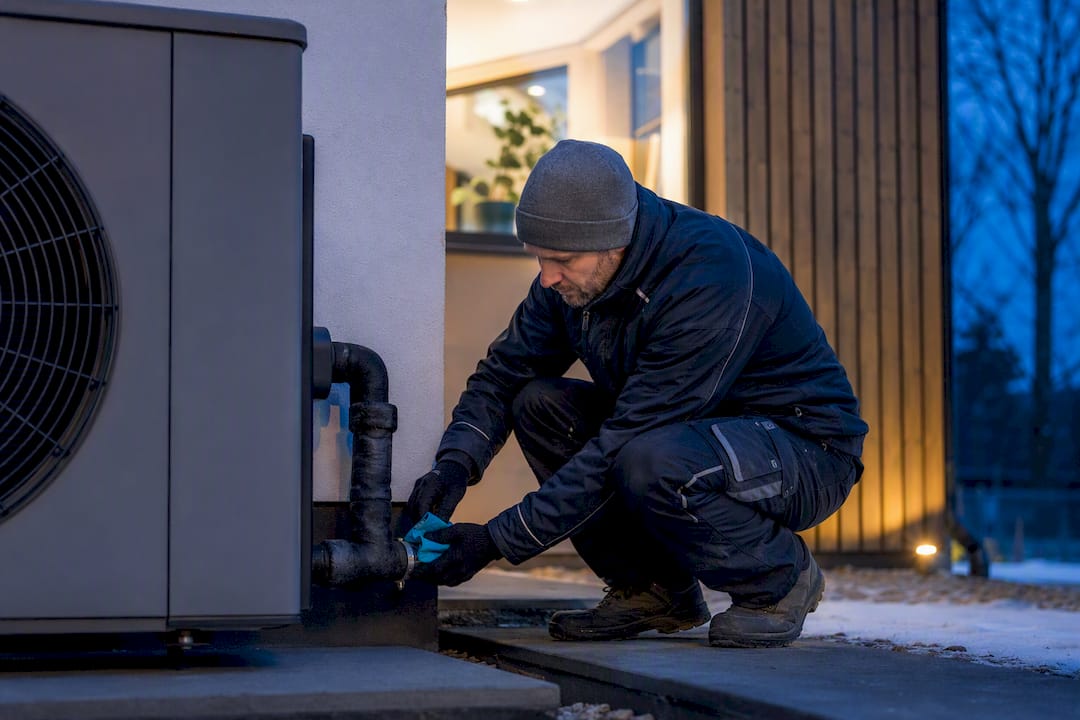
For most new or well-insulated homes with access to reasonably priced electricity, a heat pump is the better long-term choice, especially once solar panels enter the picture. If cold-weather reliability or low upfront cost is your priority and electricity is expensive where you live, a gas condensing boiler may be a practical choice. The checklist further down will help you apply this to your own house.
TL;DR:
- Heat pumps are more cost-effective long-term if your home is well insulated and electricity or solar power is affordable.
- Installing a heat pump typically involves higher upfront costs and requires properly sized radiators or underfloor heating for optimal winter performance.
- Cold weather reduces heat pump efficiency, but modern units can operate down to minus 20 to minus 25 degrees Celsius with backup heating options available.
- Gas boilers have lower initial installation costs and may be more reliable in extreme-cold areas but generally have higher operating costs and shorter lifespan.
- Hybrid systems combining a heat pump with a gas boiler suit homeowners who want flexibility, backup heat, and phased electrification, especially if they already have a gas connection.
Table of Contents
- Siltumsūknis Vai Gāzes Katls: How Each System Actually Makes Heat
- What Does It Cost to Install and Run Each System?
- How Does Cold Weather Affect Heat Pump Performance?
- What Does Installation and Maintenance Actually Involve?
- When Does a Hybrid Heating System Make Sense?
- How Should You Compare Quotes and Make a Final Decision?
- What Santehnikasveikals Sees Homeowners Get Wrong
- Get the Parts Right Before You Switch Systems
- Sources
Siltumsūknis Vai Gāzes Katls: How Each System Actually Makes Heat
A gas boiler burns natural gas or propane in a combustion chamber, and a heat exchanger transfers that heat into your water loop. Condensing models recover extra heat from exhaust gases before they exit the flue, which is why “gas boiler efficiency” ratings on modern units are so much higher than on the boilers your parents had.
A heat pump works on a completely different principle. It doesn’t create heat, it moves it. A refrigerant cycle captures ambient warmth from outside air (or from the ground, for ground-source units) and concentrates it to a usable temperature indoors.
- Air-to-water heat pumps feed a wet central heating system (radiators, underfloor loops, hot water tank) and are the most common choice for retrofits.
- Air-to-air heat pumps blow heated air directly into rooms, similar to a reversible air conditioner, and suit smaller or single-zone spaces.
- Ground-source heat pumps tap stable underground temperatures and perform more consistently in winter, but require excavation.
The efficiency measure that matters here is COP, or coefficient of performance. A heat pump with a COP of 3 turns 1 kilowatt of electricity into 3 kilowatts of heat. Seasonal COP, or SCOP, averages that number across a full heating year, and homes with underfloor heating or oversized radiators see the highest SCOP because low supply temperatures let the compressor work less hard.
What Does It Cost to Install and Run Each System?
Expect an air-source heat pump installation to typically have higher upfront costs than a gas condensing boiler, largely because of the outdoor unit, refrigerant work, and often an upgraded hot water cylinder. A straightforward gas boiler swap in an existing gas-connected home is usually the cheaper install, though comparative cost guides note the gap narrows when a home needs new radiators or distribution upgrades anyway. House size, insulation quality, and whether you’re retrofitting or building new all shift these numbers.
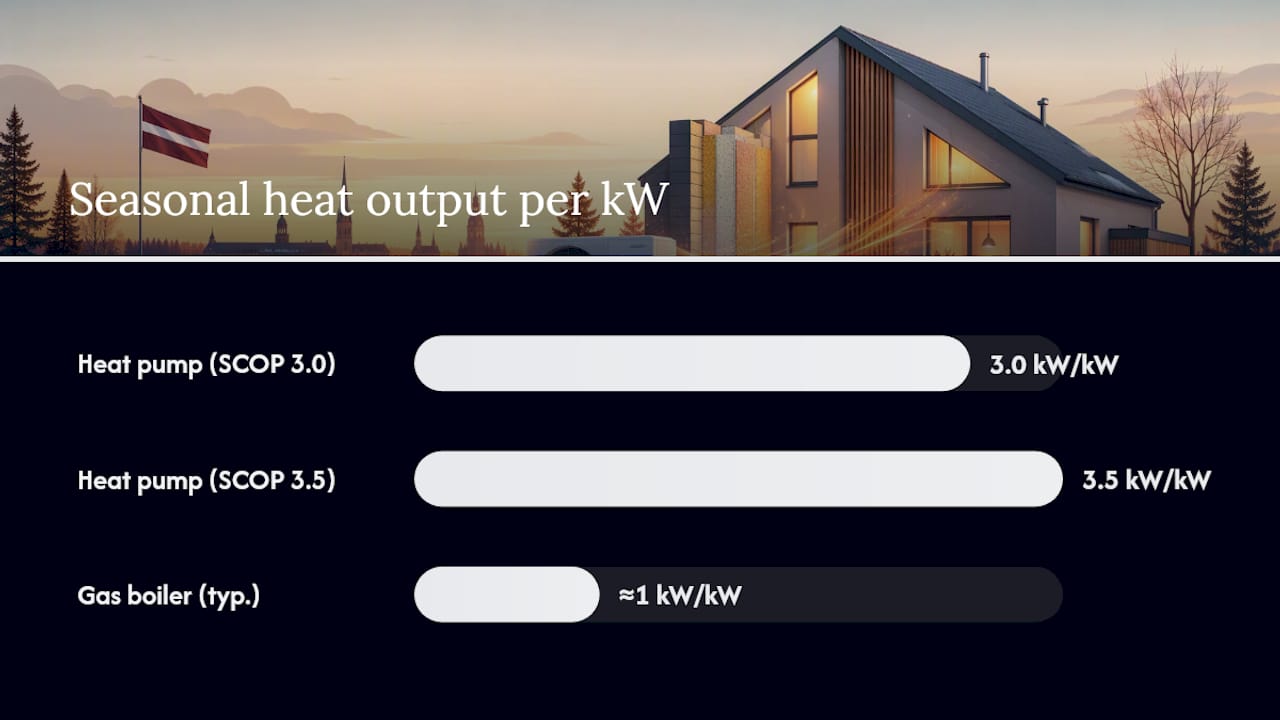
Seasonal efficiency callout: Heat pumps paired with low-temperature distribution commonly reach a SCOP of 3.0 to 3.5, meaning every kilowatt of electricity you buy delivers three to three and a half kilowatts of heat across the year. A gas boiler, by contrast, tops out near 1 kilowatt of heat per kilowatt of fuel input regardless of season.
Maintenance costs favor gas boilers slightly in familiarity, since most technicians know them well, but heat pumps generally need less frequent servicing. Budget for an annual boiler service and roughly every-other-year heat pump checkups, plus refrigerant checks over time.
Here’s a simplified way to think about payback:
- Calculate your annual heating cost under each system using local electricity and gas rates.
- Subtract the cheaper running system’s annual cost from the more expensive one to get your yearly savings.
- Divide the extra upfront cost of the heat pump by that yearly savings figure to estimate payback years.
- Re-run the math assuming rooftop solar covers part of your electricity use. An expert cited by Lsm points out that buying grid power at full retail price is what erodes heat pump economics, so cheap self-generated electricity often cuts payback time substantially.
How Does Cold Weather Affect Heat Pump Performance?
A heat pump’s COP drops as the outdoor temperature drops, since there’s simply less ambient heat to extract. That’s physics, not a flaw, but it does mean your effective efficiency in January looks nothing like your effective efficiency in October.
The good news: this isn’t the deal breaker it used to be. Modern air-to-water units can keep operating down to roughly minus 20 to minus 25 degrees Celsius, though output and efficiency both taper off as it gets that cold.
- Below freezing, expect noticeably lower COP than the unit’s rated average.
- During extended cold snaps, an electric backup heater or a supplementary gas boiler can carry the load so the heat pump isn’t straining.
- Smart controllers can automatically switch to backup heat sources rather than making you manage it manually.
Pro Tip: Oversized radiators or underfloor heating aren’t optional extras if you want strong winter performance. A heat pump forced to push high water temperatures through undersized radiators will run harder, use more electricity, and wear out faster than one matched to a proper low-temperature distribution system.
What Does Installation and Maintenance Actually Involve?
Gas boilers need a flue for exhaust, a gas supply connection, and adequate ventilation in the boiler room. That’s usually a known quantity for anyone whose home already has gas.
Heat pumps need outdoor space for the compressor unit, some tolerance for the fan noise it produces, and occasionally groundwork if you’re switching from radiators to underfloor heating. Retrofits often skip a chimney and shrink the equipment footprint compared to older combustion systems, which can offset some of the added electrical work.
- Confirm your local permit and safety inspection requirements before signing a contract; rules vary by municipality and system type.
- Expect a typical installation timeline of one to three days for a straightforward swap, longer if distribution or electrical upgrades are needed.
- Boilers generally last 10 to 15 years; heat pumps often run 15 to 20 years, though compressors and controls are the parts most likely to need replacement first.
Anyone unclear on local compliance steps should check current plumbing regulation guidance before finalizing a quote.
When Does a Hybrid Heating System Make Sense?
A hybrid system pairs a heat pump with a gas condensing boiler, using intelligent controls that pick whichever source is cheaper or more efficient in real time. On a mild day, the heat pump carries the load. On a brutal cold snap, the boiler steps in.
This setup suits a specific set of homeowners more than others.
- You already have a gas connection and don’t want to remove it entirely.
- You live somewhere with real extreme-cold risk and want guaranteed backup heat.
- You’d rather phase into full electrification than commit to it all at once.
The tradeoff is straightforward: you’re paying for two heat sources instead of one, which raises upfront cost. In exchange, you get flexibility and a safety net, and manufacturer control systems handle the switching automatically based on current energy prices rather than making you monitor it yourself.
How Should You Compare Quotes and Make a Final Decision?
Before calling installers, gather a few numbers. You’ll get sharper, more comparable quotes if you already know your house’s heat-loss estimate, your typical hot water demand, what distribution system you currently have, any noise restrictions from neighbors, and how much roof space you have if solar is on the table.
When you talk to suppliers, push for specifics rather than marketing language.
- Ask for the system’s rated COP and SCOP, not just a generic “high efficiency” claim.
- Ask what warranty covers the compressor, and for how many years.
- Ask for an estimated annual energy use figure based on your actual house, not a brochure average.
- Ask who performs commissioning and whether that’s included in the quote.
Walk away from vague performance promises or any installer who skips a proper heat-loss calculation. That’s the same red flag whether you’re pricing a heat pump vs. gas boiler or comparing a siltumsūknis vai granulu katls setup.
As a rule of thumb: choose a heat pump if your home is well insulated and you have access to affordable electricity or solar. Choose gas if upfront budget is tight and electricity costs are high or unpredictable where you live. Choose hybrid if you already have gas and want a phased transition with built-in backup.
What Santehnikasveikals Sees Homeowners Get Wrong
The debate over heat pump vs. gas boiler rarely stays where it should, which is your actual house. Too many homeowners chase national averages instead of running their own heat-loss numbers, and then blame the equipment when performance doesn’t match the brochure.
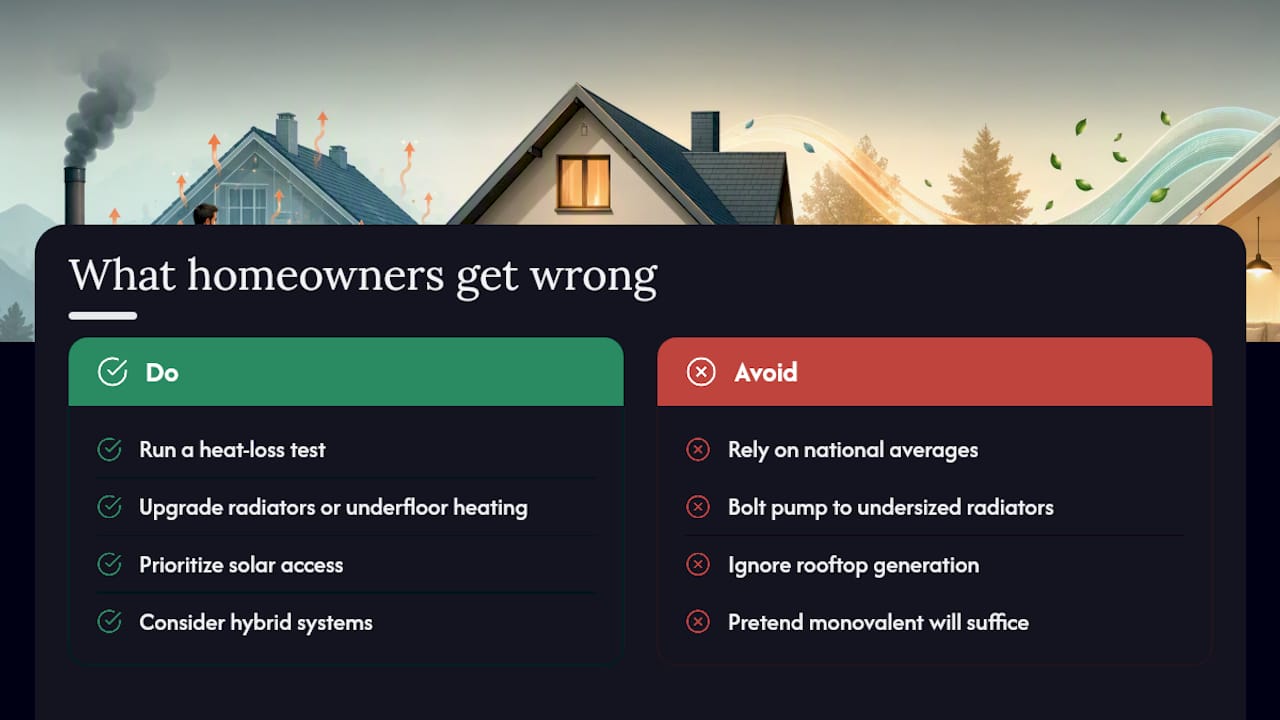
The most overlooked variable isn’t the heat source at all. It’s the distribution system. A heat pump bolted onto old, undersized radiators will disappoint almost anyone, while the same unit paired with properly sized radiators or underfloor heating can outperform expectations. If you’re only going to fix one thing before switching systems, fix that.
Solar access deserves more weight than most quotes give it, too. Two identical heat pumps in the same climate can produce very different lifetime costs depending on whether the owner is buying electricity at retail price or covering part of it with rooftop generation. Hybrid systems get dismissed as a compromise, when for a lot of Latvian homes with existing gas lines and real winter cold, they’re the more honest answer than pretending a monovalent heat pump will handle every scenario without complaint.
— Renate
Get the Parts Right Before You Switch Systems
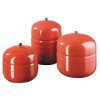
Whichever direction you choose, siltumsūknis vai gāzes katls. The equipment is only half the job. A heat pump running at low supply temperature needs radiators and valves sized for that job, not leftovers from your old boiler setup, and a boiler swap still needs correct expansion tank sizing to handle pressure changes safely.
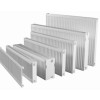
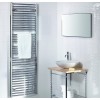
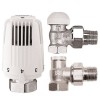
Santehnikasveikals stocks the components that make either switch work in practice: steel heating radiators sized for low-temperature systems, expansion vessels, valves, and piping accessories, all searchable by category with delivery across Latvia. If you’re unsure whether your current radiators will work with a heat pump, our expansion tank guide walks through the pressure-management basics you’ll need regardless of which heat source you pick.
Once you’ve settled on a direction, browse the bathroom and heating fixtures that round out a renovation project, and reach out to our support team for a compatibility check on radiators, valves, or WC connectors before you finalize your installer’s parts list.
Sources
- Kas ir gaiss ūdens siltumsūknis? – Termo
- Siltumsūknis vai gāzes apkure – apkures sistēmas īsumā | Bosch Home Comfort
- Hibrīda apkure: Paskaidrojums un izstrādājumu klāsts | Viessmann LV
- Lsm
Atstājiet komentāru