



















































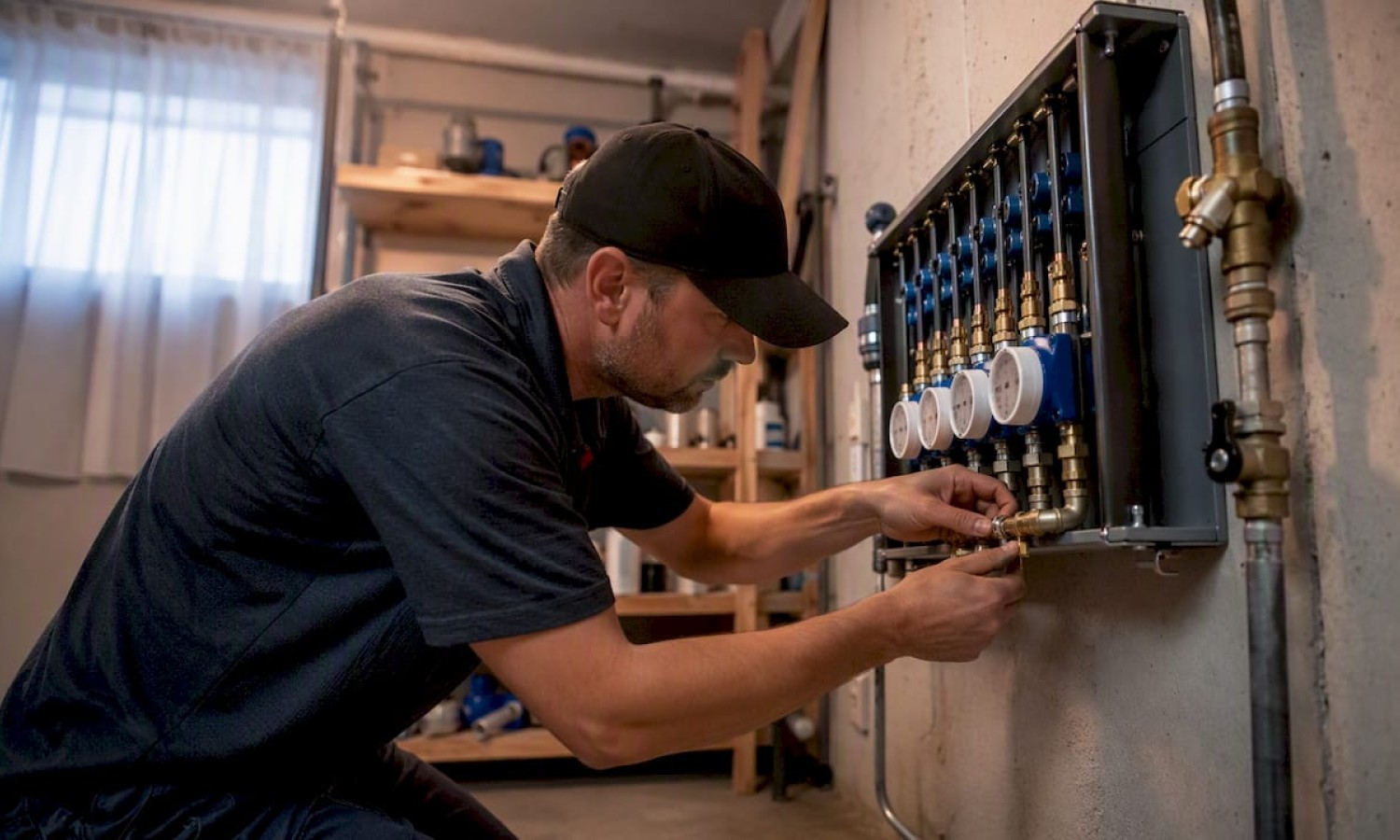

Practical Water Efficiency Improvement Steps for Homes and Buildings
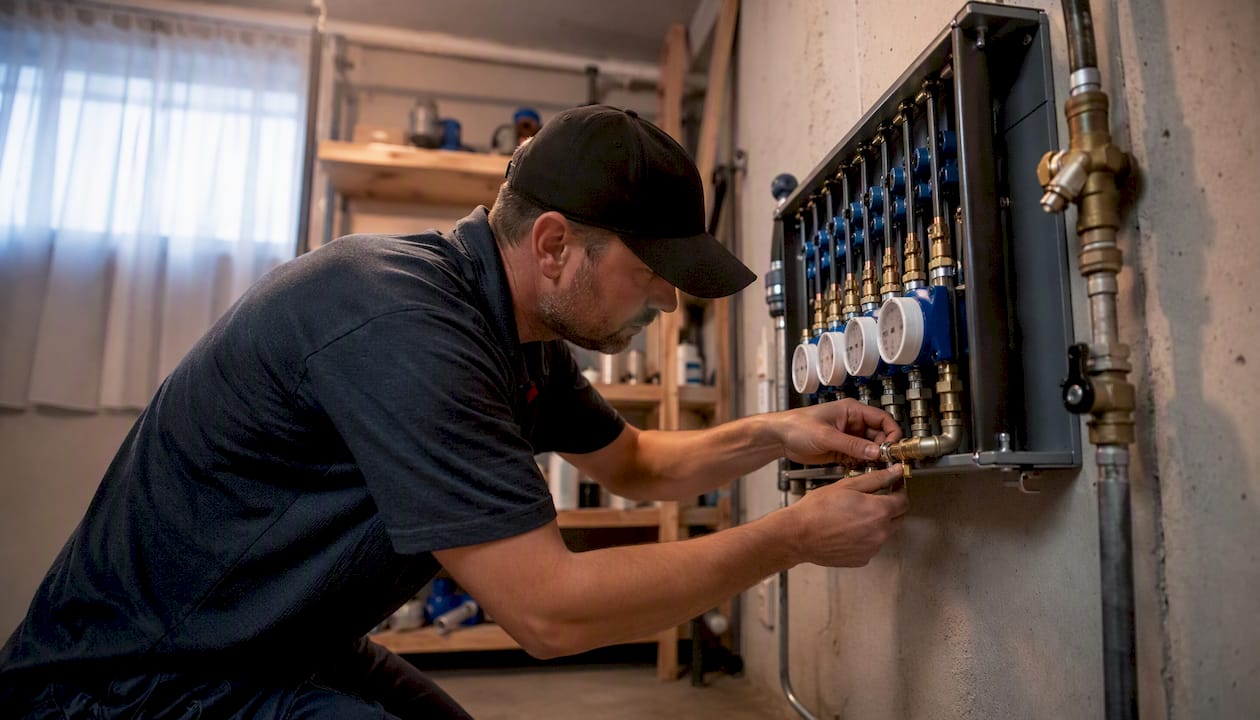
The highest-impact water efficiency improvement steps are: measure your baseline (audit and submetering), fix leaks immediately, install low-flow fixtures and ENERGY STAR appliances, optimize high-use equipment and cooling processes, improve outdoor irrigation, deploy alternative sources, then sustain gains through monitoring and behavior change. These steps follow the EPA WaterSense framework and are backed by AWWA program standards and ENERGY STAR appliance data.
Quick-scan checklist:
- Conduct a utility-bill review and walk-through audit
- Install submeters on cooling towers, boilers, labs, and irrigation zones
- Fix all leaking toilets, faucets, and valves
- Replace fixtures with WaterSense-labeled models (toilets, showerheads, aerators)
- Upgrade clothes washers and dishwashers to ENERGY STAR-certified units
- Optimize cooling tower cycles, autoclave water use, and lab wash processes
- Switch to drip irrigation, smart controllers, and drought-tolerant plants
- Set measurable targets, assign owners, and verify monthly
Savings snapshot: Behavioral programs typically reduce consumption by roughly 5–10%. Single-measure fixture upgrades deliver larger per-unit savings. Decentralized reuse systems (greywater, rainwater) can offset ≥30% of potable water demand in some applications.
Key Takeaways
The most effective water efficiency improvement steps follow a fixed sequence: measure baseline use, fix leaks, retrofit fixtures, optimize high-use equipment, and sustain gains through monitoring and organizational accountability.
| Point | Details |
|---|---|
| Measure before spending | A utility-bill review and overnight meter test identify losses before any capital is committed. |
| Leaks exceed 6% of facility use | Fixing leaks first delivers faster payback than almost any fixture upgrade. |
| WaterSense and ENERGY STAR save water and energy | Low-flow showerheads save ~1,000 gallons per person per year; ENERGY STAR washers use roughly 30% less water than standard models. |
| Greywater reuse offsets ≥30% of potable demand | Decentralized reuse systems yield the largest single reductions where state codes permit installation. |
| Santehnikasveikals supplies the fixtures | Toilets, faucets, showerheads, seals, and water-handling components are available for direct order to support each step in this guide. |
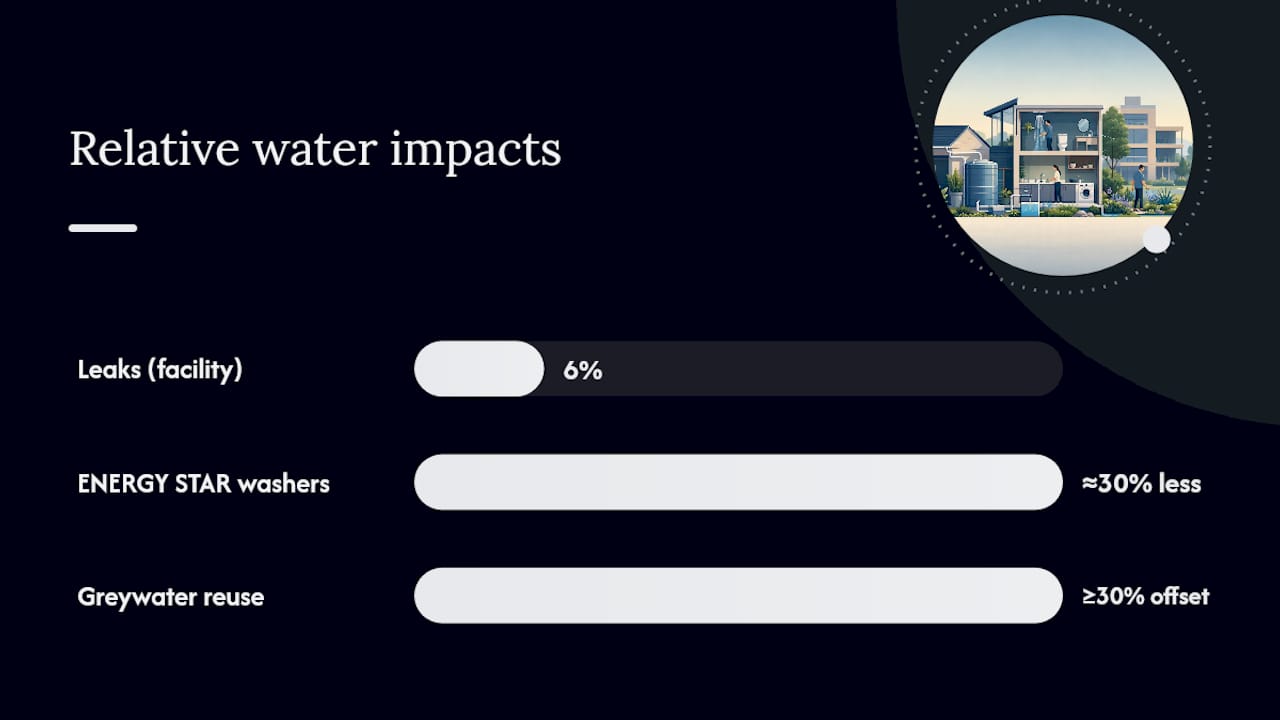
Table of Contents
- How do water audits and submetering help you improve water efficiency?
- How to find and fix leaks before they drain your budget
- Which fixtures and appliances deliver the best water savings?
- How to optimize high-use equipment in labs, kitchens, and cooling systems
- How do you keep water savings going long-term?
- What outdoor and alternative-source measures cut the most water use?
- How does staff training reduce water use in buildings and labs?
- What do water efficiency upgrades actually cost, and when do they pay back?
- Your 30/90/365-day implementation checklist
- Why measurement-first beats any other starting point
- Ready to upgrade your fixtures and parts?
- Sources
How do water audits and submetering help you improve water efficiency?
Start by measuring. You cannot manage what you cannot see, and a utility-bill review alone misses the granular data needed to target fixes. A structured water audit gives you a baseline; submeters give you ongoing visibility.
Core audit steps:
- Pull 12 months of utility bills and calculate average daily use (gallons per day).
- Walk through the facility: log every fixture, appliance, cooling unit, and irrigation zone.
- Build a high-use equipment inventory with manufacturer flow rates.
- Run a short water balance: compare metered supply against estimated end-use totals to identify unaccounted losses.
Metering options
A single main meter shows total consumption but cannot isolate where losses occur. Submeters installed on individual systems (cooling towers, boilers, restroom blocks, irrigation) reveal the source of unexplained use within days. Advanced Metering Infrastructure (AMI) adds hourly or 15-minute data intervals and remote alerts, which is most cost-effective for large facilities with multiple end-use categories. For smaller buildings, pulse-output submeters connected to a basic data logger are sufficient.
Pro Tip: Prioritize submetering for cooling towers, boilers, autoclaves, and irrigation zones first. These four categories account for the majority of unexplained water loss in commercial and lab settings, and isolating them quickly directs capital to the right fix.
Data to collect: hourly and daily consumption profiles, fixture counts per restroom, irrigation runtime schedules, and equipment run-hours. Anomalies to watch for include overnight baseline flow (indicates leaks or phantom equipment running), weekend spikes in lab buildings, and irrigation use that exceeds evapotranspiration demand.
A basic audit takes one to two days for a mid-size building. Submeter installation on three to five priority systems typically runs two to four weeks including procurement and commissioning. The EPA WaterSense planning framework recommends treating this measurement phase as the foundation of every subsequent action.
How to find and fix leaks before they drain your budget
Fixing leaks is the fastest way to cut water use. EPA data indicates leaks can exceed 6% of total facility water use, and that figure climbs in older buildings with deferred maintenance.
Detection methods:
- Bill analysis: A sudden month-over-month increase with no operational change points to a new leak.
- Overnight meter test: Read the main meter at 10 PM and again at 6 AM with no scheduled use. Any flow indicates a leak.
- Acoustic leak detection: Listening devices locate pressurized pipe leaks without excavation.
- Smart leak sensors: Placed near water heaters, under sinks, and at irrigation valves; they alert via app within minutes of a drip.
- Submeter alerts: Threshold alerts on submeters flag abnormal flow in real time.
Statistic callout: Leaks commonly exceed 6% of total facility water use. A single dripping faucet at one drip per second wastes more than 3,000 gallons per year, according to Penn State Extension.
Routine maintenance checklist:
- Monthly restroom audits: flush each toilet, check flapper seal, inspect supply valve for drips
- Quarterly trap and seal checks on floor drains and lab sinks
- Cooling tower valve inspections every 90 days
- Irrigation head alignment check before each seasonal startup
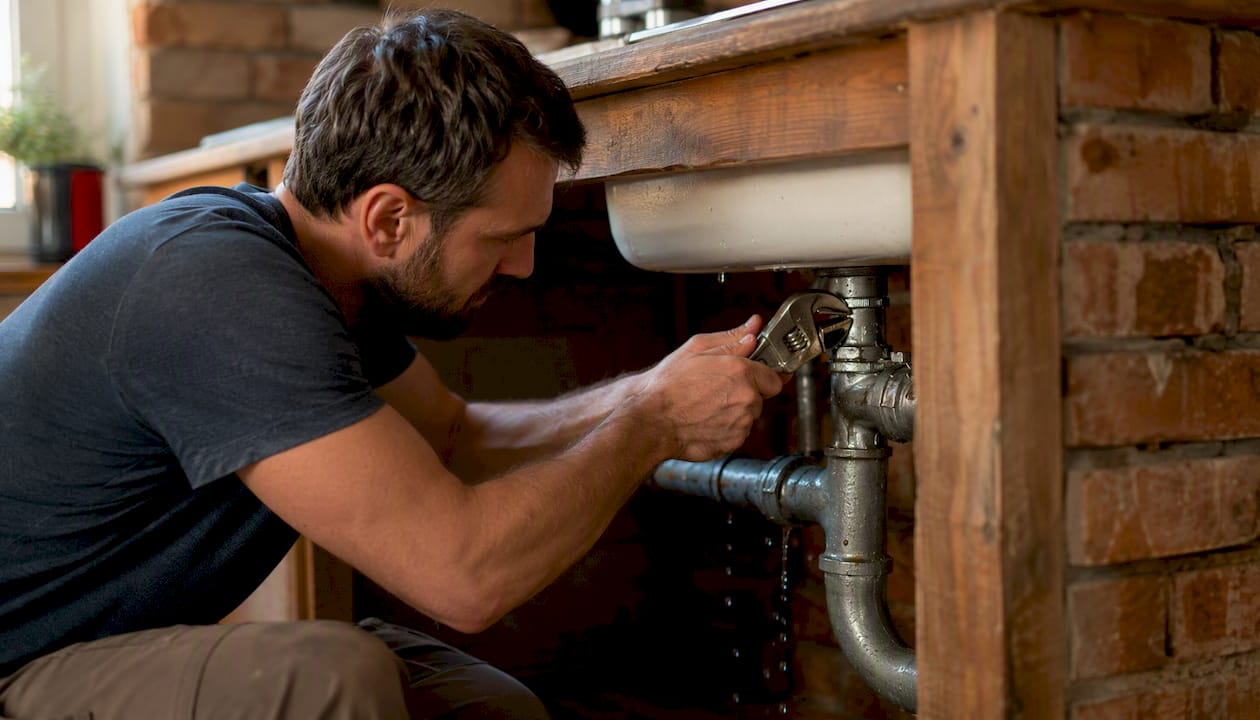
Immediate fixes require no contractor: toilet flappers cost under $10 and install in minutes; faucet washers and O-rings are similarly inexpensive. For larger leaks in pressurized mains, schedule a licensed plumber within 48 hours of detection.
Pro Tip: Keep a leak-tracking log with date found, location, estimated flow rate, repair date, and cost. Tie leak-alert response to vendor SLAs so contractors are on-site within 24 hours of a confirmed alert.
Which fixtures and appliances deliver the best water savings?
Replacing or retrofitting fixtures and choosing certified appliances provides large, proven reductions. The EPA WaterSense label identifies products independently tested to use at least 20% less water than standard models without sacrificing performance.
Product categories and baselines:
- Toilets: Older models use 3.5–5.0 gallons per flush (gpf). Standard 1.6 gpf toilets are the current federal maximum. WaterSense-labeled high-efficiency toilets use 1.28 gpf or offer dual-flush (0.8/1.6 gpf). Switching from a 3.5 gpf toilet saves thousands of gallons per person per year.
- Showerheads: Standard flow is 2.5 gallons per minute (gpm). WaterSense showerheads use ≤2.0 gpm. Penn State Extension notes low-flow showerheads save roughly 1,000 gallons per person per year.
- Faucet aerators: A WaterSense-labeled aerator reduces kitchen or bathroom faucet flow from 2.2 gpm to 1.5 gpm or less. Cost: a few dollars per unit. This is among the most cost-effective single upgrades available.
- Clothes washers: ENERGY STAR-certified washers use roughly 30% less water than conventional models and also reduce energy for water heating.
- Dishwashers: ENERGY STAR-certified dishwashers use less water per cycle than hand-washing and meet strict energy thresholds.
Implementation steps: Inventory all fixtures by restroom and floor. Prioritize high-traffic restrooms and lab hand-wash stations first, since per-unit savings multiply across daily users. Phase replacements by budget: aerators and showerheads in month one, toilets in the next capital cycle.
The AWWA and EPA both recommend WaterSense and ENERGY STAR as the primary selection criteria for residential and commercial fixture procurement.
How to optimize high-use equipment in labs, kitchens, and cooling systems
Optimizing equipment and processes often multiplies savings beyond what fixture swaps alone can achieve. A single cooling tower or autoclave can use more water than an entire restroom block.
- Audit each piece of equipment. Record make, model, age, daily run-hours, and manufacturer-specified water consumption. Compare actual metered use against spec-sheet figures to identify drift.
- Autoclaves: Many older autoclaves use once-through cooling water that runs continuously. My Green Lab identifies autoclave retrofits as one of the top nine lab water-efficiency actions. Install a recirculating chiller or a water-saving retrofit kit to replace once-through flow.
- Cooling towers: Increase cycles of concentration (CoC) from the default 3–4 to 6–8 where water chemistry allows. Each additional cycle reduces blowdown volume. Install conductivity controllers to automate blowdown timing and prevent over-purging.
- Once-through cooling systems: EPA guidance recommends eliminating once-through cooling entirely where feasible, replacing it with recirculating systems or air-cooled alternatives.
- Lab and commercial dishwashers/washers: Optimize cycle selection, run only full loads, and check rinse-water pressure settings against manufacturer minimums. Excess rinse pressure wastes water without improving results.
- Operational scheduling: Set equipment to standby or off during non-production hours. An autoclave left in idle cooling mode overnight can waste hundreds of gallons per week.
Pro Tip: *Submeter each high-use device individually.
Rank equipment by water intensity (gallons per hour of operation) and cost-to-save ratio. Cooling towers and autoclaves typically top both lists in lab and light-industrial settings.
How do you keep water savings going long-term?
One-time projects decay. Embedding monitoring, targets, and accountability is what converts a project into a program. The EPA WaterSense framework explicitly recommends forming a dedicated water management team and treating efficiency as a continuous improvement cycle.
- Set a baseline and SMART targets. Express goals as gallons per square foot per year or percent reduction from the baseline year. A 10% reduction in 12 months is specific and verifiable.
- Deploy monitoring technology. Options range from low-cost pulse-output submeters with spreadsheet logging to full AMI dashboards with automated anomaly alerts. Match the investment to the facility’s scale and water spend.
- Run a continuous improvement cycle: measure → act → verify → adjust. Review submeter data monthly; compare against targets quarterly; adjust operational procedures when actuals diverge from plan.
- Assign owners. Each major end-use category (HVAC, restrooms, labs, irrigation) needs a named responsible person. Without ownership, alerts go unresolved and savings erode.
- Include contractors and tenants. Lease language and maintenance contracts should specify water-use expectations and reporting requirements.
Pro Tip: Tie water KPIs to facilities maintenance contracts. A contractor whose retention bonus depends partly on water performance will respond to submeter alerts faster than one paid purely on task completion.
A UC Riverside study on the Dropcountr app found that near-real-time digital feedback reduced household consumption by an average of 6.2%, with leak-alert responses producing day-after drops of roughly 50%. The lesson for facility managers: response time to alerts matters as much as the alert itself. Smart meter data is only as useful as the operational process behind it. For more on smart plumbing monitoring tools, the Santehnikasveikals resource library covers sensor options and installation considerations.
AWWA standards provide program design templates and evaluation criteria for utilities and large facilities running formal conservation programs.
What outdoor and alternative-source measures cut the most water use?
Outdoor demand and alternative sources often yield the largest single reductions for properties where landscape irrigation dominates the water profile.
Irrigation steps:
- Audit runtime schedules: compare programmed minutes against local evapotranspiration (ET) data from your state’s extension service.
- Repair or replace misaligned, broken, or overspray heads before the next irrigation season.
- Convert high-volume spray zones to drip irrigation where plant spacing allows; drip reduces evaporation losses significantly.
- Install a smart irrigation controller (ET-based or soil-moisture-sensor-based) to eliminate over-watering automatically.
- Schedule all watering between 10 PM and 6 AM to minimize evaporation.
Landscape options: Xeriscaping with native or drought-tolerant plants reduces irrigation demand at the source. Mulching to a 3-inch depth cuts soil moisture loss between watering cycles. Replacing cool-season turf with native groundcovers in non-use areas is one of the highest-leverage landscape changes available in arid and semi-arid U.S. regions.
Alternative sources: Rainwater harvesting via cisterns or rain barrels captures roof runoff for outdoor irrigation and, in some jurisdictions, toilet flushing. Greywater reuse (laundry-to-landscape or branched-drain systems) redirects sink and shower drain water to subsurface irrigation. A Frontiers scoping review found greywater reuse can offset ≥30% of potable water demand in some residential applications.
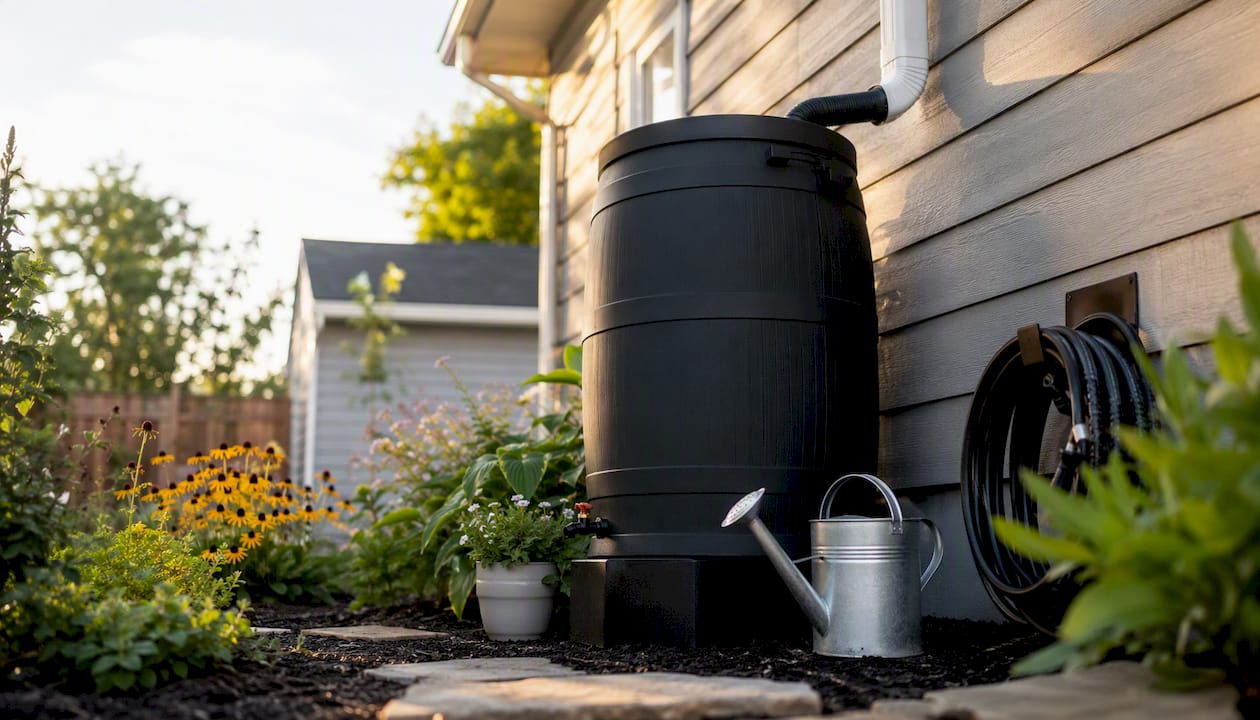
Legal note: State and local codes govern greywater and rainwater systems. California, Texas, and Arizona have established permitting frameworks; other states restrict or prohibit certain reuse configurations. Check your state environmental or health agency rules and consult EPA reuse guidelines before installation. The Santehnikasveikals guide to building drainage systems covers drainage design considerations relevant to greywater routing.
Pro Tip: Pair a rainwater or greywater pilot with a dedicated submeter. Without metered data on potable-water offset, you cannot verify savings or justify the system’s cost to stakeholders.
How does staff training reduce water use in buildings and labs?
Behavior programs and staff training are cost-effective when combined with technology. Hardware alone does not prevent a technician from running a tap during a long procedure or a maintenance worker from leaving a hose unattended.
Core policies and training:
- Written operating procedures for high-water-use tasks (autoclave operation, lab glassware rinsing, commercial kitchen prep)
- Shut-off protocols posted at every sink, hose bib, and equipment station
- Tenant and occupant onboarding checklist covering water-use expectations
- Maintenance staff training on leak identification and reporting procedures
Nudges and feedback:
- Near-real-time consumption apps (such as Dropcountr, used in the UC Riverside study) that show daily use and flag anomalies
- Leak-alert notifications pushed to facility managers and maintenance leads
- Consumption comparison dashboards showing current use versus baseline and peer buildings
- Signage campaigns: EPA’s Fix a Leak Week (typically held in March) provides free materials and a framework for building-wide awareness
Low-cost prompts that work:
- Laminated faucet shut-off signs at every hand-wash station
- Dishwasher and clothes-washer loading rules posted above each unit
- Lab-specific SOPs specifying maximum rinse time per glassware type
- Sticker reminders on autoclave panels to confirm water-saving mode is active
Goals without verification are aspirations, not programs.
What do water efficiency upgrades actually cost, and when do they pay back?
Small measures pay back in months; larger systems take years but deliver proportionally larger reductions. Local water and sewer rates, energy prices for water heating, usage intensity, and available rebates all shift the numbers.
Factors that shift payback:
- Water and sewer rates: cities with combined rates above $10 per 1,000 gallons see faster payback on all measures.
- Energy prices: water heating accounts for roughly 18% of home energy use; low-flow fixtures reduce both water and gas or electric bills.
- Usage intensity: a 50-person office restroom block pays back a toilet upgrade far faster than a single-family home.
- Rebates and incentives: many U.S. utilities offer rebates for WaterSense toilets ($25–$100 per unit), ENERGY STAR washers, and smart irrigation controllers. Check your utility’s website or the EPA WaterSense rebate finder. State programs (California’s SoCal Water$mart, Texas’s WaterIQ) add further offsets. For cost-saving plumbing ideas with payback examples, the Santehnikasveikals cost-saving guide provides additional context.
Your 30/90/365-day implementation checklist
A staged schedule reduces decision paralysis and generates early wins that fund larger projects.
30-day actions:
- Pull 12 months of utility bills; calculate average daily use.
- Walk through the facility and log all fixtures, appliances, and irrigation zones.
- Run an overnight meter test to confirm or rule out active leaks.
- Replace all dripping faucet washers and toilet flappers found during the walk-through.
- Install WaterSense aerators on all kitchen and bathroom faucets.
- Post shut-off signage at sinks and hose bibs.
- Notify staff of the water efficiency program and assign a point of contact.
90-day actions:
- Complete a full water audit using the utility-bill baseline and walk-through data.
- Install submeters on the top three water-consuming systems (cooling tower, boiler, or irrigation).
- Replace the highest-traffic toilets and showerheads with WaterSense-labeled models.
- Audit cooling tower CoC settings and adjust blowdown controls.
- Pilot a greywater or rainwater system on one irrigation zone if state codes permit.
- Implement lab-specific SOPs for autoclave and glassware rinse procedures.
365-day actions:
- Evaluate submeter data against the baseline; calculate verified savings.
- Scale submetering to remaining high-use systems.
- Complete remaining toilet and showerhead replacements across all restroom blocks.
- Integrate water KPIs into facilities maintenance contracts.
- Apply for utility and state rebates on completed upgrades.
- Publish an internal annual water report with savings, costs, and next-year targets.
Why measurement-first beats any other starting point
Most water programs fail not because the technology is wrong but because the sequence is wrong. Facilities buy fixtures before they know where the water is going, then wonder why the bills barely move.
The EPA’s stepwise framework, the AWWA program standards, and the Frontiers scoping review all converge on the same logic: measure first, act on what the data shows, verify the result, and adjust. That sequence is not bureaucratic caution. It is the only way to know whether a $5 aerator or a $3,000 cooling tower upgrade is the right next dollar to spend.
The hybrid model matters too. Digital monitoring without behavior change produces detection without response. Behavior change without metering produces effort without verification. The mechanism is simple: people act when they see a specific, immediate signal tied to their own use. Generic awareness campaigns do not replicate that.
For facility managers, the practical implication is to build the organizational structure before the capital plan. Form the water management team, assign end-use owners, and set verified targets before purchasing a single fixture. The fixtures are easy. The accountability structure is what makes savings persist into year three and beyond.
Ready to upgrade your fixtures and parts?
When the audit is done and the priority list is set, the next step is procurement. Santehnikasveikals carries the fixture and plumbing categories needed to execute the steps in this guide: toilets, faucets, showerheads, replacement seals, siphons, mixing valves, and water-handling components for both residential and commercial applications.

WaterSense-labeled toilets and low-flow showerheads are available for direct order, with delivery across the service area. For maintenance tasks and retrofit work, the catalog includes pump stations and pressure components suited to building system upgrades. Where available, select WaterSense and ENERGY STAR-labeled products to qualify for utility rebates and meet current federal efficiency standards.
Browse the full fixture and plumbing catalog at Santehnikasveikals to check availability and current pricing for your specific upgrade list.
Sources
External references:
- Getting Started | US EPA
- Start Saving | US EPA
- Advances in end-user water conservation technologies: a scoping review | Frontiers
- Household Water Conservation | Penn State Extension
- Home water-use app improves water conservation | UCR News
- Using water efficiently | US EPA
- Top 9 Actions to Take in the Lab to Improve Water Efficiency | My Green Lab
- Guide to Home Water Efficiency | U.S. Department of Energy
- Water conservation | AWWA
Santehnikasveikals resources:
Atstājiet komentāru