



















































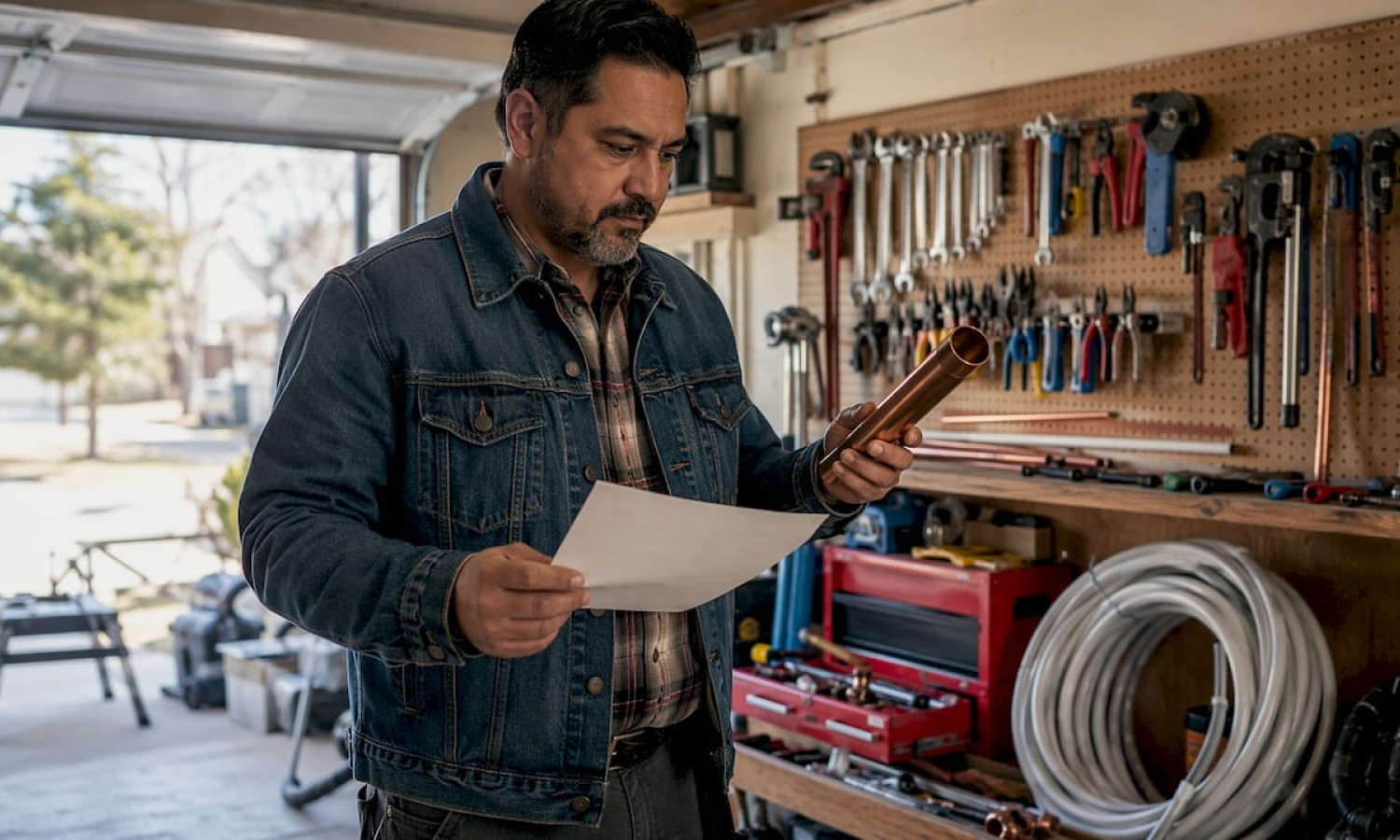

Plumbing Materials Checklist for New Homeowners 2026
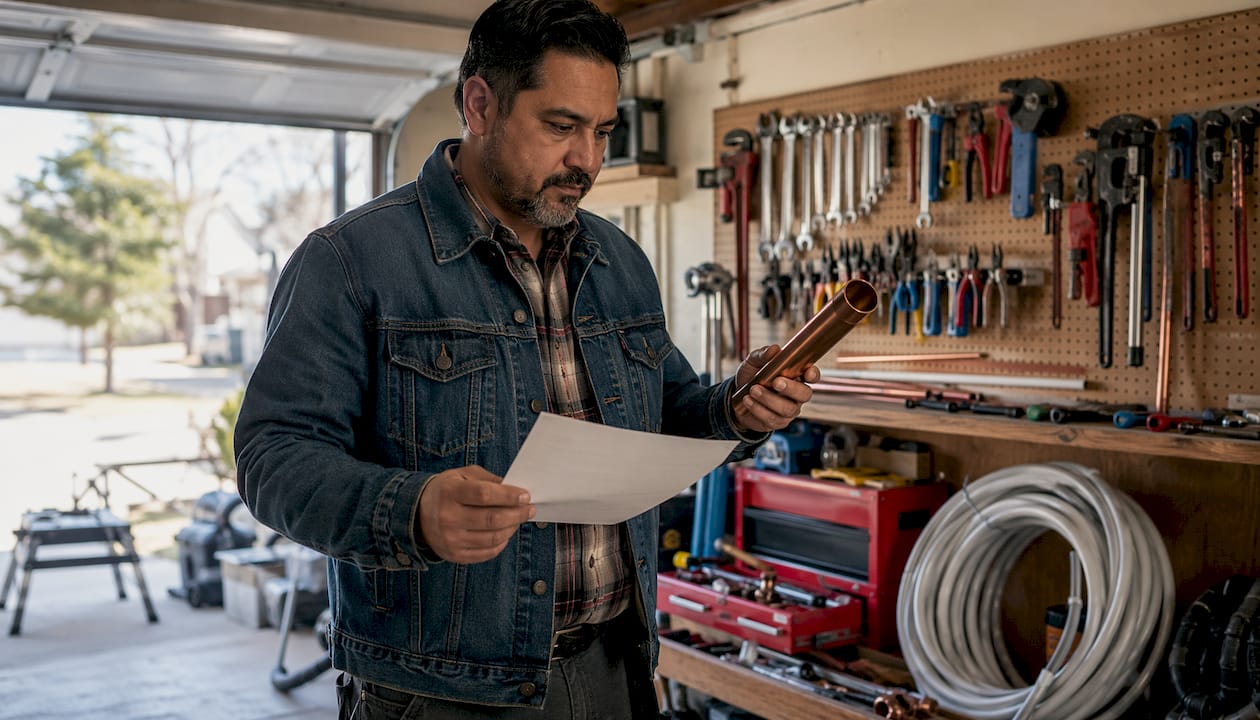
TL;DR:
- A comprehensive plumbing checklist includes specific pipe types, essential tools, consumables, safety gear, and extra material to prevent shortages. Conduct a full walkthrough of your home’s plumbing to identify pipe materials, shutoff valves, and potential issues before starting repairs or upgrades. Keep photo records, measure precisely, and stock a well-organized emergency kit and surplus supplies to ensure smooth project completion.
Every home plumbing project starts with the same problem: missing one part mid-job. A complete plumbing materials checklist prevents that. Before any repair or installation, stock these core items.
Pipe materials (identify what’s already in your home first):
- PVC (Polyvinyl Chloride): lightweight, used for drain lines and waste systems
- PEX (Cross-linked Polyethylene): flexible, preferred for water supply lines
- Copper: durable, suitable for both hot and cold water lines
- Galvanized steel: found in older homes, prone to interior rust
- ABS (Acrylonitrile Butadiene Styrene): black plastic, used for vent and drain systems
Essential hand tools:
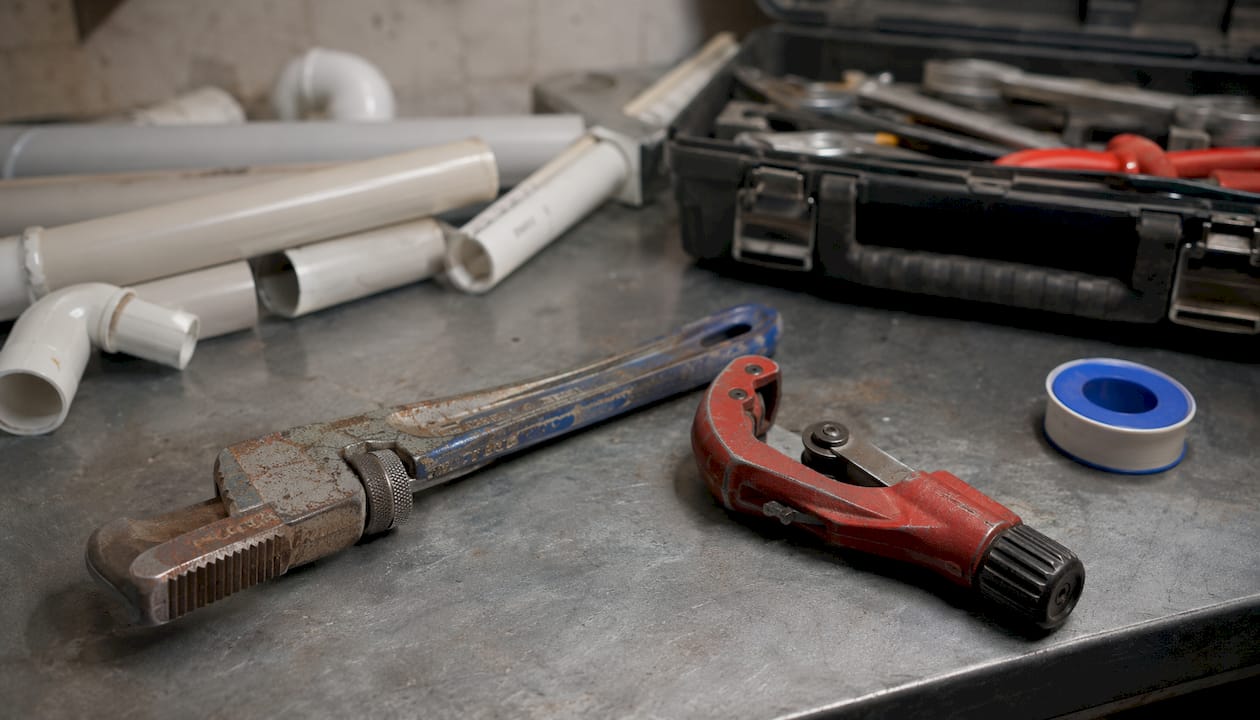
- Pipe wrench
- Basin wrench for faucet work in tight spaces
- Adjustable wrench
- Pipe cutter or tubing cutter
- Hacksaw with spare blades
- Channel-lock pliers
- Hand auger for clearing drain blockages
Critical consumables and repair supplies:
- PTFE (Teflon) tape for sealing threaded joints
- Plumber’s putty for fixture seals
- Washers, O-rings, and cartridges for faucet repair kits
- Compression fittings and transition fittings
- Spare supply lines and flexible hoses
- Shutoff valves (angle stops and straight stops)
- Silicone caulk
Safety equipment:
- Safety goggles
- Work gloves
- Knee pads
This checklist covers both inspection and active repair tasks. Keep it on hand before any supply run.
What does a plumbing system walkthrough cover?
A full walkthrough of your home’s plumbing before any project saves time and prevents wrong purchases. Start at the water meter and main shutoff valve, then trace supply lines through the house.
- Locate the main shutoff valve. Typically found near the water meter, in the basement, or in a utility room. Know exactly where it is before touching any pipe.
- Identify pipe materials throughout the house. Look for color and texture: white or gray for PVC, orange or red flexible tubing for PEX, shiny metal for copper, and dark threaded pipe for galvanized steel.
- Check under sinks, behind toilets, and near the water heater for individual shutoff valves. Note which ones are ball valves (quarter-turn) versus gate valves (multi-turn).
- Inspect visible pipe joints and connections for mineral deposits, green corrosion on copper, or rust staining on galvanized steel.
- Test each shutoff valve by turning it fully off and back on. Valves that haven’t moved in years can seize or leak when operated.
- Document everything with photos. High-resolution photos of pipe connections, valve locations, and fitting types make supply runs faster and reduce wrong purchases.
Common pitfalls to avoid:
- Overlooking shutoff valves hidden inside vanity cabinets or behind access panels
- Assuming all pipes are the same material throughout the house (many older homes have mixed systems)
- Skipping the water heater area, where supply and pressure relief connections often show early wear
- Failing to note pipe diameters before buying fittings
A basin wrench and pipe cutter are useful during inspection for removing corroded fittings or accessing tight spaces under sinks. Keep a notepad or phone notes app open during the walkthrough.
How do you assess water heaters, drains, and water quality systems?
Water heater inspection
Water heaters give clear signals when they need attention. Check the unit for:
- Rust or moisture around the base (indicates a slow leak)
- Sediment rumbling during heating cycles (common in tank-style units after several years)
- The pressure relief valve, which should lift and release freely
- The anode rod, a sacrificial metal rod inside tank heaters that corrodes instead of the tank lining
Tank water heaters use steel with glass lining and a magnesium or aluminum anode rod. Tankless units rely on heat exchangers that can scale up in hard-water areas. A pressure gauge helps verify that incoming water pressure stays within the manufacturer’s specified range.
Drain and sewer assessment
Drain lines in most homes use PVC or ABS. Older properties may still have cast iron or clay sewer laterals. Check for:
- Slow drains across multiple fixtures (a sign of a main line issue, not just a local clog)
- Gurgling sounds after flushing (indicates venting problems)
- Visible cracks or joint separation in exposed drain pipes in the basement or crawl space
For drain troubleshooting, a hand auger handles most sink and tub clogs. Main-line blockages typically require a drum machine or professional inspection camera.
Water quality and treatment systems
Whole-house filters, under-sink units, and water softeners each require periodic maintenance. Keep replacement filter cartridges and O-rings on hand. Softeners need resin bed checks and salt replenishment. A basic water test kit identifies hardness, chlorine levels, and pH, which guides filter selection.
Pro Tip: If you notice white scale buildup on faucet aerators or showerheads, test your water hardness before buying a softener. Scale forms when hardness exceeds 7 grains per gallon, and a simple test strip confirms whether treatment is needed.
What should a plumbing maintenance plan include?
Routine maintenance prevents the majority of plumbing failures. A basic annual schedule covers:
- PTFE tape and plumber’s putty: replace on any threaded connection that shows moisture or mineral staining
- Faucet washers and O-rings: inspect annually; replace when faucets drip or handles feel stiff
- Shutoff valves: exercise (open and close) once per year to prevent seizing
- Water heater anode rod: check every two to three years; replace when more than 50% corroded
- Supply lines under sinks: inspect flexible braided hoses for bulging or cracking; replace every five to seven years regardless of visible condition
Safety precautions when handling plumbing materials:
- Always shut off the water supply before opening any fitting
- Wear goggles when cutting pipe or working with solvent cement
- Use gloves when handling pipe dope, flux, or solvent-based primers
- Ventilate the work area when soldering copper or applying PVC cement
Storage best practices: Store PTFE tape, plumber’s putty, and rubber washers away from direct sunlight and temperature extremes. PEX tubing should be kept coiled and covered to prevent UV degradation. Solvent cements and primers have shelf lives printed on the container; discard expired stock.
Emergency supply kit essentials: Keep at minimum one roll of PTFE tape, a tube of plumber’s putty, two spare supply line hoses, a set of assorted washers and O-rings, a pipe repair clamp, and a working shutoff valve key. Post the location of your main shutoff valve somewhere visible. A basic emergency kit prevents a minor leak from becoming a flooded room while you wait for professional help.
Call a professional when you see sewage backing up into multiple fixtures, water pressure that drops suddenly throughout the house, or any sign of a slab leak (warm spots on floors, unexplained water bills).
What do experts recommend for efficient plumbing supply runs?
Preparation before a supply run cuts errors and extra trips. Carry photos and measurements of the existing setup, and bring the old part when it’s safe to remove. A photo of the connection point tells a supply counter more than a verbal description.
Key insight: When mixing different pipe materials, use transition fittings designed for that specific combination. Direct gluing or threading copper to PEX, or PVC to copper, without the correct adapter causes leaks and mechanical failures. SharkBite push-fit fittings work across copper, PEX, and CPVC for quick connections, but are best reserved for accessible locations.
The difference between a homeowner toolkit and a professional inventory comes down to diagnostic tools. Professionals use sonde cameras paired with locators to find buried pipe problems without excavation. For homeowners, a basic borescope inspection camera (available for under $50) handles most under-sink and accessible drain inspections.
Pro Tip: Before any supply run, photograph the pipe, the fitting, and the label on any existing valve or fixture. Store these in a dedicated phone album labeled by room. When you’re standing in the aisle, you’ll have every measurement and connection type at your fingertips.
Maintain a small emergency stock: two spare shutoff valves, a pipe repair clamp, and a roll of self-fusing silicone tape. Water damage from a burst supply line can cause significant structural harm in under an hour.
How much material do you need for different project types?
Quantities depend on project scope, but a consistent rule applies: add a 5–12% surplus to all pipe and fitting quantities to account for cutting waste and measurement errors. Skipping this buffer is the most common cause of mid-project supply shortages.
| Project type | Pipe quantity guidance | Fittings buffer |
|---|---|---|
| Single fixture repair | Measure run length, add 5–12% surplus | Buy 2 extra of each fitting type |
| Bathroom remodel | Calculate per fixture, add 12% for waste | Add tees, elbows, and couplings for each branch |
| Full repipe (one floor) | Linear footage of all runs plus 10% | Add a fitting surplus for branch points |
Always use consistent units throughout a project. Mixing inches and feet when ordering pipe lengths is a frequent source of procurement errors. Write measurements in one unit and confirm them twice before ordering.
What brands and quality grades should you buy?
For hand tools, RIDGID and Milwaukee are the standard references for pipe wrenches, tubing cutters, and drain machines. Channellock pliers (models 440 and 460) are the established choice for channel-lock work. For DIY plumbing tools, a mid-grade set from either brand handles most homeowner tasks without the cost of professional-tier inventory.
For pipe materials, copper from reputable mill sources meets ASTM B88 standards for water service. PEX tubing rated to ASTM F876 or F877 is the baseline for residential supply lines. PVC and ABS fittings should carry NSF/ANSI 14 certification for potable water or drain applications. Oatey is a widely available brand for solvent cements, flux, and solder; their lead-free solder meets NSF/ANSI 61 for drinking water systems.
For fittings, brass ball valves outperform plastic in longevity and shutoff reliability. Avoid unbranded compression fittings for permanent installations; they tend to weep at the ferrule over time.
What are the sustainable plumbing material options?
PEX tubing uses less energy to manufacture than copper and generates no mining byproduct. It also resists freeze damage better than rigid pipe, reducing the likelihood of burst pipes and the waste that follows. For drain lines, recycled-content PVC is available from select manufacturers and carries the same NSF/ANSI 14 rating as standard PVC.
Low-flow fixtures certified by WaterSense (an EPA program) reduce household water consumption without requiring pipe changes. Replacing standard aerators with WaterSense-rated models on existing faucets is the lowest-cost sustainable upgrade available. For water heaters, heat pump water heaters use significantly less electricity than standard electric resistance units and qualify for federal tax credits under current energy efficiency programs.
Copper, while energy-intensive to produce, is fully recyclable and has an indefinite service life when properly installed. Reclaimed copper pipe from demolition projects is a viable option for non-potable applications. For homeowners focused on long-term material choices, the plumbing standards guide covers current certification requirements for both conventional and sustainable materials.
Key Takeaways
A complete plumbing materials checklist requires the right pipe types, hand tools, consumables, and safety gear before any project begins, with a 5–12% material surplus built into every quantity estimate.
| Point | Details |
|---|---|
| Stock the five pipe types | PVC, PEX, copper, galvanized steel, and ABS each serve specific functions; identify what’s in your home first. |
| Carry photos and measurements | Bring close-up photos and exact measurements to every supply run to avoid wrong fittings and extra trips. |
| Add a material surplus | Add some material surplus when ordering pipe and fittings to cover cutting waste and measurement errors. |
| Use transition fittings when mixing materials | Direct connections between copper, PEX, and PVC without proper adapters cause leaks and failures. |
| Keep an emergency kit stocked | PTFE tape, spare supply lines, a repair clamp, and shutoff valve access prevent minor leaks from escalating. |

Santehnikasveikals stocks a full range of plumbing supplies and fixtures for homeowner and contractor projects, from pipe fittings and shutoff valves to water heaters and drain components. Browse the catalog to source everything on your checklist in one place.
Atstājiet komentāru