






































Get Grout Right in Latvia: 1.5–3mm Tile Joint Checklist

The safest everyday choice is a mid-tone grout close to your tile shade, or one shade darker. Use a matching color for a seamless, continuous surface, choose contrast only when you want the tile pattern to stand out, and switch to epoxy grout in showers, kitchens, and anywhere grease or standing water is a regular problem. Always test a cured sample before you commit.
TL;DR:
- Matching grout to tile color creates a seamless look, especially for large-format or textured tiles, while contrasting grout highlights tile patterns and structure.
- Epoxy grout offers superior stain and water resistance, making it ideal for showers, kitchens, and wet areas, whereas cementitious grout requires sealing for durability in dry indoor spaces.
- Mid-tone gray or beige grout hides stains, grime, and uneven application better than white or black, which show water spots or mineral deposits more clearly.
- Proper mixing, curing, and sealing are essential to prevent uneven or patchy grout, with minor color inconsistencies often correctable by applying a grout colorant.
- Testing grout samples in real lighting and at actual joint width before large application ensures color accuracy and helps avoid costly errors.
Table of Contents
- What Is Flīžu Šuvju Krāsa and Why It Changes the Whole Room
- Grout Types and How They Affect Color and Performance
- How to Choose a Grout Color for the Effect You Want
- Maintenance, Staining, and Durability by Grout Color
- Common Causes of Uneven or Patchy Grout Color and How to Fix Them
- How to Test Grout Colors Before You Commit
- Santehnikasveikals.lv Installer Checklist and Practical Purchase Guidance
- Balancing Design Intent with Long-Term Upkeep
- Get Your Grout Right the First Time With Santehnikasveikals.lv
- Sources
What Is Flīžu Šuvju Krāsa and Why It Changes the Whole Room
Flīžu šuvju krāsa, or tile grout color, is the shade of the cement or resin filling the joints between your tiles. It sounds like a minor detail until you realize grout lines cover a surprising percentage of a finished floor or wall, especially with smaller tiles or mosaics. The right choice can make a bathroom feel twice as large or turn a plain white subway tile into a graphic feature wall. The wrong choice shows every water spot, every hairline crack in the mix, and every year of foot traffic.
Grout color also interacts with light in ways tile color alone doesn’t. A pale gray joint can look silvery under morning sun and almost blue under evening bulbs. That’s why professionals treat grout selection as its own decision, not an afterthought tacked onto tile shopping.
Grout Types and How They Affect Color and Performance
Not all grout behaves the same way once it’s mixed, applied, and cured, and the type you pick limits which colors will actually hold up.
Cementitious grout is the standard choice for most residential floors and walls. It’s porous, which means it accepts pigment well and offers a huge range of tones, but that same porosity lets it absorb moisture, oil, and grime over time. Unsealed cementitious grout in a lighter shade will gray out faster than the same grout sealed properly.
Epoxy grout uses resin instead of cement. It’s non-porous, so it resists staining and holds its original pigment far longer, but it costs more, cures fast (so DIYers have a shorter working window), and can look slightly plastic-like compared to cementitious finishes.
Specialty variants worth knowing:
- Pigmented sealed grout: cementitious grout with a color sealer baked in for extra stain resistance.
- Granular vs. non-sanded formulas: sanded grout suits joints over 3mm and takes color slightly differently than smooth, non-sanded mixes used for narrow joints.
- Grout-seal hybrids: pre-sealed products marketed for kitchens and high-traffic entries.
For sustained wet, hot, or greasy conditions, such as a shower pan or the wall behind a stove, epoxy grout is the more reliable pick because it’s non-porous and stain-resistant. For everything else indoors, cementitious grout with a sealer applied after full cure does the job at a lower cost.
How to Choose a Grout Color for the Effect You Want
Every grout decision comes down to one question: do you want the tile and joint to disappear into each other, or do you want the joint to draw the eye?
- Matching grout keeps the tile reading as one continuous surface. Designers recommend this approach specifically for large-format tiles and for small, heavily textured tiles, where a contrasting line would either look choppy or fight with the surface texture.
- Contrasting grout emphasizes the tile’s shape and the pattern it creates, which works well with mosaics, herringbone layouts, and classic subway tile. It also gets busy fast in small rooms or with heavily veined stone, so it’s worth testing in situ before you order a full pallet.
- Complementary mid-tones split the difference. A grout one or two shades off from the tile hides seams without vanishing entirely, and it’s the choice most installers reach for when a client can’t decide.
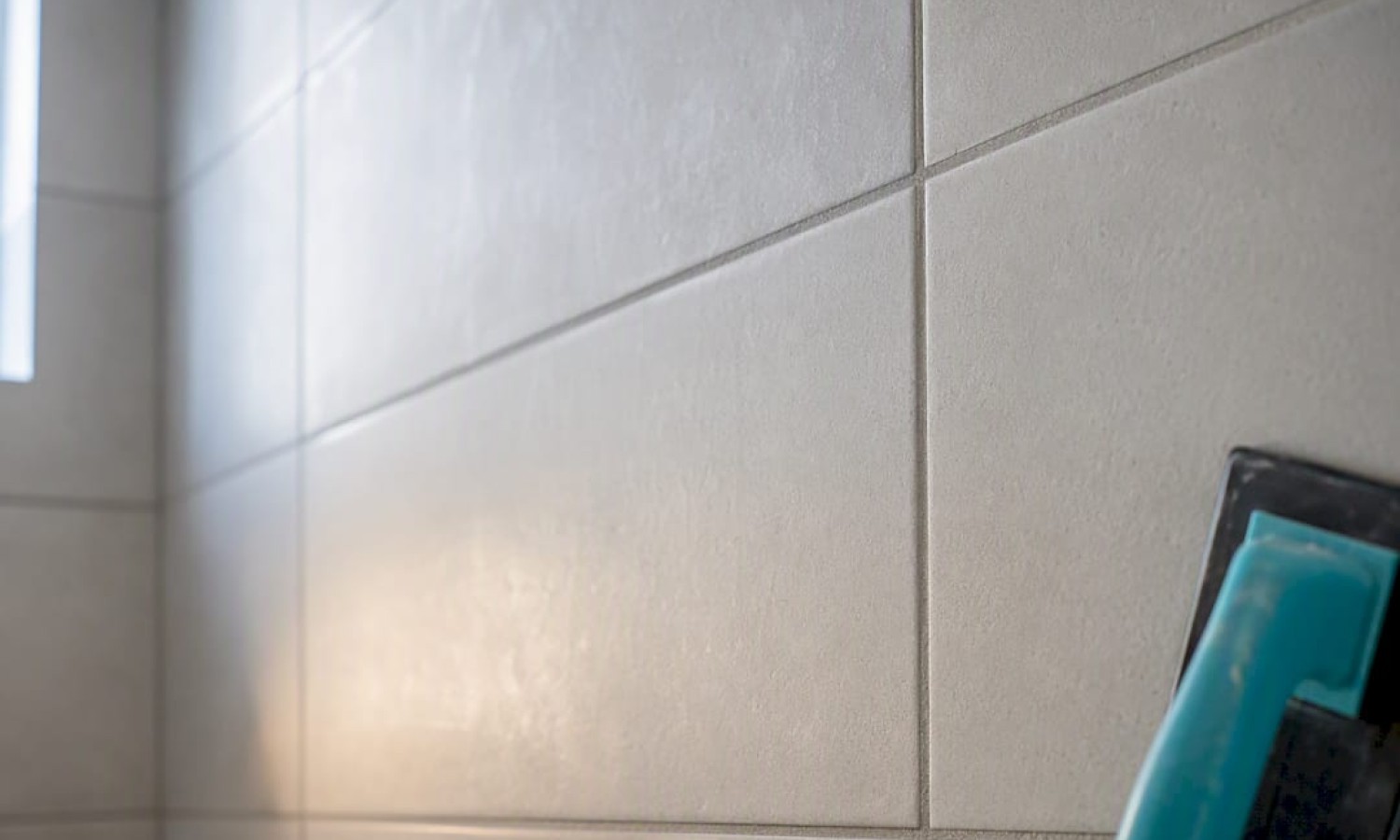
Joint width matters here too. Narrow joints on rectified tile (roughly 1.5 to 2mm) read almost invisible regardless of color, while wider floor joints (3mm or more) make the grout color a genuine design element on its own. Lighting changes everything as well: a grout that looks warm gray in a showroom with daylight bulbs can shift cooler under household LEDs at home.
Pro Tip: If you’re torn between matching and contrasting, buy the mid-tone sample first. It’s the one choice that rarely looks wrong later, even if your tile or paint color changes.
Maintenance, Staining, and Durability by Grout Color
Color choice isn’t just aesthetic. It determines how much upkeep your floor or wall will demand for the next decade.
Mid-tone grays, beiges, and greige tones hide everyday dirt and mask minor mixing inconsistencies far better than pure white or jet black. White grout shows every coffee spill and grease mark within weeks in a kitchen. Black grout, meanwhile, often develops a dusty, faded look as mineral deposits from hard water settle into the surface, which is more noticeable against dark pigment than against a mid-tone.
Maintenance basics by grout type:
- Cementitious grout needs sealing after it fully cures and should be re-sealed periodically in humid rooms like bathrooms.
- Epoxy grout skips sealing altogether and holds up best exactly where grease and moisture are constant, such as shower enclosures and kitchen splashbacks.
- Weekly cleaning with a pH-neutral cleaner keeps either type looking fresh longer than harsh acidic products, which can strip sealer prematurely.
A quick reality check on color and cleaning cycles: darker grout hides stains but shows dried mineral scale, while lighter grout hides scale but shows stains. Neither color is maintenance-free. The mid-tone compromise simply spreads the visibility problem thinner.
Common Causes of Uneven or Patchy Grout Color and How to Fix Them
Patchy grout usually indicates installation issues rather than a poor color choice.
- Inconsistent water ratio during mixing creates lighter and darker patches once the grout cures.
- Uneven mixing time leaves pigment unevenly distributed through the batch.
- Wiping tools too aggressively or too soon pulls pigment unevenly off the surface.
- Fast or uneven drying conditions, like a sunny window on one side of a room, cause visible tone shifts across a single floor.
These small variations in water ratio and curing conditions are the most common cause of patchy grout, and mid-tone colors hide the resulting unevenness better than stark white or black.
If patchiness is minor, a grout colorant or refresher applied evenly across the whole surface can correct it without a full teardown. If the discoloration is deep, uneven, or the grout is crumbling, a full regrout is the more honest fix. Preventive habits that cut this risk at install time: measure water precisely, mix for the full recommended time, wipe tools consistently across the whole job, and avoid installing in direct sun or near heating vents while the grout cures.
How to Test Grout Colors Before You Commit
Never choose grout from a screen or a tiny swatch under store lighting. Follow a short, repeatable process instead.
- Request or buy physical color cards and small sample pots from your supplier. Manufacturer charts like Kiilto’s present curated tone ranges specifically so you can test a real sample in your own space.
- Mix a small batch and apply it in a scrap joint at the actual width you plan to use, since joint width changes how much grout color you actually see.
- Let the sample cure fully, at least 48 hours, before judging the color. Wet grout always looks darker than cured grout.
- View the cured sample at different times of day and under your home’s actual light bulbs, not the store’s.
- Photograph the sample and record its batch number, so you can reorder the exact match later if you need more.
Digital tools that calculate color difference, sometimes called Delta E, can help quantify how close a grout shade is to your tile, but they’re a supplement to the physical sample, not a replacement for it.
Santehnikasveikals.lv Installer Checklist and Practical Purchase Guidance
Before you order full bags or buckets, run through this checklist:
- Match joint width to tile type: 1.5 to 2mm for rectified large-format tile, 2 to 3mm for standard wall tile, 3mm or wider for floors and natural stone.
- Choose grout type by room: epoxy for showers and kitchen backsplashes, sealed cementitious for dry-use walls and floors.
- Mix small batches consistently and measure water every time, not by eye.
- Seal cementitious grout after full cure, then reseal annually in bathrooms.
The store stocks both cementitious and epoxy grout alongside sealers and installation accessories, so you can compare products side by side before buying. If you’re unsure which type or shade fits your project, consider seeking technical guidance before committing to a full order.
Balancing Design Intent with Long-Term Upkeep
Matching grout is the right call when a client wants low maintenance and a calm, unified room. Contrast earns its place when someone genuinely loves the graphic look and is willing to clean grout lines more often to keep them crisp.
My rule of thumb: pick a color you’d still be happy with in five to ten years, not just on installation day. Trends fade. Grout doesn’t move once it’s in the joint.
— Renate
Get Your Grout Right the First Time With Santehnikasveikals.lv
Guessing at grout color from a small swatch is how most regret projects start. The store carries both epoxy and cementitious grout options side by side, along with sealers suitable for grout maintenance, so you can compare technical specs and pricing in one place instead of hunting across multiple suppliers.
If your project includes wet-area fixtures too, browse the store’s bathroom fittings and heating system components while you’re planning material orders, since renovation projects rarely stop at tile. Order your grout and sealer together, request technical advice from the team if you’re unsure which type suits your room, and get your color sample tested in real light before the whole job goes ahead.
Sources
- How to Choose the Perfect Grout Color, According to a Designer
- How to Choose Grout for Your Tiles | La Fabrico Tile Showroom
- Grout Color Guide: How to Choose the Perfect Grout
- Flīžu šuvju masu krāsu toņi — Kiilto
Atstājiet komentāru