











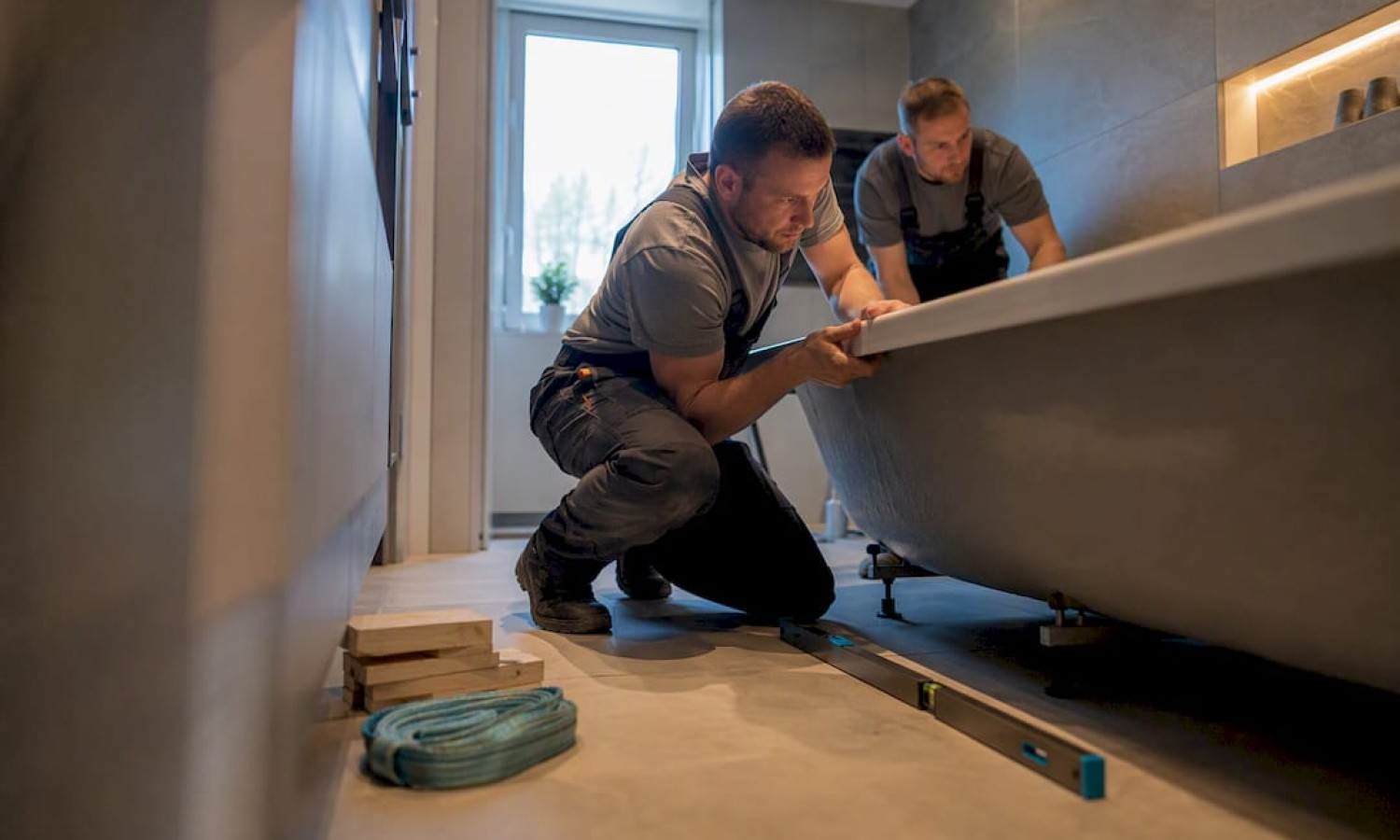

€150 to €1,200: Itemized Bathtub Installation Costs in Latvia
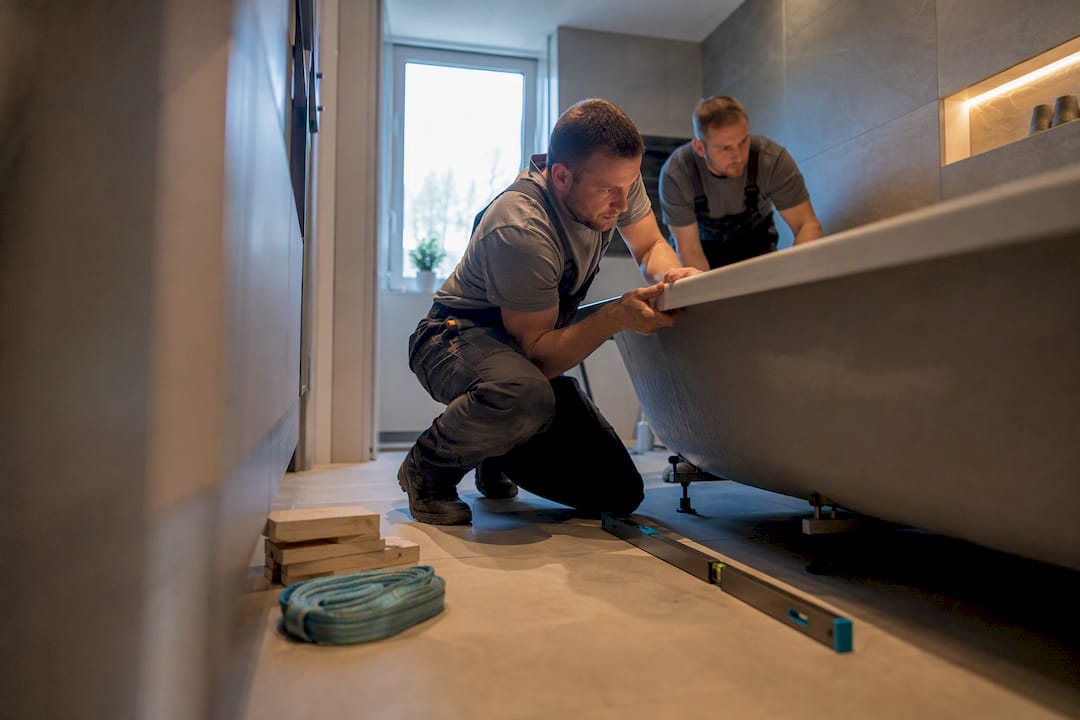
Expect somewhere between €150 and €1,200 for professional bathtub installation in Latvia, depending on tub weight, plumbing changes, and demolition needs. A plain acrylic swap generally costs less; a cast-iron or whirlpool tub with pipe work usually costs more. Before signing anything, get two or three written quotes covering the same scope so you compare apples to apples.
TL;DR:
- Bathtub installation costs in Latvia range from €150 to €1,200, largely influenced by tub weight, plumbing alterations, and finishing work.
- Heavy tubs like cast-iron or whirlpools, especially when tiling is involved, tend to increase labor and handling costs significantly.
- Plumbing modifications and demolition access, such as moving drains or removing built-in tubs, can double or triple the price of basic installation.
- Proper planning includes getting itemized written quotes, testing plumbing connections, and confirming scope details before work begins.
- Measuring existing drain positions and choosing appropriately sized tubs can prevent costly delays and unexpected additional modifications.
Table of Contents
- How Much Does Bathtub Installation Cost in Latvia?
- What Affects the Final Price?
- What’s the Installation Timeline for a Standard Apartment?
- How Do You Get an Accurate Quote?
- Price Ranges by Tub Type and Job Complexity
- What Should You Check Before Accepting the Work?
- What Homeowners Usually Miss
- Need the Right Tub or Fittings Before You Book an Installer?
- Sources
How Much Does Bathtub Installation Cost in Latvia?
Local service pages break the job into per-task lines rather than one flat number, which actually makes budgeting easier. Sadzivesdarbi shows vannas uzstādīšana (bathtub installation) starting from €150, with santehnikas demontāža (fixture removal) from €60. On the labor-only end, 24h-serviss quotes vannas demontāža at €30 and standard acrylic or steel tub installation around €50, with whirlpool tub mounting closer to €80.
Three scenarios cover most Latvian apartments. A simple like-for-like swap (same size, same drain position) stays near the bottom of the range. Add plumbing modifications, like moving the drain or replacing an old pipe stack, and the price climbs into the middle band. A heavy cast-iron or whirlpool tub with new tiling around it lands at the top.
| Scenario | Typical price (EUR) | Usually included |
|---|---|---|
| Simple swap, same layout | €150–€250 | Removal, install, hook-up |
| Swap with plumbing changes | €250–€1,200 | Above plus pipe/drain work |
| Heavy or whirlpool tub, tiling involved | €150–€1,200 | Above plus reinforcement, sealing, tile repair |
What Affects the Final Price?
Tub material drives labor time more than almost anything else. Acrylic tubs are light and easy for two installers to maneuver; cast-iron and stone-resin tubs (like acrylic-stone composites) can weigh well over 100 kilograms and often need extra hands or floor reinforcement. Climateplus notes explicitly that heavier tubs carry higher handling and installation costs, which matches what most Riga plumbers will tell you upfront.
Access matters just as much as the tub itself. A fifth-floor walkup with no elevator, a narrow bathroom door, or a tub that has to come out in pieces all add time, and time is what you are paying for.
A few cost drivers worth flagging before you request quotes:
- Plumbing changes: moving a drain or swapping an old cast-iron stack for PVC can double the job’s cost.
- Demolition access: removing a built-in tub surrounded by tile usually costs more than pulling a freestanding one.
- Finishing work: tile repair, silicone sealing, and wall patching are frequently quoted separately, not bundled into “installation.”
- Disposal: hauling away the old tub sometimes carries its own line item, especially for cast iron.
Pro Tip: Ask whether the quote includes tile repair around the tub’s edge. Installers often treat this as a separate job, and it’s one of the most common surprise charges homeowners report after the fact.
What’s the Installation Timeline for a Standard Apartment?
Bathtub work in Latvia typically happens in two distinct phases, and understanding the split helps you avoid scheduling headaches.
- Rough-in stage (melnie darbi): plumbers install or reposition the water supply and drain lines before any tiling begins. Skipping careful work here is the single biggest cause of expensive rework later.
- Final installation: once tiling is done, the tub itself gets set, leveled, connected to the drain and mixer, and sealed. Sadzivesdarbi.lv puts a standard mounting cycle at one to two working days when the rough-in and water outlets are already prepared.
- Testing and handover: the installer runs a pressure test and walks through the finished work with you before calling the job complete.
Before installers show up for the final stage, make sure the drain is capped and tested for leaks, hydroinsulation under the tiles has cured properly, and the bathroom is cleared of debris. Skipping that prep is what turns a two-day job into a four-day one.
How Do You Get an Accurate Quote?
A vague verbal estimate is the fastest way to end up arguing about money halfway through the job. Ask for a written scope that spells out exactly what’s covered.
Require these items in writing before you agree to anything:
- Removal and disposal of the old tub, itemized separately.
- Hook-up to existing or modified plumbing, named explicitly.
- A pressure test on the new connections, with results documented.
- A written warranty period on labor, separate from any product warranty.
Worth asking directly: Who fixes it if a leak shows up in three weeks? Will the same person sign the acceptance protocol who did the work? Does the price change if the drain position needs adjusting once they open the wall?
Treat any of these as a warning sign: cash-only payment with no receipt, a quote with no line items (just one lump number), or a price dramatically below every other quote you’ve gotten with no explanation of what’s excluded. Comparing itemized line prices rather than a single bundled figure is the only reliable way to know you’re comparing the same job.
Price Ranges by Tub Type and Job Complexity
Matching your tub type to a complexity level gives you a realistic starting point before you even call anyone.
| Tub type | Complexity | Typical range (EUR) | Likely extras |
|---|---|---|---|
| Acrylic, standard size | Simple swap | €150–€250 | Minor sealant, disposal |
| Acrylic or steel | Plumbing changes | €250–€450 | Drain move, pipe patching |
| Stone-resin or cast iron | Simple swap | €150–€1,200 | Extra handling, reinforcement check |
| Whirlpool or heavy stone-resin | Complex, tiling involved | €150–€1,200 | Electrical hookup, tile repair, reinforcement |
These ranges assume a normal Latvian apartment bathroom, not a multi-story house with long pipe runs. If your building has old cast-iron stacks or the bathroom hasn’t been touched in decades, expect quotes toward the top of each band. Bring this table to your first call and ask the installer which row matches your job and why.
What Should You Check Before Accepting the Work?
Several quality checks should be done before the installer finishes, including pressure testing, ensuring no odors, proper drainage, sealing, and documentation with an acceptance protocol.
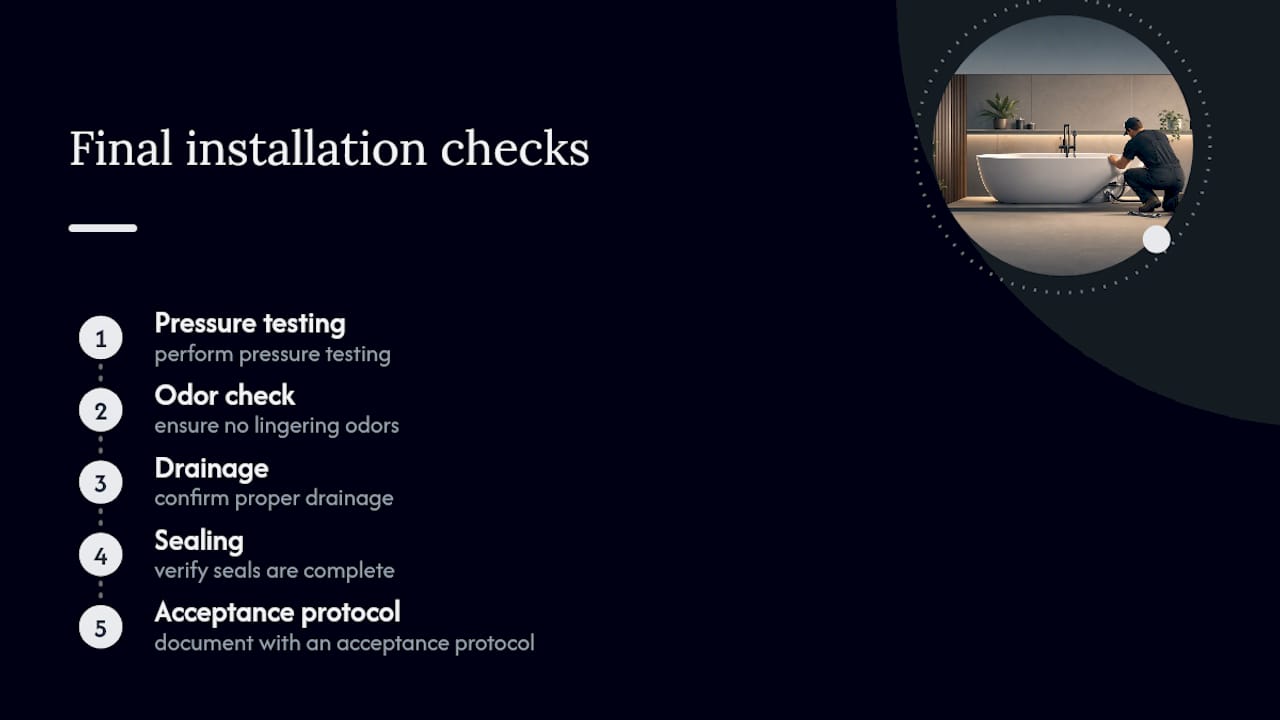
Local guidance on demolition and rework shows why this matters: fixing a failed installation after the fact often starts at €100 for demolition and €150 for reinstallation, on top of what you already paid. For deeper technical background on why these checks exist, Santehnikasveikals’ guide to plumbing standards walks through the reasoning installers should already know.
What Homeowners Usually Miss
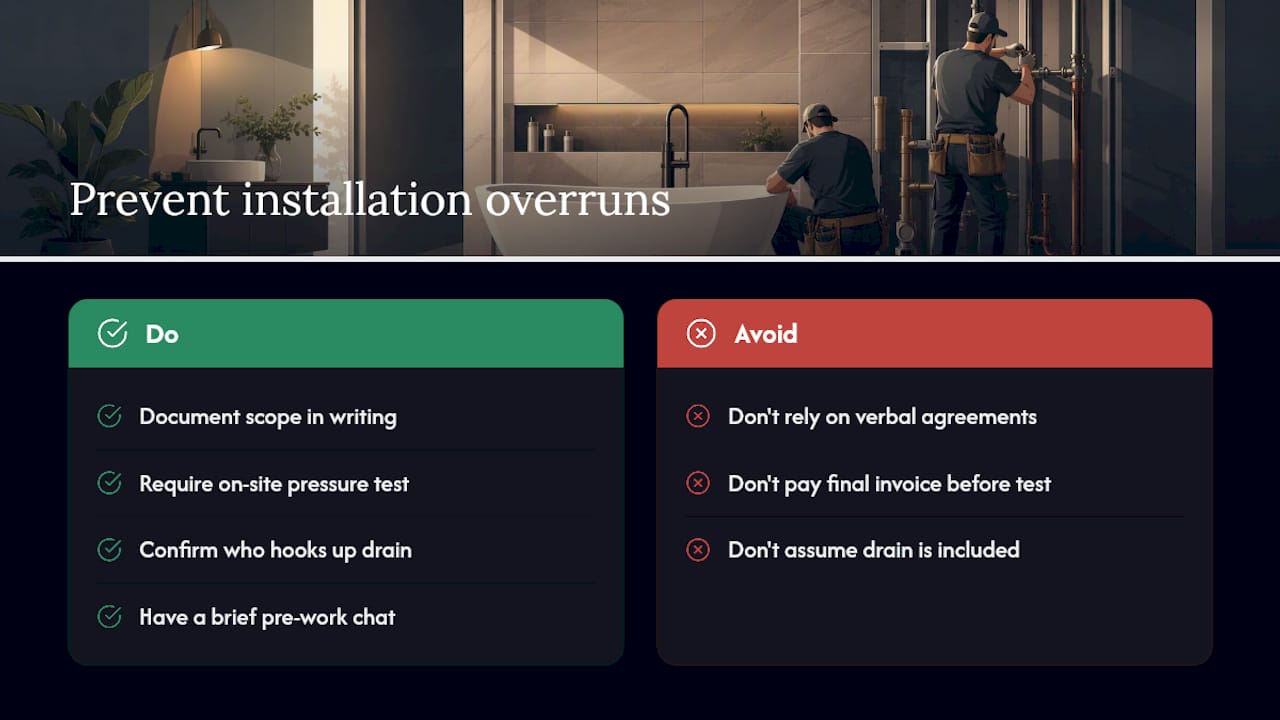
Most cost overruns in bathtub installation come from one gap: the scope was agreed on verbally, then reality showed up behind the wall. My rule is simple. Document the scope in writing, and don’t sign off until the pressure test happens in front of you, not after you’ve already paid the final invoice.
I’ve seen enough quote disputes to know the pattern: a homeowner assumes “installation” includes hooking up the drain, the installer assumes it doesn’t, and the disagreement surfaces only after the tile is already sealed around the tub. A ten-minute conversation before work starts would have cost nothing.
— Renate
Need the Right Tub or Fittings Before You Book an Installer?
Getting quotes squared away is only half the job. You still need a tub that fits your bathroom’s footprint and drain layout, and buying the wrong size is what turns a simple swap into a plumbing-change scenario you didn’t budget for. Santehnikasveikals carries acrylic-stone tubs like the Vanna Paa VARIO M, 1600x750mm and the larger Vanna Paa VARIO L, 1700x750mm, with delivery across Latvia.
Before ordering, measure your existing drain position and check whether your waste fittings match standard sizing. A mismatch here is exactly the kind of surprise that turns a €250 quote into a €450 one. If you’re unsure, contact Santehnikasveikals directly and describe your bathroom’s dimensions before you order.
| Product | Best for | What it covers |
|---|---|---|
| Vanna Paa VARIO M (1600x750mm) | Standard bathroom footprints | Acrylic-stone tub, standard drain fit |
| Vanna Paa VARIO L (1700x750mm) | Larger bathrooms or master baths | Acrylic-stone tub, wider soaking depth |
Browse the full bathtub catalog to compare sizes and materials before you finalize your installer’s scope.
Sources
- Dzīvokļa remonta izmaksas un cenas 2026. Cenrādis par m²
- Izcenojumi - Santehniķa izcenojumi - Santehniķa pakalpojumi
- Cenas - Climate plus
Atstājiet komentāru