



















































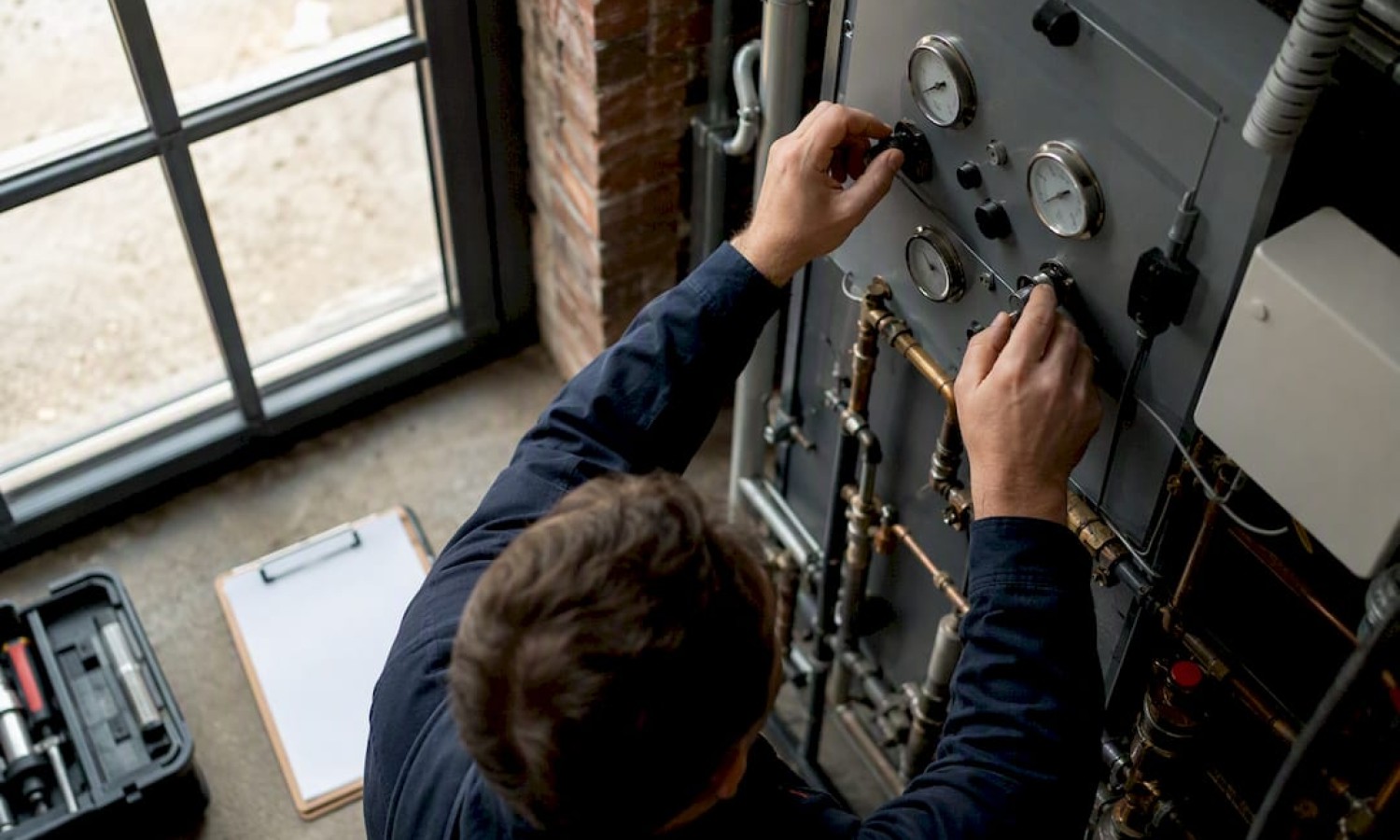

Building Utility Optimization: A Facility Manager’s Action Plan
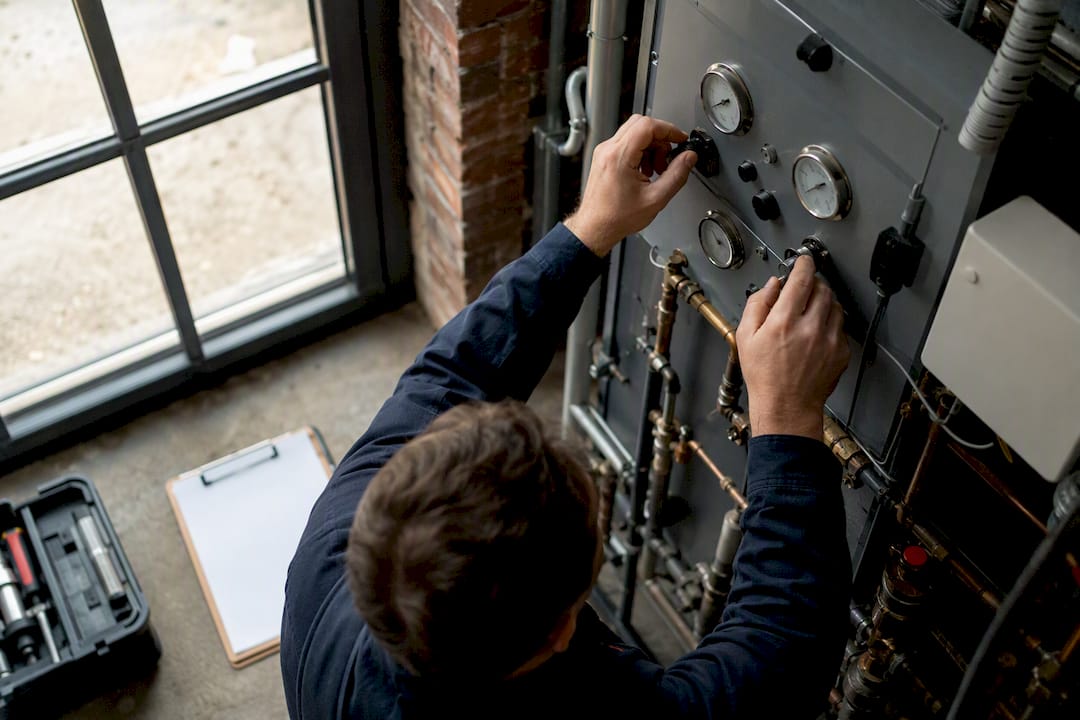
The fastest way to cut utility costs is to install submetering and analytics, tune your Building Management System (BMS) setpoints, switch to LED lighting where practical, and retune HVAC through VAV and VFD adjustments. These four moves usually deliver the largest savings for the least capital, and they work in almost any commercial building regardless of age or equipment mix.
- Install submetering and an energy monitoring dashboard (typical payback: months, not years)
- Retune BMS setpoints and schedules (often 5 to 10% energy reduction with zero hardware cost)
- Retrofit to LED lighting with occupancy controls (commonly 30 to 60% lighting energy savings)
- Retune VAV boxes and add VFDs to pumps/fans (often double-digit percentage savings on air and water distribution)
Combined lighting-and-HVAC packages can produce 5 to 22% whole-building energy savings and 13 to 22% annual cost savings, depending on the baseline used. Assign an energy lead to own the numbers, a controls technician to execute BMS changes, and someone from accounting to track utility bills against the baseline.
Key Takeaways
Optimizing building utilities works best when facility teams pair low-cost operational fixes, like BMS retuning and LED retrofits, with data-driven analytics and periodic retro-commissioning.
| Point | Details |
|---|---|
| Start with data | Install submetering and pull interval data before making any setpoint or equipment changes. |
| Fix operations first | Retune BMS schedules, VAV boxes, and pump VFDs before considering capital replacement. |
| Expect measurable ranges | Combined lighting-and-HVAC packages can save 5 to 22% of whole-building energy use. |
| Document for incentives | Keep pre/post interval data and commissioning reports to qualify for utility rebates. |
| Source smart | Santehnikasveikals supplies heating and plumbing components to support upgrade projects once priorities are set. |
Table of Contents
- How Do You Optimize Building Utilities With Low-Cost Fixes First?
- What HVAC Changes Deliver the Best Return?
- What Role Do Controls and Analytics Play in Utility Optimization?
- How Can Water Efficiency and Waste Reduction Cut Utility Costs?
- What Do Audits, Commissioning, and SEM Add to the Plan?
- How Does Demand Response Fit Into Utility Optimization?
- How Do You Finance Utility Upgrades With Incentives?
- How Should You Prioritize and Sequence Your Roadmap?
- What Does the Research Say About Realistic Savings?
- Where to Source Components for Your Utility Upgrades
- Sources
How Do You Optimize Building Utilities With Low-Cost Fixes First?
Before any capital project, capture the fixes that cost little and pay back fast. This is where most facility teams find their first real budget relief.
- Swap remaining fluorescent or incandescent fixtures for LEDs paired with daylighting sensors; expect 30 to 60% lighting energy reduction depending on the space and existing lamp type.
- Fix occupancy scheduling so HVAC and lighting don’t run in empty conference rooms or after-hours zones.
- Set back temperatures during unoccupied periods rather than holding a constant setpoint around the clock.
- Add plug-load controls and cheap occupancy or CO2 sensors to catch equipment left running.
Pro Tip: Before touching a single setpoint, pull two weeks of interval meter data as your before baseline, make the change, then pull another two weeks. Without that before/after window, you’re guessing at savings instead of proving them.
Retro-commissioning work consistently finds these operational fixes, often producing payback in under a year and mid-teens percentage annual savings once corrected. None of this requires new equipment. It requires someone actually looking at how the building runs versus how it was designed to run.
What HVAC Changes Deliver the Best Return?
HVAC and mechanical plant equipment typically represent the largest utility cost center in commercial buildings, and it’s also where the most misdiagnosed problems live. Start with tuning before you consider replacement.
- Setpoint and sequencing fixes: correcting simultaneous heating and cooling, fixing economizer dampers stuck in the wrong position, and retuning VAV terminal boxes.
- Chiller and boiler plant tuning: chilled-water reset, condenser water reset, and staged sequencing so plants don’t run at partial load inefficiently.
- Pump and fan VFDs: variable frequency drives on constant-speed pumps and fans routinely cut motor energy use by matching output to actual demand instead of running at full speed continuously.
- Heat pump electrification: worth evaluating when replacing aging boilers, but only after a load study confirms your electrical service can handle the added draw.
NREL’s research on building energy use points to operational and control improvements as a consistently underused source of savings, larger than most facility teams assume. The decision between retrofit and replacement usually comes down to remaining equipment life, current refrigerant compliance, and whether your electrical infrastructure can support electrification without a costly service upgrade. Don’t replace a chiller because it’s old. Replace it because a load study and a cost comparison say it’s the right call.
What Role Do Controls and Analytics Play in Utility Optimization?
A Building Management System (BMS) or Building Automation System (BAS) only optimizes what it can see. Submetering and analytics extend that visibility down to individual equipment, floors, or tenants, which is what turns raw data into fault detection and demand management.
- Establish minimum metering coverage: whole-building interval data first, then submeters on major HVAC plant, and occupancy or CO2 sensors in high-traffic zones.
- Connect analytics above the BMS using standard protocols like BACnet/IP, Modbus, or REST APIs, plus non-invasive submeters where rewiring isn’t practical.
- Run automated fault detection to catch stuck dampers, failed sensors, and simultaneous heating/cooling before they waste months of energy unnoticed.
- Use tariff and demand-charge analysis to identify when shifting load or adjusting schedules actually saves money under your specific rate structure.
- Analytics platforms that sit above legacy BMS hardware typically require several weeks of clean interval data before recommendations are reliable.
- Sensor density directly affects accuracy; sparse metering produces vague answers, not actionable ones.
Pro Tip: Commission your analytics the same way you’d commission new equipment. Start with conservative setpoint changes, verify the meter data reflects the change, then widen the adjustment. Skipping this step is how buildings end up with automation nobody trusts.
How Can Water Efficiency and Waste Reduction Cut Utility Costs?
Water and its associated heating costs get overlooked next to electricity, but leaks and inefficient fixtures quietly inflate both water and gas bills.
- Install low-flow fixtures, aerators, and sensor faucets in high-traffic restrooms to cut both water use and domestic hot water (DHW) heating load.
- Add smart leak sensors on major supply lines and water heaters; a slow leak behind a wall can run for months before anyone notices the bill.
- Review DHW distribution for oversized recirculation loops that waste heat.
- Segregate waste streams and reduce source waste at the operational level to lower hauling and disposal costs tied to utility service contracts.
What Do Audits, Commissioning, and SEM Add to the Plan?
An energy audit identifies opportunities. Commissioning verifies new equipment performs as designed. Retro-commissioning (RCx) does the same for existing buildings, and it’s often the highest-value step most facility teams skip.
- Energy audit: baseline assessment identifying where energy and water are being wasted.
- Commissioning: verification that newly installed equipment meets design intent.
- Retro-commissioning: systematic tuning of existing systems, frequently finding fixes with under-one-year payback.
Strategic Energy Management (SEM) turns a one-time audit into an ongoing discipline: an internal energy team tracks consumption against a regression-based baseline and adjusts continuously rather than waiting for the next audit cycle.
- Assemble stakeholders: energy lead, controls contractor, accounting, and maintenance staff.
- Schedule the audit or RCx assessment, typically four to eight weeks for a mid-size commercial building.
- Implement low-cost fixes immediately, then track results monthly through benchmarking tools like Portfolio Manager.
How Does Demand Response Fit Into Utility Optimization?
Demand response (DR) and peak management target the charges tied to your highest 15-minute usage spike, not just total consumption. These demand charges can represent a significant share of a commercial electric bill, separate from the energy you actually use.
- Pre-cool the building before a peak event, then coast on stored thermal mass during the event window.
- Shift non-critical loads, like water heating or equipment cycles, outside peak pricing periods.
- Temporarily set back HVAC and dim non-critical lighting during utility-called DR events.
Time-of-use and real-time tariffs change the math on pre-cooling and load shedding, sometimes dramatically. Program rules, baselines, and rebate eligibility vary by utility, so confirm the specifics with your provider before assuming a DR revenue stream exists.
How Do You Finance Utility Upgrades With Incentives?
Utility incentive programs, performance contracts, and on-bill financing exist specifically to lower the barrier to these upgrades, and most facility teams underuse them.
- Rebates: direct utility payments for qualifying equipment like LEDs, VFDs, and heat pumps.
- SEM accelerators: utility-run programs that help build internal energy management capacity, especially valuable for under-resourced facility teams.
- Performance contracts and on-bill financing: spread capital cost over the realized savings period.
Combined lighting-and-HVAC packages typically run 13 to 22% annual cost savings, though your baseline selection materially changes what counts toward incentive eligibility.
Pro Tip: Document everything before you touch a single system: interval meter data covering at least one full billing cycle, a clear pre/post measurement window, and any commissioning reports. Utilities and lenders reject claims without this paper trail, no matter how real the savings are.
How Should You Prioritize and Sequence Your Roadmap?
Sort every measure into one of three buckets: low-cost/high-impact quick wins, medium-term retrofits, and long-term capital projects requiring electrical or structural work.
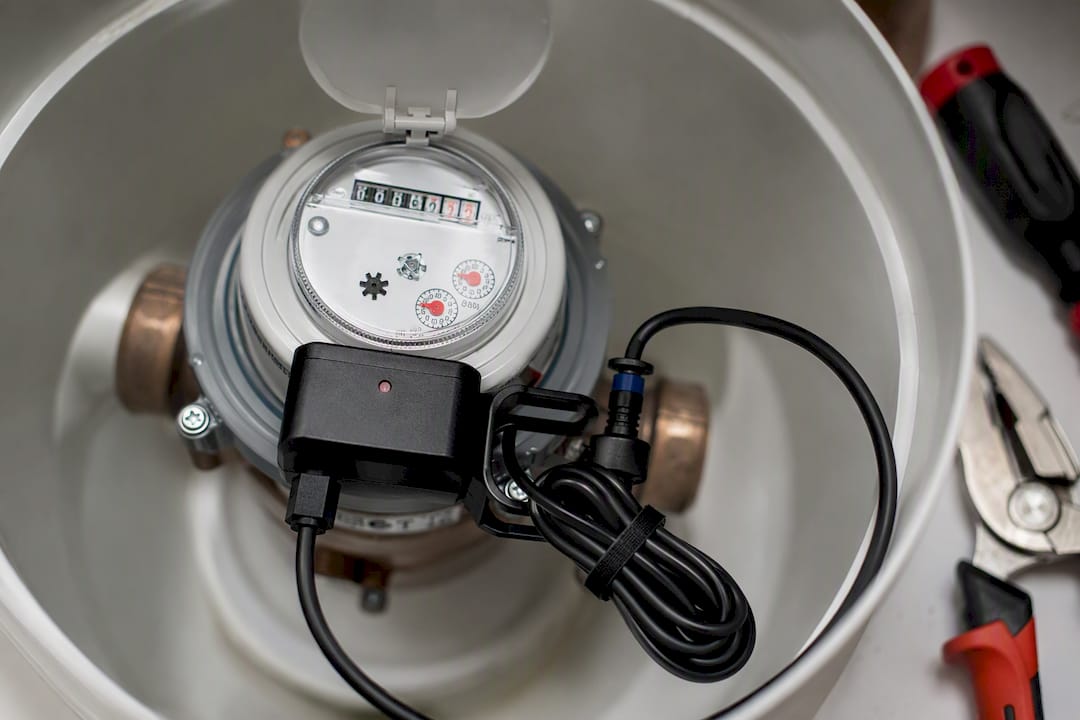
- Months 0 to 3: submetering install, BMS schedule fixes, LED retrofit in high-use areas. Energy lead and controls tech own this phase.
- Months 3 to 9: VAV/VFD retuning, chiller/boiler sequencing fixes, water fixture upgrades. Facility engineer coordinates with installers.
- Months 9 to 12: heat pump or electrification decisions, larger capital projects, and incentive applications. Building owner and accounting finalize budget and rebate paperwork.
Before ordering major electrical equipment, confirm service capacity with a load study and coordinate procurement with a qualified installer to avoid mid-project surprises.
What Does the Research Say About Realistic Savings?
Multi-technology retrofit packages combining lighting and HVAC measures produce 5 to 22% whole-building energy savings in utility program analyses, with the range driven largely by baseline assumptions.
- Retro-commissioning alone often reaches mid-teens percent annual savings with fast payback.
- EIA’s commercial building data shows why benchmarking matters at scale: commercial buildings account for a substantial share of total energy consumption.
A practitioner’s view on what actually moves the needle
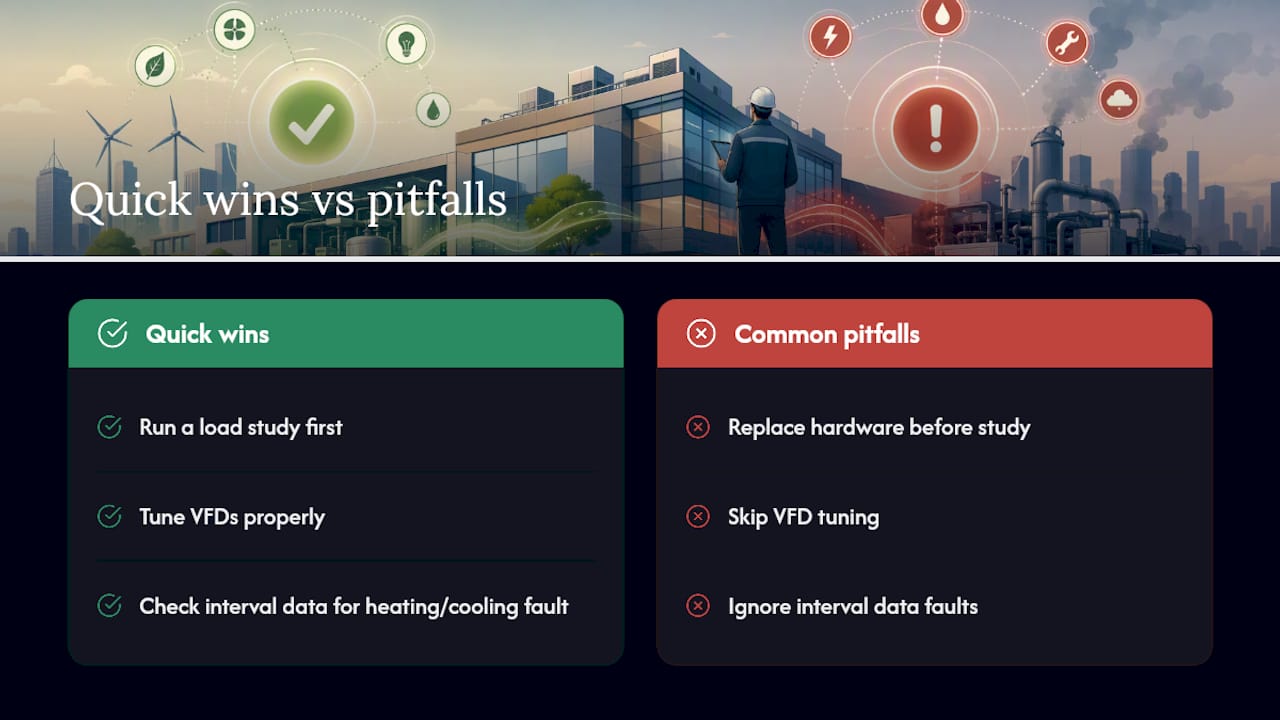
Two things I see facility teams get backward: they replace hardware before running a load study, and they skip VFD tuning because it seems minor. It isn’t. A poorly tuned VFD can erase most of its own savings. One building I reviewed found its biggest “quick win” wasn’t new equipment at all. It was correcting a simultaneous heating and cooling fault that two weeks of interval data exposed immediately.
Where to Source Components for Your Utility Upgrades
Once you’ve identified which fixes come first, whether that’s low-flow fixtures, efficient heating components, or leak sensors, sourcing the right parts matters as much as the plan itself. Santehnikasveikals carries plumbing fixtures, heating equipment, and installation accessories across the categories most facility teams need for these upgrades, from efficient faucets to electric heating units like the ADAX NEO electric radiator.

Browsing the catalog gives you a faster starting point than sourcing parts one supplier at a time, particularly for buildings juggling multiple upgrade categories at once. Pair any purchase with a qualified installer, and if you’re considering electrification or heat pump additions, confirm your electrical capacity with a load study before you buy. Start by checking the heating and plumbing product categories against your prioritized roadmap.
Sources
- ACEEE blog post on utility programs and SEM
- Multi-technology building system retrofits for utility incentive programs (eScholarship)
- Building Optimization | Focus on Energy
- ENERGY STAR facts and stats for buildings
Recommended
- Cost-Saving Plumbing Ideas That Actually Work in 2026 | Santehnikasveikals.lv
- Water Supply Planning Guide for Homes and Businesses | Santehnikasveikals.lv
- Plumbing Regulations 2026: What Builders Must Know | Santehnikasveikals.lv
- Benefits of Water-Saving Toilets for Your Home | Santehnikasveikals.lv
Atstājiet komentāru