





















































Why Comply With Plumbing Standards: A 2026 Guide

TL;DR:
- Compliance with plumbing standards ensures systems are safe, efficient, and legally compliant by preventing water contamination and failures.
- Following codes protects public health, reduces legal and financial risks, and guarantees minimum safety standards in plumbing installations.
Compliance with plumbing standards is the foundation of every safe, efficient, and legally sound plumbing system. Standards developed by bodies like the International Code Council (ICC) and IAPMO establish the minimum requirements that protect occupants from water contamination, structural failures, and disease. For homeowners and contractors alike, understanding why comply with plumbing standards is not just a regulatory exercise. It is a direct investment in health, property value, and long-term cost control. Code-compliant plumbing reduces household water contamination incidents by up to 40% compared to non-compliant systems.
Why comply with plumbing standards: scope and intent
Plumbing codes regulate far more than pipe size. They govern water supply pressure, drainage slope, backflow prevention, venting, fixture placement, and material selection. Each rule exists to stop a specific failure mode.
The three core areas every code addresses are:
- Water supply safety: Codes set pressure limits and material standards to prevent contamination at the source.
- Drainage and waste removal: Proper slope and trap requirements stop sewer gases from entering living spaces.
- Cross-connection control: Backflow prevention devices keep potable water separate from waste lines, blocking the most common route for contamination.
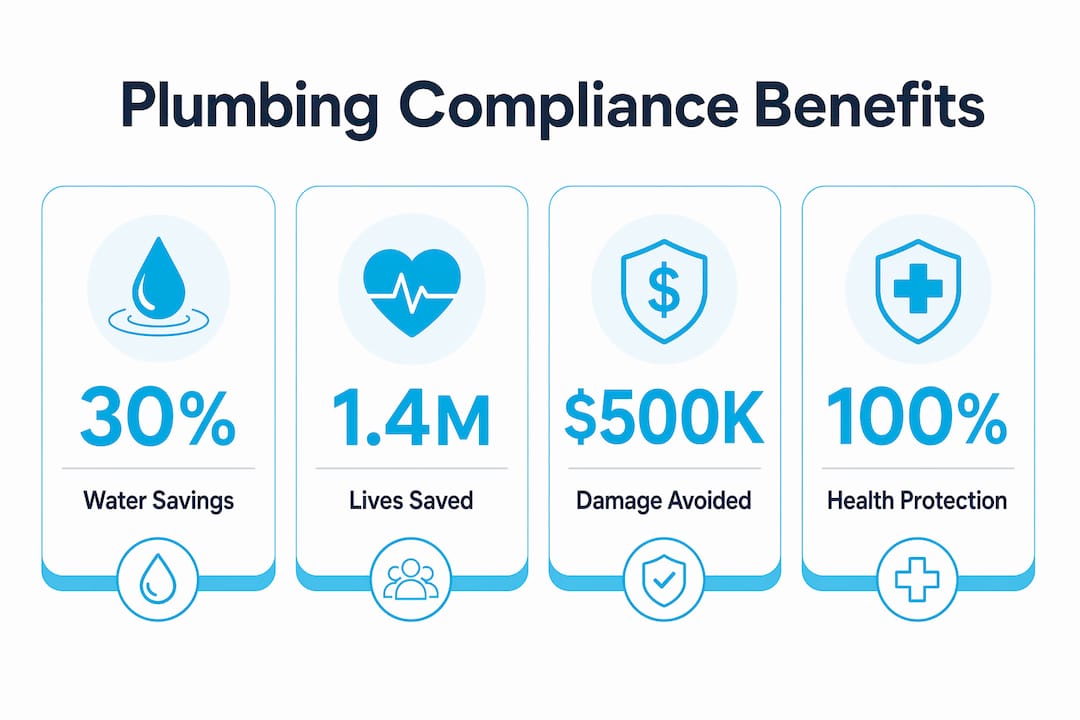
The World Health Organization links inadequate water and sanitation infrastructure to 1.4 million deaths annually. That number reflects what happens at scale when plumbing systems fail. Locally, the same failure modes appear in individual homes: a missing backflow preventer, an improperly vented drain, or a substandard pipe material.
Codes also draw a clear line between minimum compliance and best practice. The ICC and IAPMO set floors, not ceilings. A system that passes inspection is legal. A system designed with lifecycle durability in mind is genuinely safe. Homeowners and contractors who understand this distinction make better decisions at every stage of a project.

What are the legal and financial risks of skipping permits?
Permits are not bureaucratic friction. They are the mechanism that makes compliance verifiable and enforceable. Most residential plumbing work requires a permit, and the fee is modest. Permit fees typically range from $75 to $400 for residential plumbing work. That cost is trivial compared to what happens when work goes unpermitted.
The financial penalties for skipping permits follow a predictable pattern:
- Retroactive permit fees: Municipalities charge 2–3 times the original permit cost when unpermitted work is discovered. A $200 permit becomes a $400–$600 penalty, plus the cost of opening walls for inspection.
- Insurance claim denials: Insurers routinely deny claims tied to unpermitted work. A burst pipe in an unpermitted bathroom addition can leave a homeowner with no coverage.
- Real estate transaction problems: Approximately 68% of home inspectors flag unpermitted plumbing as a major red flag during property sales. That finding triggers buyer concessions between $3,000 and $15,000, or outright cancellation of the sale.
- Warranty voidance: Manufacturers of fixtures and water heaters routinely void warranties when installation does not follow code. Non-compliance turns a covered product into an out-of-pocket repair.
For contractors, the stakes are higher still. A single unpermitted job that causes property damage can result in license suspension, civil liability, and loss of bonding. Code compliance is not just ethical. It is the practical foundation of a sustainable contracting business.
Pro Tip: Before starting any plumbing project, check your local jurisdiction’s permit threshold. Many areas require permits for work as minor as replacing a water heater or adding a hose bib.
How do plumbing standards protect health and safety?
Plumbing codes are public health infrastructure. Strict code enforcement correlates directly with lower community rates of waterborne illness outbreaks. The mechanism is straightforward: proper installation reduces pathogen exposure, including bacteria like Legionella, which thrives in poorly maintained water systems.
The health protections built into modern codes include:
- Backflow prevention: Cross-connections between potable and waste lines are the primary contamination pathway. Codes require certified backflow prevention assemblies at every high-risk connection point.
- Trap and vent requirements: Every fixture drain requires a water-sealed trap to block sewer gases, including hydrogen sulfide and methane, from entering occupied spaces.
- Temperature controls: Codes specify minimum water heater temperatures to kill Legionella and maximum delivery temperatures to prevent scalding, particularly for children and elderly occupants.
- Material standards: Approved pipe materials must meet NSF/ANSI standards for contact with potable water, preventing leaching of lead, plasticizers, or other contaminants.
Backflow prevention assemblies require installation testing and annual recertification to maintain their protective function. This is not a one-time installation task. It is an ongoing maintenance obligation that homeowners often overlook and that contractors can offer as a recurring service.
Pro Tip: Ask your plumber for documentation of backflow preventer testing at installation. Keep that record with your home maintenance files. You will need it if a contamination event triggers an insurance or liability question.
The connection between plumbing infrastructure and public health is direct and well-documented. Every code requirement in this area exists because a real failure caused real harm before the rule was written.
Why go beyond minimum code for durability and efficiency?
Codes establish minimum thresholds that balance safety, cost, and practical implementation. They are not guarantees of optimal durability or long-term performance. Approved products comply with health and safety standards, but design decisions should also account for long-term risks that codes do not fully address.
The gap between minimum compliance and genuine performance shows up in three areas:
| Area | Minimum code approach | Beyond-code approach |
|---|---|---|
| Water efficiency | Meets current fixture flow rates | Installs WaterSense-certified fixtures, reducing consumption by up to 30% |
| Pipe material | Uses any code-approved material | Selects material based on local water chemistry and expected service life |
| Backflow protection | Installs required assemblies | Schedules annual recertification and keeps testing records |
Compliant fixtures reduce household water consumption by up to 30%. That reduction cuts utility bills and reduces the load on municipal water treatment systems. The environmental benefit is real, but the financial benefit is what most homeowners notice first.
Climate resilience is an emerging consideration that current codes address only partially. Freeze protection requirements, for example, vary widely by jurisdiction and may not reflect actual temperature extremes in a warming climate. Contractors who advise clients on pipe insulation, drain-down valves, and freeze-resistant fixture selection provide value that goes well beyond what the inspection process requires.
Code literacy prevents costly delays and rework by integrating knowledge of regulations early in project design. Contractors who understand the intent behind each rule, not just its literal text, catch design conflicts before they become field problems. That knowledge improves project margins and builds client trust in ways that no marketing effort can replicate.
Pro Tip: When selecting fixtures for a renovation, check for WaterSense certification alongside code compliance. The label confirms the product meets EPA water efficiency standards, which often exceed minimum code requirements.
Key Takeaways
Plumbing code compliance protects health, prevents financial loss, and delivers measurable efficiency gains that minimum-standard thinking alone cannot achieve.
| Point | Details |
|---|---|
| Health protection is primary | Code-compliant systems reduce water contamination incidents by up to 40% compared to non-compliant installations. |
| Permits prevent major losses | Unpermitted work triggers retroactive fees 2–3 times the original cost and can derail property sales by $3,000–$15,000. |
| Backflow testing is ongoing | Backflow prevention assemblies require annual recertification, not just one-time installation. |
| Codes set floors, not ceilings | Minimum compliance is legal; lifecycle-focused design choices deliver genuine safety and durability. |
| Code literacy pays for contractors | Understanding code intent reduces rework, improves margins, and builds long-term client trust. |
Compliance as a competitive advantage, not a checkbox
I have spent years watching contractors treat code compliance as the finish line. Pass the inspection, move to the next job. That mindset is the most expensive mistake in the trade.
The contractors I have seen build durable businesses are the ones who treat code literacy as a professional skill, not a regulatory burden. They read the intent behind each requirement. They know why a particular trap arm length matters, not just that it does. That depth of understanding means they catch problems in the design phase, before concrete is poured or walls are closed. A single avoided rework call pays for hours of code study.
For homeowners, the practical lesson is simpler: the contractor who pulls permits and schedules inspections is not slowing your project down. That contractor is protecting your investment. Unpermitted work is a liability that follows the property, not the contractor. You are the one who absorbs the cost at resale.
Codes also evolve. The 2026 update cycle has brought tighter requirements around water efficiency and cross-connection control in several jurisdictions. Staying current is not optional for anyone doing serious work. The 2026 plumbing regulations affecting builders are worth reviewing before any new project starts. Compliance is not a static target.
— Renate
Santehnikasveikals: code-compliant products for every project
Choosing the right fixtures and components is the practical side of compliance. Every product you install needs to meet current code requirements, and the selection process matters as much as the installation itself.

Santehnikasveikals carries a full range of code-compliant plumbing supplies for both residential and commercial projects, including backflow prevention components, certified fixtures, drainage systems, and heating equipment. The catalog covers everything from basic pipe fittings to complete bathroom solutions, with delivery available across Latvia. Whether you are a homeowner planning a renovation or a contractor sourcing materials for a new build, Santehnikasveikals provides the product selection and technical specifications needed to meet current standards without compromise.
FAQ
What does plumbing code compliance actually require?
Plumbing codes require that all installations meet minimum standards for water supply, drainage, venting, backflow prevention, and material selection set by bodies like the ICC and IAPMO. Compliance is verified through the permit and inspection process.
How much does a plumbing permit cost?
Residential plumbing permit fees typically range from $75 to $400, depending on the jurisdiction and scope of work. Skipping the permit exposes homeowners to retroactive fees 2–3 times that amount if the work is discovered later.
Can unpermitted plumbing work affect a home sale?
Approximately 68% of home inspectors flag unpermitted plumbing as a major concern during real estate transactions. Buyers typically demand concessions between $3,000 and $15,000 to accept the liability, or they cancel the sale entirely.
How often does backflow prevention equipment need testing?
Backflow prevention assemblies require testing at installation and annual recertification to maintain their protective function. Certified testers need specialized equipment and recertification every three years.
Do plumbing codes guarantee the safest possible system?
Codes establish minimum thresholds, not optimal outcomes. A code-compliant system is legal and safe at a baseline level. Achieving genuine durability and efficiency requires going beyond minimum requirements through better material selection, water-efficient fixtures, and lifecycle planning.
Recommended
- Plumbing Regulations 2026: What Builders Must Know | Santehnikasveikals.lv
- What Is Plumbing Infrastructure: A Complete Guide | Santehnikasveikals.lv
- Cost-Saving Plumbing Ideas That Actually Work in 2026 | Santehnikasveikals.lv
- Must-Have Plumbing Tools for DIY Homeowners in 2026 | Santehnikasveikals.lv
Atstājiet komentāru