





















































What Is Plumbing Infrastructure: A Complete Guide

TL;DR:
- Plumbing infrastructure is an interconnected system of pipes, fixtures, and drainage that delivers clean water and removes wastewater safely. It comprises three main systems: water supply, drain-waste-vent, and stormwater drainage, each operating on different principles to ensure functionality and health safety. Proper material selection, adherence to codes, and maintenance prevent contamination, protect public health, and sustain building performance.
Plumbing infrastructure is defined as the interconnected network of pipes, fixtures, valves, and drainage systems that deliver potable water and remove wastewater safely within buildings and communities. The World Plumbing Council estimates that adequate plumbing prevents approximately 1.4 million preventable deaths annually through clean water supply, sanitation, and hygiene. That number makes plumbing one of the most consequential public health systems ever built. Modern plumbing infrastructure integrates engineering principles covering fluid dynamics, pressure management, and backflow prevention to keep potable water uncontaminated at every point of use.
What is plumbing infrastructure and how does it work?
Plumbing infrastructure is the full system of water supply lines, drain-waste-vent (DWV) networks, and stormwater drainage that keeps a building functional and safe. The industry term “plumbing system” covers all three layers working together. Understanding how plumbing works as a fusion of regulated practice and engineering helps homeowners and professionals make better decisions during construction and renovation.
Water supply lines carry pressurized potable water from a municipal main or private well to every fixture in a building. DWV systems use gravity and air venting to remove wastewater and prevent sewer gases from entering occupied spaces. Stormwater drainage handles rainwater runoff separately, routing it away from foundations and into municipal storm systems. Each layer has a distinct function, but all three must be designed together for the system to perform reliably.
What are the main types of plumbing systems in buildings?
Residential plumbing infrastructure consists of three primary systems: water supply, drain-waste-vent, and stormwater drainage. Each operates on different physical principles and serves a different purpose.
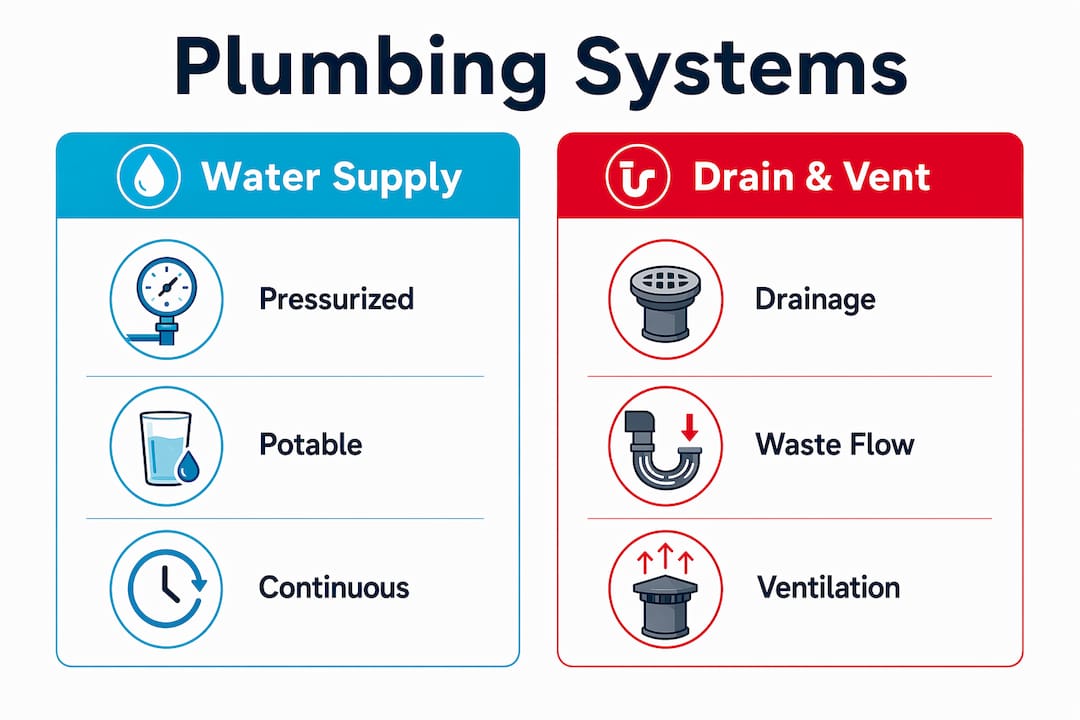
Water supply systems operate under continuous pressure, typically between 40 and 80 PSI in residential buildings. Pressure forces water from the main line through branch pipes to sinks, showers, toilets, and appliances. Cold and hot supply lines run in parallel, with the hot side passing through a water heater before reaching fixtures.
Drain-waste-vent (DWV) systems rely entirely on gravity, not pressure. Wastewater flows downhill through sloped drain pipes toward the main sewer or septic system. The “vent” portion is the part most homeowners overlook. Vent pipes connect the drain network to open air above the roofline, which balances air pressure inside the pipes and allows water to flow freely without gurgling or backing up. You can learn more about building drainage design and how these two sides of the system interact.
Stormwater drainage is a separate system that manages rainwater from roofs, driveways, and landscaped areas. It does not mix with wastewater in a properly designed building. The key distinctions between all three systems are:
- Water supply: pressurized, delivers clean water, uses copper or PEX pipe
- DWV: gravity-fed, removes wastewater and gases, uses PVC or ABS pipe
- Stormwater: gravity-fed, manages runoff, uses larger-diameter PVC or concrete pipe
- Each system has its own code requirements and inspection checkpoints
Mixing any of these systems creates contamination risk and code violations. Proper drainage slope design is critical for DWV and stormwater systems to function without pooling or backflow.
What plumbing materials and components make up modern infrastructure?
The materials used in a plumbing system determine its lifespan, maintenance needs, and performance under pressure. Copper piping offers long-term durability while modern PEX tubing is favored for ease of installation in renovations. Galvanized steel, common in pre-1970s homes, corrodes over time and restricts water flow. Choosing the right material for the application is the first decision any renovation project must get right.
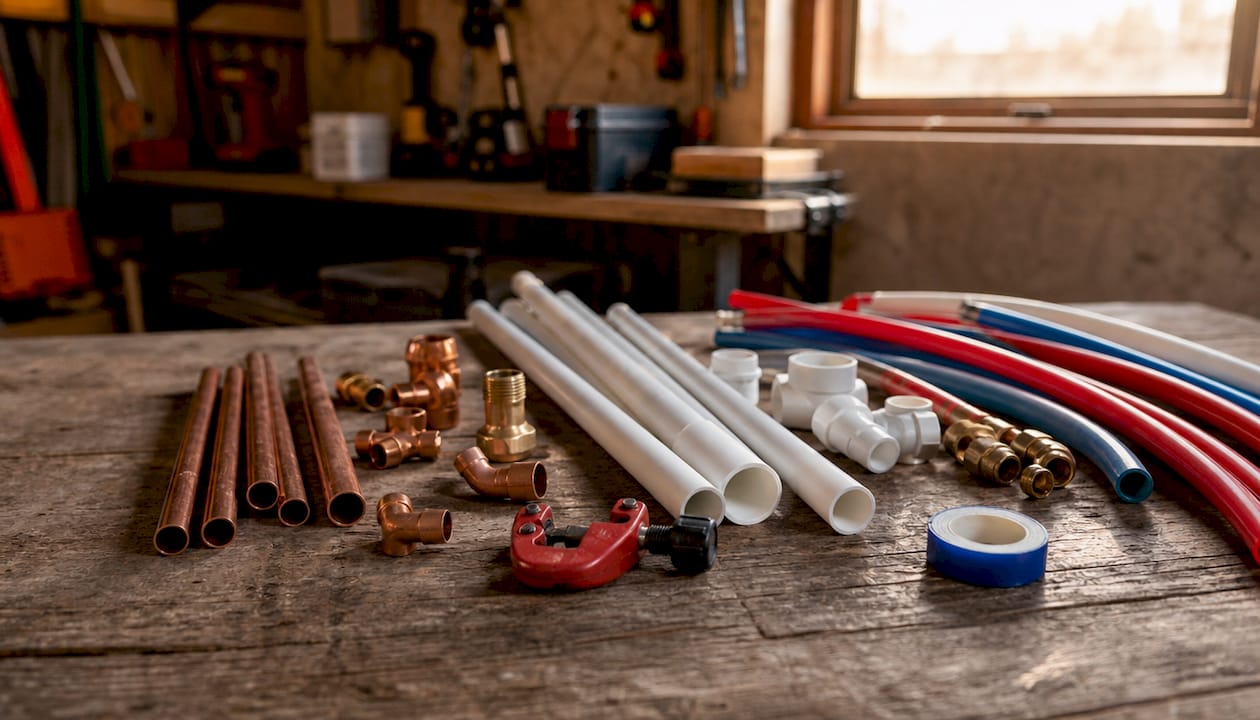
| Material | Best Use | Lifespan | Key Advantage |
|---|---|---|---|
| Copper | Supply lines, hot water | 50+ years | Durable, antimicrobial |
| PEX | Renovations, tight spaces | 40–50 years | Flexible, freeze-resistant |
| PVC | DWV, cold supply | 25–40 years | Lightweight, low cost |
| Galvanized steel | Legacy systems only | 20–50 years | Prone to corrosion |
Beyond pipe material, every plumbing system relies on a set of core components that control flow, prevent contamination, and connect fixtures to the network:
- Pipes and fittings: Elbows, tees, and couplings route water through walls and floors without leaks.
- Valves: Shutoff valves isolate sections of the system for repairs without cutting water to the whole building.
- Fixtures: Sinks, toilets, showers, and bathtubs are the visible endpoints of the supply and drain networks.
- Traps: P-traps hold a water seal beneath every drain. Plumbing traps block sewer gases from entering living spaces by maintaining a small pool of water in the curved pipe section.
- Vent pipes: These connect the drain network to outside air, preventing the vacuum pressure that would pull water out of traps and cause odors.
Pro Tip: If a bathroom or utility sink smells like sewer gas after a vacation or long period of disuse, the P-trap has likely dried out. Run water for 30 seconds to restore the seal before calling a plumber.
A VIEGA bath trap is a practical example of a quality trap component used in residential bathrooms across Europe. Selecting certified components matters because undersized or non-compliant fittings reduce system performance and create code violations.
How does plumbing infrastructure support health, safety, and building code compliance?
Plumbing infrastructure is the primary barrier between a building’s occupants and waterborne pathogens. Modern plumbing integrates backflow prevention and pressure management to keep potable water uncontaminated from source to tap. Without these controls, a pressure drop in the supply line can pull contaminated water backward into the drinking supply, a condition called backflow.
Building codes exist precisely to prevent these failures. Standards like the International Plumbing Code (IPC) and the Uniform Plumbing Code (UPC) set minimum pipe sizes, required trap depths, vent pipe diameters, and fixture unit loads. Compliance is not optional. Building-level plumbing must align with municipal infrastructure for code compliance and long-term system performance. Mismatches between building pipe sizes and municipal connection points cause pressure loss, non-compliance, and costly retrofits.
“Plumbing is the first line of defense against contamination in any occupied building. A correctly vented, trapped, and pressure-managed system does not just deliver water. It protects every person who turns on a tap.”
Homeowners carry real responsibility here. Private service lines from the property boundary to the building are the owner’s obligation to maintain, not the municipality’s. Annual inspections by a licensed plumber catch early signs of corrosion, joint failure, and trap evaporation before they become health hazards. For guidance on staying current with code requirements, the 2026 plumbing regulations guide covers what builders and homeowners need to know this year.
What is civil plumbing and how does it relate to internal plumbing?
Civil plumbing covers underground infrastructure serving multiple properties or entire communities, including water mains, sewer trunk lines, and stormwater drainage networks. Civil plumbing involves large-diameter pipes and heavy machinery, with a long-term infrastructure planning focus measured in decades, not years. Internal plumbing, by contrast, serves a single building and focuses on immediate functionality and occupant comfort.
The table below shows the key differences between the two scopes:
| Factor | Civil plumbing | Internal plumbing |
|---|---|---|
| Scope | Multiple properties or communities | Single building |
| Pipe diameter | Large (150mm+) | Small to medium (15–100mm) |
| Responsible party | Municipal authority | Property owner |
| Planning horizon | Decades | Building lifespan |
| Typical materials | Concrete, ductile iron, HDPE | Copper, PEX, PVC |
Property owners are responsible for private service lines up to the municipal connection point. Understanding this boundary matters for risk management. If a sewer line fails on the public side of that boundary, the municipality repairs it. If it fails on the private side, the cost falls to the property owner. Developers and homeowners planning new construction must confirm that the building’s internal system is sized to match the civil infrastructure it connects to. Plumbing links building habitability with regional infrastructure, and integrated planning from the start avoids expensive corrections later.
Key Takeaways
Plumbing infrastructure is the integrated system of water supply, drainage, and venting that protects public health, ensures code compliance, and keeps buildings functional across their entire lifespan.
| Point | Details |
|---|---|
| Three core systems | Water supply, DWV, and stormwater drainage each serve distinct functions and must be designed together. |
| Material selection matters | Copper and PEX are the standard choices for 2026 renovations; galvanized steel in older homes needs replacement. |
| Traps and vents are critical | P-traps block sewer gases and must stay wet; vent pipes maintain pressure so drains flow freely. |
| Civil vs. internal plumbing | Property owners maintain private service lines; municipal authorities manage the civil network beyond the boundary. |
| Code compliance protects health | IPC and UPC standards set minimum requirements that prevent backflow, contamination, and system failure. |
What I’ve learned from years of watching plumbing get overlooked
Most homeowners think about plumbing only when something goes wrong. That is the single most expensive mistake in home ownership. The systems hidden inside your walls are doing constant work, and the moment you ignore them is the moment small problems become structural ones.
The detail that surprises people most is the vent pipe. I have seen renovations where contractors rerouted drain lines without extending the vent stack, and the result was slow drains and persistent odors that took months to diagnose. The fix cost three times what proper planning would have. Ignoring vent pipes creates vacuum pressure that pulls water from traps, and that is a common renovation mistake that is entirely avoidable.
My practical advice: before any renovation that touches walls or floors, have a licensed plumber map your existing system. Know where your shutoff valves are. Run water in every fixture monthly if parts of your home sit unused. And when you connect to municipal infrastructure, confirm pipe sizing with your local authority before you build. The civil network sets the ceiling for what your internal system can do.
— Renate
Plumbing supplies for every stage of your project
Whether you are planning a full renovation or replacing a single component, having the right materials on hand makes the difference between a job done once and a job done twice.

Santehnikasveikals stocks a full range of plumbing system components including pipes, fittings, valves, traps, and fixtures from trusted brands. The catalog covers everything from basic PVC drain fittings to certified copper supply components and complete bathroom fixture sets. Delivery is available across Latvia, and the product pages include technical specifications to help you match components to your system’s requirements. If you need a specific fitting or are comparing materials for a renovation, the Santehnikasveikals catalog is a practical starting point.
FAQ
What is plumbing infrastructure in simple terms?
Plumbing infrastructure is the complete network of pipes, valves, fixtures, and drainage systems that deliver clean water and remove wastewater in a building or community. It includes water supply lines, drain-waste-vent systems, and stormwater drainage working together.
What are the main types of plumbing systems?
The three main types are water supply systems, drain-waste-vent (DWV) systems, and stormwater drainage. Water supply operates under pressure; DWV and stormwater rely on gravity.
Why do plumbing traps matter?
P-traps hold a water seal that blocks sewer gases from entering living spaces. If a fixture goes unused for weeks, the water evaporates and the seal fails, allowing odors into the home.
What is the difference between civil and internal plumbing?
Civil plumbing serves multiple properties through large underground mains and sewer lines managed by municipal authorities. Internal plumbing serves a single building and is the property owner’s responsibility to maintain.
How does plumbing infrastructure protect public health?
Adequate plumbing prevents approximately 1.4 million deaths annually by supplying clean water and safely removing wastewater. Backflow prevention, proper venting, and code-compliant pipe sizing are the key mechanisms that stop contamination.
Recommended
- Plumbing Regulations 2026: What Builders Must Know | Santehnikasveikals.lv
- Must-Have Plumbing Tools for DIY Homeowners in 2026 | Santehnikasveikals.lv
- Smart Plumbing Advantages for Homeowners in 2026 | Santehnikasveikals.lv
- Drainage System Troubleshooting Steps for Homeowners | Santehnikasveikals.lv
Atstājiet komentāru