





















































What Is PEX Plumbing? A Homeowner’s Guide

TL;DR:
- PEX plumbing uses cross-linked polyethylene tubing to carry hot and cold water in homes. It offers advantages such as flexibility, resistance to corrosion, and easier installation compared to copper, with over 70% market share in new homes. However, it requires proper insulation and cannot be used for gas lines or outdoor applications exposed to sunlight.
PEX plumbing is defined as a system that uses cross-linked polyethylene tubing to carry hot and cold water through a home. The “cross-linking” refers to a chemical process that bonds the polymer chains in polyethylene together, making the pipe stronger, more flexible, and more heat-resistant than standard plastic pipe. PEX has become the dominant choice in residential construction, commanding over 70% of the new-home plumbing market. That figure tells you everything about where the industry has moved. Whether you are repiping an older home or roughing in a new build, understanding PEX pipe gives you a real advantage before you spend a dollar on materials.
What is PEX plumbing, and how does it work?
PEX tubing carries pressurized water from your main supply line to every fixture in your home, just like copper or CPVC pipe. The difference is in the material. Cross-linked polyethylene bends without fittings, resists corrosion, and does not require heat or soldering to connect. That combination cuts installation time significantly compared to traditional metal pipe.
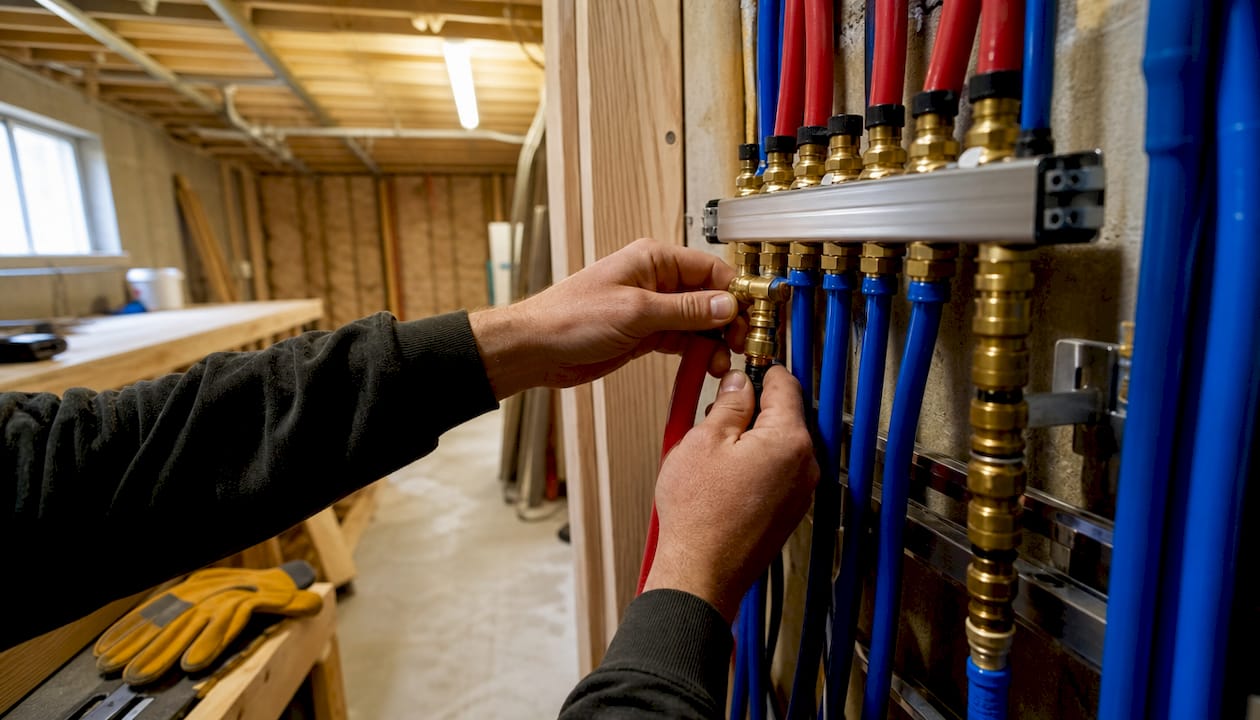
The pipe connects to fixtures and valves using mechanical fittings. The three main connection methods are crimp rings, clamp rings, and expansion fittings. Each method requires a specific tool, but none requires an open flame. That makes PEX plumbing far more accessible for homeowners who want to tackle their own repairs or installations.
PEX also handles temperature swings well. It expands slightly when water inside it freezes, which reduces the risk of a burst pipe. That physical property is one reason builders in cold climates have adopted it so quickly.
What are the types of PEX tubing and their characteristics?
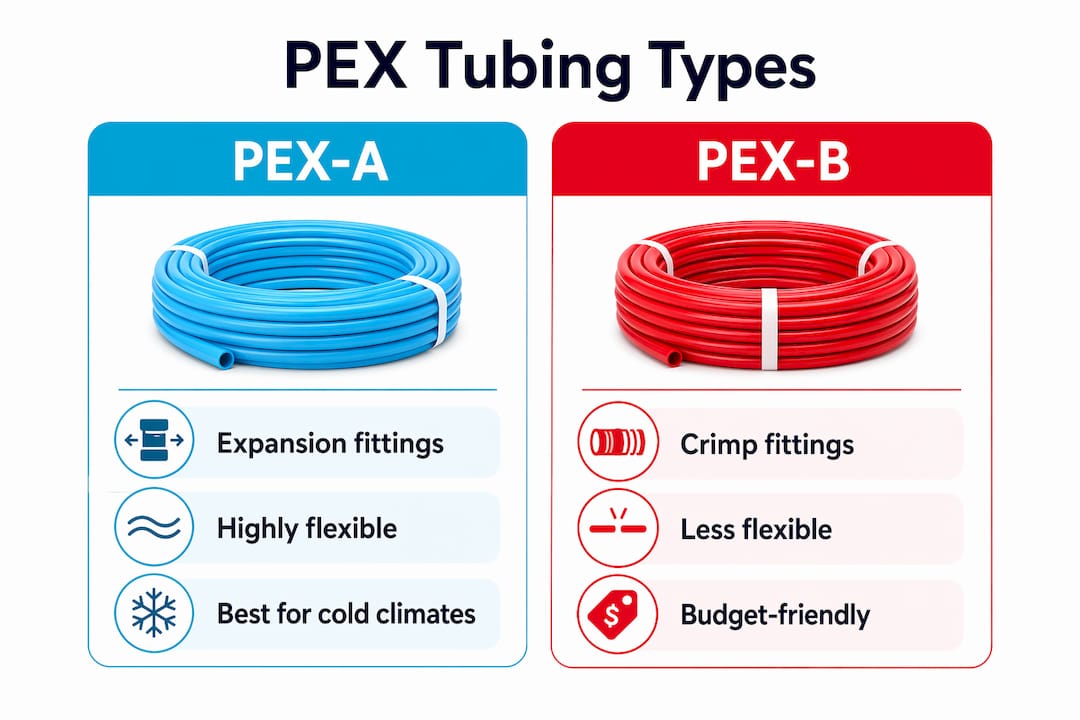
Three grades of PEX tubing exist: PEX-A, PEX-B, and PEX-C. Each uses a different manufacturing process, and the differences affect flexibility, cost, and connection method.
- PEX-A is made using the Engel method, also called the peroxide method. It achieves a cross-linking density of 70–85%, which gives it the highest flexibility of the three types. It carries a pressure rating of 160 psi at 73°F and remains functional down to -40°F. PEX-A is the only type that can be repaired after a kink using a heat gun. It costs more than PEX-B or PEX-C, but its performance in tight spaces and cold climates justifies the premium for most residential jobs.
- PEX-B uses the silane method. It is stiffer than PEX-A and costs less per foot. The stiffness can make routing around corners slightly harder, but PEX-B still outperforms rigid pipe in most residential applications. It is the most widely available type and works well for straightforward hot and cold supply runs.
- PEX-C is made using an electron beam process. It has the lowest cross-linking density of the three and is the least flexible. PEX-C is a budget option suited for short runs or repairs where flexibility is not a priority.
The connection method also varies by type. PEX-A uses expansion fittings, where the pipe is expanded with a tool and then allowed to contract around the fitting. PEX-B and PEX-C typically use crimp or clamp fittings. Expansion connections are generally considered the most leak-resistant because the pipe grips the fitting as it contracts.
Pro Tip: If you are working in a cold climate or need to route pipe through tight corners, choose PEX-A. The added flexibility and kink-repair capability will save you time and frustration on the job.
Check the 2026 plumbing regulations before selecting your PEX type, since local building codes may specify minimum cross-linking standards or approved connection methods.
What are the benefits and limitations of using PEX plumbing?
PEX tubing delivers real advantages over copper and CPVC, but it also has specific limitations every homeowner should know before committing to it.
The main benefits:
- Flexibility reduces fittings and labor. PEX bends around corners without elbow fittings, which means fewer connection points and fewer potential leak sites. Fewer fittings also means faster installation.
- Corrosion and scale resistance. Unlike copper, PEX does not corrode from acidic water or develop mineral scale buildup on the interior walls. That extends the pipe’s service life in homes with hard water.
- Freeze resilience. PEX expands when water freezes inside it, which reduces burst risk compared to rigid pipe. This property makes it a strong choice for homes in cold regions.
- Lower cost. PEX material costs less per foot than copper, and the faster installation process reduces labor costs. A full-home repipe with PEX typically runs $4,500–$12,000, compared to $7,500–$18,000 for copper. That gap represents real savings on any major project.
- No heat required for connections. PEX connects with mechanical fittings, so you do not need a torch or soldering skills. That lowers the barrier for DIY work and reduces fire risk during installation.
The key limitations:
- UV degradation makes PEX unsuitable for outdoor use. Sunlight breaks down the polymer over time, causing the pipe to become brittle and fail. Any PEX run that exits the building must be protected or replaced with a UV-resistant material.
- PEX is not approved for gas lines. It carries water only.
- PEX cannot be used in contaminated soil environments, where chemicals in the ground can permeate the pipe wall.
- Freeze resistance does not mean freeze-proof. PEX still requires insulation in cold climates to prevent plumbing failures and frozen fixtures. The pipe’s ability to expand buys you some protection, but it is not a substitute for proper insulation.
Pro Tip: Never leave PEX exposed to sunlight, even temporarily during a renovation. Even short-term UV exposure can degrade the pipe surface. Cover any exposed runs with foam insulation or tape until the walls are closed.
How does PEX compare to copper and CPVC in cost and performance?
PEX has displaced copper as the standard for new residential construction, and the reasons go beyond price. The comparison below covers the factors that matter most for a homeowner deciding between materials.
| Factor | PEX | Copper | CPVC |
|---|---|---|---|
| Market share (new homes) | Over 70% | Under 10% | Under 20% |
| Full repipe cost | $4,500–$12,000 | $7,500–$18,000 | Lower than copper |
| Labor savings vs. copper | Approximately 30% | Baseline | Moderate |
| Corrosion resistance | Excellent | Moderate (acidic water) | Good |
| Freeze resistance | Good (expands) | Poor (cracks) | Poor (cracks) |
| UV resistance | Poor (indoor only) | Excellent | Moderate |
| Heat tolerance | Up to 180°F | High | Moderate |
| DIY friendliness | High | Low (soldering) | Moderate |
Copper still has a role in modern plumbing. Experts recommend a hybrid copper-PEX approach for homes with high-heat areas or exposed fixture connections. Use PEX for the long runs inside walls and copper for the short stubs near water heaters or outdoor hose bibs. That combination gives you the cost and flexibility benefits of PEX where it matters most, while copper handles the spots where heat or UV exposure is a concern.
CPVC is a reasonable budget option for straight runs in moderate climates, but its brittleness in cold temperatures and lower DIY friendliness make it a less practical choice than PEX for most homeowners.
What are the practical steps and tips for installing PEX plumbing at home?
PEX installation is genuinely manageable for a prepared homeowner. The right tools and a few key habits make the difference between a clean job and a callback.
Tools you need:
- A dedicated PEX cutter (not a utility knife) for clean, square cuts
- A crimp tool or expansion tool, depending on your fitting type
- A go/no-go gauge to verify crimp ring compression
- A heat gun if you are working with PEX-A and need to fix kinks
Installation tips that matter:
- Buy 10-foot sticks instead of coils when possible. PEX coils have a “memory” that causes them to spring back, making routing difficult in tight spaces. Ten-foot sticks eliminate that problem and give you more control over routing direction.
- Make clean, square cuts every time. A proper square cut with a PEX cutter is the single most important step for a leak-free connection. An angled or ragged cut prevents the fitting from seating correctly.
- Secure drop-ear elbows with screws at every fixture. Drop-ear elbows fastened to framing prevent faucet handles and supply stubs from wobbling. Unsecured stubs are one of the most common DIY mistakes and can cause fittings to loosen over time.
- Fix PEX-A kinks with a heat gun. If you kink a PEX-A run, apply gentle heat from a heat gun and the pipe will return to its original shape without losing performance. PEX-B and PEX-C kinks cannot be repaired this way and require cutting out the damaged section.
- Insulate all runs in unheated spaces. Even with PEX’s freeze resilience, pipes in crawl spaces, attics, or exterior walls need pipe insulation to prevent freezing in cold climates.
- Keep all PEX runs indoors or protected. Never route PEX through areas with direct sunlight exposure.
Pro Tip: Label your PEX runs at the manifold with colored tape or a marker before closing walls. Red for hot, blue for cold. It takes two minutes and saves hours of guesswork during any future repair.
The right DIY plumbing tools make every step faster and reduce the chance of a failed connection. Do not substitute a utility knife for a proper PEX cutter. The quality of your cut directly affects the quality of your connection.
Key Takeaways
PEX plumbing is the most cost-effective and DIY-friendly pipe material for residential water supply, provided you select the correct type, use proper tools, and insulate runs in cold environments.
| Point | Details |
|---|---|
| PEX dominates new construction | PEX holds over 70% of the new-home plumbing market, far ahead of copper and CPVC. |
| Three types serve different needs | PEX-A offers the most flexibility and kink repair; PEX-B balances cost and performance; PEX-C suits budget repairs. |
| Cost advantage over copper is significant | A full repipe with PEX costs $4,500–$12,000 versus $7,500–$18,000 for copper, with about 30% labor savings. |
| Limitations require attention | PEX degrades under UV light, cannot be used for gas lines, and still needs insulation in cold climates. |
| Installation quality determines longevity | Square cuts, secured drop-ear elbows, and correct fitting tools prevent the most common DIY failures. |
Why I think most homeowners underestimate PEX
The conversation around PEX usually focuses on price, and that undersells the material. The real advantage is how much it simplifies the entire plumbing process. When I look at a typical bathroom remodel, the ability to run a single continuous PEX line from the manifold to the fixture without a single elbow fitting changes the whole job. Fewer fittings means fewer failure points, and that matters more than the cost per foot.
That said, I have seen PEX fail when homeowners treat it as foolproof. The freeze resistance claim is real, but it is not a license to skip insulation. A pipe that expands instead of bursting still freezes. A frozen fixture is still a problem. The homes I have seen handle cold climates best use PEX throughout the interior and add foam insulation on every run in an unheated space.
The hybrid approach with copper near water heaters and outdoor connections is also worth taking seriously. PEX handles sustained heat well up to 180°F, but copper near a water heater gives you a margin of safety and makes future service connections easier. The two materials work together cleanly, and the combination is what most experienced plumbers actually install.
My honest recommendation: if you are a homeowner tackling a repipe or a significant renovation, choose PEX-A for the flexibility and the kink-repair option. Buy sticks, not coils. Use a proper expansion tool if your budget allows. And never skip the drop-ear elbows at fixtures. Those four decisions will give you a system that performs like a professional installation.
— Renate
PEX plumbing supplies and tools at Santehnikasveikals
Getting the right materials before you start saves time and prevents mid-project trips to the store.

Santehnikasveikals carries a full range of plumbing materials and tools for residential projects, including PEX tubing, fittings, crimp and expansion tools, and pipe insulation. The catalog covers everything from basic supply runs to complete bathroom and heating system installations. Whether you are repiping a single bathroom or planning a full home renovation, you can find the materials you need in one place, with delivery available across Latvia.
FAQ
What does PEX stand for in plumbing?
PEX stands for cross-linked polyethylene. The cross-linking process bonds the polymer chains in the plastic, making the pipe stronger, more flexible, and more heat-resistant than standard polyethylene.
Is PEX plumbing safe for drinking water?
PEX is approved for potable water use in residential plumbing systems across the United States and Europe. It does not corrode and does not leach metals into the water supply.
How long does PEX pipe last?
PEX pipe is rated for a service life of 25 years or more under normal residential conditions. Proper installation, insulation in cold climates, and keeping the pipe away from UV exposure are the main factors that determine longevity.
Can I install PEX plumbing myself?
Yes. PEX is one of the most DIY-friendly pipe materials available. It requires no soldering, connects with mechanical fittings, and bends without special tools. A PEX cutter and a crimp or expansion tool are the two core tools you need to get started.
What is the difference between PEX-A and PEX-B?
PEX-A uses the Engel manufacturing method, giving it higher flexibility, a cross-linking density of 70–85%, and the ability to repair kinks with heat. PEX-B uses the silane method, costs less, and is slightly stiffer. Both are suitable for residential hot and cold water supply.
Palikite komentarą