




















































Types of Plumbing Materials: A Homeowner’s 2026 Guide
TL;DR:
- Choosing the right plumbing materials depends on the application, temperature tolerance, and budget. Copper offers durability for hot water, while PEX provides flexibility and affordability for full repiping. Drainage systems mainly use PVC or ABS, with cast iron and galvanized steel being legacy options.
The most common types of plumbing materials are PEX, copper, PVC, CPVC, ABS, galvanized steel, cast iron, brass, and stainless steel, each designed for a specific plumbing function and set of conditions. Choosing the wrong material causes leaks, code violations, and costly repairs. The right choice depends on three factors: whether the pipe carries pressurized water or handles gravity drainage, the water temperature it must handle, and your budget. This guide breaks down every major pipe material option so you can make a confident decision for your renovation or new build.
1. What are the major types of plumbing materials for water supply?
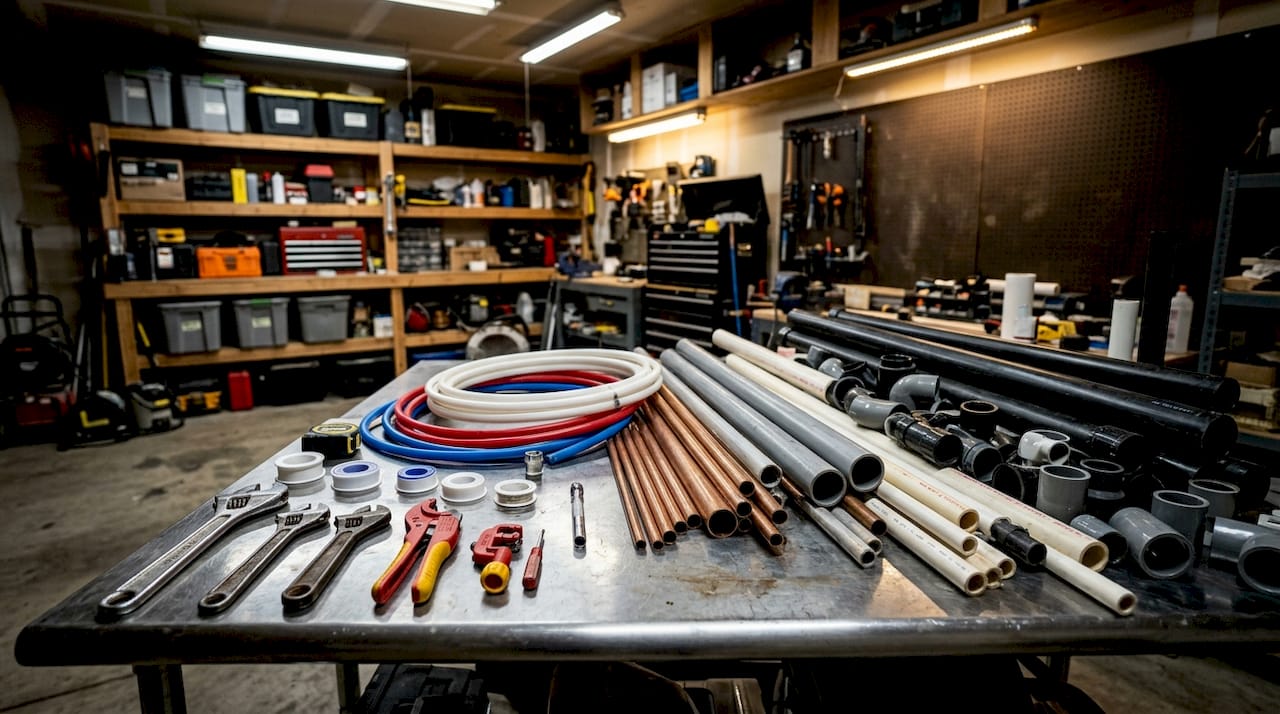
Pressurized supply lines and gravity drainage lines require fundamentally different materials. Getting this distinction wrong leads to code violations and system failures. The three dominant supply line materials in modern residential construction are copper, PEX, and CPVC.
Copper
Copper is the gold standard for durability and heat resistance in residential plumbing. It handles high temperatures without deforming, resists bacteria growth, and lasts 50 years or more with proper installation. The trade-off is cost. Copper requires soldering, which demands skill and time, making labor costs significantly higher than plastic alternatives.
PEX (cross-linked polyethylene)
PEX is flexible, cost-effective, and the preferred choice for full repipes in modern homes. It bends around corners without fittings, which reduces leak points. PEX costs between $0.40 and $4.00 per foot in 2026, making it one of the most affordable supply line options available. That price range reflects the difference between standard and reinforced grades.
Pro Tip: Never store or install PEX in direct sunlight. UV exposure causes premature brittleness and eventual leaks, even before the pipe is put into service.
CPVC (chlorinated polyvinyl chloride)
CPVC handles hot water where standard PVC cannot. It costs less than copper and installs with solvent cement rather than soldering. The downside is brittleness over time. Older CPVC pipes crack more easily during repairs, which makes them frustrating to work with during remodels.
Key supply line considerations at a glance:
- Copper: Best long-term durability, highest cost, requires soldering
- PEX: Best value, flexible, not for outdoor or UV-exposed runs
- CPVC: Good for hot water, lower cost than copper, becomes brittle with age
2. What are the common materials for drainage, waste, and vent plumbing?
Drainage, waste, and vent systems, known in the trade as DWV systems, carry wastewater away from fixtures using gravity rather than pressure. These pipes do not need to withstand internal pressure, so the material requirements differ completely from supply lines. The standard materials for DWV systems are PVC, ABS, cast iron, and galvanized steel in older homes.
PVC for drainage
PVC dominates drainage applications because it is inexpensive, corrosion-resistant, and easy to cut and join with solvent cement. It costs between $0.50 and $3.00 per foot depending on diameter and wall thickness. PVC is not suitable for hot water lines because it warps above 140°F. For a deeper look at how drainage systems are structured, the building drainage system guide at Santehnikasveikals covers the full layout.
ABS (acrylonitrile butadiene styrene)
ABS is the black plastic alternative to white PVC. It handles impact better in cold temperatures, which makes it a practical choice in unheated spaces. ABS uses a one-step solvent cement rather than the two-step primer-plus-cement process PVC requires. Some local building codes prohibit mixing ABS and PVC in the same drain run, so check your local regulations before combining them.
Cast iron and galvanized steel
Both materials appear in homes built before the 1970s. Cast iron is heavy and durable but corrodes slowly from the inside. Galvanized steel corrodes internally over decades, narrowing the pipe diameter and reducing flow. When you find galvanized steel during a remodel, full replacement is the right call. Patching corroded galvanized pipe rarely solves the underlying problem.
| Material | Best use | Temperature limit | Cost per foot | Key drawback |
|---|---|---|---|---|
| PVC | DWV drainage | 140°F max | $0.50–$3.00 | Not for hot water |
| ABS | DWV, cold climates | Similar to PVC | Comparable to PVC | Code restrictions on mixing |
| Cast iron | DWV, sound dampening | High | Higher than plastic | Heavy, corrodes over time |
| Galvanized steel | Legacy systems only | Moderate | Varies | Internal corrosion, replace fully |
3. How temperature tolerance and corrosion resistance affect your choice
Material properties determine whether a pipe lasts 10 years or 50. Temperature tolerance is the most critical factor for supply lines. PVC cannot handle water above 140°F without warping or melting. That single fact rules it out for any hot water supply application.
CPVC and PVC differ chemically, and that chemical difference is exactly what gives CPVC its heat resistance. CPVC is formulated with additional chlorination, which raises its thermal tolerance well above standard PVC. Using PVC where CPVC is required is a code violation in most jurisdictions, and it will fail.
Corrosion resistance separates plastics from metals in long-term performance:
- Plastic pipes (PEX, PVC, CPVC, ABS) do not corrode from water contact, making them the default choice in areas with aggressive or acidic water chemistry.
- Copper resists corrosion well but can develop pinhole leaks in homes with very low pH water.
- Galvanized steel corrodes from the inside out, often invisibly, until flow drops noticeably.
- PEX degrades when exposed to UV light, requiring protection during storage and installation.
Pro Tip: If you are matching new pipe to existing pipe during a remodel, check the pipe insulation guide at Santehnikasveikals to understand how insulation choices interact with your pipe material’s temperature limits.
4. What factors should you consider when choosing plumbing materials?
The best plumbing material for your project depends on four practical factors: application, cost, installation complexity, and local building codes.
- Application first. Identify whether the pipe carries pressurized hot water, pressurized cold water, or gravity drainage. This single question eliminates most wrong choices immediately.
- Budget. PEX costs $0.40–$4.00 per foot and installs without special tools beyond a crimp or clamp tool. Copper costs more per foot and requires a torch, solder, and flux, which adds labor time.
- Installation complexity. PEX and PVC are the most DIY-friendly materials. Copper soldering has a learning curve. Cast iron requires specialized cutters and is physically demanding to handle.
- Building codes. Plumbing regulations in 2026 specify approved materials for each application. Some jurisdictions ban certain plastics in specific locations, such as inside wall cavities or above ceilings.
- Lifespan expectations. Copper lasts 50 or more years. PEX has a shorter track record but carries manufacturer warranties of 25 years or more. PVC and ABS in drainage applications last decades with minimal maintenance.
- Identifying existing materials. During a remodel, tap the pipe lightly. Copper rings clearly. PVC and CPVC produce a dull thud. Galvanized steel sounds solid and heavy. Color also helps: PEX comes in red, blue, and white; CPVC is cream or yellow; ABS is always black.
- Tool requirements. Before starting, review the DIY plumbing tools guide at Santehnikasveikals to confirm you have the right equipment for your chosen material.
Key Takeaways
The right pipe material is determined by application first, then temperature tolerance, then cost. Choosing based on price alone without considering the intended use leads to failure.
| Point | Details |
|---|---|
| Match material to application | Use PEX or copper for supply lines; use PVC or ABS for drainage systems. |
| Respect temperature limits | PVC fails above 140°F; use CPVC or copper for any hot water supply run. |
| Replace galvanized steel fully | Internal corrosion in galvanized pipes narrows flow; patching does not fix the root problem. |
| Protect PEX from UV light | Store and install PEX away from sunlight to prevent brittleness and leaks. |
| Check local codes before buying | Approved materials vary by jurisdiction; confirm compliance before purchasing pipe. |
What I’ve learned from watching homeowners pick the wrong pipe
After years of covering plumbing renovations and talking with contractors across the industry, one pattern stands out. Homeowners consistently underestimate how much the application determines the material. They walk into a supply store, see that PVC is cheaper than copper, and buy PVC for everything. Then they run it to a hot water heater and wonder why it warps within a year.
My honest recommendation for most modern supply line projects is PEX. The flexibility alone saves hours of installation time, and the cost advantage over copper is real. That said, PEX is not a universal answer. If you are running pipe in an area with any sun exposure, even indirect, you need to sleeve it or choose a different material entirely.
The other thing I see homeowners get wrong is galvanized steel. They find it in an older home and try to splice in a repair. The pipe looks solid from the outside, but the inside is often reduced to a fraction of its original diameter. A splice buys you a year, maybe two. A full replacement buys you decades.
My advice: spend 30 minutes identifying every material in your existing system before you buy a single fitting. That knowledge changes every decision that follows.
— Renate
Santehnikasveikals has the plumbing materials your project needs
Whether you are replumbing a bathroom, running new supply lines, or replacing aging drainage pipe, having the right materials on hand from the start saves time and avoids mid-project delays.

Santehnikasveikals stocks a wide selection of plumbing supply materials for homeowners and contractors across Latvia, from fittings and pipe to full bathroom fixtures. The catalog covers the materials discussed in this guide, with clear product specifications so you can match what you need to your specific application. Visit the Santehnikasveikals online store to browse the full range, check current pricing, and order with delivery across Latvia. If you need help selecting the right product for your project, the team is available to advise.
FAQ
What are the main types of plumbing materials?
The main types are PEX, copper, CPVC, PVC, ABS, galvanized steel, and cast iron. Each serves a different function: PEX and copper for pressurized supply, PVC and ABS for drainage.
Which plumbing material is best for hot water lines?
Copper and CPVC are the correct choices for hot water supply lines. PVC cannot handle temperatures above 140°F and will warp or fail.
Is PEX better than copper for residential plumbing?
PEX costs less and installs faster than copper, making it the preferred choice for full repipes. Copper offers greater long-term durability and is better suited for high-temperature or outdoor applications.
How do I identify the pipe material in my home?
Tap the pipe lightly and check the color. Copper is orange-brown and rings when tapped. PVC is white and produces a dull sound. ABS is black. PEX comes in red, blue, or white flexible tubing. Galvanized steel is gray and heavy.
Can I mix different plumbing materials in the same system?
You can connect different materials using transition fittings, but not all combinations are code-approved. Mixing ABS and PVC in the same drain run is prohibited in some jurisdictions. Always verify local plumbing code requirements before combining materials.
Palikite komentarą