




















































Siltās Grīdas Izmaksas: What Underfloor Heating Costs in Latvia
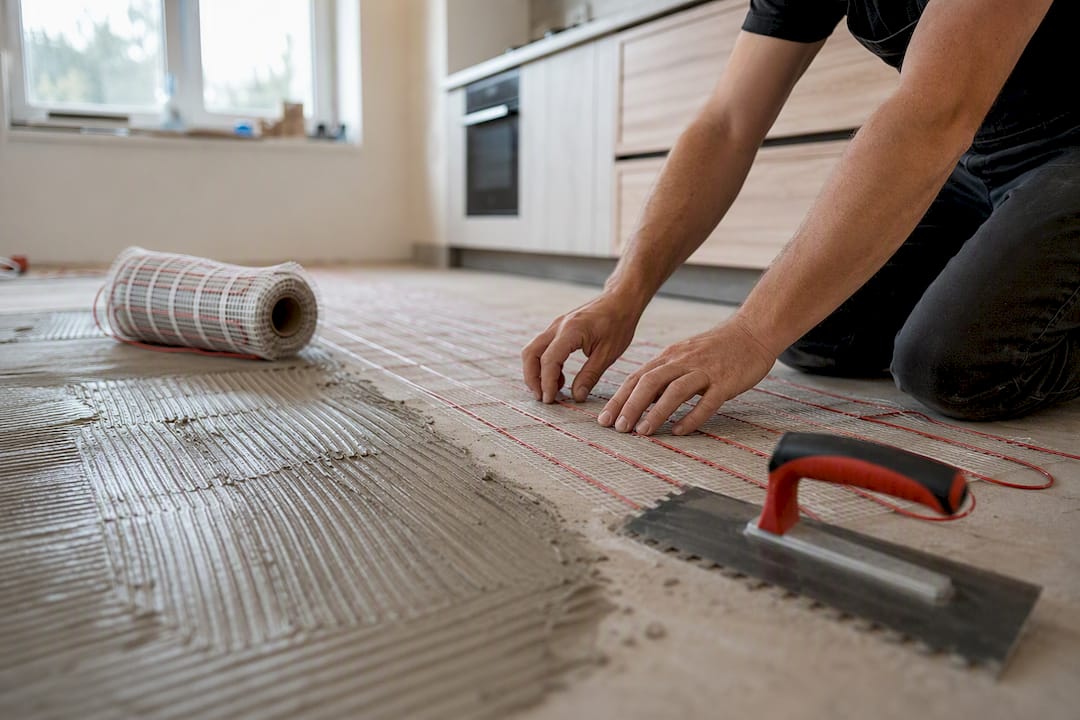
Electric underfloor heating in Latvia typically runs within a range for basic installation costs, while full water-based systems with automation have a higher cost range, according to Latvian installer estimates. KRS pricing data puts simple electric projects from 25 €/m² and full-spec water solutions at 35 to 50 €/m².
Choose electric for a single bathroom retrofit or a rental apartment where fast, low-disruption installation matters more than long-term running costs. Choose water-based systems for new builds or full renovations paired with a heat pump, where the higher upfront cost pays off over years of lower energy bills.
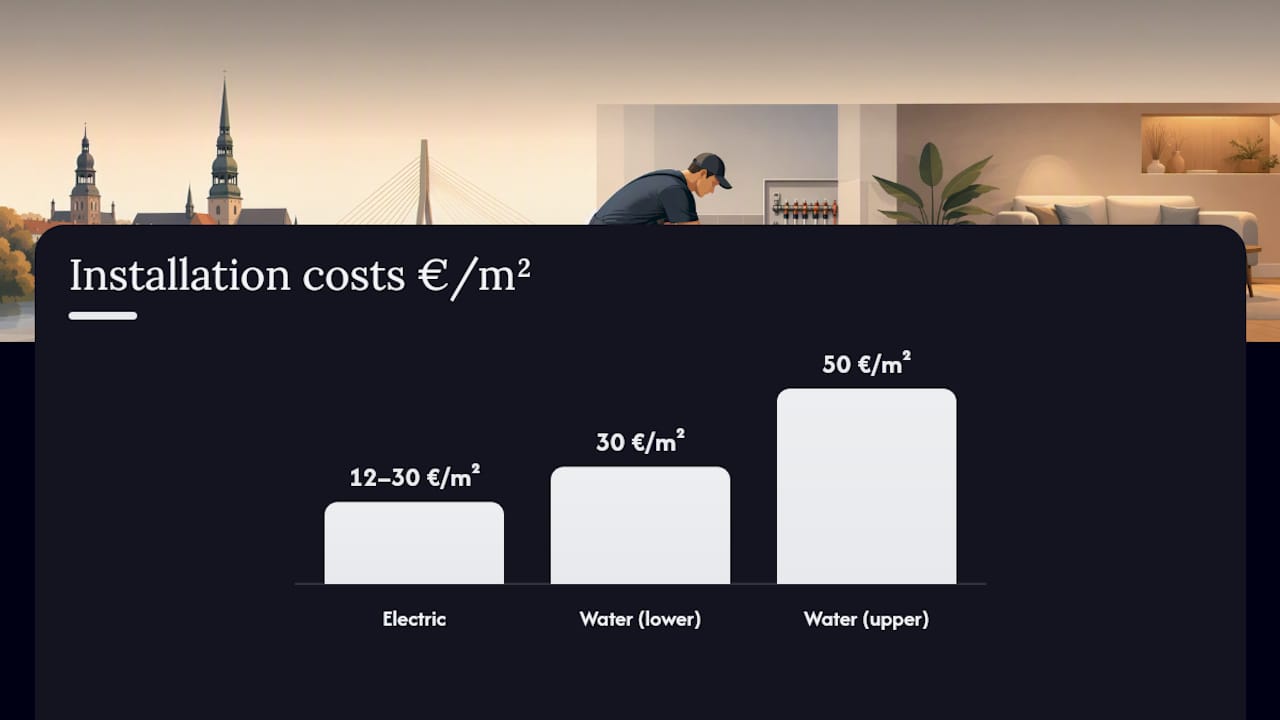
- Electric mats/cables: 12–30 €/m² (basic), often installed in 1–2 days
- Water pipe systems: 30–50 €/m² (full solution with manifold and controls)
- Room- and whole-house totals appear further down, once you’ve seen how the components stack up
Key Takeaways
Underfloor heating in Latvia costs 12 to 50 €/m² depending on system type, with electric suited to small rooms and water-based systems suited to whole-house projects paired with heat pumps.
| Point | Details |
|---|---|
| Electric system cost | Basic electric underfloor heating runs 12–30 €/m², best for single rooms or retrofits. |
| Water system cost | Full water-based systems with automation cost 30–50 €/m², suited to new builds and heat pumps. |
| Labor is a major cost | Installation labor often makes up 30–40% of the total quoted price. |
| Timeline varies by scope | Bathroom retrofits take 3–5 days; whole-house projects need two weeks or more for screed curing. |
| Source materials directly | Santehnikasveikals supplies pipes, manifolds, and thermostats with nationwide Latvian delivery. |
Table of Contents
- Siltās Grīdas Izmaksas: What Makes Up the Price Per Square Meter
- What Factors Change Your Underfloor Heating Cost
- Electric or Water Underfloor Heating: Which Costs Less Overall?
- Real-World Cost Examples for Common Room Sizes
- Installation Timeline: What to Expect Stage by Stage
- Monthly Running Costs and How to Keep Them Low
- Getting an Accurate Quote and Choosing an Installer
- How Santehnikasveikals.lv Supports Your Underfloor Heating Project
- What Actually Matters When Budgeting for Warm Floors
- Get the Right Materials for Your Underfloor Heating Project
- Sources
Siltās Grīdas Izmaksas: What Makes Up the Price Per Square Meter
The per-square-meter figure you see on a contractor’s page is never one number. It’s five or six line items stacked together, and knowing what each one costs helps you spot a quote that’s missing something.
- Insulation/underlay: 3–8 €/m², critical for ground-floor rooms and often skipped in cheap quotes
- Heating element (cable, mat, or PEX pipe): 8–20 €/m², the biggest material cost after screed
- Screed or thin-system overlay: 5–15 €/m², with thin-profile systems like Uponor Siccus cutting build-up height for renovations
- Manifold, thermostat, and automation: 3–10 €/m², scaling sharply with zoning and smart controls
- Labor: often 30–40% of the total, according to line-item labor data from Nordgroup
Hidden extras that frequently get left off a first quote include floor leveling compound for uneven substrates, electrical panel upgrades for larger electric systems, and disposal of old flooring. Ask your installer to itemize every one of these before you sign anything.
The choice between a full screed pour and a thin overlay system changes your budget and your timeline. A full screed adds strength and thermal mass but needs weeks to cure. A thin system like Siccus gets you heat faster and preserves ceiling height, which matters in older Latvian apartments with already-tight floor-to-ceiling clearances.
What Factors Change Your Underfloor Heating Cost
Your quoted €/m² rate isn’t fixed. It moves based on a handful of project variables, and understanding them helps you negotiate or budget realistically.
- Area size: larger rooms spread fixed costs (manifold, thermostat, site setup) across more square meters, so €/m² drops as the project grows
- Existing floor removal: demolishing old tile or parquet and raising floor levels can add 10–20% to labor costs
- Finish flooring: tile and stone work well directly over heated screed; engineered wood needs specific thermal-resistance ratings and sometimes a different heating output
- Zoning and controls: each additional thermostat zone or manifold loop adds cost, especially with WiFi-enabled controls
- Accessibility: upper-floor apartments or homes with narrow stairwells can add delivery and labor surcharges
Pro Tip: Ask your installer for a per-zone breakdown, not just a whole-project total. A poorly zoned system wastes energy heating rooms you’re not using, and that mistake costs you every month, not just once at installation.
Seasonal demand also plays a role. Contractors in Latvia often book up in late summer and early fall as homeowners prepare for winter, and prices can firm up during that window.
Electric or Water Underfloor Heating: Which Costs Less Overall?
For a small bathroom retrofit, electric wins on upfront cost and speed. For a new build or whole-house renovation with a heat pump, water-based systems cost more initially but win on running costs over the system’s lifetime.
Electric systems install fast, often in a single day for a small room, because there’s no pipework, no manifold, and no lengthy screed cure. Devinera’s cost analysis confirms electric setups carry lower installation costs for small areas but become more expensive to run once you’re heating anything larger than a bathroom or hallway.
Water systems cost more to install, typically 30–50 €/m² versus electric’s 12–30 €/m², and take several days longer because of screed curing. But they run on far lower water temperatures, especially when paired with a heat pump, which keeps monthly energy costs down for whole-floor heating.
A 5 m² bathroom heated electrically at 150 W/m² for 5 hours a day, using Latvia’s typical residential electricity rate of around 0.22 €/kWh, costs roughly several euros a month. Scale that same wattage across a 50 m² apartment and the monthly bill climbs fast, which is exactly why electric makes sense for small zones and water makes sense for whole floors.
- Small bathroom, apartment retrofit: electric, 12–30 €/m², installed in 1–2 days
- New build with heat pump: water-based, 30–50 €/m², installed over 1–2 weeks including screed cure
- Maintenance: electric systems have virtually no moving parts to service; water systems need occasional manifold checks and pressure testing
Real-World Cost Examples for Common Room Sizes
Turning €/m² into an actual number for your project is where budgeting gets useful. Here’s what representative Latvian projects tend to add up to, assuming mid-range materials and standard site conditions.
- Bathroom (5 m²), electric system: roughly 100–250 €, including cable, thermostat, and basic insulation underlay. A programmable WiFi thermostat adds 40–80 € to that total.
- Kitchen (15 m²), electric system: roughly 300–600 €, scaling with the insulation quality and whether you add zone controls.
- 50 m² apartment, water-based system: roughly 1,750–2,750 €, covering piping, manifold, screed, and basic thermostatic controls. Upgrading to a Siccus thin-system for a renovation without raising floor height can shift that total upward by 10–15%.
- 120 m² house, water-based system with heat pump integration: roughly 4,200–6,600 €, including multiple manifold zones and smart controls. This is where automation and zoning add the most cost, but also the most comfort and efficiency payoff.
Every one of these ranges assumes standard subfloor conditions. A site visit that reveals moisture issues, an uneven substrate, or an outdated electrical panel will shift the final number, sometimes significantly. Get a written quote after a physical inspection, not just a phone estimate.
Installation Timeline: What to Expect Stage by Stage
Underfloor heating installation follows a predictable sequence, and knowing the stages helps you plan around the disruption.
- Site prep and old floor removal (1–2 days): removing existing flooring, checking the subfloor, installing insulation boards.
- Heating element installation (1–3 days): laying electric cable/mat or water pipe loops and connecting to the manifold or thermostat.
- Screed pour or thin-overlay application (1 day for pouring, but curing takes 2–4 weeks for full screed, or as little as 24–48 hours for thin systems).
- Finish flooring installation (1–3 days), only after the screed has fully cured and passed a moisture check.
Latvian installers commonly quote 3–5 working days for a typical bathroom retrofit, and two weeks or more for whole-house projects where screed drying dominates the schedule. The most common delay homeowners cause themselves: walking on fresh screed or turning on the heat before it’s fully cured, which can crack the floor.
Monthly Running Costs and How to Keep Them Low
A rough monthly cost formula looks like this: wattage per m² × hours of daily use × your €/kWh rate × 30 days, divided by 1,000 for kilowatt-hours. Using Latvia’s average residential rate near 0.22 €/kWh, a 5 m² bathroom at 150 W/m² running 5 hours daily costs roughly 5 to 8 € a month. Scale that to a 20 m² living room at the same settings and you’re looking at 20 to 30 € monthly, before any efficiency measures.
Programmable or WiFi thermostats can meaningfully cut that bill by learning your schedule and avoiding unnecessary heating cycles, a low-cost upgrade with an outsized payoff.
Pairing a water-based system with a heat pump lowers the source temperature needed, which reduces energy draw across the whole system, not just per room.
Pro Tip: Set your thermostat to a slightly lower baseline temperature and let the floor’s thermal mass hold steady heat, rather than cycling the system on and off aggressively. It’s gentler on your energy bill and on the system itself.
Getting an Accurate Quote and Choosing an Installer
A reliable quote starts with what you hand the installer, not what they hand you. Bring floor plans, note your current heating source, and specify your intended finish flooring (tile, wood, laminate) before asking for numbers.
- Ask who supplies the materials: the installer or you directly, since that changes markup
- Confirm whether pressure testing (for water systems) or electrical continuity testing (for electric) is included
- Get the warranty terms in writing, both for materials and labor
- Ask for a realistic timeline that accounts for screed curing, not just installation days
Red flags include quotes with no itemized breakdown, prices that seem far below the 12–50 €/m² Latvian market range with no explanation, and installers unwilling to specify insurance coverage for the work.
How Santehnikasveikals.lv Supports Your Underfloor Heating Project
Santehnikasveikals stocks pipes, manifolds, thermostats, and screed-related materials across its heating and ventilation catalog, with delivery available throughout Latvia. Homeowners can browse product pages to compare specifications and prices before requesting quotes from installers, which keeps negotiations grounded in real numbers.
- Use product pages to build a materials list before contacting installers
- Compare electric and water-system components side by side
- Check delivery timelines against your renovation schedule
What Actually Matters When Budgeting for Warm Floors
Most homeowners overspend on automation before they’ve nailed the basics. Insulation quality and an honest, itemized budget matter more than a smart thermostat with five zones you’ll rarely use separately.
If you’re renovating, time your underfloor heating installation before new flooring goes down, never after, and build in a buffer week for screed curing so you’re not rushing the finish work.
— Renate
Get the Right Materials for Your Underfloor Heating Project
Comparing €/m² ranges is useful, but turning that into an actual materials list is where most homeowners get stuck. Santehnikasveikals gives you direct access to the pipes, manifolds, and thermostats your installer will need, priced and specified upfront so you’re not waiting on a contractor’s markup to find out what parts actually cost.

Browse the heating and ventilation catalog to compare components before you request quotes, or check out related radiator upgrade options if you’re weighing underfloor heating against modernizing existing radiators. For homes keeping a secondary heat source alongside underfloor heating, the ADAX NEO electric radiator line is worth a look. If your renovation includes bathroom fixtures alongside heating work, the Vanna Paa VARIO L stone-mass bathtub page shows how the catalog extends beyond heating into full bathroom renovations. Start building your materials list today and request a quote through the site’s product pages.
Sources
- Siltās grīdas – cenas, uzstādīšana un apkope | Ozoliņa Siltumserviss
- Siltās grīdas mājām un dzīvokļiem | KRS
- Elektriskā grīdas apsilde: cena, uzstādīšana un izmaksas | Devinera
- Ūdens siltās grīdas | Uponor
- Būvdarbu izmaksas | Nordgroup
Atstājiet komentāru