


Plumbing’s Role in Property Management: A 2026 Guide
TL;DR:
- Proactive plumbing maintenance reduces tenant complaints, emergency costs, and protects property value. Proper scheduling and standardization of components improve efficiency and long-term asset management. Plumbing systems also safeguard public health and support environmental sustainability.
Plumbing is defined as the primary infrastructure system that determines whether a rental property remains habitable, profitable, and legally compliant. The role of plumbing in property management extends far beyond fixing leaks. It directly shapes tenant satisfaction, operating costs, asset valuation, and public health outcomes. Property managers who treat plumbing as a core asset strategy, rather than a reactive expense, consistently outperform those who wait for failures. This guide covers the financial case for proactive maintenance, the essential components every manager must track, and practical steps to build plumbing into your long-term asset plan.
How does plumbing maintenance influence operational costs and tenant retention?
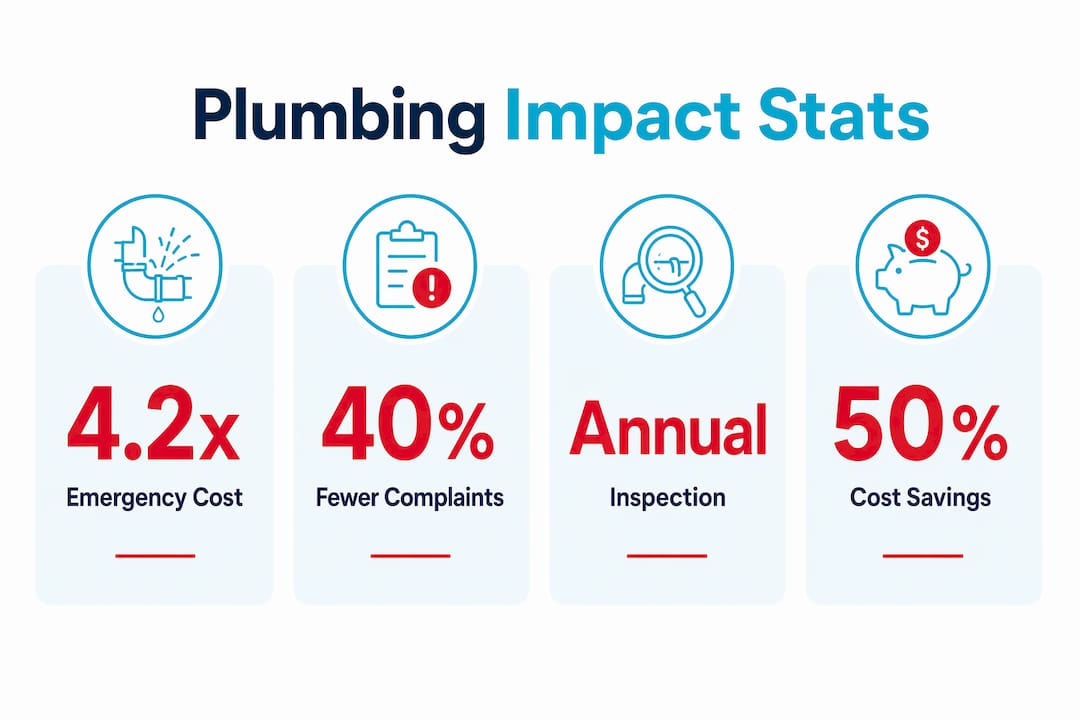
Plumbing reliability is one of the strongest predictors of tenant retention in rental properties. Properties with proactive plumbing maintenance report 40% fewer tenant complaints related to water and plumbing. Fewer complaints translate directly into longer lease terms and lower vacancy costs.
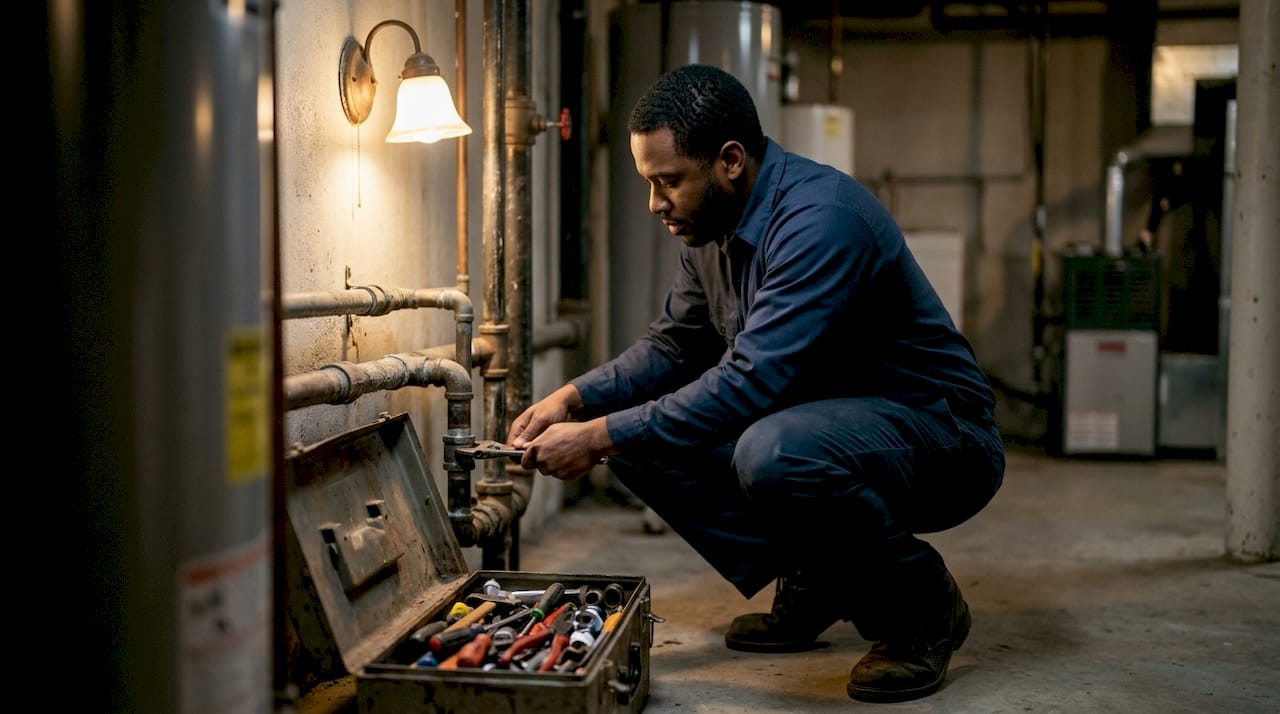
The cost gap between reactive and preventive approaches is significant. Emergency plumbing service calls cost 4.2 times more than scheduled preventive visits. That multiplier means a single burst pipe or failed water heater can wipe out months of maintenance savings in one afternoon.
The “run-to-failure” model carries hidden costs beyond the repair bill itself. Ignoring small leaks causes long-term structural damage and spikes water bills, often going undetected until the damage is severe. Tenants who experience repeated plumbing failures rarely renew their leases, and word spreads quickly in rental markets.
Pro Tip: Schedule a plumbing walkthrough at every lease renewal. Catching a slow drain or a dripping valve during a routine visit costs almost nothing. Catching it after a tenant complaint costs credibility and cash.
Key plumbing issues that drive tenant dissatisfaction include:
- Slow or blocked drains that back up into sinks, tubs, or toilets
- Low water pressure caused by corroded pipes or failing pressure regulators
- Water heater failures that leave tenants without hot water
- Running toilets that inflate utility bills and signal deferred maintenance
- Visible leaks under sinks or around fixtures that suggest neglect
Reliable plumbing reduces operational stress by cutting emergency call volume, which frees property managers to focus on tenant relations and portfolio growth rather than crisis response.
What are essential plumbing components and maintenance best practices?
Every property manager needs a clear picture of which plumbing components carry the highest failure risk and what maintenance cycles apply to each. Skipping this step is where most reactive maintenance budgets originate.
The core components to track across any managed property include:
- Washing machine hoses. Replace every 3–5 years and inspect annually for bulging or cracking. A burst hose is one of the most common causes of significant water damage in residential units.
- Water supply pressure. Annual pressure testing must keep system pressure below 80 psi. Pressure above that threshold accelerates wear on valves, joints, and appliance connections throughout the building.
- Shutoff valves. Test every valve annually to confirm it opens and closes fully. Seized valves during an emergency extend water damage dramatically.
- Water heaters. Flush sediment annually, inspect the anode rod every two years, and plan replacement at the 8–10 year mark regardless of apparent condition.
- Drain and sewer lines. Camera inspections every 3–5 years identify root intrusion, grease buildup, and pipe degradation before they cause backups.
- Trap seals and backflow preventers. Inspect these at every unit turnover. They are the primary barrier between the sewer system and living spaces.
The table below summarizes recommended maintenance cycles for the most critical components:
| Component | Inspection Frequency | Replacement or Action Trigger |
|---|---|---|
| Washing machine hoses | Annual | Replace every 3–5 years or at first sign of wear |
| Water pressure | Annual | Reduce if above 80 psi |
| Shutoff valves | Annual | Replace if seized or leaking |
| Water heaters | Annual flush, biennial anode check | Replace at 8–10 years |
| Drain and sewer lines | Every 3–5 years via camera | Repair at first sign of root intrusion or cracking |
| Trap seals and backflow preventers | Every unit turnover | Replace if seal is broken or device fails test |
Standardizing plumbing components across a property portfolio improves maintenance efficiency and reduces training time for staff. Using uniform shutoff valve models and water heater brands across all units means your maintenance team can work faster and your parts inventory stays lean.
Pro Tip: Build a building drainage system map for each property. A simple diagram showing drain lines, shutoff locations, and water heater positions cuts emergency response time in half when something goes wrong at 11 PM.
How does plumbing serve as a public health and asset protection tool?
Plumbing is critical public health infrastructure, not just a convenience system. Modern plumbing prevents waterborne diseases, removes toxic gases from living spaces, and maintains the sanitation standards that make a property legally habitable. For property managers, this is not an abstract concern. A failed trap seal allows sewer gas into a unit. A compromised backflow preventer can contaminate the entire building’s water supply.
“Plumbing infrastructure is the single most critical system for preventing disease outbreaks in residential buildings. Trap seals, backflow preventers, and properly vented drain lines form the barrier between sanitary living conditions and contamination. When these components fail, the consequences extend beyond one unit and affect every tenant in the building.”
The connection between plumbing quality and property valuation is direct. Poor plumbing reduces property valuation because unreliable systems make a property uninhabitable regardless of how attractive the finishes or location are. Appraisers and buyers both discount properties with documented plumbing deficiencies, and lenders sometimes require repairs before financing closes.
Modern plumbing technologies also support environmental sustainability goals that matter to both investors and tenants. Low-flow fixtures, pressure-reducing valves, and water-efficient appliances reduce consumption without sacrificing performance. These upgrades lower utility costs in properties where water is a landlord expense, and they signal responsible ownership to prospective tenants who increasingly factor sustainability into their rental decisions.
Key public health and asset protection functions that plumbing serves:
- Trap seals block sewer gases including hydrogen sulfide from entering living spaces
- Backflow preventers stop contaminated water from reversing into the potable supply
- Properly maintained drain lines prevent standing water that breeds bacteria and mold
- Functional water heaters maintain temperatures that prevent Legionella growth in hot water systems
- Pressure regulation protects pipe joints and appliance connections from stress fractures
What practical strategies can property managers use to integrate plumbing into asset plans?
Treating plumbing as part of an asset management strategy, rather than a line item for emergency repairs, changes how you budget, schedule, and communicate with tenants. The shift is not complicated, but it requires deliberate systems.
Maintaining digital logs of plumbing maintenance history is essential for insurance claims and code compliance audits. A documented service record proves that you acted responsibly when a tenant files a claim or an inspector arrives. Without records, you are at the mercy of whoever is telling the story. Digital logs also reveal patterns, such as a specific unit that generates repeated drain calls, which points to a structural issue rather than tenant behavior.
Practical strategies to build plumbing into your asset management plan:
- Create a preventive maintenance calendar. Schedule inspections by component type across all units, not just when something breaks. Tie the calendar to lease renewal dates so inspections happen at natural transition points.
- Budget for plumbing as a capital line item. Small maintenance investments prevent major capital expenses. Allocate a fixed annual amount per unit for plumbing upkeep, separate from emergency repair reserves.
- Standardize parts across your portfolio. Uniform shutoff valves and water heater models reduce parts inventory and cut the time your maintenance team spends sourcing components during repairs.
- Train staff on shutoff locations and basic triage. A maintenance coordinator who can isolate a leak within two minutes prevents thousands of dollars in water damage while the plumber is in transit.
- Use drainage troubleshooting protocols before calling a plumber. Many drain issues resolve with basic clearing techniques. Reserving plumber visits for genuine mechanical failures keeps service costs down.
Pro Tip: Review your 2026 plumbing regulations annually. Code changes affect what components are legally required in managed properties, and staying current protects you from compliance penalties during inspections.
Budgeting for plumbing as a long-term investment rather than an unpredictable expense gives you control over one of the largest cost variables in property management. Managers who adopt this approach report fewer emergency calls, more predictable cash flow, and stronger tenant relationships built on the simple fact that things work when they should.
Key Takeaways
Proactive plumbing maintenance is the single most cost-effective strategy for reducing tenant complaints, protecting asset value, and avoiding emergency repair costs in managed properties.
| Point | Details |
|---|---|
| Emergency repairs cost far more | Emergency plumbing calls cost 4.2 times more than scheduled preventive visits. |
| Proactive care cuts complaints | Properties with preventive maintenance programs report 40% fewer plumbing-related tenant complaints. |
| Digital logs protect managers | Documented maintenance history supports insurance claims and code compliance audits. |
| Standardization saves time and money | Uniform components across a portfolio reduce parts inventory and staff training time. |
| Plumbing protects public health | Trap seals and backflow preventers are the primary barrier against contamination and sewer gas in occupied units. |
Why I stopped treating plumbing as a reactive budget line
After years of watching property managers scramble after burst pipes and flooded units, the pattern became impossible to ignore. The managers who spent the most on plumbing emergencies were almost always the ones who spent the least on scheduled maintenance. The math is not subtle. A $150 annual inspection catches the slow leak that would have become a $3,000 drywall replacement six months later.
The mindset shift that actually changes outcomes is treating every plumbing component as an asset with a known lifespan. A water heater installed in 2017 is not “working fine.” It is 9 years into a 10-year service life, and it belongs on a replacement schedule, not a watch list. Managers who think this way stop being surprised by failures because they have already planned for them.
The tenant satisfaction angle is equally underrated. Tenants rarely notice when plumbing works perfectly. They notice every single time it does not. One week without hot water generates more negative reviews and lease non-renewals than almost any other maintenance failure. Fixing plumbing proactively is invisible to tenants in the best possible way. It keeps the relationship professional and the property competitive.
The property managers I have seen build the strongest portfolios share one habit: they inspect before they are forced to. That discipline, applied consistently to plumbing systems, pays back in lower costs, longer tenancies, and properties that hold their value through market cycles.
— Renate
Quality plumbing supplies for property managers
Property managers who commit to preventive maintenance need reliable access to quality components, from shutoff valves and drain fittings to water heaters and pressure regulators.
Santehnikasveikals carries a wide catalog of plumbing supplies and tools suited for both single-unit maintenance and multi-property portfolios. Whether you need VIEGA drain fittings, SCHELL angle valves, or replacement siphon components, the platform offers delivery across Latvia with a product range built for professional use. Property managers sourcing components for scheduled maintenance programs will find the catalog covers the full scope of residential and commercial plumbing needs.
FAQ
What is the role of plumbing in property management?
Plumbing is the core infrastructure system that determines habitability, tenant satisfaction, and asset value in managed properties. Proactive plumbing maintenance reduces emergency costs, prevents health hazards, and supports long-term property valuation.
How does plumbing affect tenant satisfaction?
Reliable plumbing directly reduces tenant complaints. Properties with preventive maintenance programs report 40% fewer plumbing-related complaints, which correlates with higher occupancy and longer lease terms.
How often should property managers inspect plumbing systems?
Annual inspections cover pressure testing, valve checks, and water heater maintenance. Drain and sewer camera inspections are recommended every 3–5 years, and washing machine hoses should be replaced on the same cycle.
Why are digital maintenance logs important for plumbing?
Digital logs document service history, which supports insurance claims and code compliance audits. Without records, property managers have no defense against liability claims or inspector findings.
How does poor plumbing affect property value?
Poor plumbing reduces property valuation because unreliable systems make a property uninhabitable regardless of other features. Appraisers and lenders both discount properties with documented plumbing deficiencies.
Recommended
- Plumbing Regulations 2026: What Builders Must Know | Santehnikasveikals.lv
- Must-Have Plumbing Tools for DIY Homeowners in 2026 | Santehnikasveikals.lv
- Drainage System Troubleshooting Steps for Homeowners | Santehnikasveikals.lv
- What Is Pipe Insulation and Why Your Home Needs It | Santehnikasveikals.lv
Palikite komentarą