




















































Match 35mm or 40mm to Replace a Ceramic Cartridge in Latvia
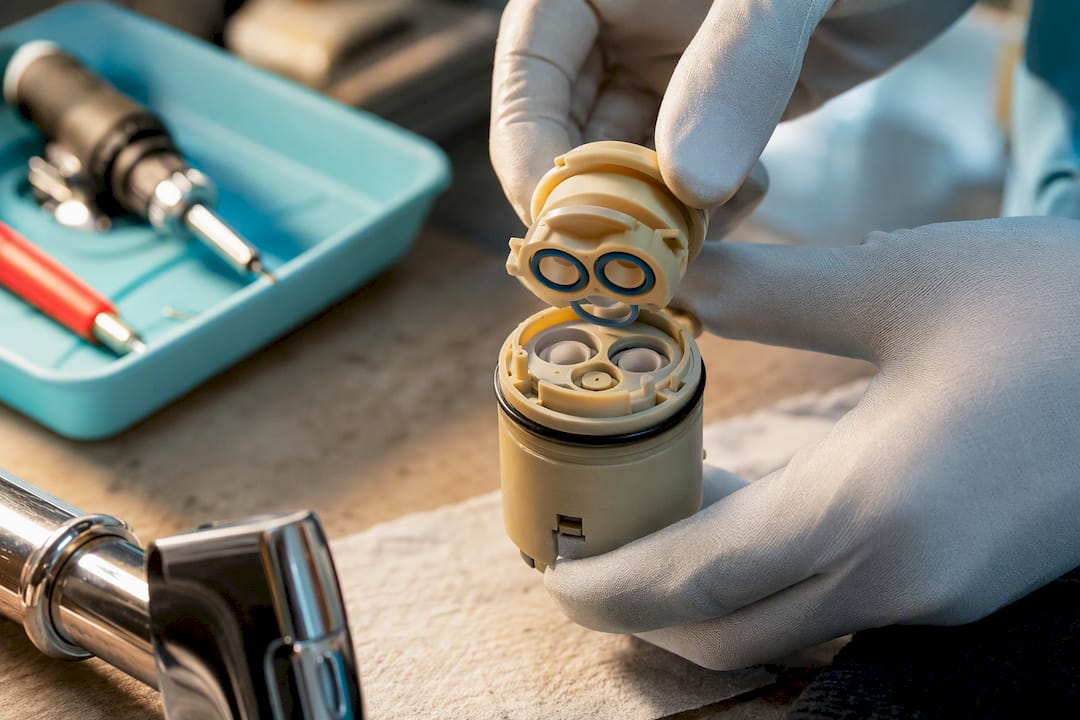
Yes, you can replace a ceramic cartridge in a faucet yourself in most cases. Success comes down to three checks before you buy anything: measure the diameter (usually 35mm or 40mm), match the stem style and tab position, and confirm you can actually reach the cartridge without opening walls. If the old cartridge is seized solid or the valve body looks corroded, stop and call a plumber instead of forcing it.
TL;DR:
- Measuring the diameter, stem style, and tab position is essential to find a correctly fitting replacement cartridge, especially if the old one is seized or corroded.
- Hard water causes mineral buildup and debris that can fuse the cartridge in place or scratch ceramic discs, significantly reducing its lifespan.
- Costs range from inexpensive aftermarket options to more reliable OEM parts, and having the right tools and spare O-rings on hand streamlines the DIY replacement process.
- A professional should be called when the cartridge won’t budge despite gentle twisting, or if the valve body shows corrosion or requires wall or surround removal.
- Regular cleaning, flushing, and using plumber’s silicone grease can extend the life of a ceramic cartridge in homes with hard water.
Table of Contents
- What Is a Ceramic Cartridge in a Faucet?
- How Do You Identify the Right Replacement Cartridge?
- How Do You Replace a Faucet Cartridge Step by Step?
- Does Water Quality Affect Cartridge Lifespan?
- How Much Does a Replacement Cartridge Cost?
- When Should You Call a Plumber Instead?
- Find Cartridges, Retainers, and Tools at Santehnikasveikals
- Sources
- FAQ
What Is a Ceramic Cartridge in a Faucet?
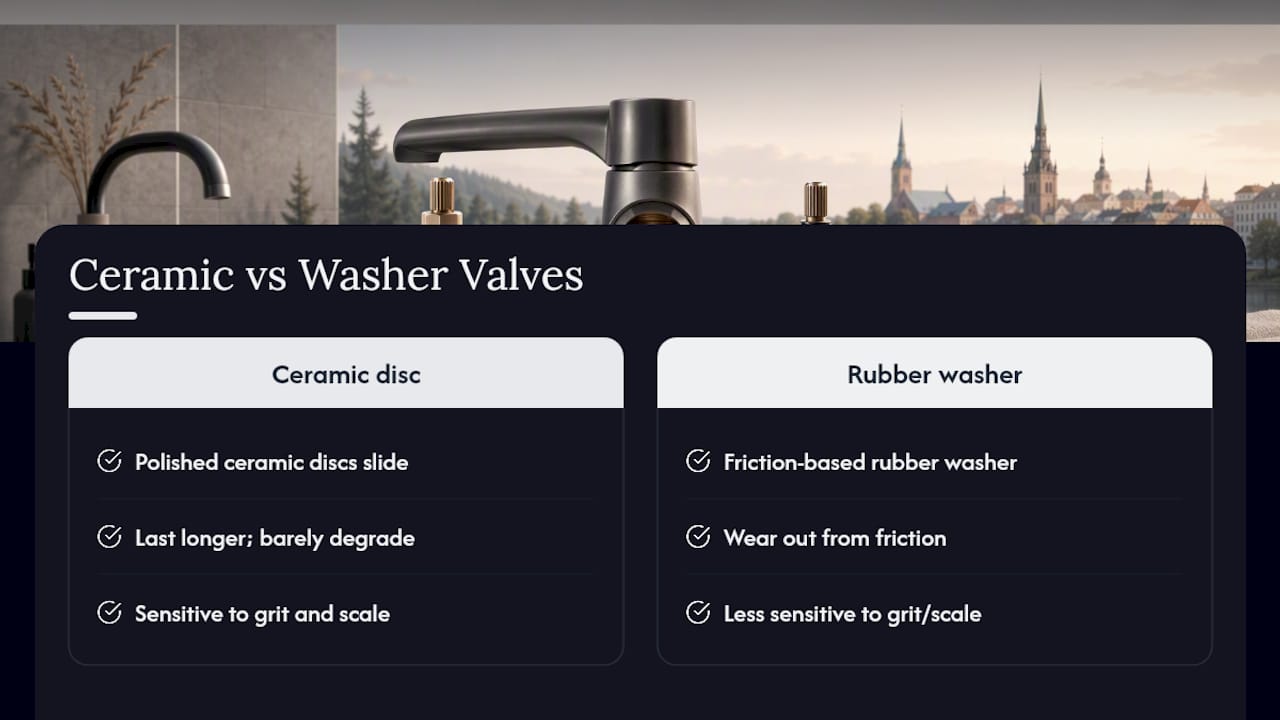
A ceramic cartridge controls water flow and temperature using two polished ceramic discs that slide against each other. Turn the handle a quarter turn, and the holes in the discs line up to let water through; turn it the other way, and they seal shut. That simple mechanism is why single-handle kitchen faucets, bathroom sinks, and shower valves all lean on the same basic part.
Compared to the old rubber-washer designs that wear out from friction, ceramic discs barely degrade under normal use. Plumbing professionals note that ceramic disk cartridges last longer than washer-style valves but are more sensitive to grit and mineral buildup, which is the one real weakness in an otherwise durable design. Debris trapped between the discs, or scale from hard water, is what eventually causes a drip or a stuck handle.
How Do You Identify the Right Replacement Cartridge?
Buying blind is the single most common mistake people make with faucet cartridge replacement. Cartridges that look similar can differ in bore diameter, stem length, and tab orientation, and a mismatch means a leak, a stripped fitting, or a return trip to the store.
Work through this checklist before you order anything:
- Measure the diameter. Most residential cartridges fall around 35mm or 40mm, though specialty ceramic quarter-turn cartridges can vary by brand and application.
- Check the overall height of the cartridge from base to stem tip, since a cartridge that sits too high or low throws off handle alignment.
- Note the stem style. Splined, square, and D-shaped stems are not interchangeable, and short stems won’t work where a long stem is required.
- Look at the bottom tabs or ears. Their spacing and orientation determine how the cartridge locks into the valve body, and getting this wrong can even reverse your hot and cold sides.
- Search for a stamped model number on the cartridge body or retainer nut. Manufacturer part pages, like Elkay’s cartridge specification listings, show the dimensional data that lets you cross-check a part before buying.
- Photograph the old cartridge and the valve bore. A clear photo lets a supplier match your part even when the stamp has worn off.
If you’re still not sure, bring the old cartridge or your photos to a local plumbing supplier. Matching by sight is faster and more reliable than guessing from memory.
How Do You Replace a Faucet Cartridge Step by Step?
Manufacturer guides consistently walk through the same sequence, and it holds up whether you’re working on a kitchen faucet or a shower valve. Here’s what that process looks like from start to finish.
Tools to gather first:
- Hex keys (Allen wrenches) in the sizes your handle screw requires
- A flathead or Phillips screwdriver
- A 25mm socket or the OEM cartridge installation tool
- A cartridge puller (a cheap universal puller is worth having on hand, especially in hard water areas where cartridges seize more often)
- Plumber’s silicone grease for the O-rings
The replacement sequence:
- Shut off the water supply at the stop valves under the sink or the main line for a shower valve, then open the faucet to release pressure.
- Cover the drain with a rag or plug so no small parts fall in, then remove the handle and any decorative trim to expose the cartridge.
- Locate the retainer, either a clip or a nut, and remove it carefully. Protect the sink basin while doing this, and use a small pick to lift a clip’s tab rather than prying it sideways.
- Twist the cartridge gently to break the mineral bond holding it in place, then pull it straight out. If it won’t budge or the valve body shifts, stop rather than risk damaging the housing.
- Flush the valve bore with water to clear loose debris, and scrub any visible scale with a nylon brush and a vinegar-based descaler. Inspect the retainer and O-rings for wear while you’re in there.
- Lubricate the new cartridge’s O-rings with plumber’s silicone grease and align the tabs or ears with the 12 o’clock and 6 o’clock openings in the valve body, since getting this orientation wrong can reverse hot and cold.
- Seat the cartridge without forcing it, reinstall the retainer clip or nut, then reassemble the handle and trim.
- Turn the water back on slowly and run the handle through its full range, checking hot and cold, before declaring the job done.
Pro Tip: If a retaining clip resists, don’t bend its legs trying to force it out. A damaged clip is a cheap part to replace, but a cracked valve body from prying too hard usually means buying a whole new faucet.
Does Water Quality Affect Cartridge Lifespan?
Hard water is the leading cause of premature cartridge failure. Dissolved minerals build up inside the valve bore and on the ceramic discs themselves, and that scale can fuse a cartridge in place hard enough to need a puller just to get it out. Suspended grit from old pipes causes similar wear by scratching the disc surfaces that need a smooth seal to work.
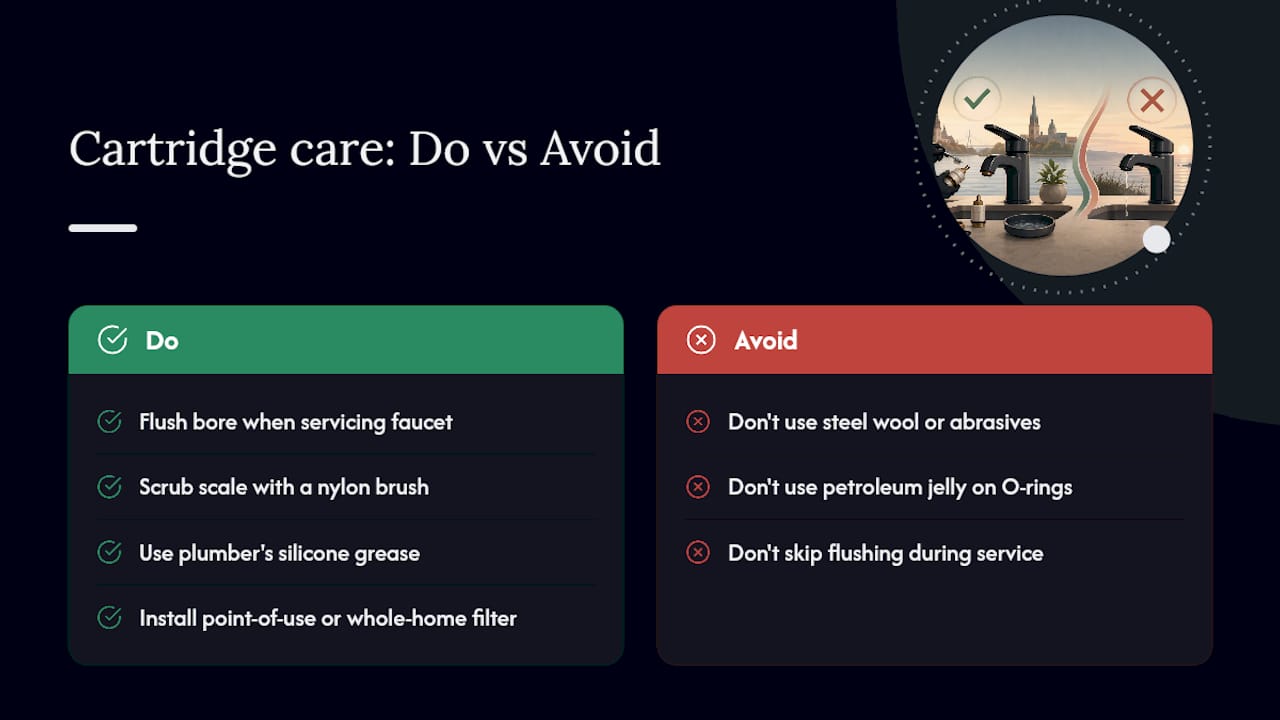
You can extend a cartridge’s working life with a few habits. Flush the bore whenever you service a faucet, clean off visible scale with a nylon brush rather than steel wool or anything abrasive, and always use plumber’s silicone grease, not petroleum jelly, when you reinstall O-rings. In areas with consistently hard water, a point-of-use filter or a whole-home water treatment setup reduces scale buildup across every fixture in the house, not just the one you just repaired.
How Much Does a Replacement Cartridge Cost?
Prices vary a lot depending on whether you buy a generic aftermarket cartridge or an OEM part matched to your faucet brand. Generic cartridges tend to sit at the low end of the price range, while branded OEM parts cost more but carry less risk of a poor fit. OEM cartridges reduce fit problems on older valves, while aftermarket versions sometimes need an extra O-ring swap to seal properly.
A basic toolset adds a small one-time cost if you don’t already own it:
- A cartridge puller, useful even beyond this one repair if your home has hard water
- An OEM installation tool or a 25mm socket, depending on your faucet brand
- Spare O-rings and a replacement retainer clip, cheap insurance against a part that’s already worn
When shopping, bring the old cartridge or clear photos, choose a seller who accepts returns in case the fit is off, and pick up spare clips and O-rings in the same order so you’re not waiting on a second delivery mid-repair.
When Should You Call a Plumber Instead?
DIY replacement makes sense when the cartridge is easy to reach, you’ve confirmed the exact part you need, and the valve bore looks clean once you get the old cartridge out. Those are the conditions where the job stays a thirty-minute fix.
Call a professional when the cartridge won’t budge even after gentle twisting and a puller, when the valve body shows corrosion or pitting, or when access requires cutting into a wall or pulling a tub surround. A full faucet replacement is sometimes the more sensible fix at that point. Weigh a plumber’s hourly rate against the cost of a cracked valve body, because that mistake usually costs far more to fix than the visit would have.
— Renate
Find Cartridges, Retainers, and Tools at Santehnikasveikals
Find replacement ceramic cartridges, retainer clips, O-rings, and the pullers and installation tools needed to do this job right, with delivery available to ensure timely arrival of parts.

If you’re not certain which cartridge fits your faucet, consider sending a photo of the old part and the valve bore to a support team before ordering. This can be a faster way to confirm the match than guessing from a part number that may have worn off years ago. Browsing while you’re at it also makes sense if your renovation goes further than one faucet. Many online stores carry products from stone resin bathtubs to WC connection kits, so a cartridge swap can be the starting point for a bigger bathroom refresh. Check cartridge and hardware selections online, and if your build calls for more than a repair, product catalogs are available to cover the rest of the project too.
Sources
- 1269 Cartridge: Single Handle Bathroom Faucets — Moen Solutions
- Faucet cartridge types — Dean’s Plumbing
- Moen 1225 cartridge replacement: step-by-step guide — PlumbingByTheBook
FAQ
What size is a standard ceramic faucet cartridge?
Most residential ceramic cartridges measure around 35mm or 40mm in diameter, though exact dimensions vary by brand and faucet type, so always measure your old cartridge before ordering.
Can a ceramic cartridge be repaired instead of replaced?
Not usually. The ceramic discs inside are sealed and not designed to be serviced, so once a cartridge drips or sticks, replacement is the standard fix rather than a repair.
What are the signs a cartridge needs replacing?
A persistent drip, a stiff or hard-to-turn handle, unstable water temperature, and reduced flow are the four most common symptoms of a worn or scaled cartridge.
Is it safe to use petroleum jelly on cartridge O-rings?
No. Plumber’s silicone grease is the recommended lubricant for O-rings and sealing surfaces, since petroleum-based products can degrade rubber over time.
How long does a ceramic cartridge typically last?
Ceramic cartridges generally outlast rubber-washer designs by a wide margin, though hard water and mineral buildup can shorten their working life considerably in affected homes.
Palikite komentarą