




















































Eco-Friendly Plumbing Materials: A Homeowner’s Guide
TL;DR:
- Eco-friendly plumbing materials minimize environmental harm while providing safe, durable water systems during a building’s lifespan. PEX, copper, stainless steel, and HDPE are common options, each with unique sustainability benefits and tradeoffs. Proper certification, lifecycle assessment, and installation practices are essential for creating truly sustainable plumbing systems.
Eco-friendly plumbing materials are defined as those that minimize environmental harm while delivering safe, durable water service throughout a building’s lifetime. Selecting the right materials means looking beyond price and availability. You need to weigh chemical safety, embodied carbon, recyclability, and compliance with health standards like NSF/ANSI 61 and NSF/ANSI 372. The most commonly recognized green plumbing materials include PEX, copper, stainless steel, and HDPE. Each has real strengths and real tradeoffs, and knowing both is what separates a genuinely sustainable plumbing system from one that just sounds good on paper.
What materials are considered eco-friendly for plumbing systems?
Eco-friendly plumbing materials are those that score well across three areas: low environmental impact during production, safe performance in contact with drinking water, and a long, reliable service life. No single material wins on all three counts. The right choice depends on your project, your local water chemistry, and the certifications you can verify.
The four materials most widely recognized as sustainable plumbing options are PEX, HDPE, copper, and stainless steel. Each earns its place for different reasons.
- PEX (cross-linked polyethylene): PEX pipe manufacturing requires 44% less energy and produces 64% lower global warming potential than copper. That is a significant lifecycle advantage. PEX is also flexible, which reduces the number of joints needed and lowers the risk of leaks.
- HDPE (high-density polyethylene): HDPE performs well in both pressure and drainage applications. It resists corrosion and has a long service life, making it a practical eco-friendly pipe alternative for underground and outdoor runs.
- Copper: Copper is fully recyclable and has a proven service life of 50 years or more. Its manufacturing footprint is higher than PEX, but its recyclability at end of life partially offsets that impact.
- Stainless steel: Stainless steel resists corrosion and leaches very little into water. A 2026 PLOS Water study found that stainless steel pipes showed minimal lead leaching of just 0.3–0.4 µg/L, compared to 192 µg/L from leaded brass taps. That gap matters enormously for potable water safety.
PVC is a different story. PVC carries environmental and health risks due to additives like lead-based stabilizers, making it a poor choice for potable water lines in any genuinely green plumbing system.
The IRC 2024 code, Section P2609.1, requires all potable water plumbing components to comply with NSF/ANSI 61 and NSF/ANSI 372. NSF/ANSI 372 sets a weighted-average lead content limit of 0.25% for wetted surfaces. Any material you specify for drinking water lines must carry both certifications.
Pro Tip: Never assume a product is lead-free based on marketing language alone. Check the NSF product certification database directly to confirm both NSF/ANSI 61 and NSF/ANSI 372 listings before purchasing.
How do lifecycle impacts and certifications shape eco-friendly choices?
A material’s environmental impact does not begin when water flows through it. It starts at the mine or chemical plant and ends in a landfill or recycling facility. Lifecycle assessment (LCA) measures the total environmental cost across all those stages, including manufacturing energy, global warming potential, and service life assumptions.
Product-specific verified Environmental Product Declarations (EPDs) are the clearest way to compare materials on embodied carbon. Verified EPDs are essential for precise embodied carbon accounting and LEED v5 sustainability compliance. Without a product-specific EPD, you are working with industry averages that may not reflect what you are actually installing.
Here is how to evaluate a material’s lifecycle impact step by step:
- Check manufacturing energy and global warming potential. PEX and HDPE have lower embodied energy than copper. Copper has higher upfront impact but offsets it through recyclability.
- Assess service life assumptions. A material that lasts 50 years creates far less waste than one replaced every 20 years. Longer service life means fewer replacement cycles and less total material use.
- Verify health certifications. NSF/ANSI 61 covers broad contaminant leaching from all wetted surfaces. NSF/ANSI 372 specifically certifies lead content limits for plumbing components. Both are required for potable water use under current codes.
- Evaluate end-of-life options. Metals like copper and stainless steel are fully recyclable. Plastics like PEX and HDPE have more limited recycling infrastructure and often end up in landfill.
The comparison below shows how the most common materials stack up on key lifecycle criteria.
| Material | Embodied energy | Recyclability | NSF/ANSI 61 eligible | Lead leaching risk |
|---|---|---|---|---|
| PEX | Low | Limited | Yes | Low |
| HDPE | Low | Moderate | Yes | Low |
| Copper | High | Excellent | Yes | Low (pure copper) |
| Stainless steel | Moderate | Excellent | Yes | Very low |
| PVC (standard) | Moderate | Poor | Varies | High (with lead stabilizers) |
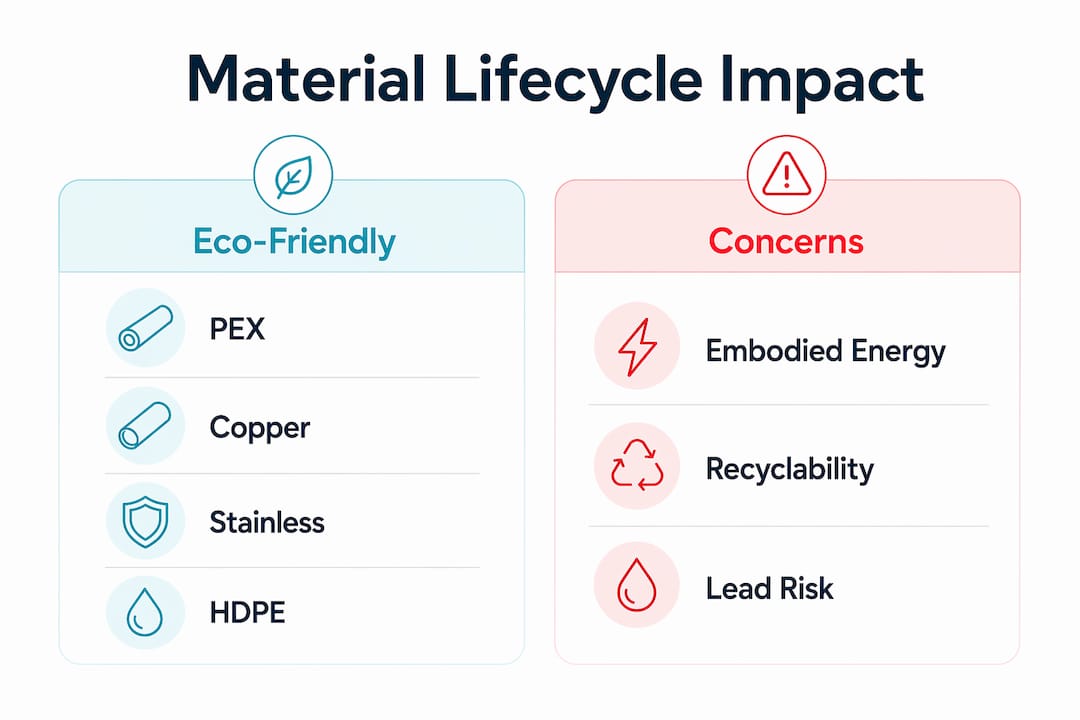
End-of-life scenarios significantly affect overall plumbing material sustainability. The gap between metal recycling and plastic landfill disposal is one of the most underappreciated factors in green plumbing material selection.
Pro Tip: When requesting EPDs from a supplier, ask specifically for “product-specific verified EPDs” rather than generic industry EPDs. Generic declarations can overstate environmental performance by averaging across product lines.
What are the practical tradeoffs of popular green plumbing materials?
Every material on the eco-friendly list comes with real limitations. Understanding those tradeoffs helps you make a choice that holds up over decades, not just on paper.
PEX: low carbon, limited recyclability
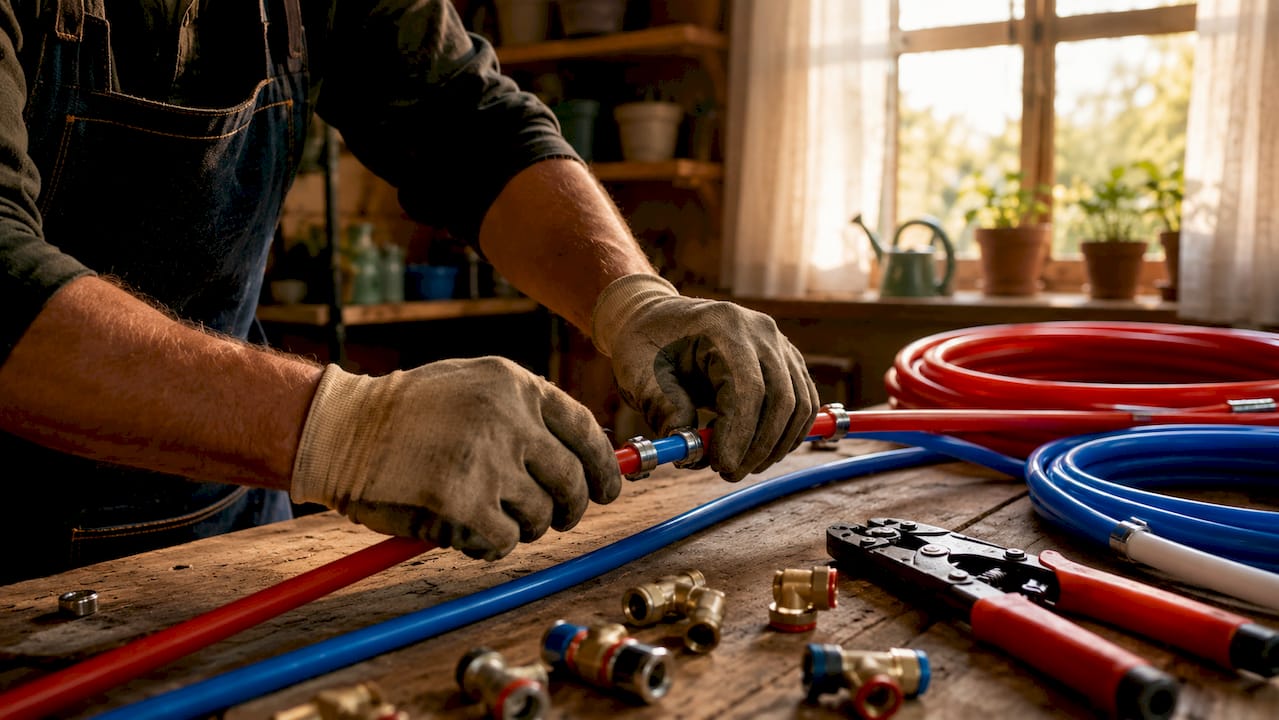
PEX delivers the best manufacturing footprint of any common pipe material. Its flexibility means fewer fittings, fewer potential leak points, and faster installation. The downside is that PEX cannot be recycled through standard municipal programs. At end of life, most PEX pipe goes to landfill. For a project prioritizing whole-life carbon, that end-of-life gap is worth factoring in.
Copper: durable and fully recyclable
Copper has the highest embodied energy of the four main eco-friendly options. However, its 50-plus year service life and near-universal recyclability make it competitive over a full lifecycle. Copper also has natural antimicrobial properties, which reduce biofilm growth inside pipes. The main risk is corrosion in acidic water conditions, which can increase copper leaching into drinking water. Always check local water chemistry before specifying copper.
Stainless steel: the safest choice for water quality
Stainless steel is the strongest performer on water safety. Its minimal lead leaching makes it the best choice where water quality is the top priority. It is also highly durable and fully recyclable. The tradeoff is cost. Stainless steel pipe and fittings cost significantly more than PEX or copper, which limits its use to high-priority applications like drinking water supply lines and certified shower fittings.
HDPE: the underground workhorse
HDPE excels in applications where corrosion resistance and flexibility matter most, such as underground supply lines and outdoor runs. It has a low carbon footprint during manufacturing and performs reliably over long service periods. Its recyclability is better than PEX but still lags behind metals. HDPE is not commonly used for interior hot water distribution, where PEX or copper remain the standard choices.
The table below summarizes the key practical tradeoffs.
| Material | Lifespan | Recyclability | Best application | Main limitation |
|---|---|---|---|---|
| PEX | 25–50 years | Poor | Interior supply lines | Not recyclable |
| HDPE | 50+ years | Moderate | Underground/outdoor | Not for hot water indoors |
| Copper | 50+ years | Excellent | Full system use | Higher cost, corrosion risk |
| Stainless steel | 50+ years | Excellent | Drinking water lines | High upfront cost |
How can homeowners and builders select eco-friendly plumbing materials?
Choosing environmentally safe plumbing solutions requires more than picking a material from a list. The process involves verifying certifications, understanding local conditions, and specifying installation practices that protect the material’s performance over time.
- Verify NSF/ANSI 61 and NSF/ANSI 372 certifications. Check the NSF International product database before purchasing any fitting, pipe, or valve for potable water use. Both certifications are required under IRC 2024 and are the baseline for any legitimate green plumbing claim.
- Request product-specific EPDs. Generic industry EPDs mask variation between products. A verified product EPD with long service-life assumptions gives you accurate whole-life carbon data for your specification.
- Match the material to your water chemistry. Copper corrodes in low-pH water. Stainless steel and PEX perform better in acidic conditions. Request a water quality report from your utility before finalizing material choices.
- Minimize joints through good installation design. Proper installation that reduces pipe joints and leaks is as important as material choice for long-term sustainability. Fewer joints mean fewer leak points and a longer effective service life.
- Size pipes correctly. Oversized pipes hold more standing water, which increases heat loss and energy use. Tools like the IAP Water Demand Calculator help builders size pipes accurately, reducing both water waste and energy consumption.
- Specify lead-free certified fittings throughout. Pipes alone do not determine water safety. Fittings, valves, and traps must also carry NSF/ANSI 372 certification to keep the full system lead-free.
Pro Tip: Ask your supplier for the specific product certification number, not just a claim of compliance. Certification numbers can be verified directly on the NSF International website in under two minutes.
Key Takeaways
Sustainability in plumbing is a lifecycle decision, not a single material choice. The most effective approach combines low-embodied-carbon materials, verified health certifications, and installation practices that extend service life and prevent leaks.
| Point | Details |
|---|---|
| Top eco-friendly materials | PEX, HDPE, copper, and stainless steel each qualify, with different strengths and tradeoffs. |
| Health certifications are mandatory | NSF/ANSI 61 and NSF/ANSI 372 are required under IRC 2024 for all potable water components. |
| Lifecycle beats first impressions | PEX has the lowest manufacturing footprint, but copper and stainless steel win on recyclability. |
| Installation quality matters | Reducing pipe joints and preventing leaks extends service life as much as material selection does. |
| EPDs enable real comparisons | Product-specific verified EPDs are the only reliable way to compare embodied carbon across materials. |
What I’ve learned about eco-friendly plumbing after years of watching projects go wrong
The most common mistake I see is treating “eco-friendly” as a label rather than a set of criteria. A builder specifies PEX because it has a low carbon footprint during manufacturing, then installs it with brass fittings that have never been tested for lead content. The pipe is green. The system is not.
The second mistake is ignoring local water chemistry. I have seen copper installations corrode within a decade in areas with acidic groundwater. The homeowner chose copper because it is “natural and recyclable.” Nobody checked the water pH. The result was a replacement job that consumed more resources than a well-specified PEX system would have in 40 years.
What actually works is treating material selection as a system decision. You need the pipe, the fittings, the traps, and the installation method to work together. A certified bath drain component from a verified manufacturer matters as much as the pipe running to it. The whole system either meets the standard or it does not.
The emerging materials worth watching are recycled-content metal pipes and bio-based polymer alternatives. Neither is mainstream yet, but both are moving through certification pipelines. Standards like NSF/ANSI 61 will need to evolve to keep pace. For now, the practical advice is simple: verify certifications, request EPDs, match materials to conditions, and build for longevity. The greenest plumbing system is the one you never have to replace.
— Renate
Sustainable plumbing products at Santehnikasveikals
Homeowners and builders who want to act on what they have read here do not need to search across multiple suppliers.

Santehnikasveikals carries a wide range of plumbing components suited to green building projects, including lead-free certified fittings and traps from Viega, a brand with a strong track record on NSF-equivalent European safety standards. The catalog covers pipes, fittings, shower components, and drainage products that meet the certification benchmarks covered in this article. Builders working on LEED-aligned projects can contact the Santehnikasveikals team directly for guidance on EPD-documented products. Browse the full plumbing product catalog to find components that match your sustainability specifications.
FAQ
What are the most eco-friendly pipe materials for home plumbing?
PEX, HDPE, copper, and stainless steel are the four most recognized eco-friendly pipe materials. Each qualifies based on low environmental impact, long service life, and eligibility for NSF/ANSI 61 certification for potable water use.
Is PVC pipe eco-friendly?
Standard PVC is not considered eco-friendly for potable water use. PVC can contain lead-based stabilizers and other additives that pose environmental and health risks across its lifecycle.
What does NSF/ANSI 372 certification mean for plumbing materials?
NSF/ANSI 372 certifies that a plumbing component’s wetted surfaces contain no more than 0.25% lead by weighted average. IRC 2024 requires this certification for all potable water plumbing components.
Does PEX pipe have a lower carbon footprint than copper?
Yes. PEX manufacturing requires 44% less energy and produces 64% lower global warming potential than copper pipe production. However, copper outperforms PEX at end of life due to its full recyclability.
Why do installation practices matter for sustainable plumbing?
Reducing pipe joints and preventing leaks extends a system’s effective service life, which directly reduces total material consumption over time. A well-installed system with average materials often outperforms a poorly installed system with premium eco-friendly pipes.
Atstājiet komentāru