





















































Building Materials List 2026 for Project Planners

For any U.S. project breaking ground in 2026, the non-negotiable staples remain cement/concrete, structural steel, dimensional lumber, bricks/CMU, gypsum board, insulation (fiberglass, mineral wool, spray foam), roofing assemblies, windows/doors, and MEP basics. Alongside those, the highest-impact trending picks to spec or pilot now are: Cross-Laminated Timber (CLT), hempcrete, mycelium composites, recycled-plastic masonry/lumber, green and low-carbon concrete, self-healing concrete, bamboo, cork insulation, rammed earth, and straw bale.
Construction material inflation outpaced bid-price growth as of June 2026, per ConstructConnect, reaching 9% year-over-year while bid prices rose only 3.5%. That gap means procurement timing and alternate specs are no longer optional risk-management steps. Lock in fixed-price purchase orders on steel, copper, and aluminum early. Pilot bio-based and recycled materials on non-critical enclosures or interior partitions before committing them to the structural envelope. Verify ASTM compliance and ICC/IBC code acceptance before any alternate material enters a bid package.
Key Takeaways
The single most important action for 2026 project planners: issue fixed-price purchase orders on aluminum, copper, and structural steel at least 16 weeks ahead, because material inflation reached a high year-over-year level while bid prices grew only modestly.
| Point | Details |
|---|---|
| Lock in long-lead commodities early | Aluminum (+52.4%), copper (+29.7%), and steel (+16.9%) are the highest-risk items; fix prices now. |
| Write alternates into every spec | Pre-approved substitutes for long-lead items cut change-order time from weeks to hours on delivery failures. |
| Pilot bio-based materials first | Test CLT, hempcrete, or cork on non-critical enclosures before committing to the primary envelope. |
| Verify ASTM and ICC-ES compliance | No material enters a bid package without a current third-party test report or ICC-ES Evaluation Report. |
| Santehnikasveikals for MEP sourcing | Santehnikasveikals supplies plumbing fixtures, pipes, fittings, and heating systems with product catalogs and delivery. |
Table of Contents
- Your complete building materials list 2026: system-by-system checklist
- Top trending and eco-innovative materials to spec in 2026
- How to choose the right materials for your 2026 project
- 2026 market snapshot: price inflation, lead times, and what to do about it
- Sourcing, certifications, and U.S. standards to verify
- Plumbing and MEP materials, ready to order
- Sources
Your complete building materials list 2026: system-by-system checklist
Foundation
- Cement types: Portland cement (ASTM C150 Types I, II, III), blended cements (ASTM C595), and fly-ash blended mixes for reduced embodied carbon. Specify compressive strength class (typically 3,000–5,000 psi for residential/light commercial).
- Concrete mix: Ready-mix per ASTM C94; call out w/c ratio, admixtures, and air-entrainment for freeze-thaw zones.
- Rebar: ASTM A615 Grade 60 standard; ASTM A706 where weldability or seismic ductility is required.
- Vapor barriers: 10–20 mil polyethylene sheeting per ASTM E1745; specify Class A or B depending on radon and moisture exposure.
- Drainage: Perforated HDPE pipe (ASTM F405), drainage composite, and filter fabric. Note: drainage board lead times have stretched in coastal markets.
Structural frame
- Structural steel: ASTM A992 for wide-flange sections; ASTM A36 for plates and angles. Connections per AISC 360. Steel is a confirmed long-lead item in 2026.
- Dimensional lumber: Spruce-Pine-Fir (S-P-F) No. 2 and better, or Southern Yellow Pine (SYP) in the Southeast. Grade-stamp verification required.
- Engineered wood: LVL (Laminated Veneer Lumber), LSL, and I-joists per APA EWS marks. Specify moisture content limits for delivery.
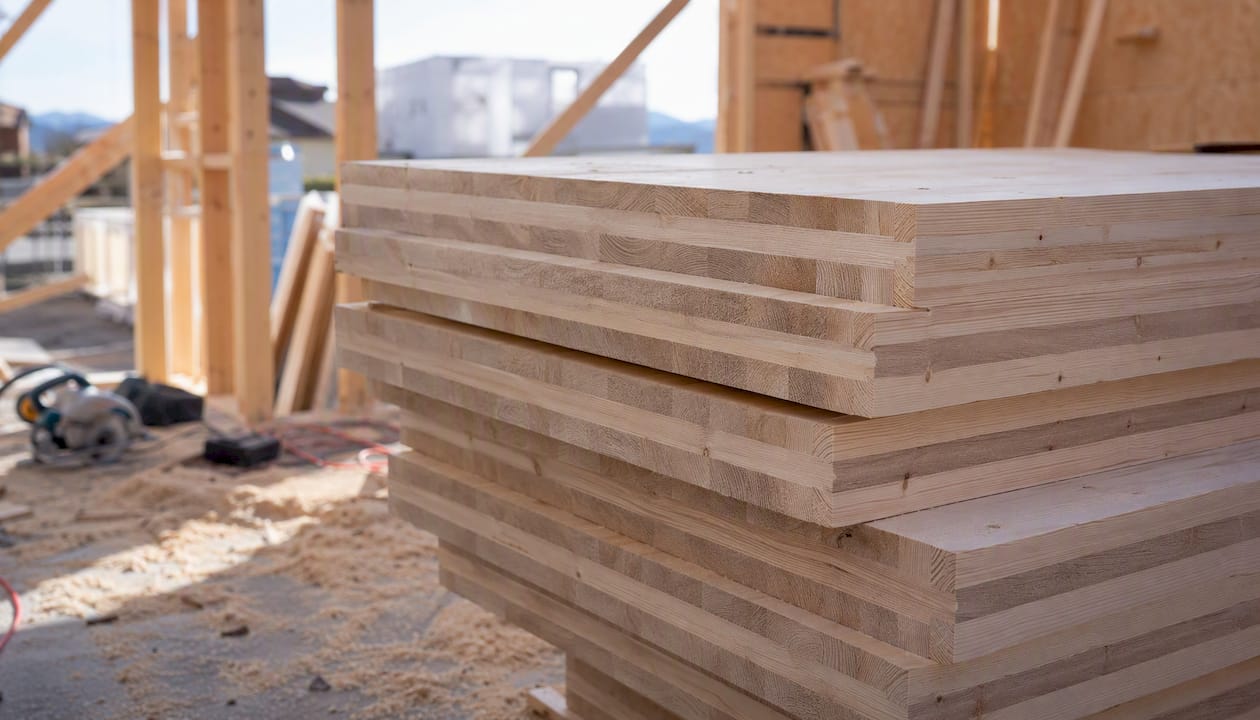
- CLT: Cross-Laminated Timber per ANSI/APA PRG 320; specify fire-rating exposure category (char-rate design per IBC Chapter 23). FSC certification available from most North American mills.
- Anchors and ties: Simpson Strong-Tie or equivalent; specify ICC ESR report numbers in the spec.
Exterior envelope
- Masonry: Modular clay brick (ASTM C216), CMU (ASTM C90). Specify Grade SW (severe weathering) in freeze-thaw zones.
- Sheathing: Structural wood panels (APA Rated Sheathing) or glass-mat gypsum (ASTM C1177) for high-moisture climates.
- Weather-resistive barriers (WRB): ASTM E2556 housewrap or fluid-applied membranes; specify vapor permeance class per climate zone (ASHRAE 90.1 Table).
- Insulation by climate zone:
- Zones 1–3: rigid mineral wool or extruded polystyrene (XPS, ASTM C578)
- Zones 4–6: closed-cell spray polyurethane foam (ccSPF, ASTM C1029) or mineral wool batt
- Zones 7–8: continuous exterior mineral wool plus air-sealing
- Windows/doors: Specify U-factor and SHGC per ENERGY STAR climate zone map; request NFRC labels.
Roofing
- Membrane: TPO or EPDM for low-slope (ASTM D6878 / D4637); specify 60-mil minimum thickness.
- Shingles: Asphalt architectural shingles, ASTM D3462; Class A fire rating.
- Metal: Standing-seam steel or aluminum; specify Kynar 500 coating for coastal exposure.
- Underlayment: Synthetic felt (ASTM D226 Type II equivalent) or self-adhered membrane at eaves and valleys.
- Flashings: Galvanized steel (ASTM A653) or copper; specify sealant compatibility.
Interiors and finishes
- Gypsum board: Standard (ASTM C1396), Type X fire-rated (5/8"), moisture-resistant (MR) for wet areas. Specify UL design numbers for fire-rated assemblies.
- Flooring substrate: Cement board (ASTM C1325) under tile; plywood subfloor (APA Rated) under hardwood or LVT.
- Finishes: Low-VOC paints and coatings per SCAQMD Rule 1113 or equivalent; specify Green Seal GS-11 where required.
MEP basics
- Pipe: PEX-A (ASTM F876/F877) for domestic water; copper Type L (ASTM B88) where code or owner preference requires; PVC Schedule 40 (ASTM D1785) for drain/waste/vent. For plumbing code compliance, verify local amendments to IPC or UPC before finalizing pipe specs.
- Conduit: EMT (ANSI C80.3) for interior; rigid PVC (NEMA TC-2) in concrete.
- Fixtures: Specify WaterSense-labeled toilets, sinks, and faucets for water-efficiency credits. Confirm rough-in dimensions before ordering.
- HVAC ducts: Sheet-metal (SMACNA standards) or flexible duct (UL 181); specify R-8 insulation on ducts in unconditioned spaces per ASHRAE 90.1.
Long-lead flags for 2026: structural steel sections, aluminum curtainwall, copper pipe, CLT panels, and specialty glazing. Place purchase orders 16–24 weeks ahead for these items.
Top trending and eco-innovative materials to spec in 2026
Frost & Sullivan identifies sustainability, AI-enabled materials design, circular business models, and bio-based materials as the top strategic imperatives shaping construction in 2026. The ten materials below represent the clearest opportunities for U.S. project planners right now.
1. Cross-Laminated Timber (CLT)
Best use: Mid-rise residential and commercial structures, floor/roof decks, shear walls. CLT qualifies under IBC Chapter 23 for tall wood buildings up to 18 stories with compliant fire design. Embodied carbon is substantially lower than concrete or steel for equivalent structural spans. Cost band: medium-high. Lead time: 10–16 weeks from North American mills; specify early. Request ANSI/APA PRG 320 certification and FSC chain-of-custody documentation.
2. Hempcrete
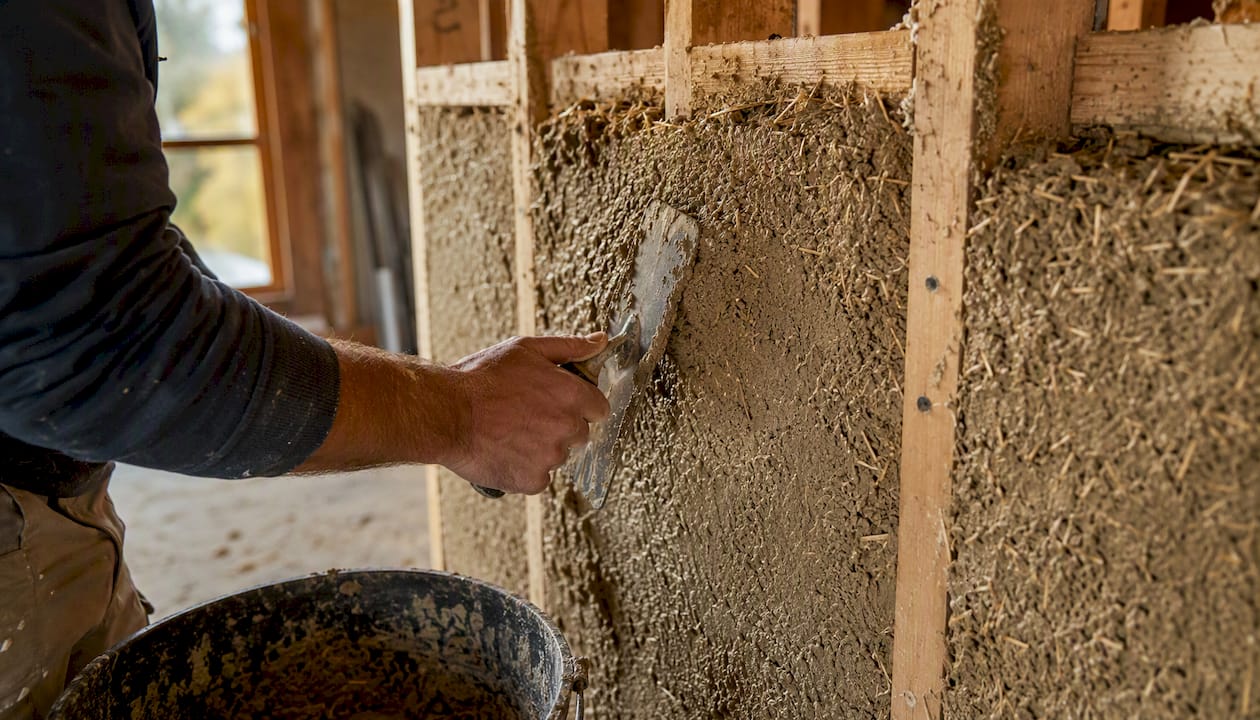
Best use: Non-load-bearing infill walls, interior partitions, and retrofit insulation in mild-to-moderate climates. Hempcrete (hemp hurd + lime binder) offers good hygrothermal performance and carbon sequestration. Cost band: medium-high; labor-intensive to cast in place. U.S. availability is growing but still regional. Check ICC Evaluation Service (ICC-ES) reports before specifying; not all jurisdictions have adopted hemp-based products under IBC. Avoid in high-humidity coastal zones without a verified lime-render exterior finish.
3. Mycelium composites
Best use: Non-structural insulation panels, packaging, and interior acoustic tiles. Grown from agricultural waste inoculated with fungal mycelium, these panels are fully compostable. Cost band: medium. U.S. manufacturers are scaling production, but large-format structural applications remain limited. Specify fire-test data (ASTM E84 surface burning) before use in occupied spaces.
4. Recycled-plastic bricks and lumber
Best use: Non-structural landscape walls, decking, fencing, and site furniture. Recycled HDPE and mixed-plastic lumber (ASTM D7032 for composite decking) resists moisture and insects. Cost band: low-medium. Widely available nationally. For structural applications, confirm load ratings and ICC-ES acceptance; most products are not rated for primary structural use.
5. Green / low-carbon concrete
Best use: Foundations, slabs, and structural frames where conventional concrete is already specified. Cost band: low-medium (SCMs often cost less than Portland cement). Widely available. Request Environmental Product Declarations (EPDs) per ISO 14044 from the ready-mix supplier.
6. Self-healing concrete
Best use: Infrastructure, parking structures, and below-grade applications where crack repair access is difficult. Bacteria-based or crystalline admixture systems (e.g., Xypex, Penetron) can seal hairline cracks autonomously. Cost band: high (premium admixture cost). Availability is national for admixture-based systems. Specify ASTM C1202 permeability testing as a performance benchmark.
7. Bamboo
Best use: Interior flooring, wall panels, and structural elements in mild climates. Engineered bamboo (laminated bamboo lumber) achieves tensile strength comparable to structural steel by weight. Cost band: medium. U.S. supply is primarily imported; lead times of 8–12 weeks are typical. Verify ASTM D5456 (structural composite lumber) equivalency and check local fire-code acceptance.
8. Cork insulation
Best use: Continuous exterior insulation, under-slab thermal breaks, and interior acoustic panels. Cork boards (expanded or agglomerated) are vapor-permeable, dimensionally stable, and renewable. Cost band: medium-high. Primarily imported from Portugal and Spain; plan for 8–14 week lead times. Specify density (100–200 kg/m³) and confirm R-value per inch with the supplier’s published test data.
9. Rammed earth
Best use: Load-bearing or non-load-bearing walls in arid and semi-arid climates (Southwest U.S.). Excellent thermal mass, near-zero embodied carbon when using on-site soil. Cost band: medium (labor-intensive). Not suitable for high-rainfall or freeze-thaw zones without stabilized mix and waterproof detailing. Verify with local AHJ; rammed earth falls under IBC Section 2109 (adobe/earthen construction) in most jurisdictions.
10. Straw bale construction
Best use: Residential walls in dry climates (Southwest, Mountain West). High insulation value (R-30+ per wall assembly). Cost band: low for materials, medium-high for labor and detailing. Moisture management is the critical risk; specify a vapor-open plaster finish and raised foundation detail. Check local building department acceptance; some jurisdictions require a special inspection program.
Pro Tip: Before committing any bio-based or recycled material to the primary building envelope, run a pilot installation on a non-critical enclosure element — a garage wall, a site office, or a landscape structure. Collect moisture readings, inspect after one seasonal cycle, and document installer feedback. That single cycle of real-world data is worth more than any manufacturer spec sheet.
How to choose the right materials for your 2026 project
Selecting materials for a 2026 U.S. project means balancing six criteria simultaneously. Here is a decision checklist specifiers can apply to any candidate material.
1. Cost shape: capex vs. lifecycle Compare installed first cost against 20-year maintenance and replacement costs. CLT and cork insulation carry higher upfront costs but lower lifecycle maintenance than conventional assemblies in many climates. Average project spending reached $1,617 per shopper in 2026 per JD Power, with buyers increasingly focused on value clarity. That sensitivity extends to commercial procurement.
2. Embodied carbon Request EPDs for concrete, steel, and insulation products. For projects pursuing LEED v4.1 or WELL certification, embodied-carbon documentation is a prerequisite for several credits.
3. Durability and lifecycle Specify service-life targets in the project manual. Structural steel with proper coating systems lasts 50+ years. Straw bale and hempcrete, without correct moisture detailing, can degrade in under 10 years. Match material durability to the building’s intended service life.
4. Fire and code compliance Every material must carry a code-compliant fire rating for its application. CLT requires char-rate design per IBC; straw bale and hempcrete need plaster encapsulation to meet IBC flame-spread requirements. Never accept a material without a current ICC-ES Evaluation Report or a local variance in writing.
5. Installation complexity Rammed earth, hempcrete, and straw bale require specialized trades. Confirm subcontractor availability in your region before specifying. Conventional materials (drywall, steel framing, concrete) have deep labor pools nationally.
6. Regional and climate suitability Rammed earth and straw bale perform well in the arid Southwest but are high-risk in the humid Southeast or freeze-thaw Northeast without significant detailing upgrades. Cork and mineral wool insulation perform across all climate zones. Match the material to ASHRAE 90.1 climate zone requirements before finalizing specs.
Questions to ask every supplier:
- Can you provide a current third-party test report (ASTM, UL, or ICC-ES)?
- What is your confirmed lead time for this project’s delivery window?
- What warranty do you offer, and who administers it?
- Do you provide installation support or certified installer referrals?
Red flags: no third-party test data, batch-to-batch inconsistency in published data sheets, no local installation references, and warranty terms that exclude consequential damage.
2026 market snapshot: price inflation, lead times, and what to do about it
ConstructConnect reported that construction-material inflation reached a high level year-over-year in June 2026, while bid prices rose only slightly over the same period. The gap between input costs and recoverable bid prices is the defining margin risk for 2026 projects.
The three commodities driving the most pain: aluminum (+52.4% YoY), copper (+29.7%), and steel (+16.9%), per ConstructConnect’s June 2026 data.
After a period of relative stability, construction input prices rose again through late 2025 and into 2026, per Gordian data tracked by Construction Dive. The driver mix includes Section 232/301 tariffs on steel and aluminum, Red Sea and Panama Canal shipping disruptions, and wage inflation in skilled trades.
BaseRock Partners describes 2026 as an inflection point where pricing leverage may moderate as IIJA-funded infrastructure spending peaks and organic volume recovery becomes the primary performance driver. That moderation is not yet visible in commodity prices, but it signals that locking in prices now, before any demand-side softening, is the lower-risk posture.
Mitigation tactics:
- Early fixed-price POs: Issue purchase orders for steel, copper, and aluminum items 16–24 weeks ahead of need. Negotiate price-hold clauses.
- Alternate specs: Write two acceptable products into every spec section for long-lead items. This gives the GC buyout flexibility without a change order.
- Local sourcing: Domestic fabricators for structural steel and precast concrete reduce shipping exposure. Build distributor relationships before you need them.
- Staged procurement: Buy materials in tranches tied to confirmed schedule milestones, not in one lump sum. Reduces carrying cost and exposure to price reversals.
- Contingency allowances: Budget a 10–15% material contingency on commodity-heavy scopes. Document it in the owner’s budget narrative.
- Cost-saving plumbing tactics at the fixture and pipe level can offset some commodity-driven cost pressure in MEP scopes.
Sourcing, certifications, and U.S. standards to verify
Specifying the right material is half the job. Getting it delivered as specified requires supplier due diligence and standards verification.
Supplier due diligence checklist
Before issuing a purchase order, confirm: written lead-time commitment, sample or pre-shipment test report, traceability documentation (mill certs for steel, batch records for concrete admixtures), warranty terms in writing, and installation support availability. For plumbing compliance standards, request NSF/ANSI 61 certification on any product contacting potable water.
Key certifications and standards
- ASTM International: The primary U.S. product-performance standard for nearly every material category. Always cite the specific ASTM designation in the spec (e.g., ASTM C1396 for gypsum board, ASTM A992 for structural steel).
- ICC/IBC: The International Building Code (adopted with state amendments in most U.S. jurisdictions) governs structural, fire, and energy performance. ICC-ES Evaluation Reports (ESRs) are the fastest path to code acceptance for non-standard materials.
- FSC: Forest Stewardship Council chain-of-custody certification for CLT, dimensional lumber, and engineered wood. Required for LEED MR credits.
- ENERGY STAR / DOE / ASHRAE 90.1: Governs window U-factors, SHGC, HVAC equipment efficiency, and building envelope performance. Specify compliance in the project manual.
- NSF/ANSI 61: Potable-water contact certification for pipes, fittings, and fixtures.
- EPDs (Environmental Product Declarations): ISO 14044-compliant third-party declarations for embodied-carbon documentation. Request for concrete, steel, insulation, and CLT.
Regional availability and climate suitability
Rammed earth and straw bale have the strongest contractor networks in the Southwest (Arizona, New Mexico, California). CLT mills are concentrated in the Pacific Northwest and Southeast. Cork and mycelium products ship nationally but carry import lead times. Mineral wool insulation is available from national distributors in all 50 states with short lead times.
For distributor benchmarking across building-material categories, MDM’s 2026 Top Distributors lists rank large North American wholesalers and are a practical starting point when local supply is tight or a new material category needs a vetted source.
Practical sourcing approach: Start with national distributor lists (MDM, HARDI for HVAC, NAWLA for lumber). For specialty or bio-based materials, contact the manufacturer directly for a certified installer and distributor referral.
What the spec sheet won’t tell you
The most expensive procurement mistakes on construction projects rarely come from choosing the wrong material. They come from specifying the right material without confirming that a qualified installer exists within 200 miles of the site.
That gap between specification and installation reality is where most bio-based material pilots fail. A hempcrete or rammed earth spec that looks clean on paper becomes a change order when the GC discovers there are two certified installers in the region and both are booked. The fix is simple: before any non-standard material enters a bid package, call three contractors and ask whether they have installed it and whether they would bid it. If two of three say no, write it as an alternate, not a base spec.
The other habit worth standardizing is maintaining a project-level alternate list: for every long-lead or specialty item, pre-approve one acceptable substitute with equivalent performance specs. That list, built before bid day, cuts change-order negotiation time from weeks to hours when a supplier misses a delivery window.
Plumbing and MEP materials, ready to order

For MEP scopes, the fixture and fitting selections that close out a building materials list often take the longest to finalize. Santehnikasveikals stocks a full range of plumbing fixtures, pipes, fittings, valves, and heating systems, with product catalogs, price calculators, and direct delivery. Whether you are specifying WaterSense-labeled toilets and sinks for a LEED project or sourcing PEX fittings and HVAC components for a fast-track commercial build, the catalog covers the full MEP fixture list in one place.
For project planners working against tight procurement windows, having a single supplier for fixtures, heating units, and installation accessories reduces coordination overhead and keeps delivery schedules aligned. Browse the full product range and place orders directly at Santehnikasveikals.
Sources
- Construction material inflation outpaces bid prices - ConstructConnect News
- 2026 U.S. Home Improvement Retailer Satisfaction Study - JD Power
- Construction Materials Strategic Imperatives 2026 | Frost & Sullivan
- Construction Materials Outlook 2026 - BaseRock Partners
- MDM’s 2026 Top Distributors lists are live, available to download
Recommended
- Plumbing Regulations 2026: What Builders Must Know | Santehnikasveikals.lv
- Why Comply With Plumbing Standards: A 2026 Guide | Santehnikasveikals.lv
- Water Supply Planning Guide for Homes and Businesses | Santehnikasveikals.lv
- Must-Have Plumbing Tools for DIY Homeowners in 2026 | Santehnikasveikals.lv
Atstājiet komentāru