




















































When to Choose Copper Over PEX in Latvia: Heat, Code, Water
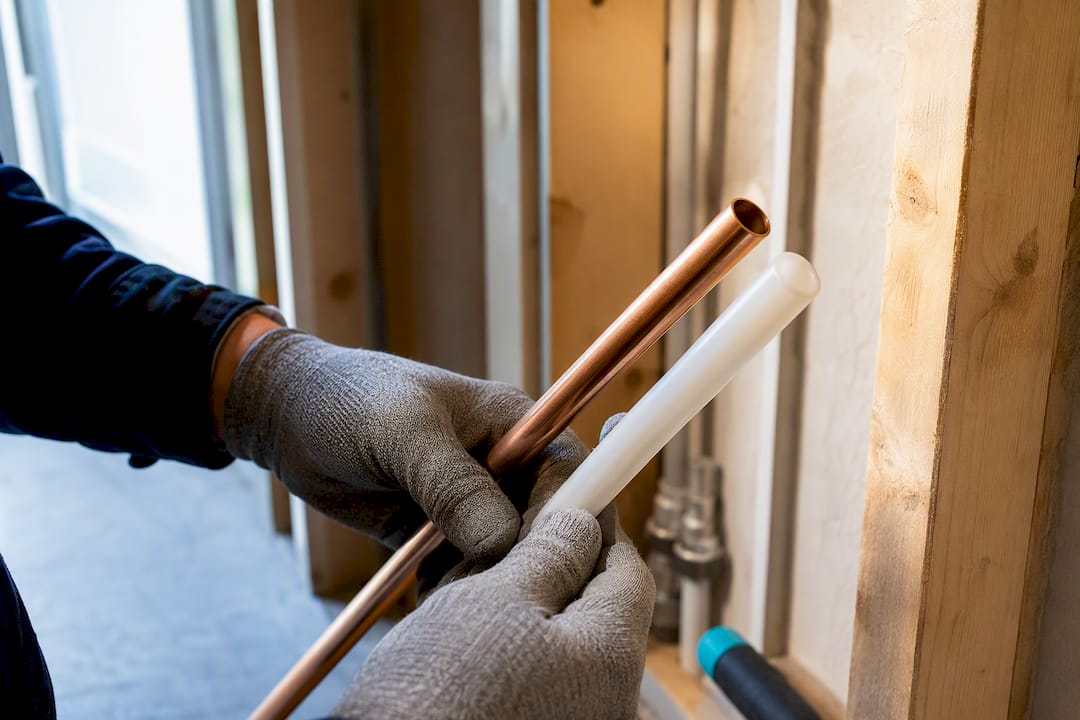
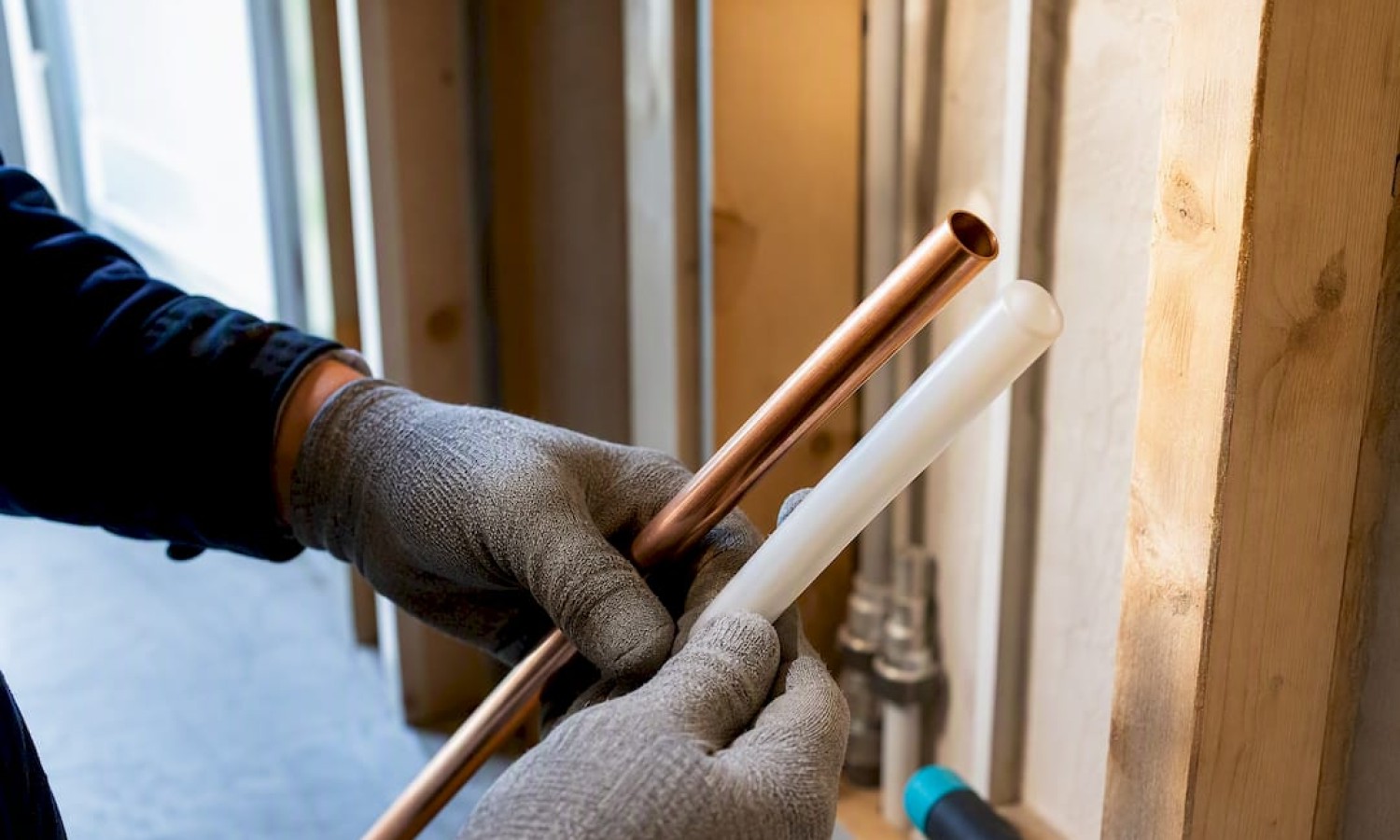
Copper is an excellent choice for exposed, high-temperature, or fire-safety plumbing runs, where durability and heat performance outweigh cost. It falls short in budget-driven new construction or in homes with aggressive water chemistry, where freeze risk and pinhole leaks push many builders toward PEX or CPVC instead. Both copper and plastic piping systems are commonly available, so the right call depends on your specific project conditions rather than brand loyalty to one material.
TL;DR:
- Copper’s higher cost and labor requirements are offset by its longevity, resistance to UV, impact, and rodent damage, especially in exposed or fire-safety applications.
- Freeze risk remains significant for copper pipes in unheated spaces, and low pH water accelerates internal corrosion, leading to pinhole leaks over time.
- Type L copper offers higher pressure ratings and longer service life than Type M, making it preferable for main supply lines, while flexible copper is ideal for obstacle-heavy or decorative runs.
- Proper support, insulation, and corrosion prevention measures are essential to maximize copper pipe lifespan and reduce maintenance costs.
- When choosing between copper, plastic, and other materials, consider project environment, water chemistry, budget, and local plumbing codes to make the most suitable decision.
Table of Contents
- Vara Caurules Plusi Mīnusi: Weighing Copper’s Strengths
- The Downsides: Cost, Freeze Risk, and Corrosion
- Type L vs Type M: Choosing the Right Copper Grade
- Installation Methods: Soldering, Press-Fit, and Compression
- Preventing Corrosion: A Practical Maintenance Checklist
- Copper vs PEX vs CPVC: A Quick Decision Checklist
- Why Copper Still Earns Its Place in Modern Plumbing
- Sourcing Copper Pipe, Fittings, and Insulation
- Sources
Vara Caurules Plusi Mīnusi: Weighing Copper’s Strengths
The case for copper starts with longevity. Properly installed copper piping commonly delivers a long service life for both potable water and HVAC applications, a track record that has made it the default choice in commercial and institutional buildings for generations, according to Santehnikasveikals’s guide to plumbing materials. That durability comes from copper’s resistance to UV degradation, mechanical impact, and rodent damage, failure modes that commonly affect plastic piping in exposed or unconditioned spaces.
Copper also handles heat and fire better than most alternatives. It won’t soften, melt, or off-gas at high temperatures, which is why building codes still favor it for boiler connections and fire sprinkler lines. That same thermal conductivity that makes copper efficient in radiator loops becomes a liability in uninsulated hot-water runs, where heat escapes faster than it would through plastic. Insulation isn’t optional if you want to control energy loss.
Beyond performance, copper carries a few practical side benefits worth noting:
- Copper inhibits bacterial growth inside the pipe wall, providing a hygienic benefit in potable water systems.
- Fully recyclable at end of life, with scrap value that partially offsets material cost.
- Rigid copper runs require fewer support brackets over long horizontal spans compared to flexible plastic tubing.
- Solder joints and press-fit connections both hold up under repeated thermal cycling in heating systems.
Pro Tip: If you’re running copper for a heating loop, budget for pipe insulation from the start. The same conductivity that moves heat efficiently through a radiator also bleeds it out through every uninsulated meter of exposed pipe.
The Downsides: Cost, Freeze Risk, and Corrosion
Copper’s main disadvantage is higher upfront cost. Material prices vary with metal markets more than plastics, and labor costs are higher due to the need for skilled soldering or brazing. Press-fit methods reduce labor time but require specialized tools and training.
Freeze damage is the second major risk. Copper is rigid, so when water inside a pipe freezes and expands, the metal can crack outright, unlike PEX, which flexes with the ice and usually survives, according to Asteria’s analysis of copper piping. Unheated basements, exterior walls, and vacation homes with unreliable heating are the classic failure points.
Water chemistry creates a third, quieter problem: pinhole leaks. Low pH water or water carrying high dissolved oxygen accelerates pitting corrosion inside copper pipe walls, sometimes over just a few years, per Plumbing & Mechanical’s reporting on water chemistry. Modern water treatment can occasionally make things worse by stripping out the natural mineral inhibitors that once protected the pipe.
Connecting copper directly to steel or other dissimilar metals invites galvanic corrosion, which eats away at the joint from the inside. A few mitigations matter here:
- Install dielectric fittings anywhere copper meets a different metal.
- Check that your home’s electrical bonding and earthing don’t route stray current through the plumbing.
- Test your water’s pH and dissolved oxygen levels if you notice recurring small leaks.
- Avoid unauthorized internal coatings; only use linings the local plumbing code permits.
Cutting corners on material choice to save money upfront is a documented risk, not a theoretical one. SafePipingMatters’s value engineering report documents cases where substituting cheaper piping without accounting for environment or code led to costly failures and liability claims down the line.
Type L vs Type M: Choosing the Right Copper Grade
Copper pipe comes in two common wall thicknesses, Type L and Type M, and the difference matters more than most buyers realize. Type L has a thicker wall, giving it a higher pressure rating and longer expected service life, which is why it’s the standard choice for main water supply lines, according to ChinaCopperMetal’s comparison of the two grades. Type M copper, having thinner walls, is less expensive and suitable for lower-pressure applications where allowed by code.
There’s also a hard-versus-soft distinction. Rigid (hard) copper suits straight runs behind walls, while flexible (soft, coiled) copper bends around obstacles without extra fittings, which makes it useful for:
- Potable water supply lines (Type L preferred for mains).
- Radiator and boiler tail connections in heating systems.
- HVAC refrigerant lines, where soft copper’s flexibility eases installation.
- Exposed, decorative plumbing runs where a rigid, polished look matters.
Installation Methods: Soldering, Press-Fit, and Compression
How you join copper pipe changes both the cost and the risk profile of the job. Three methods dominate residential and light commercial work:
- Soldering and brazing remain the traditional standard, but they involve open flame near framing, which means hot-work permits and fire-watch protocols on renovation sites with combustible materials nearby.
- Press-fit connections skip the flame entirely, cutting installation time and fire risk, though the crimping tools carry a real upfront cost, according to iCrimpTools’s comparison of pressing versus soldering.
- Compression and mechanical fittings work well for repairs and tight-access spots where neither flame nor a press tool is practical.
Whichever method you choose, proper support spacing and insulation on exposed or hot-water runs protect against sagging, heat loss, and freeze damage over the system’s lifetime. Santehnikasveikals’s DIY water pipe installation guide covers spacing and technique basics for homeowners tackling smaller jobs themselves.
Preventing Corrosion: A Practical Maintenance Checklist
Most copper pipe failures trace back to water chemistry, not manufacturing defects. Water with low pH or high dissolved oxygen encourages pitting, which can eventually punch a pinhole leak through the pipe wall, and installers should treat repeated small leaks as a signal to test the water rather than just patch the spot, per Plumbing & Mechanical’s coverage of water chemistry effects.
A short maintenance routine catches most problems early:
- Test water pH and dissolved oxygen if you notice unexplained pinhole leaks or discoloration.
- Confirm dielectric fittings separate copper from any steel, galvanized, or aluminum components.
- Verify your home’s grounding system isn’t using the copper plumbing as an electrical path.
- Inspect exposed joints annually for green staining or white mineral crust, both early corrosion signs.
- Insulate exposed hot-water runs to cut heat loss and reduce freeze exposure in cold spots. Santehnikasveikals’s pipe insulation guide breaks down where insulation pays off fastest.
If a leak recurs in the same section of pipe after a repair, that’s usually a chemistry problem, not a workmanship one. Call a plumber to test the water rather than replacing the same fitting twice.
Copper vs PEX vs CPVC: A Quick Decision Checklist
Match the material to the job, not the other way around. Before you commit to copper, weigh these factors against your specific project:
- Budget: Copper costs more in material and skilled labor; PEX and CPVC install faster and cheaper in most residential budgets.
- Exposure: Unheated or exterior spaces favor flexible PEX over rigid, freeze-prone copper.
- Heat or fire requirement: Boiler tails, fire sprinklers, and high-temperature commercial runs still favor copper or stainless steel.
- Water chemistry: Aggressive, low-pH water pushes the decision toward plastics or a treated system.
- Joint preference: Fewer joints and a rigid feel favor copper; tight, obstacle-heavy runs favor flexible PEX.
Three quick scenarios: an exposed decorative bathroom supply line calls for copper’s finish and rigidity. A budget-conscious new residential build usually calls for PEX. A commercial kitchen or boiler room with high-temperature demands calls for copper or stainless steel. When in doubt, check local code and ask an installer familiar with plumbing standards compliance in your specific municipality, since requirements vary by jurisdiction.
Why Copper Still Earns Its Place in Modern Plumbing
Copper gets treated like a legacy material by a lot of builders chasing the fastest install time, and that’s a mistake born from looking only at labor cost on day one. The real comparison is lifecycle cost against a building’s actual conditions, not against a spreadsheet that ends at final inspection. A copper heating loop in a well-insulated system with decent water chemistry will likely outlast two or three plastic replacements over the building’s life.
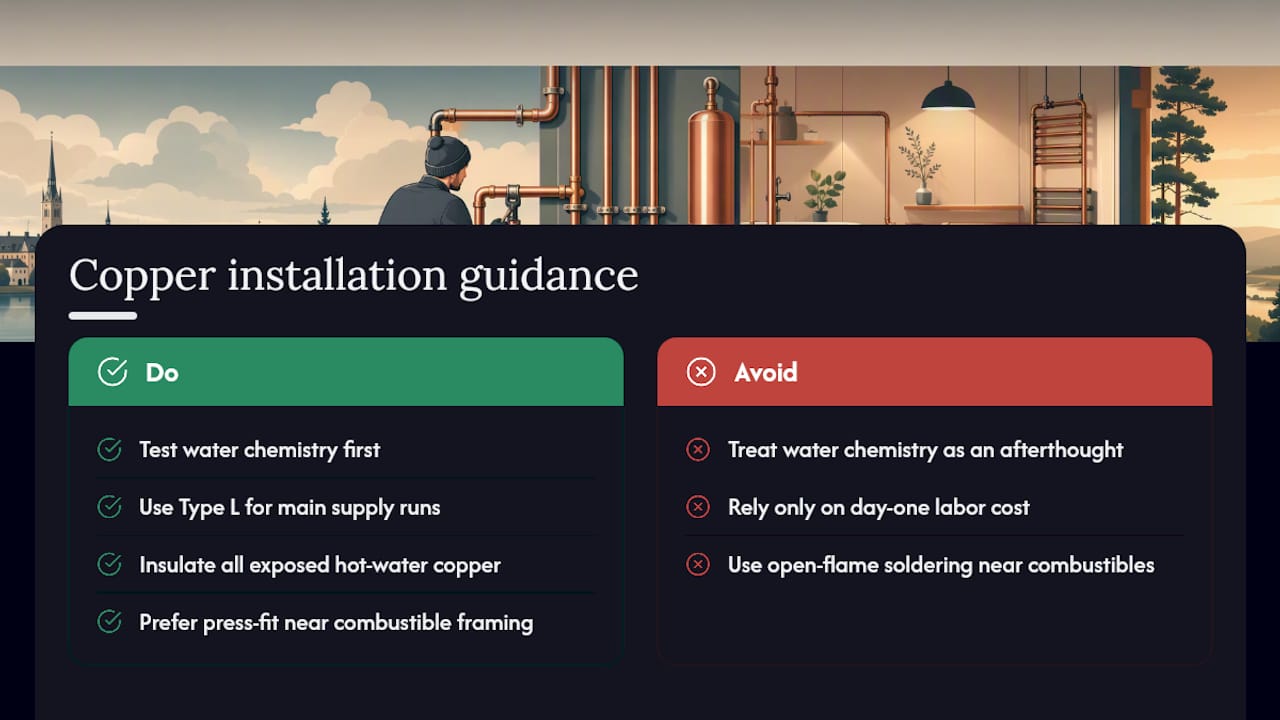
Where I think the industry gets it backwards is treating water chemistry as an afterthought rather than a specification requirement. Nobody tests pH and dissolved oxygen before choosing pipe material, yet that single factor decides whether copper lasts thirty years or develops pinhole leaks in five. If you’re serious about copper, test the water first and choose the pipe second.
A few rules of thumb worth keeping on hand: use Type L for main supply runs where pressure and lifespan matter most. Insulate every exposed hot-water copper run without exception. And in renovations near combustible framing, prefer press-fit over open-flame soldering unless a certified installer is managing the hot-work permit.
— Renate
Sourcing Copper Pipe, Fittings, and Insulation
Choosing between copper and plastic only matters if you can actually get the right grade, fittings, and insulation for the job. Plumbing and heating suppliers stock pipe materials, fittings, insulation, and installation tools across categories, so you can source copper and dielectric fittings conveniently.

For heating projects specifically, browse the steel and copper-compatible radiator range to match your piping choice to the right heat output for the room. If you’re comparing plastic fitting options alongside copper for a mixed-material system, Circo Innovations’s PVC fittings guide covers the plastic side of that comparison well. Use product filters on plumbing supplier sites to narrow by pipe type, diameter, and pressure rating, or contact sales teams directly for project quotes with delivery options.
Sources
- Advantages and Disadvantages of Copper Pipes | Asteria
- How water chemistry impacts residential plumbing materials
- SafePipingMatters: Value engineering report
Atstājiet komentāru