




















































20 Minute Checklist to Protect Plumbing Warranties in Latvia
Three separate warranties apply to plumbing work in Latvia: the manufacturer’s product warranty, the seller’s statutory obligations, and the installer’s workmanship guarantee. If something goes wrong, contact the seller first and keep your receipt and warranty card safe, since incomplete paperwork is the most common reason claims get denied. Improper installation can void manufacturer coverage entirely.
TL;DR:
- Extended manufacturer warranties in Latvia often require professional installation and proper registration to exceed the standard two-year coverage.
- Most claims are denied due to improper installation, missing serial numbers, or use of non-original parts, highlighting the importance of careful documentation.
- Consumer statutory rights allow claims within 24 months regardless of warranty, but warranty length and conditions vary with registration and installation quality.
- Keep all receipts, warranty cards, and photographs of serial numbers and installation details for at least as long as the longest applicable warranty period.
- Avoid DIY installation if seeking extended coverage, and ensure the installer provides signed documentation to protect your warranty rights.
Table of Contents
- How does garantija santehnikai Latvia work in practice?
- How long do plumbing warranties usually last in Latvia?
- What voids a plumbing warranty in Latvia?
- How do you file a plumbing warranty claim in Latvia?
- What do installer workmanship guarantees actually cover?
- Buyer and handover checklist for warranty protection
- A Latvian retailer’s take on protecting your warranty
- Why Santehnikasveikals makes warranty-safe buying easier
- Sources
- FAQ
How does garantija santehnikai Latvia work in practice?
Plumbing warranty in Latvia isn’t one thing. It’s three overlapping layers, and mixing them up costs people money.
The manufacturer product warranty covers manufacturing defects in the item itself, a cracked shower tray, a faulty faucet cartridge, a leaking valve. Terms live on the product page or inside the warranty card that ships with the item. Alcadrain, a major supplier of drainage systems sold in Latvia, documents this structure clearly: a baseline warranty, plus extended coverage on select components when a certified professional handles installation.
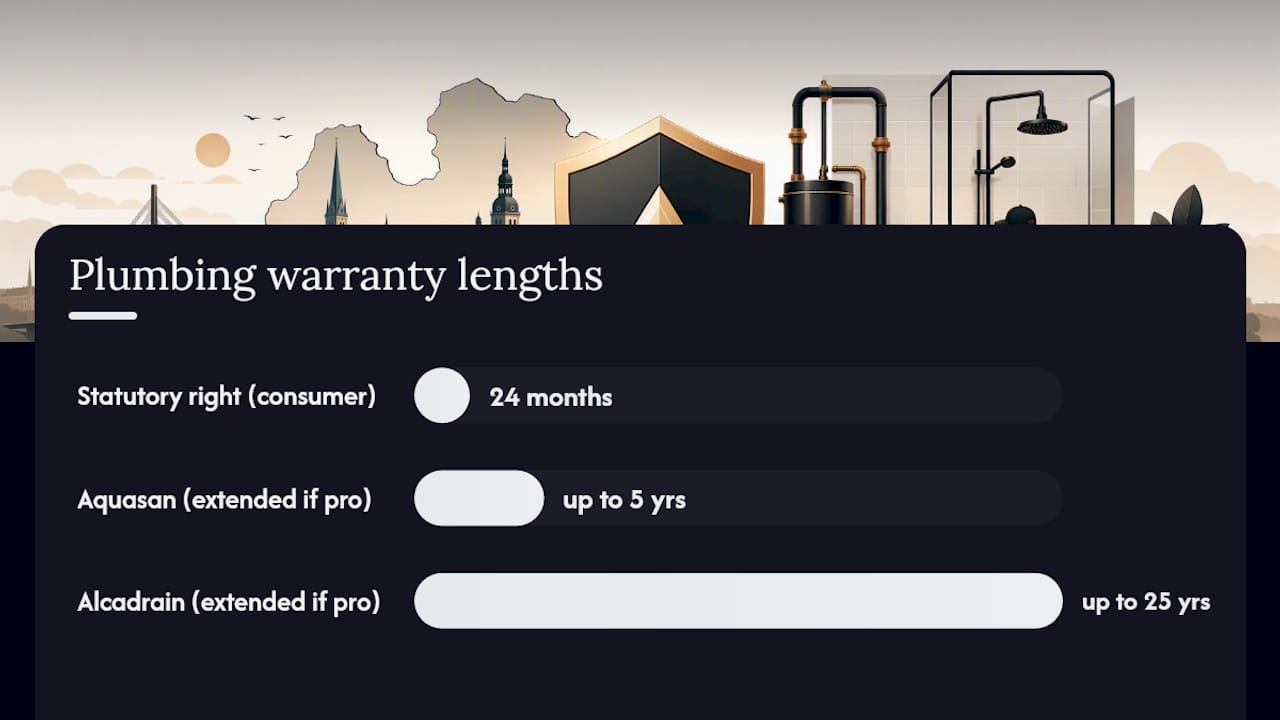
The seller’s obligations sit on top of that. Latvian retailers must honor manufacturer terms, but consumers also hold statutory rights independent of what any brand promises. Retailer Aquasan notes that consumers can claim non-conformity within 24 months of delivery, regardless of the manufacturer’s stated term.
The installer’s workmanship warranty is separate again. It covers the labor, leaks from a bad joint, a fixture that was never sealed correctly, not the product itself.
Before hiring or buying, check for:
- A warranty card or voucher included with the product
- A certified installer’s stamp or signature on start up documentation
- Your proof of purchase (receipt or invoice)
- Written terms for any manufacturer specific extended coverage
How long do plumbing warranties usually last in Latvia?
Most plumbing products sold in Latvia carry a standard 2 year manufacturer warranty. That’s the floor, not the ceiling.
Some manufacturers push well past it; for practical homeowner insights on warranty scopes and start-up documentation, see this understanding HVAC warranties guide. Alcadrain’s terms show extended warranty periods reaching up to 25 years on certain stainless steel drainage components, but only when a professional installer handles setup and the work gets registered properly. Skip that step and you default back to the 2 year baseline.
Aquasan lists similar tiering, with some product lines carrying manufacturer terms of up to five years, while the consumer’s statutory right to claim non-conformity remains fixed at 24 months no matter what the manufacturer offers.
The pattern to remember: the longer warranty tiers almost always require professional installation, registration, or a signed start-up document. A DIY install that would have qualified for extended coverage under a certified installer often gets bumped down to the basic term instead.
Business buyers and contractors should note that these extended consumer protections are built around private buyers. Legal entities purchasing for commercial projects typically negotiate warranty terms directly with the manufacturer or distributor rather than relying on statutory consumer rights.
What voids a plumbing warranty in Latvia?
Warranty terms read like a list of things not to do, and most claim denials trace back to one of a handful of avoidable mistakes.
- Improper installation. If the product wasn’t installed according to the manufacturer’s instructions, or wasn’t installed by someone qualified to do it, coverage typically ends there.
- Non-original parts. Swapping in a generic cartridge, seal, or fitting instead of the manufacturer’s own component is a common reason for denial.
- Physical damage or misuse. Cracks from impact, frost damage from improper drainage, or damage from cleaning products the manufacturer doesn’t approve.
- Consumables and wear items. Seals, membranes, and gaskets wear out on a schedule and usually sit outside extended warranty coverage even when the rest of the product is protected.
- Tampered serial numbers. Damaged, altered, or missing serial numbers are treated as an administrative voiding trigger on their own, separate from any physical fault.
- Unauthorized repairs. TOP Santehnika’s warranty voucher terms specify that repairs must go through an authorized service organization, and outside intervention can cancel coverage even if the original defect was legitimate.
Pro Tip: Photograph the product’s serial number and the completed installation before you close up any wall or cabinet around it. If a claim ever comes down to a dispute over the numbers, you’ll have proof.
How do you file a plumbing warranty claim in Latvia?
Acting fast and keeping the right paperwork ready decides whether a claim moves quickly or drags out for weeks.
- Stop using the item if it’s unsafe. Shut off water supply to a leaking fixture before anything else.
- Document the problem. Photograph the fault, the serial number, and the installation itself.
- Gather your paperwork. You’ll need the proof of purchase and the warranty card. Without these, service centers may have limited options to help you.
- Contact the seller first for consumer purchases. The retailer is usually your first point of contact, not the manufacturer directly, unless your warranty card names a specific service center.
- Expect diagnostics. A technician will assess whether the fault is covered. If it turns out not to be a warranty issue, expect a diagnostic fee.
- Wait on repair or replacement. Minor faults often get repaired on site; larger issues may mean a replacement part or unit, with turnaround time depending on parts availability.
- Escalate if refused unfairly. If a seller or manufacturer denies a claim you believe is valid, keep every document, email, and photo. Latvia’s consumer protection channels exist for exactly this kind of dispute.
What do installer workmanship guarantees actually cover?
A workmanship guarantee is a separate promise from the plumber, not the product manufacturer, and it covers the labor: faulty fitting, leaking joints, and installation defects that show up after the job is done.
Local installers commonly offer 12 to 24 month guarantees on their work, with free rectification if something fails within that window. That’s a contract with the installer, entirely apart from whatever warranty came with the fixture itself.
Before hiring anyone, verify the guarantee in writing. Ask for:
- A written guarantee period stated in the contract, not just a verbal promise
- Proof of the installer’s certification or credentials
- Stamped warranty or start up documentation once the job is finished
That last point matters more than most people realize. Professional installation with proper documentation is frequently the condition that unlocks a manufacturer’s extended warranty tier in the first place. Skip the paperwork, and you may have a great installer but a shorter product warranty than you expected.
Buyer and handover checklist for warranty protection
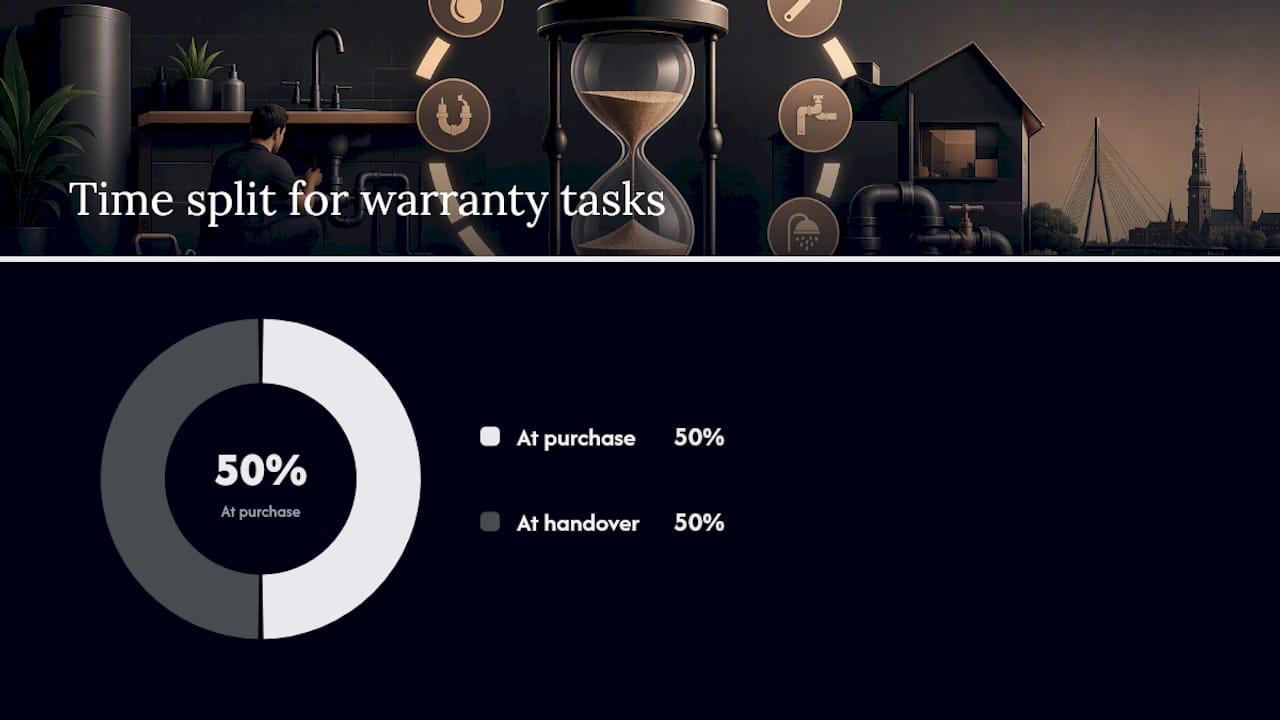
Getting this right takes about ten minutes at purchase and ten more at handover. That’s it.
At purchase:
- Request the warranty card
- Confirm the stated warranty length on the product page
- Ask whether registration or start up sign off is required for extended coverage
At handover:
- Get the installer’s stamp or signature on the warranty documentation
- Collect start up documentation if the product requires it
- Photograph the installed product, including the visible serial number
For your records, keep digital copies of receipts, warranty cards, photos, and the installer’s contact details. A shared folder or even a phone album works fine.
Pro Tip: Keep records for at least as long as your longest applicable warranty term, not just the 2 year baseline. If a component carries extended coverage, your documentation needs to outlast the standard period too.
A Latvian retailer’s take on protecting your warranty
The single biggest mistake I see is people treating the receipt as disposable. It isn’t. Combined with a warranty card signed by whoever installed the product, that receipt is what turns a warranty claim from a formality into an argument.
If you buy from Santehnikasveikals, warranty length is listed on the product pages, and our customer support team can help with registration questions before you ever need to file a claim. That’s the cheapest insurance you’ll ever get on a bathroom renovation.
— Renate
Why Santehnikasveikals makes warranty-safe buying easier
Ordering online doesn’t have to mean guessing at warranty terms after the fact. Some retailers list warranty length directly on product pages, so you can know before checkout whether an item carries the standard 2 year term or a longer manufacturer tier, and customer service teams can provide guidance on registration or start-up documentation requirements before installation begins.

That matters most on higher-value fixtures where extended coverage depends on professional installation being properly documented. If you’re replacing a bathtub, browse the Vanna Paa VARIO M stone mass bathtub or the larger VARIO L model, both listed with their warranty terms upfront. Planning a heating upgrade instead? Check the Termolux Ventil Compact radiator listing for the same clarity. Have a question before you buy? Reach out to customer support and get your warranty questions answered first.
Sources
- Garantijas un garantijas talons - Alcadrain s.r.o – lielākais čehu sanitārās tehnikas ražotājs
- Garantija un Atteikuma tiesības - Aquasan
- Santehniķis Rīgā 24/7 | Ārkārtas Izsaukumi 30 Min | Garantija 12 Mēn
FAQ
Do I have statutory rights beyond the manufacturer warranty?
Yes. Consumers in Latvia can claim non-conformity within 24 months of delivery regardless of what warranty term the manufacturer states.
Who pays for diagnostics if my claim isn’t covered?
If a technician determines the fault falls outside warranty coverage, a diagnostic fee typically applies and the cost usually falls on the customer.
Is a product warranty the same as an installer’s guarantee?
No. The product warranty covers manufacturing defects in the item itself, while the installer’s workmanship guarantee covers labor and fitting, and the two run independently of each other.
Do I need to register my product for warranty coverage?
Some extended manufacturer warranty tiers require registration or certified installation sign off; without it, coverage defaults to the standard 2 year term.
How long should I keep my receipts and warranty card?
Keep them for at least as long as your longest applicable warranty period, digital copies included, since missing documentation is one of the most common reasons claims get denied.
Atstājiet komentāru