




















































Why Use Prefabricated Bathroom Units: Builder’s Guide

Prefabricated bathroom units (PBUs), also called bathroom pods, deliver three things site-built bathrooms rarely can: predictable schedules, single-vendor accountability, and factory-controlled quality. Programme reductions are reported by industry sources, and single-point responsibility removes the trade-interface disputes that stall site-built projects. For contractors and property managers where schedule certainty and reduced warranty risk matter, modular bathroom units are a direct answer.
Top buying triggers:
- Speed. Factory production runs in parallel with structural work, compressing the critical path in construction timelines.
- Risk control. One manufacturer holds responsibility for scope, defects, and warranty.
- Workmanship. Waterproofing and fixture installation in a controlled environment reduces post-occupancy defects.
Table of Contents
- How prefabricated bathroom units are built and delivered
- The concrete benefits: time, cost, quality, and waste
- Where modular bathroom pods make the most sense
- What prefab bathrooms actually cost and how timelines work
- What you can and cannot customize in a PBU
- On-site planning: transport, crane, staging, and MEP hookups
- Codes, inspections, and factory QA — what to verify
- Procurement checklist: what to require from a PBU supplier
- Key Takeaways
- The trade-off that most buyers underestimate
- Fixtures and components for your PBU project
How prefabricated bathroom units are built and delivered
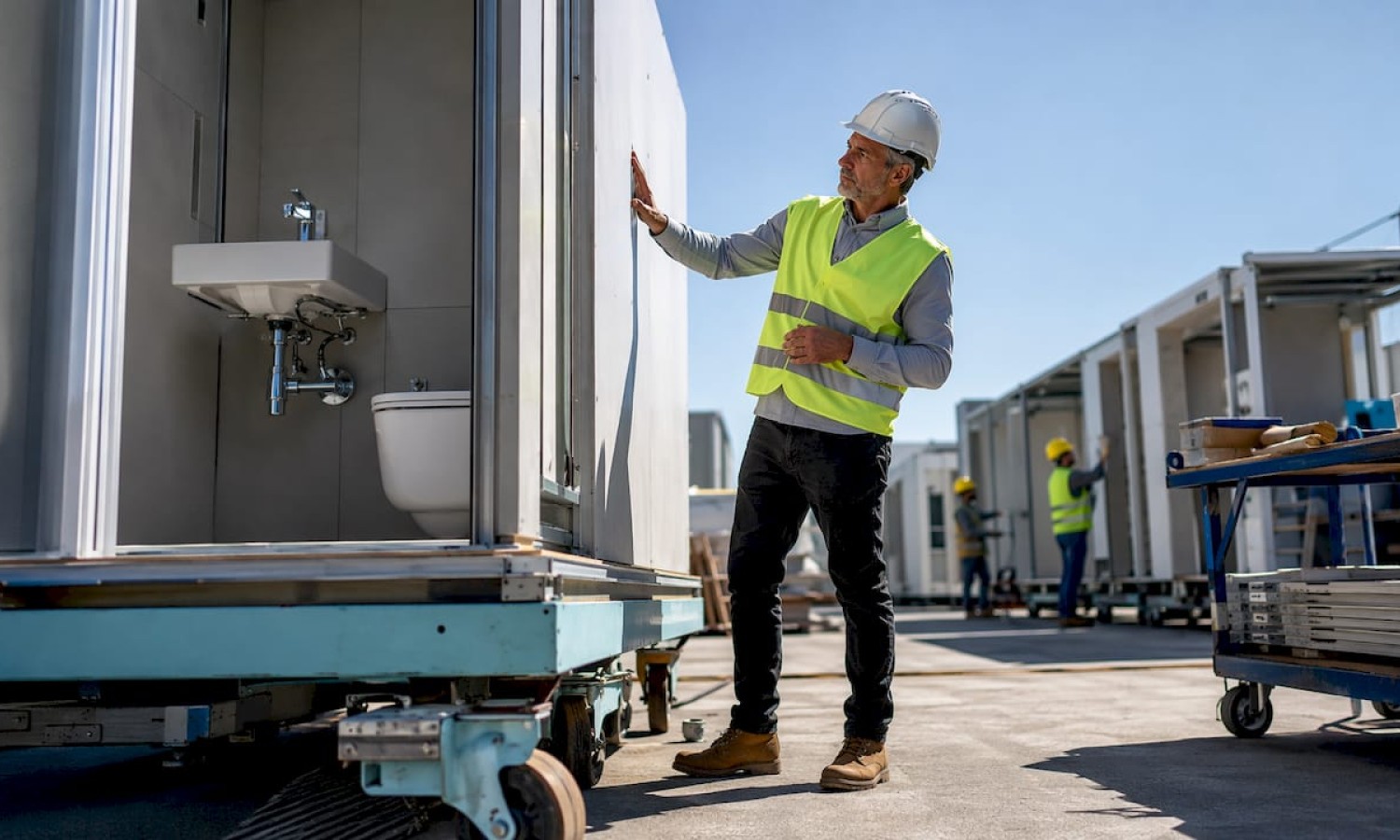
A PBU is a self-contained module assembled in a factory. It arrives on site with structural framing (where required), full MEP rough-in, waterproofing, finishes, and fixtures already installed. The on-site crew connects labeled supply, drain, and electrical points — nothing more.
Factory stages follow a defined sequence: design-for-manufacturing, off-site assembly, QA testing (water, electrical, dimensional), labeling of MEP connections, packing, transport, and on-site craning into position. Each stage is documented, which means the building inspector receives test records rather than relying on site observation alone.
Before ordering, confirm these items with the supplier: exact fixture and finish scope, MEP connection points and dimensional tolerances, unit weight and lifting point locations, and fabrication lead times. Missing any one of these creates costly surprises at installation.
Pro Tip: Involve the PBU supplier during schematic design, not after construction documents are issued. Early contractor involvement, as outlined in BCA’s DFMA guidance, resolves structural, MEP, and crane-lift interfaces before fabrication starts — changes after shop drawings are released are expensive.
The concrete benefits: time, cost, quality, and waste
The biggest measurable gains from prefab bathroom units are schedule compression and reduced indirect project risk, not always a lower unit price. Factory production concurrent with structural work shortens the critical path in construction timelines and allows earlier occupancy — which directly reduces financing costs for income-generating properties.
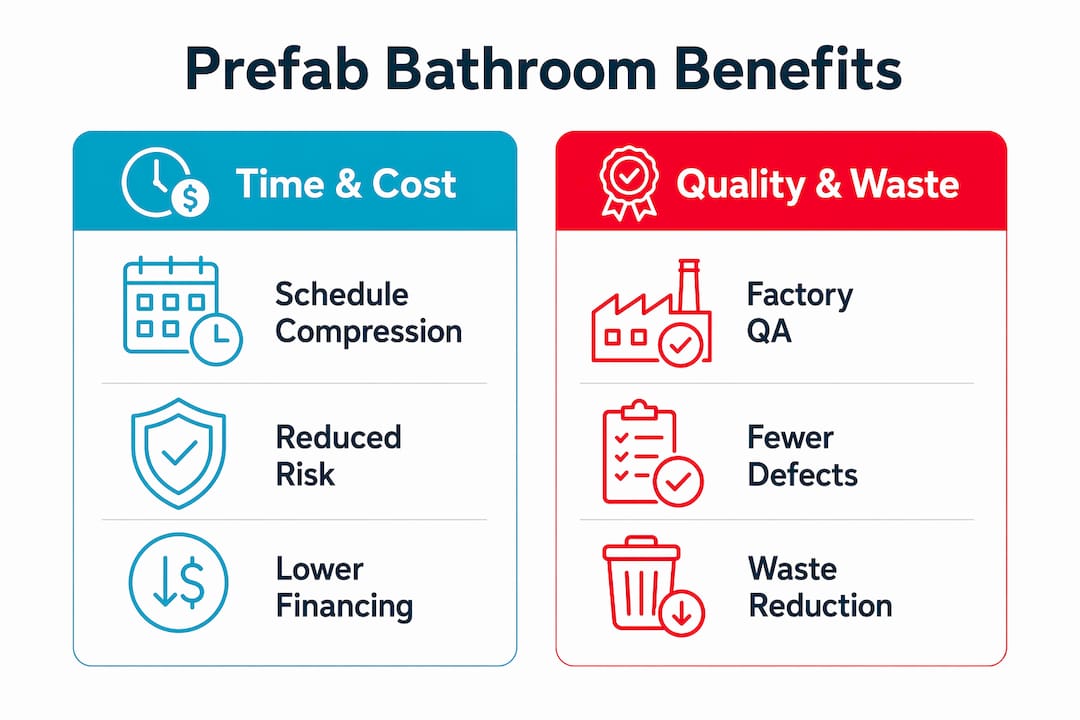
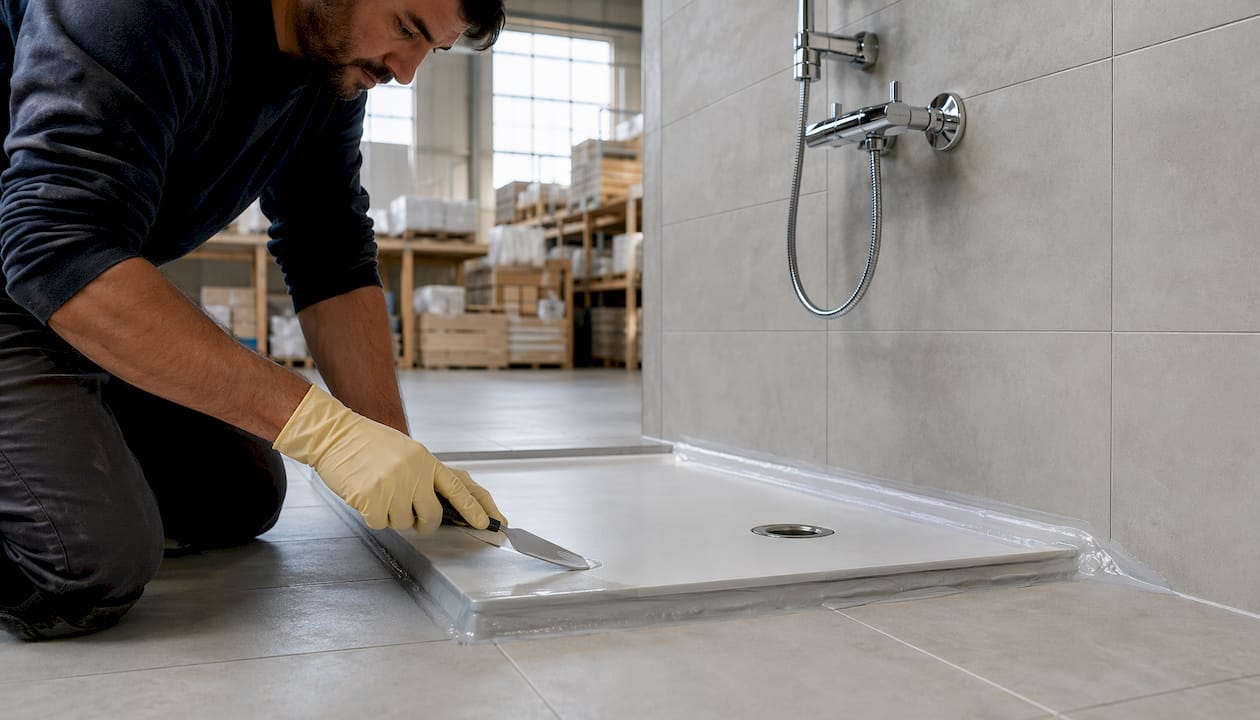
Quality gains are equally significant. Factory-controlled waterproofing and fixture installation produces fewer defects and fewer warranty claims than site-built bathrooms, where conditions vary daily. Single-vendor responsibility means disputes over who caused a leak are eliminated before they start.
On waste, factory processes cut construction waste from typical site levels (over 7%) down to much lower factory waste rates (around 1.5%), according to industry supplier data. That reduction lowers disposal costs and supports project sustainability targets.
| Metric | Site-Built | Prefabricated Pod |
|---|---|---|
| Programme impact | Sequential trades, weather-dependent | Programme reductions reported |
| Construction waste | Over 7% (industry example) | Around 1.5% (industry example) |
| Defect/warranty risk | Variable, multi-trade disputes | Lower; single-vendor responsibility |
| Cost predictability | Subject to site price adjustments | Fixed at order; turnkey certainty |
Where modular bathroom pods make the most sense
PBUs deliver the strongest value on projects with repeatable layouts and high unit counts. The more identical bathrooms a project requires, the more the factory’s production efficiency compounds.
- Multi-family apartments. Standardized layouts align directly with pod production runs.
- Hotels and hospitality. Identical floor-by-floor bathrooms allow consistent guest experience and faster floor-by-floor handover.
- Student housing and PBSA. High unit repetition makes pods the default choice for compressed academic-year deadlines.
- Build-to-rent and large renovation stacks. Minimal on-site disruption and faster handover protect rental income.
- Healthcare and senior living. Precision factory execution supports accessibility and hygiene compliance requirements.
- Occupied-building retrofits. Off-site production reduces noise, dust, and trade traffic in active buildings.
For bespoke, one-off luxury layouts with non-standard dimensions or highly customized plumbing routing, site-built may still be preferable. PBUs have fixed module dimensions and fixed drainage locations — extreme customization adds cost and lead time that can erode the schedule advantage.
What prefab bathrooms actually cost and how timelines work
PBUs often carry a higher direct unit price than a site-built equivalent. Academic analysis found direct costs roughly 4.41% higher, but total project cost was approximately 4% lower after indirect savings were included. The savings come from faster handover, reduced financing exposure, and fewer post-turnover maintenance claims.
Pro Tip: Evaluate ROI on time-to-occupancy and reduced financing costs, not unit price alone. Earlier occupancy on a 200-unit apartment block can outweigh a modestly higher pod price many times over. See cost-saving plumbing strategies for project-level cash flow context.
| Cost Component | Notes |
|---|---|
| Direct unit cost | Typically higher than site-built per unit |
| Transport and crane | Route permits, offloading zone, crane hire — budget separately |
| Site hookup labor | Minimal; labeled connections only |
| Indirect schedule savings | Faster handover, lower financing exposure |
| Warranty/maintenance exposure | Reduced; single-vendor coverage |
Lead times for fabrication typically run several weeks depending on unit count and supplier capacity. Design lock-in must happen before fabrication starts. Just-in-time delivery is critical: storing finished pods on site increases damage risk and double-handling costs.
What you can and cannot customize in a PBU
PBUs offer a wide range of finish choices — tile types, fixture brands, color schemes, and fittings. What they cannot accommodate easily: changes to structural openings, plumbing chase locations, or module dimensions after shop drawings are released.
Common design constraints to plan around:
- Fixed module dimensions. Width, height, and depth are set at design stage; structural openings in the host building must match.
- Fixed drainage locations. Drain and waste connection points are cast or framed in; repositioning after fabrication is not practical.
- Finish-change lead times. Switching tile or fixture specifications after fabrication begins delays delivery and adds cost.
- Limited post-fabrication structural modification. The module is a finished product — treat it accordingly.
Order finish samples early and lock the finish schedule before fabrication. Budget separately for any on-site finishing work that falls outside the module scope, such as perimeter sealing or corridor-side trim.
Pro Tip: Treat a PBU like a precision manufactured product. Changes after shop drawings are approved carry the same cost and schedule impact as changes to structural steel — plan accordingly.
On-site planning: transport, crane, staging, and MEP hookups
The single most important on-site task is confirming crane capacity, delivery route, and staging area before fabrication begins. Discovering a weight or access problem on delivery day is one of the most expensive mistakes in prefab construction.
Key logistics to confirm:
- Unit weight and dimensions, and whether the crane can reach the installation floor from the available position.
- Street and route permits for oversized loads, especially in urban sites.
- Offloading zone dimensions and surface load capacity.
- MEP connection tolerances — in-wall chases must be within the supplier’s stated tolerance or hookup labor increases sharply.
- Who is responsible for final testing and commissioning of connected services.
Pro Tip: Schedule deliveries just-in-time. Storing finished pods on site, even briefly, increases damage risk and eliminates much of the efficiency gain. Coordinate delivery windows with the crane schedule, not the other way around. Review plumbing infrastructure basics if MEP hookup sequencing is unfamiliar.
Codes, inspections, and factory QA — what to verify
Confirm the supplier’s factory QA regime before ordering. For US projects, the pod must demonstrate compliance with applicable codes such as the International Plumbing Code (IPC) and International Building Code (IBC). Factory documentation is what makes that confirmation possible without full on-site inspection.
Items to verify from the supplier:
- Factory test certificates (water pressure, electrical continuity, dimensional checks).
- Labeled MEP as-built drawings for each unit.
- Waterproofing test records.
- Material approvals and traceable fixture specifications.
- Warranty language covering workmanship, MEP systems, and replacement parts.
Building inspectors typically accept PBUs through a combination of site connection inspection and factory documentation review. Have the full documentation package on hand at the time of inspection. Confirm plumbing code compliance requirements with the authority having jurisdiction before finalizing the supplier’s QA scope.
Procurement checklist: what to require from a PBU supplier
Prefer suppliers that accept single-point turnkey responsibility and provide factory QA evidence as a standard deliverable, not on request.
Minimum items to require before signing:
- Scope matrix confirming exactly what is and is not included in the pod.
- Shop drawings and MEP connection diagrams with dimensional tolerances.
- Unit weight, dimensions, and lifting plan.
- Confirmed lead time and delivery window.
- Insurance and transport terms, including damage liability in transit.
- Installation supervision scope and who provides it.
- Warranty terms: workmanship, MEP, and fixture replacement.
- References or completed-project case studies with contact details.
- Change-order pricing rules and acceptance criteria.
Pro Tip: Request a factory visit or, at minimum, a video walkthrough of production and QA records before final sign-off. A supplier unwilling to show the factory is a red flag.
Key Takeaways
Prefabricated bathroom units are the right choice when schedule certainty, repeatable layouts, and reduced warranty risk outweigh the need for fully bespoke design. Early supplier involvement is the single most important procurement safeguard.
| Point | Details |
|---|---|
| Schedule compression | Programme reductions are reported; typical industry sources state a 20–50% reduction, and factory production runs parallel to structural work. |
| Total cost vs. unit cost | Direct unit cost may be ~4.41% higher, but total project cost can be ~4% lower after indirect savings. |
| Quality and defect reduction | Factory-controlled waterproofing and single-vendor responsibility reduce post-occupancy defects and warranty disputes. |
| Best-fit project types | Multi-family, hotels, student housing, healthcare — high unit repetition maximizes pod production efficiency. |
| Santehnikasveikals | Supplies fixtures, fittings, and finishing components for PBU projects, with delivery across Latvia. |
The trade-off that most buyers underestimate
The case for prefabricated bathroom units is straightforward on paper. Where buyers consistently go wrong is treating the unit price as the primary decision variable. It is not. The real question is how much a schedule delay costs your project per week — financing, lost rent, or penalty clauses — and whether a pod’s faster handover offsets a higher line-item cost. For most multi-unit projects, it does, often by a wide margin.
Site-built bathrooms still make sense for genuinely unique, high-specification layouts where the design cannot be resolved within fixed module dimensions. But that is a narrower category than most buyers assume. The majority of commercial and multi-family bathrooms are repeatable enough to benefit from factory production. The buyers who get the most value are the ones who engage the pod supplier during schematic design, lock finishes early, and plan crane and delivery logistics before fabrication starts — not after.
Fixtures and components for your PBU project
Even a fully turnkey pod requires individual fixture decisions: toilet models, thermostatic mixers, shower enclosures, drainage fittings, and spare parts for long-term maintenance. Santehnikasveikals supplies a full range of plumbing fixtures and bathroom components, with delivery across Latvia, making it a practical source for both initial specification and replacement parts.

Pro Tip: Order fixture samples and confirm product dimensions against your pod supplier’s connection specifications before fabrication starts. A toilet model or shower cabin that does not match the pod’s rough-in dimensions creates on-site rework that erases the schedule advantage.
Browse the full fixture catalog and request a project quote at Santehnikasveikals.
Оставьте комментарий