




















































What Is a Rimless Toilet, and Is It Worth the Upgrade?
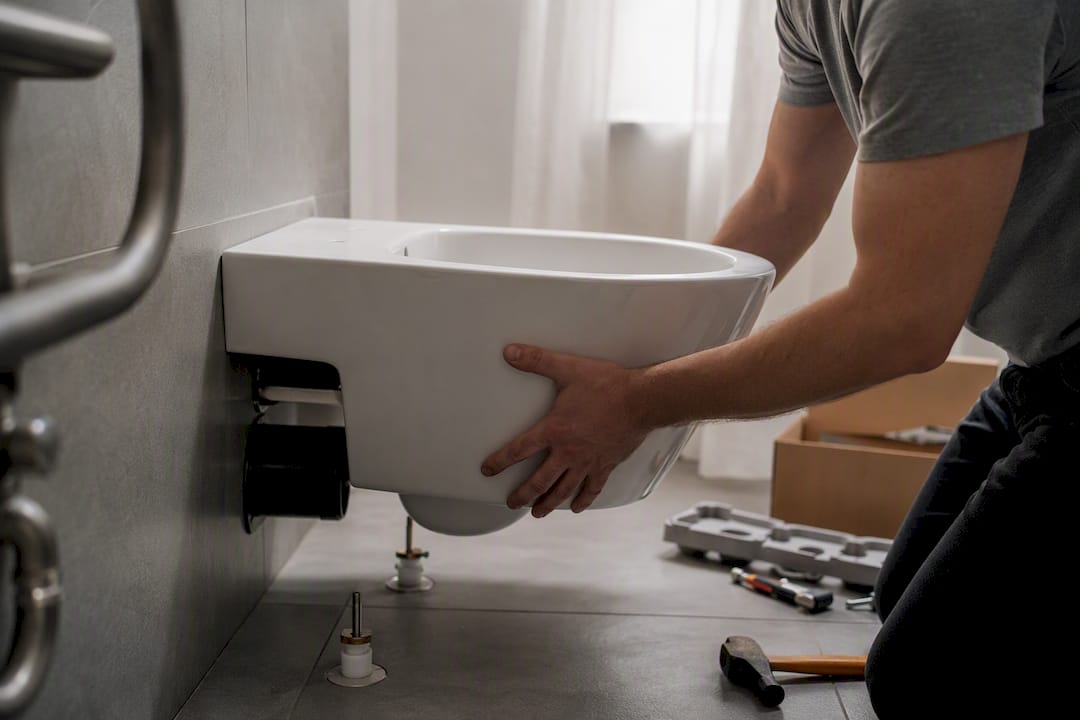
A bezmalu tualete, or rimless toilet, is a bowl designed without the hidden flush rim found in traditional models, which means no hard-to-reach ledge for grime and bacteria to collect. Manufacturers like Geberit build these bowls so water sheets down the inside surface directly, cleaning more of the bowl with less effort on your part.
For most budget buyers, a basic floor-mounted rimless model is the smarter pick over a wall-hung unit unless your bathroom layout specifically calls for concealed plumbing. Floor-mounted units cost less to buy and install, and they don’t require an in-wall frame.
- Rimless design: fewer hidden surfaces, easier cleaning
- Floor-mounted: lower upfront and installation cost
- Wall-hung: sleeker look, higher total cost
Pro Tip: Before you shop, measure your existing rough-in distance (the gap from the wall to the center of the floor outlet). This one number rules out half the models you’d otherwise waste time comparing.
Santehnikasveikals.lv carries a range of affordable rimless models and the connection parts you’ll need alongside them, which makes it a practical starting point for anyone comparing options on a budget.
Key Takeaways
A budget-friendly bezmalu tualete works best when you match rough-in measurement and outlet orientation before comparing prices or features.
| Point | Details |
|---|---|
| Define the fixture | A rimless toilet has no hidden flush rim, so fewer surfaces trap dirt and bacteria. |
| Measure before shopping | Confirm rough-in distance and outlet orientation to avoid costly returns. |
| Match installation to budget | Floor-mounted units cost less than wall-hung models, which need an in-wall frame. |
| Buy complete kits | Bundling bowl, seat, and mounting hardware avoids mismatched parts mid-installation. |
| Shop with full specs | Santehnikasveikals.lv lists dimensions, flush volume, and accessories together for easier comparison. |
Table of Contents
- What Rimless Toilet Options Fit a Tight Budget?
- How Do You Choose the Right Rimless Model for Your Bathroom?
- What Does Installing a Rimless Toilet Actually Cost?
- How Do You Keep a Rimless Toilet Clean and Working Well?
- How Santehnikasveikals.lv Makes Buying a Rimless Toilet Easier
- The Real Trade-Off Nobody Talks About
- Ready to Choose Your Rimless Toilet?
- Frequently Asked Questions
- Sources
What Rimless Toilet Options Fit a Tight Budget?
Rimless bowls used to be a premium feature. That’s changed. Entry-level rimless models now sit close in price to standard rimmed toilets, largely because more manufacturers have adopted the design across their full lineups rather than reserving it for flagship products.
The hygiene case for rimless is straightforward: without a rim to trap water and debris, there’s less surface area where deposits build up between cleanings, according to Geberit’s rimless technology pages. Some manufacturers pair the rimless bowl with a low-porosity glaze, which resists staining and makes routine wiping more effective.
When you’re shopping on a budget, you’ll typically run into three categories:
- Simple floor-mounted close-coupled rimless toilets. The tank sits directly on the bowl, installation is straightforward, and this is usually the cheapest rimless option available.
- Compact rimless models. Shorter projection from the wall, useful for small bathrooms or half-baths, still rimless, still budget-friendly.
- Entry-level wall-hung rimless units. These need an in-wall frame, which adds cost, but the bowl itself can still be a basic rimless model rather than a premium one.
Skip anything marketed as heated seats, automatic lids, or specialty glazes if you’re working with a strict budget. Those features add noticeably to the price without changing how well the toilet actually flushes or cleans. A plain rimless bowl with a standard soft-close seat delivers most of the practical benefit for a fraction of the cost.
Before you commit to a specific listing, confirm three things: what’s included in delivery (some sellers ship the bowl only, others include the tank and mounting hardware), whether the mounting kit is bundled or sold separately, and what the manufacturer’s warranty actually covers. A toilet that looks like a bargain can turn expensive fast if you have to buy the mounting kit and seat separately.
How Do You Choose the Right Rimless Model for Your Bathroom?
Getting the right rimless toilet comes down to matching four things: your rough-in measurement, your outlet orientation, your flush preference, and your seat compatibility. Get any one of these wrong and you’ll either return the unit or pay extra for a plumber to work around it.
-
Measure the rough-in distance. This is the distance from the finished wall to the center of the waste outlet or bolts on the floor. Standard rough-ins are commonly 300mm or 400mm in European fixtures; confirm yours before browsing.
-
Identify your outlet orientation. Horizontal outlets exit through the wall; vertical outlets exit through the floor. Manufacturer product pages specify which orientation each rimless model supports, and mixing this up is the single most common return reason.
-
Decide between floor-mounted and wall-hung. Floor-mounted units connect directly to existing plumbing and cost less overall. Wall-hung units need a concealed cistern and support frame built into the wall, which raises both material and labor cost.
-
Check flush volume and water efficiency. Dual-flush rimless models offering separate volumes for liquid and solid waste, with model-specific flush volumes that vary without a fixed universal range, cut water use without sacrificing flush strength. Laufen’s rimless wall-hung specs illustrate the kind of flush-volume detail worth comparing across brands.
-
Confirm seat compatibility using the model code. Seats aren’t universal. A seat listed for one manufacturer’s rimless bowl won’t necessarily fit another, even if the bowls look similar in photos.
Pro Tip: Screenshot the exact model code before you add anything to your cart. If the seat, mounting kit, and bowl don’t share the same code family, you risk a mismatch that only shows up during installation.
At checkout, verify five things: exact bowl dimensions, flush volume, whether the mounting kit is included, the seat model number, and the seller’s return policy on plumbing fixtures (many stores restrict returns once a toilet has been installed).
What Does Installing a Rimless Toilet Actually Cost?
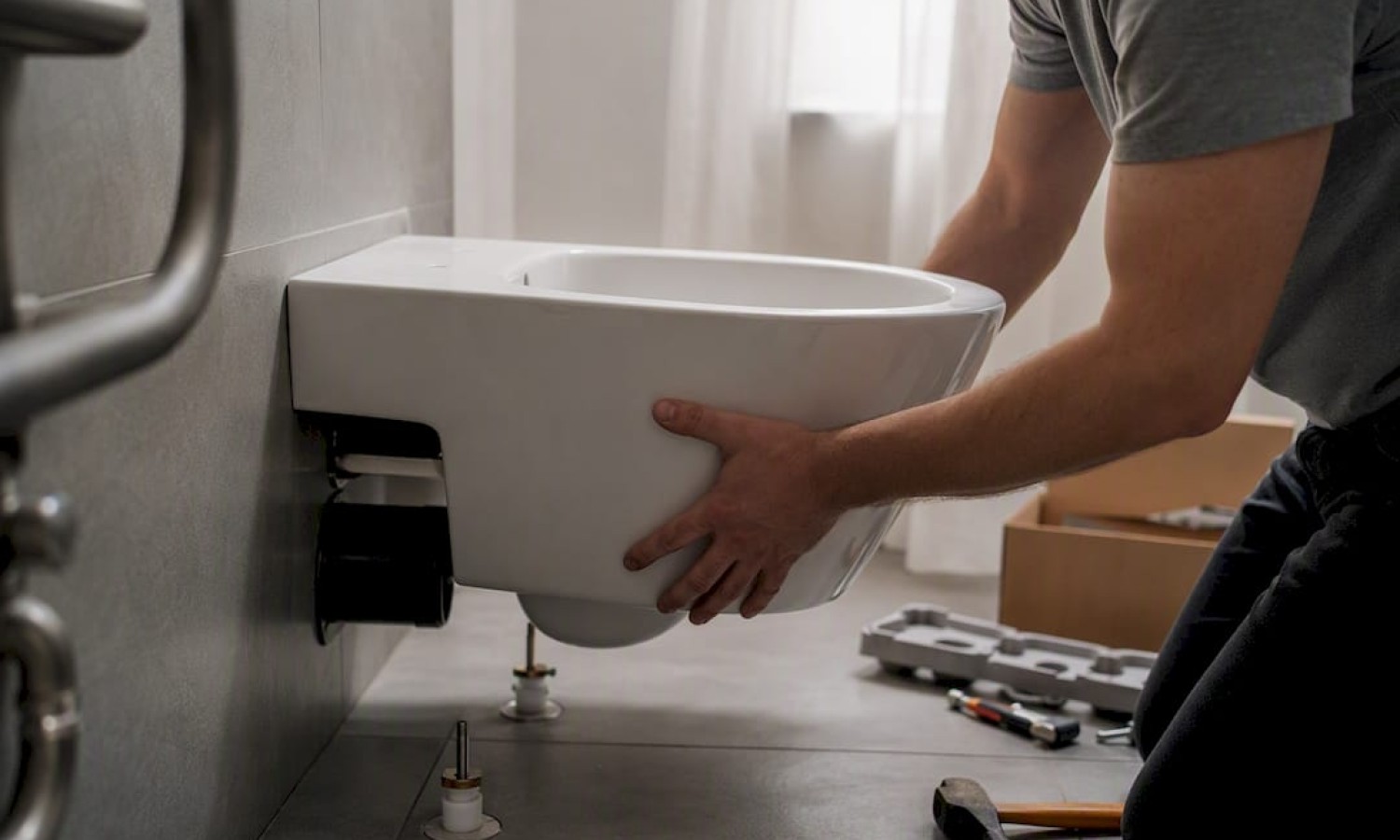
Installation cost depends almost entirely on whether you’re doing a straight swap or changing the toilet type. A floor-mounted replacement, where the new bowl matches your existing rough-in and outlet orientation, is the cheapest scenario. You’re paying for labor to disconnect the old unit, seal and set the new one, and reconnect the water supply.
Wall-hung installations cost considerably more because they require a support frame installed inside the wall cavity, plus the concealed cistern and often some drywall or tile work to finish around it. If you’re renovating a bathroom from scratch, this added cost is easier to justify than if you’re simply replacing an aging floor-mounted unit.
When DIY makes sense: if your new bowl has the same rough-in distance and outlet orientation as the old one, a straight swap is a reasonable weekend project for anyone comfortable with basic plumbing tools.
When to hire a professional: changing outlet orientation, installing a concealed cistern for the first time, or any structural wall modification. These jobs carry real risk of leaks or costly rework if done incorrectly.
A few ways to control cost without cutting corners:
- Buy a complete kit (bowl, seat, and mounting hardware together) rather than sourcing each piece separately.
- Reuse your existing cistern if it’s compatible with the new bowl, rather than replacing the whole unit.
- Bundle plumbing tasks together if you’re already having other work done, since a single site visit costs less than multiple call-outs.
- Ask for an itemized quote covering parts, labor, and disposal of the old toilet, not a flat lump sum.
When you request quotes, ask directly about timeframe, what warranty covers the installer’s own work versus the manufacturer’s warranty on parts, and whether disposal of the old unit is included. Reviewing a few cost-saving plumbing strategies before you call anyone puts you in a stronger position to spot an inflated quote.
How Do You Keep a Rimless Toilet Clean and Working Well?
The absence of a hidden rim is the whole point of rimless design. Water flows down an open, continuous surface instead of pooling behind a ledge, so there’s simply less hidden area for residue to build up between cleanings, as Geberit’s rimless technology pages describe.
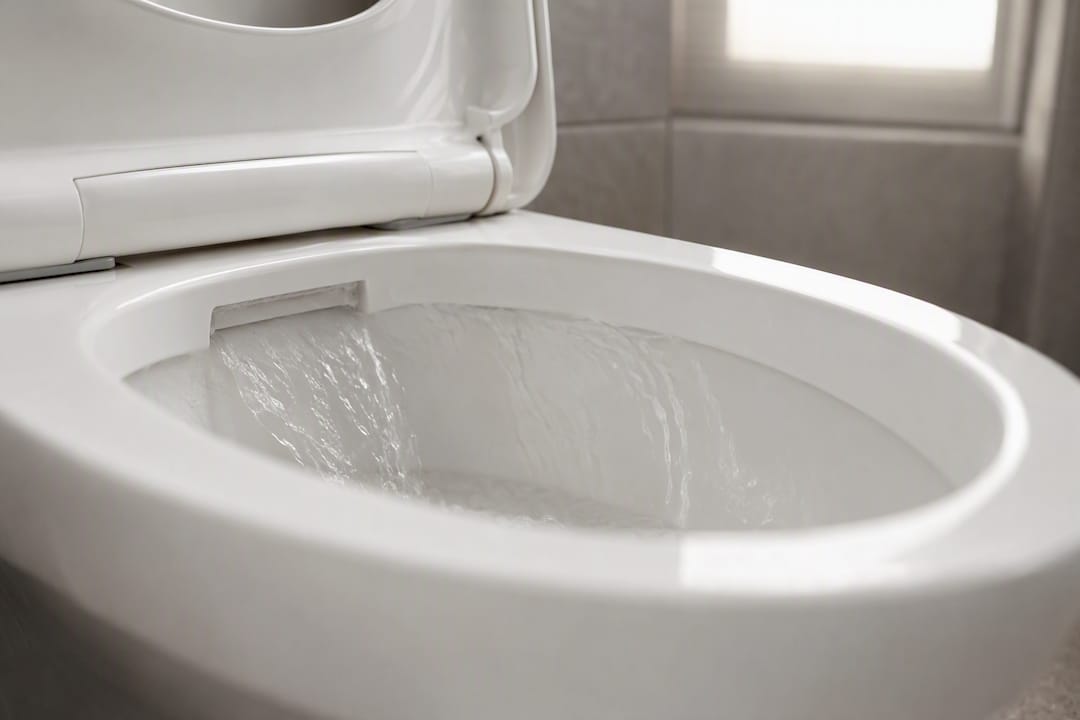
A basic weekly routine is usually enough: a standard toilet bowl cleaner and a brush, applied to the full visible surface since there’s no rim pocket to target separately. Avoid abrasive powders or steel wool on glazed bowls, especially ones with a specialty finish, since scratching the glaze creates new surface texture where dirt can start collecting again.
A few common issues and quick fixes:
- Persistent odor: usually a sign the wax ring or seal at the base needs replacing, not a cleaning problem.
- Weak flush: check the flush valve and water level in the tank first; low water volume is the most common cause.
- Loose seat: tighten the mounting bolts underneath; if they’ve stripped, a replacement hinge kit is inexpensive.
Call a plumber if you notice water pooling around the base or a flush that won’t fully clear the bowl after adjusting the water level.
Pro Tip: Run a cup of white vinegar into the tank once a month and let it sit for 30 minutes before flushing. It cuts limescale buildup around the flush valve, which keeps flush pressure consistent over time.
How Santehnikasveikals.lv Makes Buying a Rimless Toilet Easier
Comparing dozens of listings across scattered sellers is how budget toilet shopping usually turns into wasted afternoons. Santehnikasveikals keeps rimless models, mounting kits, and seats listed with full specs in one place, so you can match rough-in distance and outlet orientation without cross-referencing five different sites.
The store lists product dimensions and flush specs directly on each page, stocks connection accessories like the Viega WC connector you’ll likely need alongside a new bowl, and delivers across Latvia. Its blog also covers related basics, including water-saving toilet options, if flush efficiency is part of your decision.
- Product specs listed per model, including dimensions and flush volume
- Mounting and connection accessories sold alongside the toilets themselves
- Delivery available throughout Latvia
Once you’ve measured your rough-in and picked an outlet orientation, choose a rimless model, add the matching mounting kit and seat, and place your order through the Santehnikasveikals.
The Real Trade-Off Nobody Talks About
Most advice on rimless toilets stops at “it’s easier to clean,” which is true but incomplete. The bigger factor for budget buyers is that rimless technology has quietly become standard, not premium, so treating it as an upsell is outdated thinking.
What conventional guides get wrong is spending too much time on brand comparisons and too little on rough-in measurement. A beautiful rimless bowl that doesn’t match your existing outlet orientation isn’t a bargain. It’s a return shipment and a delayed installation.
My honest read: prioritize measurement accuracy and mounting kit compatibility over brand name or finish quality. A basic rimless bowl from a reliable listing, installed correctly on the first attempt, beats a premium model that sits in a box for two weeks while you source the right connector. Get the fit right first. Everything else, including the glaze finish and seat style, is a preference, not a requirement.
Ready to Choose Your Rimless Toilet?
If you’ve read this far, you already know the two things that matter: rough-in measurement and outlet orientation. Everything else is preference. Santehnikasveikals.lv lets you filter listings by these exact specs instead of guessing from a photo, which saves you the returns headache that trips up most first-time toilet buyers.
The site lists complete kits (bowl, seat, and mounting hardware) alongside individual parts like the Viega connector, so you’re not left sourcing a missing piece after the old toilet is already disconnected. Delivery covers all of Latvia, and product pages spell out dimensions and flush volume up front rather than burying them in a PDF.
Measure your rough-in today, pick a rimless model that matches your outlet orientation, and place your order through the Santehnikasveikals to get your bathroom upgrade moving.
Frequently Asked Questions
Is a rimless toilet actually easier to clean than a standard one? Yes. Without a hidden rim, water covers more of the bowl’s interior surface directly, leaving fewer pockets where residue collects between cleanings, according to manufacturer technology descriptions.
Can I install a rimless toilet myself? If the new bowl matches your existing rough-in distance and outlet orientation, a straight swap is manageable for anyone comfortable with basic plumbing tools. Changing outlet type or adding a concealed cistern typically calls for a professional.
Do rimless toilets use more water than traditional ones? No. Many rimless models offer dual-flush options with low-volume settings, so water efficiency depends on the specific model’s flush design, not on whether it’s rimless.
What’s the difference between rimless and rimfree? Nothing. “Rimfree” is simply the term some manufacturers, including Geberit, use for the same rimless bowl design.
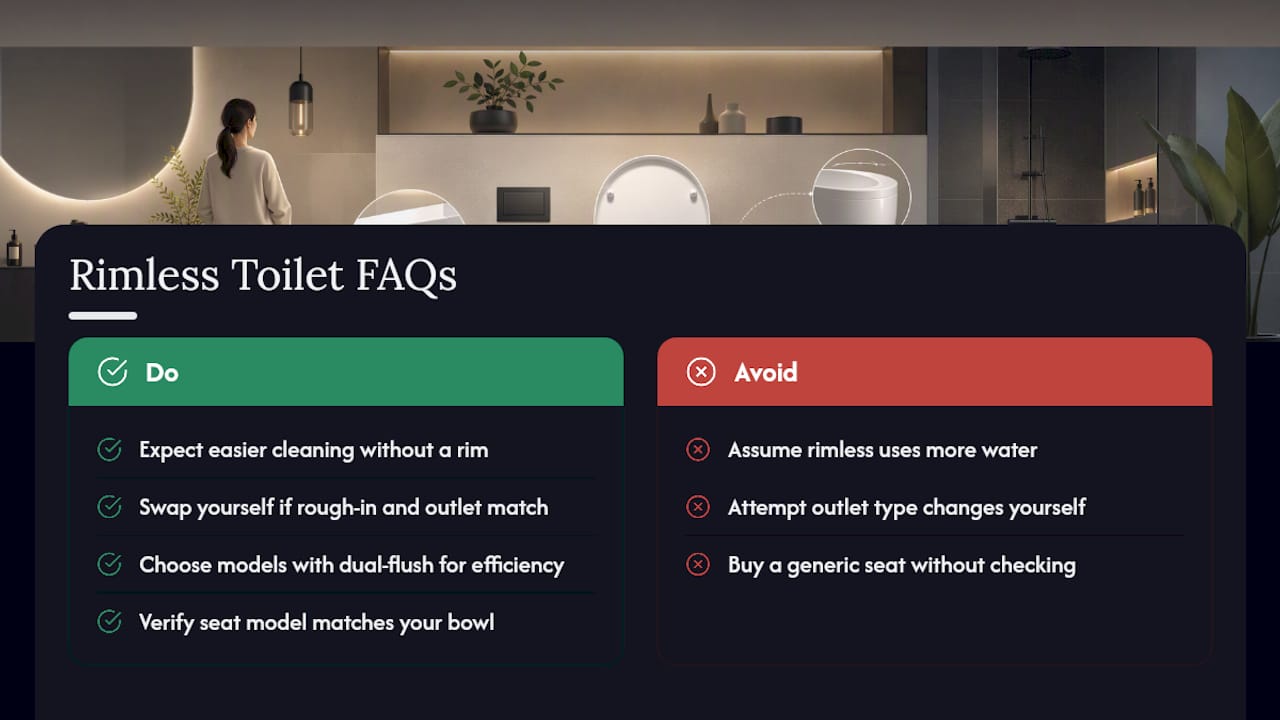
Do I need a special seat for a rimless toilet? Usually yes, since seats are matched to specific bowl shapes by model code. Always check that the seat’s model number corresponds to your exact bowl before purchasing.
Sources
- Rimfree WCs | Geberit
Оставьте комментарий