



















































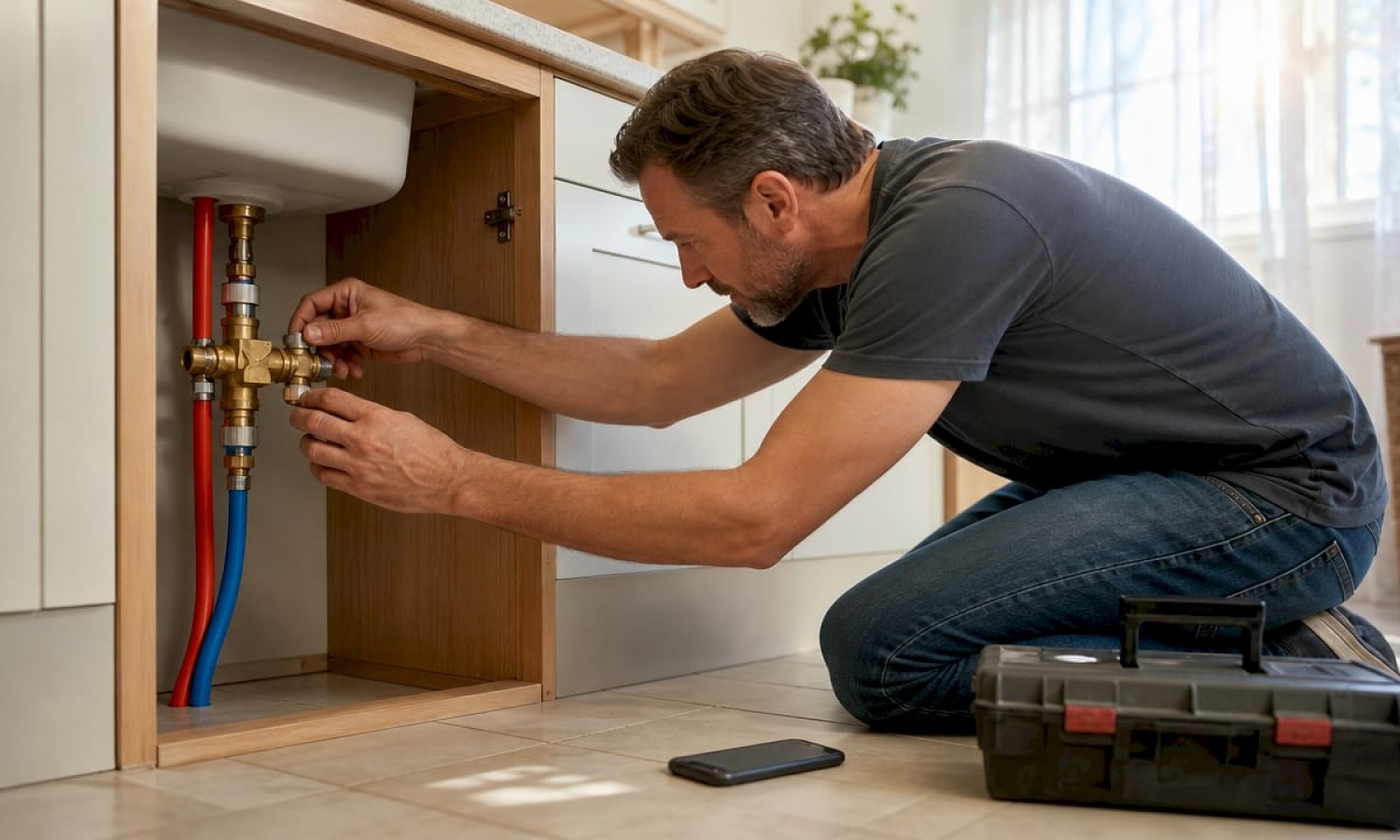

What Is a Mixing Valve? A Homeowner’s Guide
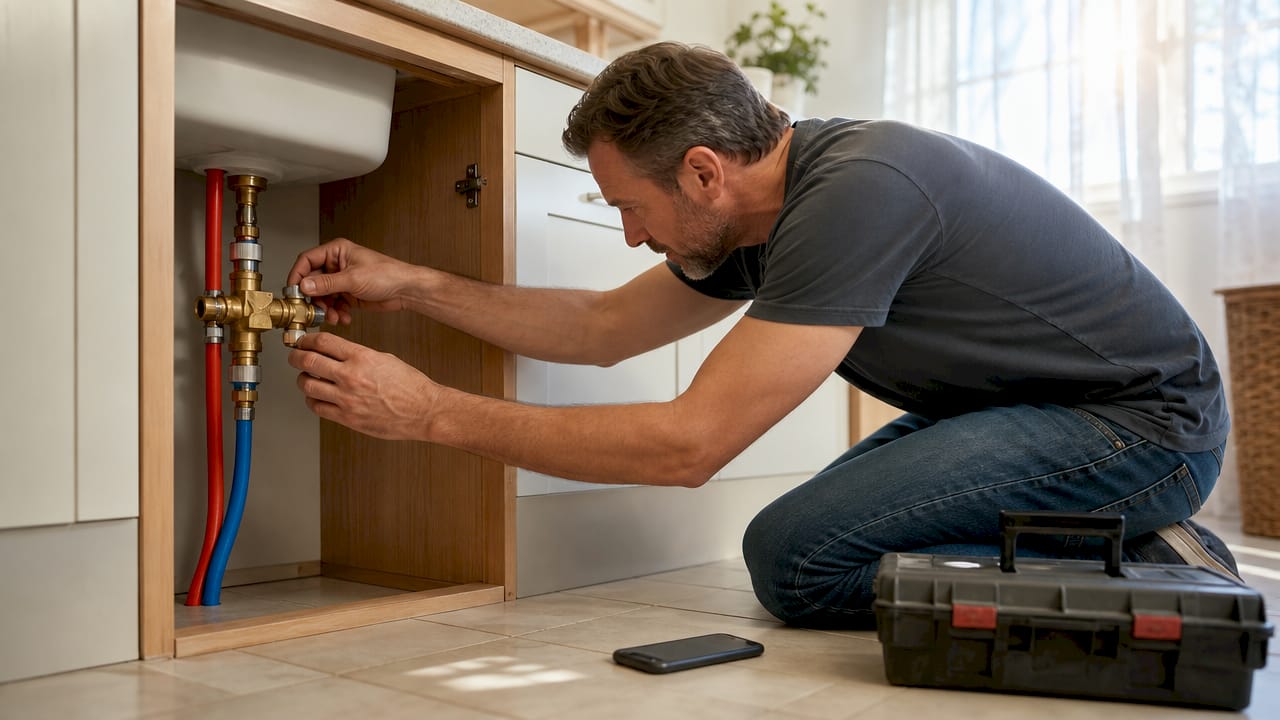
TL;DR:
- A mixing valve blends hot and cold water to deliver a safe, controlled temperature at fixtures.
- Thermostatic mixing valves maintain a preset temperature using sensors, while pressure-balance valves respond to pressure changes for safety.
A mixing valve is a plumbing device that blends hot and cold water to deliver a controlled, safe output temperature at your fixtures. The industry standard term is thermostatic mixing valve, or TMV, though pressure-balance valves serve a related purpose. Both types protect against scalding, stabilize water temperature when demand shifts, and help your plumbing system work more efficiently. If you have ever been hit by a sudden burst of hot water in the shower, you already understand what is a mixing valve and why it matters.
What is a mixing valve and how does it work?
A mixing valve blends hot and cold water to maintain a preset outlet temperature regardless of changes in supply pressure or temperature. The valve sits between your hot and cold supply lines and continuously adjusts the ratio of each to keep the output steady. That adjustment happens automatically, without you touching a faucet handle.
Thermostatic mixing valves use a wax thermostat or a bimetallic sensor inside the valve body. When the water temperature rises above the set point, the sensor expands and reduces the hot water inlet. When the temperature drops, it contracts and opens the hot side again. This feedback loop runs constantly, which is why TMVs deliver far more consistent temperatures than a standard faucet.
Pressure-balance valves work differently. They respond to pressure changes rather than temperature shifts. If someone flushes a toilet and drops cold water pressure, a pressure-balance valve restricts the hot side to match, preventing a scalding surge. The result is safer, but the outlet temperature can still drift if the incoming hot water temperature itself changes.
TMVs also include a critical safety feature: a rapid shutoff on supply failure. If the cold supply fails, the valve closes immediately to prevent a full blast of scalding hot water. If the hot supply fails, it closes to prevent a shock of cold water. This makes TMVs the preferred choice in homes with children, elderly residents, or anyone with reduced sensitivity to temperature.
- Thermostatic mixing valve: adjusts the hot/cold ratio based on temperature feedback from a sensor
- Pressure-balance valve: adjusts flow to equalize pressure between hot and cold lines
- Safety shutoff: TMVs close automatically when either supply line fails
Pro Tip: Set your TMV to deliver water at or below 120°F (49°C) at the outlet. This temperature is comfortable for bathing and low enough to prevent most scald injuries.
What are the different types of mixing valves?
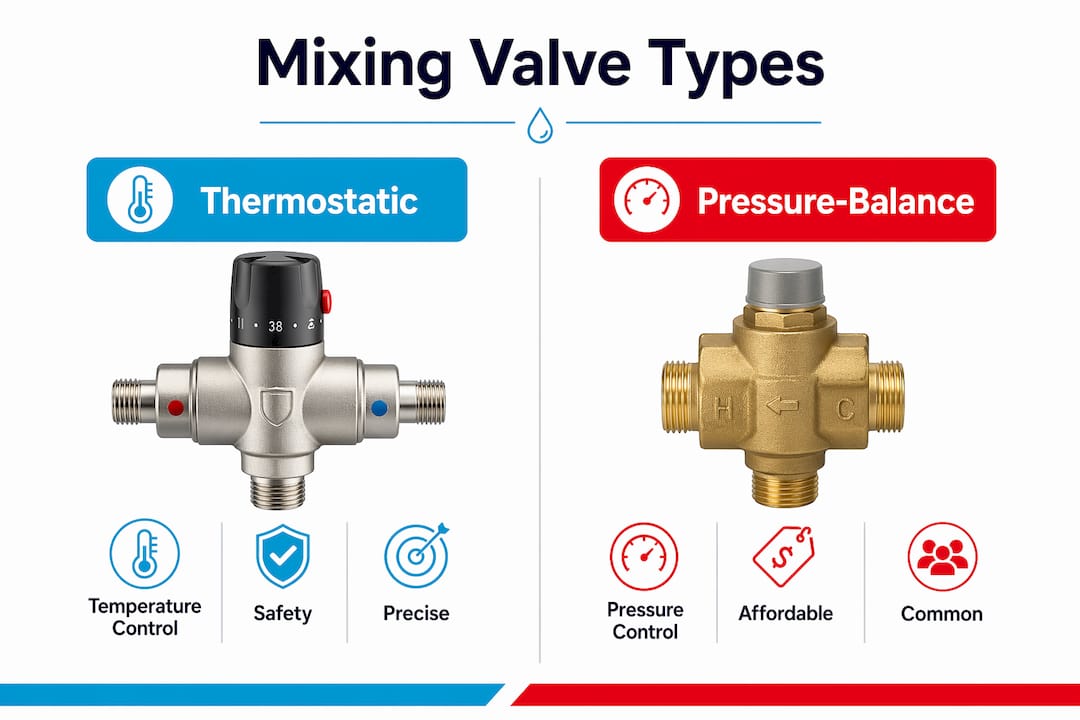
Thermostatic mixing valves and pressure-balance valves are the two main categories, but the distinctions matter when you are choosing one for your home.
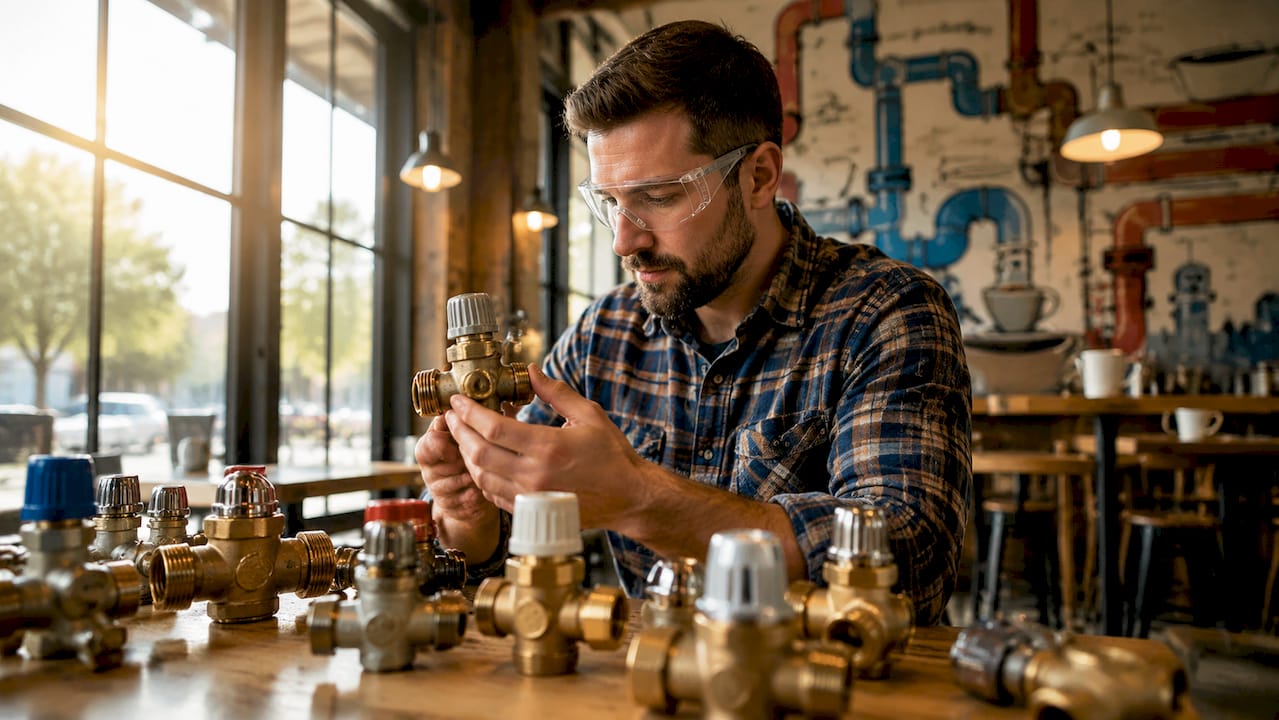
| Valve type | Temperature control | Pressure control | Best use |
|---|---|---|---|
| Thermostatic mixing valve (TMV) | Yes, precise | Yes | Whole-house, showers, high-risk users |
| Pressure-balance valve | No, limited | Yes | Showers, standard residential |
| Tempering valve | Approximate | No | Water heater outlets |
| Anti-scald valve | Approximate | No | Individual fixtures |
TMVs are the most capable option. They maintain outlet temperatures near 120°F (49°C) even when water use fluctuates across the house. A TMV installed at the water heater outlet protects every fixture downstream. A TMV installed at a single shower protects only that fixture but allows more precise control at that point.
Pressure-balance valves are the standard choice in most American shower installations. They are less expensive and simpler to install, but they do not hold a precise temperature. Many homeowners mistake pressure-balance for thermostatic control. The difference is real: a pressure-balance valve can still deliver water that is too hot if your water heater is set high.
Tempering valves and anti-scald valves are simpler, fixed-temperature devices. They blend hot and cold water at a set ratio but lack the feedback mechanism of a true TMV. They work well as a low-cost solution at individual faucets but are not suitable for whole-house protection.
Installation location also defines the valve type:
- Point-of-distribution: installed at the water heater outlet, controls temperature for the entire house
- Point-of-use: installed at a single fixture such as a shower or sink, controls only that outlet
Why install a mixing valve in your home?
Mixing valves deliver four concrete benefits that affect safety, health, comfort, and efficiency every day.
-
Scald prevention. Hot water above 120°F causes burns in seconds. Children and elderly adults are especially vulnerable because their skin is thinner and their reaction time is slower. A TMV keeps outlet temperatures in the safe range automatically, without relying on the user to adjust the faucet carefully.
-
Legionella control. Legionella bacteria grow in water stored between 77°F and 113°F (25°C and 45°C). Keeping your water heater below 120°F to avoid scalding creates exactly the right conditions for bacterial growth. Mixing valves solve this conflict directly. Homes can store hot water above 140°F for bacteria control while the valve delivers tempered water below 122°F to every fixture. That combination protects both your health and your safety.
-
Temperature consistency. Without a mixing valve, running the dishwasher or flushing a toilet can cause a noticeable temperature shift in the shower. TMVs stabilize temperature when demand shifts, so the shower stays comfortable even when other fixtures are in use.
-
Water and energy efficiency. Storing water at 140°F and blending it down to 120°F at the outlet effectively increases the usable volume of hot water from your tank. You get more showers per tank because you are using less hot water per gallon of output. That reduces both water consumption and the energy needed to reheat the tank.
Where are mixing valves installed and how do you choose the right one?
Mixing valves can be installed at water heater outlets or directly at fixtures, and the right location depends on what you want to control. A point-of-distribution valve at the heater outlet is the most cost-effective way to protect the whole house. A point-of-use valve at a single shower gives you the most precise control at that fixture.
For whole-house installation, size the valve to match your water heater’s flow rate. A valve that is too small will restrict flow and cause pressure drops. Most residential water heaters pair well with valves rated for 6–10 gallons per minute. For individual fixtures, a smaller valve rated for 1–3 gallons per minute is sufficient.
Retail pricing for mixing valves ranges from $30 to $200, depending on type and flow capacity. A basic pressure-balance cartridge for a shower runs toward the lower end. A certified TMV for whole-house installation sits at the higher end. Budget for both the valve and professional installation if you are replacing a whole-house unit, since incorrect placement affects performance significantly.
Pro Tip: Look for valves certified to ASSE 1016 (pressure-balance) or ASSE 1070 (thermostatic) standards. These certifications confirm the valve meets tested safety performance requirements.
- Choose a TMV for households with children, elderly residents, or anyone with reduced temperature sensitivity
- Choose a pressure-balance valve for a straightforward shower upgrade on a tighter budget
- Always check the valve’s maximum flow rate against your fixture’s demand before purchasing
- Proper calibration and installation location critically affect performance. A correctly sized valve in the wrong location still causes temperature swings.
How to maintain and troubleshoot mixing valves
Mixing valves are reliable, but they do wear out. Recognizing the signs early prevents both discomfort and safety risks.
Signs your mixing valve needs attention:
- Water temperature fluctuates even when no other fixtures are running
- The outlet temperature is consistently hotter or cooler than the set point
- Water flow drops noticeably at the fixture the valve serves
- The valve drips or leaks at the body or connections
Mineral deposits are the most common cause of valve failure. Hard water leaves calcium and magnesium scale inside the valve, which jams the thermostat or clogs the inlet screens. Cleaning the inlet screens every one to two years prevents most blockages. Soaking the thermostat cartridge in white vinegar dissolves light scale buildup without damaging the components.
Recalibration is the next step if cleaning does not restore consistent temperature. Most TMVs have an adjustment screw or cap that sets the maximum outlet temperature. Turn it in small increments and test the output with a thermometer. The target is 120°F (49°C) at the outlet.
Replace the valve entirely if recalibration fails or if the valve is more than ten years old. Worn seals and degraded thermostat elements cannot be reliably restored. Call a licensed plumber for whole-house valve replacement, since the work involves shutting off the main water supply and soldering or pressing new connections.
Key Takeaways
A thermostatic mixing valve is the most effective single device for preventing scalding, controlling legionella risk, and delivering consistent water temperature in a residential plumbing system.
| Point | Details |
|---|---|
| Core function | A mixing valve blends hot and cold water to maintain a safe, preset outlet temperature. |
| TMV vs. pressure-balance | TMVs control temperature precisely; pressure-balance valves only equalize pressure between supply lines. |
| Safety shutoff | TMVs close automatically if either supply fails, preventing scalding or thermal shock. |
| Legionella and scald balance | Store water at 140°F for bacteria control; the valve delivers safe temps below 122°F at fixtures. |
| Maintenance | Clean inlet screens every one to two years and recalibrate if outlet temperature drifts. |
Why I think most homeowners underestimate their mixing valve
Most homeowners treat their mixing valve as a set-and-forget component. That is a mistake I see repeatedly, and it creates real safety risks over time.
The most common misconception is that a pressure-balance valve in the shower is the same as a thermostatic mixing valve. It is not. A pressure-balance valve stops the sudden surge when someone flushes a toilet. A TMV holds the temperature steady even when the hot water supply temperature drifts, which happens constantly in real homes as the heater cycles on and off.
The second mistake is skipping calibration after installation. A valve installed at the factory default setting may deliver water at 130°F or higher, which is above the safe threshold for children and elderly adults. Always verify the outlet temperature with a thermometer after installation, not just by feel.
The third issue is neglecting the valve entirely until it fails. A TMV that has not been serviced in five or more years is likely running with clogged screens or a sluggish thermostat. The temperature may feel acceptable, but the safety shutoff may no longer respond quickly enough to protect against a supply failure. Annual checks take ten minutes and cost nothing. Replacing a valve after a scald injury costs far more in every sense.
My honest recommendation: if your home has children, elderly residents, or anyone with reduced sensitivity to heat, install a certified TMV at the water heater outlet and verify the calibration every year. The cost is modest. The protection is real.
— Renate
Mixing valves and plumbing supplies at Santehnikasveikals
Choosing the right mixing valve is straightforward once you know what your home needs. Santehnikasveikals carries a range of plumbing hardware suited to both whole-house and point-of-use installations, including thermostatic shower mixing valves and related fittings for residential systems.

The online store at Santehnikasveikals offers a full catalog of plumbing components with clear product descriptions, pricing, and delivery across Latvia. Whether you are upgrading a single shower or planning a whole-house plumbing project, you will find quality products at competitive prices without needing to visit a physical store. Browse the catalog, compare options, and order with confidence.
FAQ
What is a mixing valve in simple terms?
A mixing valve is a plumbing device that combines hot and cold water to produce a steady, safe output temperature at your faucet or shower. It adjusts automatically when supply conditions change.
What is a thermostatic mixing valve?
A thermostatic mixing valve, or TMV, uses a temperature-sensitive element to continuously adjust the hot and cold water ratio and hold the outlet at a preset temperature, typically around 120°F (49°C).
How does a mixing valve differ from a regular faucet?
A regular faucet requires manual adjustment to balance hot and cold water. A mixing valve adjusts the blend automatically in response to changes in supply temperature or pressure, without any input from the user.
Where should a mixing valve be installed?
A mixing valve can be installed at the water heater outlet to protect the whole house, or at individual fixtures like showers and sinks for point-of-use control. Installation location directly affects how consistently the valve maintains safe temperatures.
How often should a mixing valve be serviced?
Clean the inlet screens every one to two years and test the outlet temperature with a thermometer annually. Replace the valve if it is more than ten years old or if recalibration no longer restores consistent temperature.
Recommended
- What Is a Building Drainage System? A Clear Guide | Santehnikasveikals.lv
- H-veida radiatoru noslēgvārsts RLV-KS radiatoriem, leņķa G3/4x1/2 - 003L0222
- H-veida radiatoru noslēgvārsts RLV-KS radiatoriem, leņķa G3/4x3/4 - 003L0223
- H-veida radiatoru noslēgvārsts RLV-KS radiatoriem, taisns G3/4x1/2 - 003L0220
Оставьте комментарий