



















































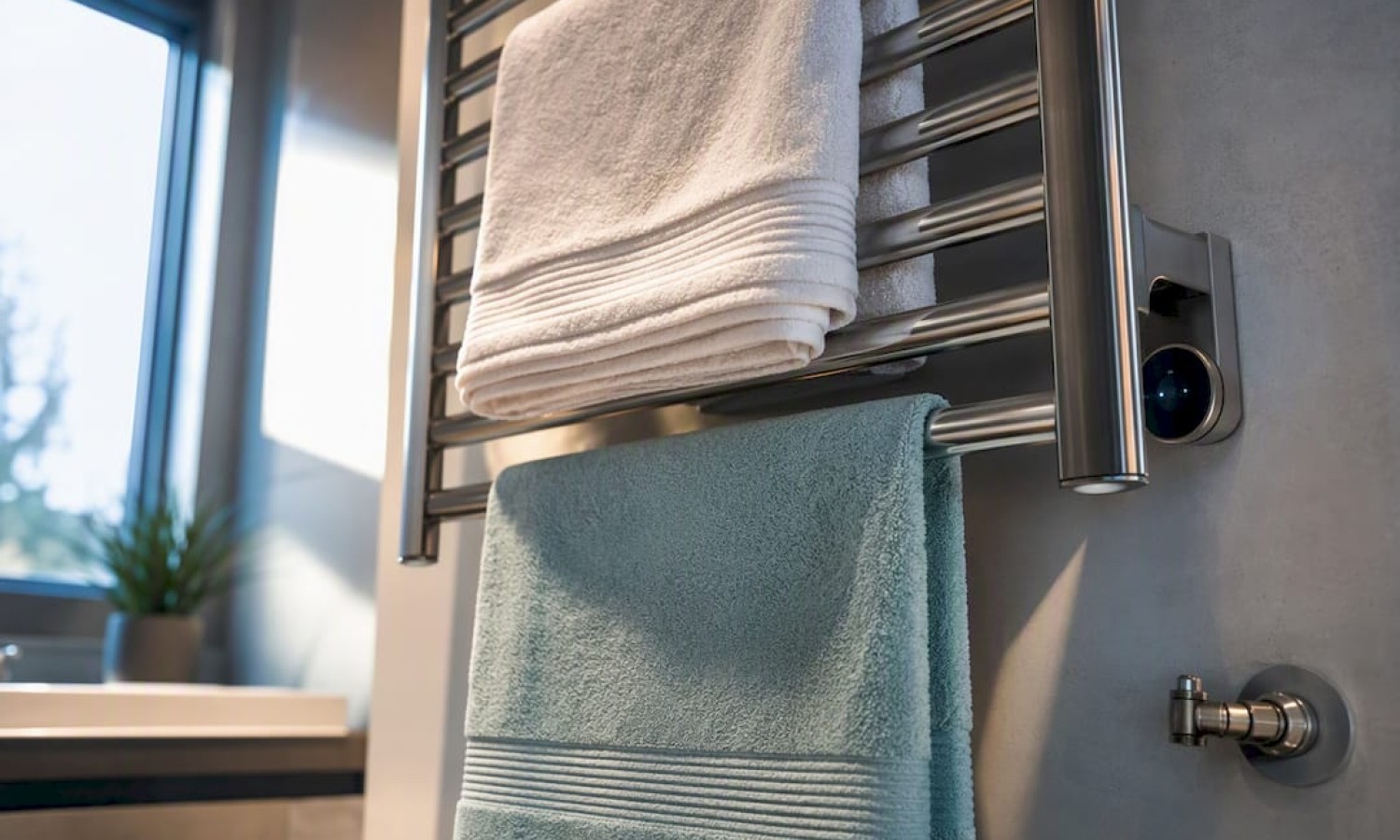

Stop Costly Returns in Latvia: Electric or Water Towel Warmers
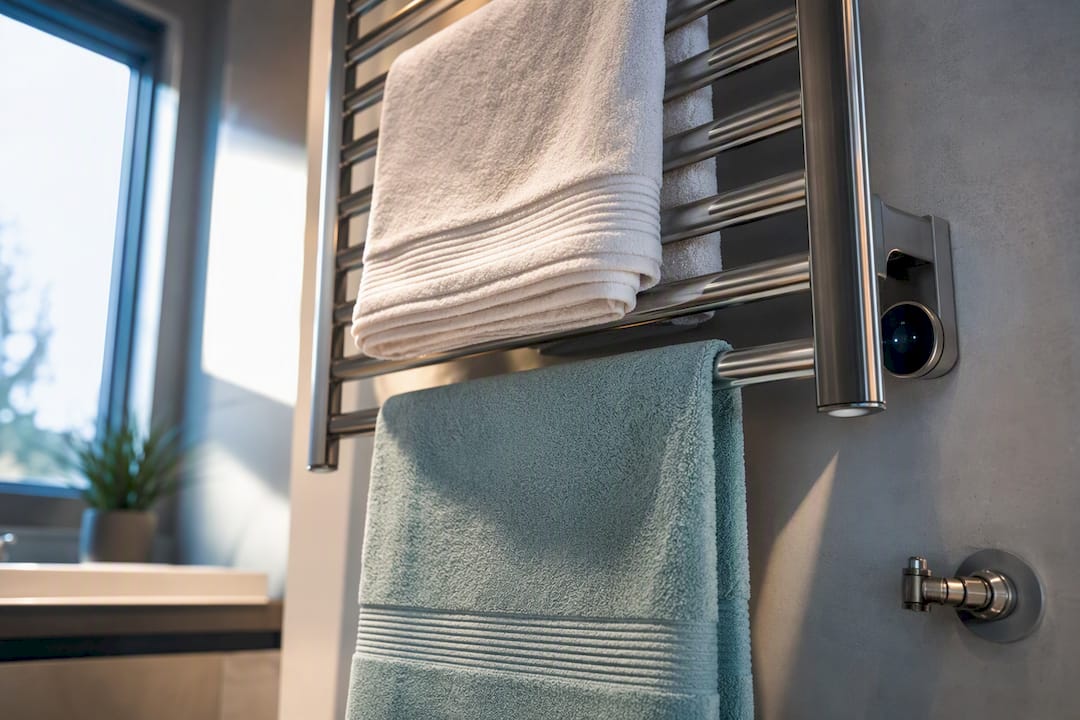
If you have an autonomous heating system with stable water pressure, a water towel warmer is usually the most efficient long-term choice. If your bathroom has no hot-water loop nearby, or you need heat on demand without touching the plumbing, an electric towel warmer solves that instantly. Dual-fuel units bridge the two when your heating shuts off seasonally but you still want warm towels year-round.
TL;DR:
- Water-connected towel warmers are more cost-effective long-term if your heating loop and water quality support their use, especially with stainless steel or brass.
- Electric towel warmers offer greater installation flexibility and faster heating but come with higher energy costs and require proper electrical readiness to avoid incompatibility.
- Proper planning of plumbing, water hardness, and system type can prevent costly installation issues and ensure the longevity of your towel warmer.
- Material choice significantly impacts durability; stainless steel and brass resist corrosion better for open-loop systems, while cheaper materials fail faster in unsuitable environments.
- Control features and rung spacing influence drying speed and usability, with electric units providing more precise timing and water systems offering steadier warmth.
Table of Contents
- Electric Vs Water Towel Warmer: Weighing the Trade-Offs
- How Do You Choose the Right Towel Warmer?
- What Should You Check Before Installing a Towel Warmer?
- How Much Do Towel Warmers Cost to Run?
- Which Materials Last Longest in a Towel Warmer
- Heat Output and Drying Speed: What Actually Differs
- Which Option Is Better for the Environment
- Which Type Should You Actually Pick
- Where to Buy a Towel Warmer and What to Check First
- Sources
Electric Vs Water Towel Warmer: Weighing the Trade-Offs
Every buying decision comes down to five practical factors: where you can install it, what it costs to run, how fast it heats, how much risk it carries, and how it looks in the room.
Installation and placement freedom clearly favors electric units. An electric towel warmer only needs a nearby power outlet or a hardwired circuit, which means it can go in any bathroom, even one with no connection to the central heating system. Water-connected models require a plumbing branch, shutoff valves, and often a professional to tie into the existing loop.
Running cost tells a different story. A water-based unit piggybacks on heat you are already paying for through your boiler or district heating, so the incremental cost during winter is close to nothing. Manufacturer guidance describes water units as the more efficient option specifically because the building’s heating system is already running.
Leak and corrosion risk sits higher with water units, especially in apartment buildings on centralized hot water, where mineral-heavy water can eat through the wrong metal fast. Electric units carry a different risk profile: no leaks, but a sealed heating element that either works or needs full replacement.
Speed and control favor electric warmers. They heat up in minutes and pair easily with timers or thermostats, while a water unit only gets as warm as the loop it’s tapped into.
Key trade-offs at a glance:
- Electric: install anywhere, fast heat, programmable, higher running cost per use
- Water-connected: near-zero marginal cost when heating runs, but tied to plumbing access and pressure
- Both types come in stainless steel, chrome, black, and designer finishes, so aesthetics rarely force the decision
How Do You Choose the Right Towel Warmer?
Buying the wrong type usually shows up after installation, when a plumber says the connection point doesn’t exist or the wiring can’t handle a hardwired unit. A short checklist before you order avoids that.
- Confirm your heating system type. Autonomous gas or electric boiler, district heating, or no central heating at all? This single fact eliminates half the options immediately.
- Check water pressure and hardness. Fluctuating pressure or high lime content pushes you toward stainless steel or brass construction, and may mean adding a pressure regulator first.
- Decide on the connection method. Plug-in electric suits renters and quick fixes; hardwired electric suits permanent installs with hidden cabling; water-connected suits homes already on a working loop.
- Measure before you shop. Match the unit’s width and rung spacing to your towel sizes and the wall space between your shower, sink, and door swing.
- Ask about serviceability. Some sellers can tell you whether the heating element is replaceable on-site or whether a failure means swapping the whole unit.
Red flags worth raising with any installer: pressure that swings noticeably between morning and evening, a heating element with no documented replacement part, or a water unit made from unrated steel destined for a mains hot-water line. Expect a wide price spread, too. Basic models start cheap, while designer or specialty units can run into the thousands depending on material and finish.
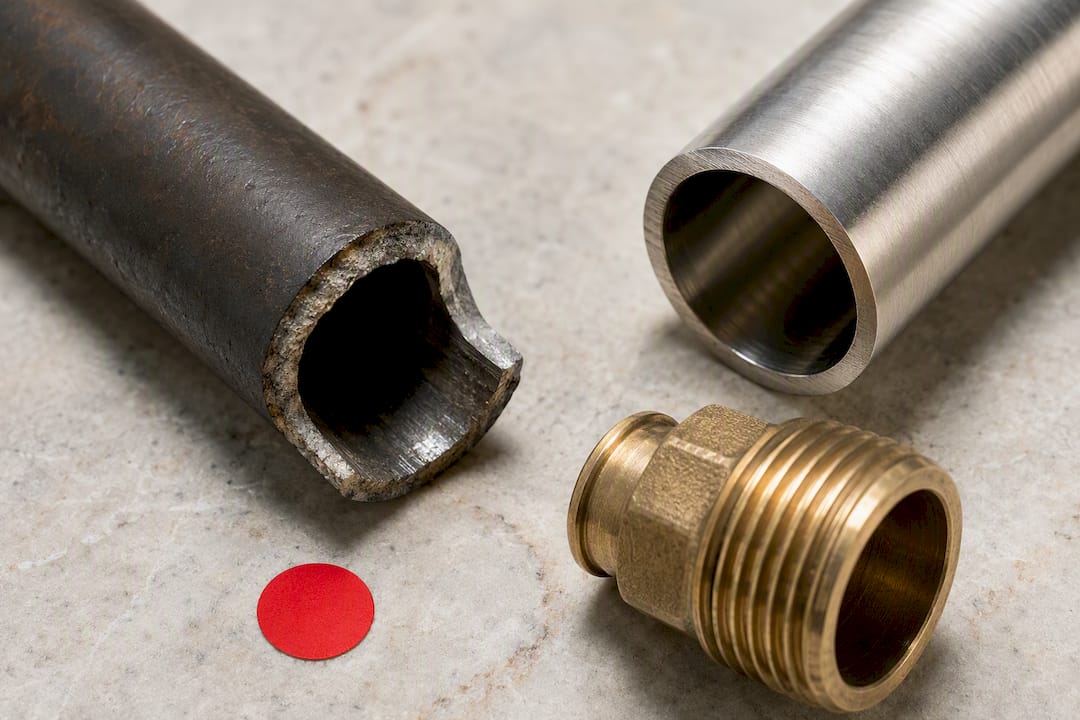
Pro Tip: Ask your installer to confirm whether your building’s hot water is “closed loop” (treated, recirculated) or “open” (mains-fed). That one detail decides whether black steel is safe or whether you need stainless steel or brass.
What Should You Check Before Installing a Towel Warmer?
A tape measure and a few honest questions about your plumbing save you from an expensive mismatch.
- Wall space and mounting height. Leave clearance from the floor, tub, and adjacent fixtures. Most units need at least a few centimeters of buffer on each side for airflow and towel drape.
- Loop type and valve compatibility. Identify whether you’re on a closed heating loop or connected to mains hot water; the valve type at the connection point determines what fittings you’ll need.
- Water hardness. High lime content and unstable pressure are the leading causes of clogging in water-based units, so test hardness early and budget for a filter or softener if needed.
- Electrical readiness. Decide between a dedicated circuit and a simple plug-in, and confirm the unit’s IP rating matches its distance from water sources, since bathroom electrical zones carry strict placement rules.
- Rough-in timing. If you’re renovating, plan the electrical cabling before walls close up so cords don’t run exposed across tile.
Measuring and testing water quality is something most homeowners can do themselves. Tying into a heating loop or running a new dedicated circuit is not. Call a licensed plumber for the former and a licensed electrician for the latter. Skipping that step is exactly how buyers discover incompatibility after the unit is already delivered.
How Much Do Towel Warmers Cost to Run?
An electric towel warmer typically draws somewhere between 25 and 100 watts depending on size and heating element. That’s a modest load, and if you’re only running it for an hour before and after a shower, the electricity cost stays low even at higher rates.
The 25 to 100 watt range covers most residential electric towel warmers, roughly the same draw as a couple of LED light bulbs running continuously.
Water-connected units behave differently. Since they draw on heat your boiler or district system already produces, the marginal cost of keeping one warm during the heating season is close to negligible. The trade-off is that they’re only warm when the central heating is on, which matters in shoulder seasons when you’ve switched radiators off but still want a warm towel.
This is where usage patterns matter more than raw wattage. A timer-controlled electric unit that runs for one or two hours a day will almost always cost less over a year than a continuously heated electric unit left on low all winter. If you’re weighing an electric radiator upgrade alongside your towel warmer choice, the same logic applies: programmable controls pay for themselves within a season or two for most households.
Which Materials Last Longest in a Towel Warmer
Material choice determines whether your towel warmer lasts fifteen years or fails in three, and it matters more than the price tag on the box.
- Stainless steel and brass are the safe default for any unit connected to open, mains-fed hot water, since both resist the corrosion that mineral-heavy water causes over time.
- Black steel works fine in a closed, chemically treated heating loop, but it rusts quickly if mistakenly installed on a mains hot-water line.
- Copper and brass hold up well and often carry a premium finish, though plating quality affects how long that finish stays intact.
- Electric heating elements are frequently sealed and non-modular, so a failed element often means replacing the entire unit rather than a simple part swap.
The lesson here isn’t subtle: a cheap unit built for the wrong environment corrodes fast, no matter how good the finish looks on day one. Material and system compatibility decide durability far more than sticker price.
Heat Output and Drying Speed: What Actually Differs
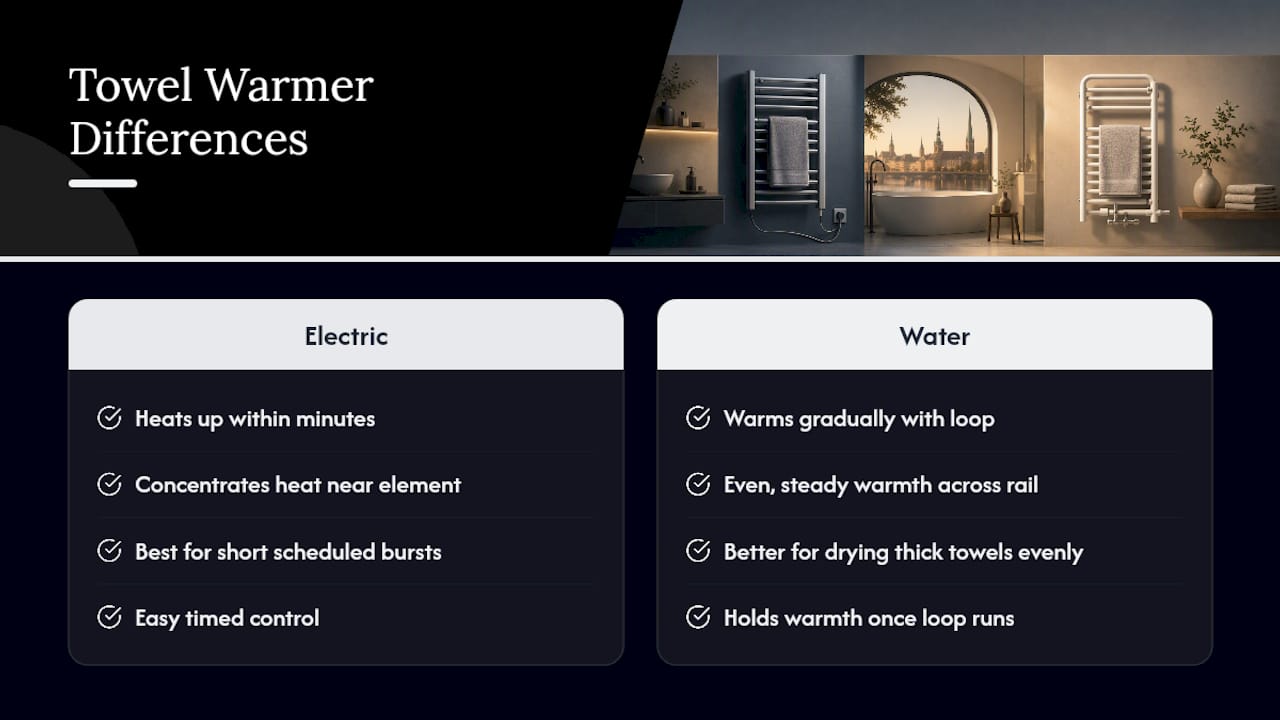
On paper, both towel warmer types deliver similar surface temperatures, but how they reach that temperature changes how you experience drying in practice. Electric units heat up within minutes of being switched on, which makes them well suited to short, scheduled bursts of warmth right when you step out of the shower.
Water-connected units warm more gradually because they depend on the temperature of the loop feeding them. Once that loop is running, though, they tend to hold a steady, even warmth across the full rail rather than concentrating heat near the element, which some households find dries thicker towels more evenly.
Rail spacing and rung count matter just as much as the heat source. A unit with tightly spaced rungs and good surface area dries towels faster than a widely spaced design running at the same temperature, because more of the towel makes contact with a warm surface. If you’re drying multiple towels or heavier bath sheets regularly, prioritize rung count and total surface area over marginal differences in wattage or loop temperature.
Neither type outright wins on drying speed. Electric wins on responsiveness and control, letting you time the heat to match your routine. Water-connected wins on consistency once the loop is active, holding warmth without you touching a switch.
Which Option Is Better for the Environment
The environmental comparison depends heavily on how your home already generates heat, not on the towel warmer itself. In a home already running an efficient boiler or connected to district heating, a water-based towel warmer adds close to zero additional emissions, since it’s simply routing existing heat through another rail rather than generating new energy.
Electric units draw directly from the grid every time they run. Their environmental footprint depends on your electricity source and, more practically, on how disciplined you are with timers. An electric warmer left running continuously all winter carries a meaningfully larger footprint than one switched on for an hour around shower time.
Sustainability also comes down to lifespan. A correctly matched material choice that avoids early corrosion means fewer replacement units manufactured, shipped, and eventually discarded over the life of your bathroom. A stainless steel unit installed on the right system can outlast several cheaper units that fail and get replaced. From a waste standpoint, buying once and buying correctly beats any marginal efficiency gain from choosing one heating method over the other.
Dual-fuel units offer a middle path environmentally too: they draw on existing heating most of the year and switch to electric only during the months your radiators are off, limiting grid draw to the shoulder seasons when you’d otherwise have no warm towel option at all.
Which Type Should You Actually Pick
If you already have a working heating loop and decent water quality, I’d steer you toward a water-connected towel warmer built in stainless steel or brass. It costs almost nothing extra to run once your heating is already on, and it avoids the “full unit replacement” risk that comes with a failed electric element. If your bathroom sits outside the heating loop, or you’re renting and can’t touch the plumbing, electric is the honest answer, not a compromise.
Santehnikasveikals stocks the electric heating elements, radiators, and installation accessories that back up either path, along with product calculators to sanity-check your specs before ordering. Before you buy anything, run through the compatibility checklist above with whoever’s installing it. That conversation costs you nothing and saves you a return.
— Renate
Where to Buy a Towel Warmer and What to Check First
Santehnikasveikals gives you one advantage a general hardware store can’t: a catalog built specifically around plumbing and heating compatibility, so you’re not guessing whether a part fits your system before it arrives.

The site stocks electric heating elements, water-connected radiators, and the installation accessories that tie either option into your bathroom correctly, alongside product calculators that help you sanity-check sizing and specs before you commit. If you’re still deciding between a plug-in electric unit and a full water-connected radiator, browsing the heating radiator category is a good starting point, since it shows real dimensions and materials side by side rather than a generic spec sheet. For older bathrooms weighing a broader upgrade, the piece on upgrading old radiators covers the efficiency math in more depth.
If you’re unsure which connection type your building supports, reach out to Santehnikasveikals support with your heating system details before ordering. Getting that confirmed first, rather than after delivery, is the difference between a smooth install and a return shipment.
Palikite komentarą