



















































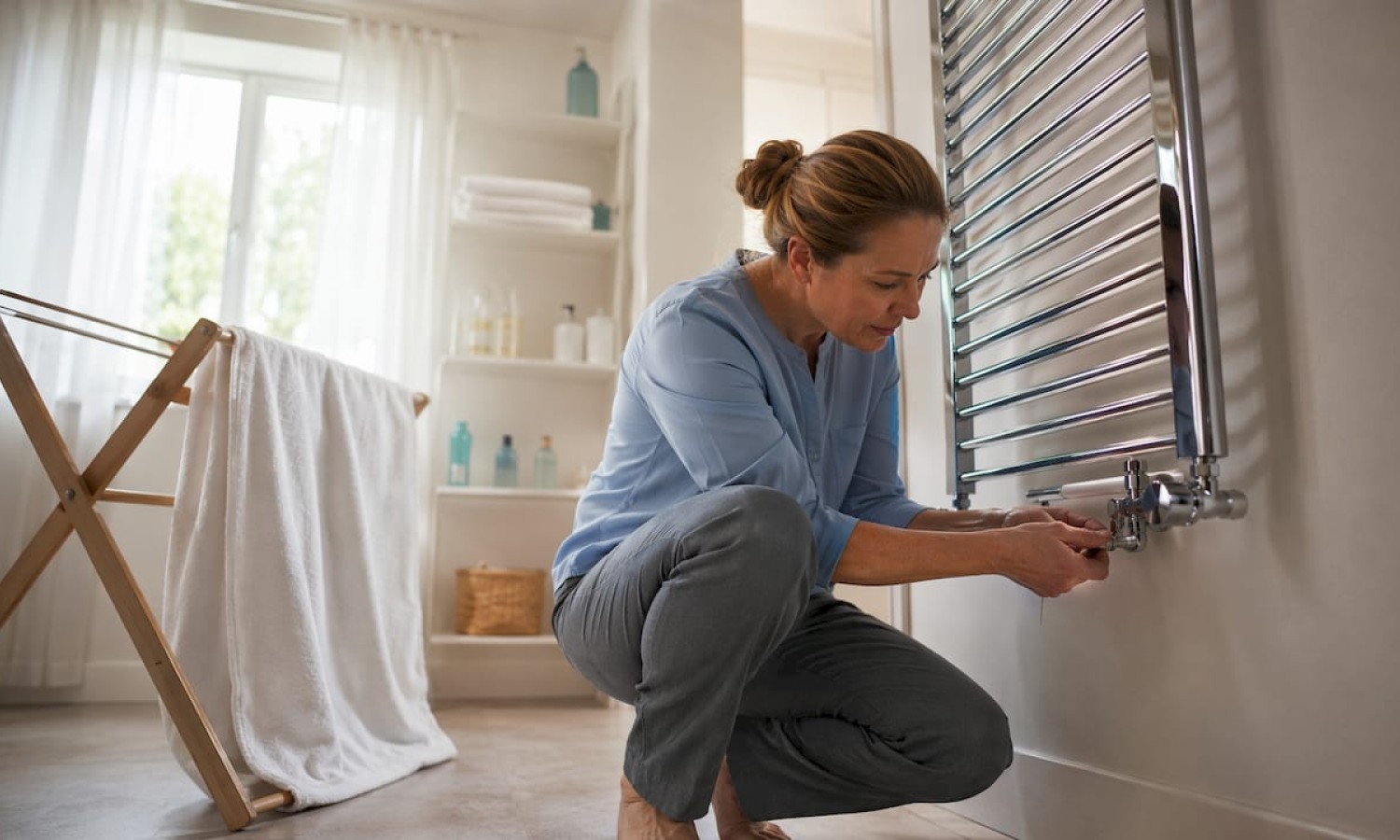

What Is a Towel Radiator? A Clear Homeowner Guide
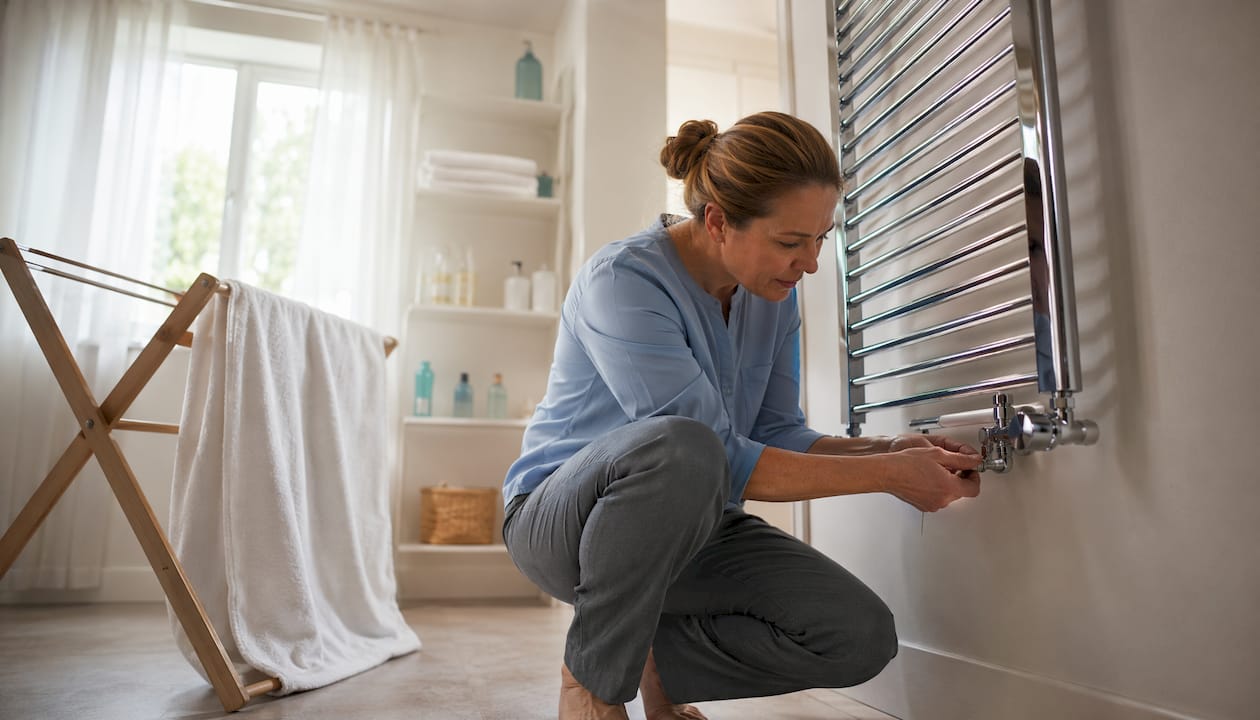
What is a towel radiator, and what does it do?
A towel radiator is a hybrid bathroom fixture that serves two functions: it dries and warms towels while also providing supplementary heat to the bathroom. The structure typically features horizontal heated bars arranged in a ladder pattern, designed for hanging towels flat across each rung. Unlike a standard panel radiator, which focuses entirely on heating a room, a towel radiator splits its output between drying fabric and warming air.
Key characteristics at a glance:
- Dual purpose: Warms towels and adds ambient heat to the bathroom
- Ladder design: Horizontal bars spaced for full towel coverage
- Supplementary role: Not a primary heat source for large bathrooms
- Available in two operating types: Hydronic (connected to hot water system) and electric (self-powered)
The industry term you’ll see on product labels and plumbing specifications is heated towel rail, used interchangeably with towel radiator. Both refer to the same fixture category.
Table of Contents
- How towel radiators are built and how they work
- Advantages and disadvantages of towel radiators
- How towel radiators differ from heated towel racks
- Are towel radiators energy efficient?
- How to size and select a towel radiator for your bathroom
- Santehnikasveikals: radiator and bathroom heating products
- Key Takeaways
How towel radiators are built and how they work
Most towel radiators are constructed from steel, stainless steel, or aluminum. Steel is the most common material in the US market due to its durability and cost efficiency. Stainless steel resists corrosion better, making it a practical choice for high-humidity bathrooms. Aluminum heats up faster but is less common in hydronic configurations.
Operating types:
- Hydronic (wet system): Connected to the home’s central hot water heating system. Runs only when the central heating is active. Water circulates through the internal tubes, transferring heat to the bars and then to towels and air.
- Electric: Self-contained and independent of central heating. Can run year-round regardless of the season. Plugs into a standard electrical circuit or is hardwired.
Within electric models, there are two internal designs worth knowing:
- Dry-element: Heats quickly, suited for on-demand towel warming
- Fluid-filled: Retains heat longer, providing steadier ambient warmth for the room
Heat transfers from the bars to towels by direct contact, and from the exposed bar surface to the surrounding air by convection. Modern towel radiators are available in finishes including matte black, brushed gold, chrome, and stainless steel, making them a visible design element rather than a hidden utility.
Advantages and disadvantages of towel radiators
Advantages
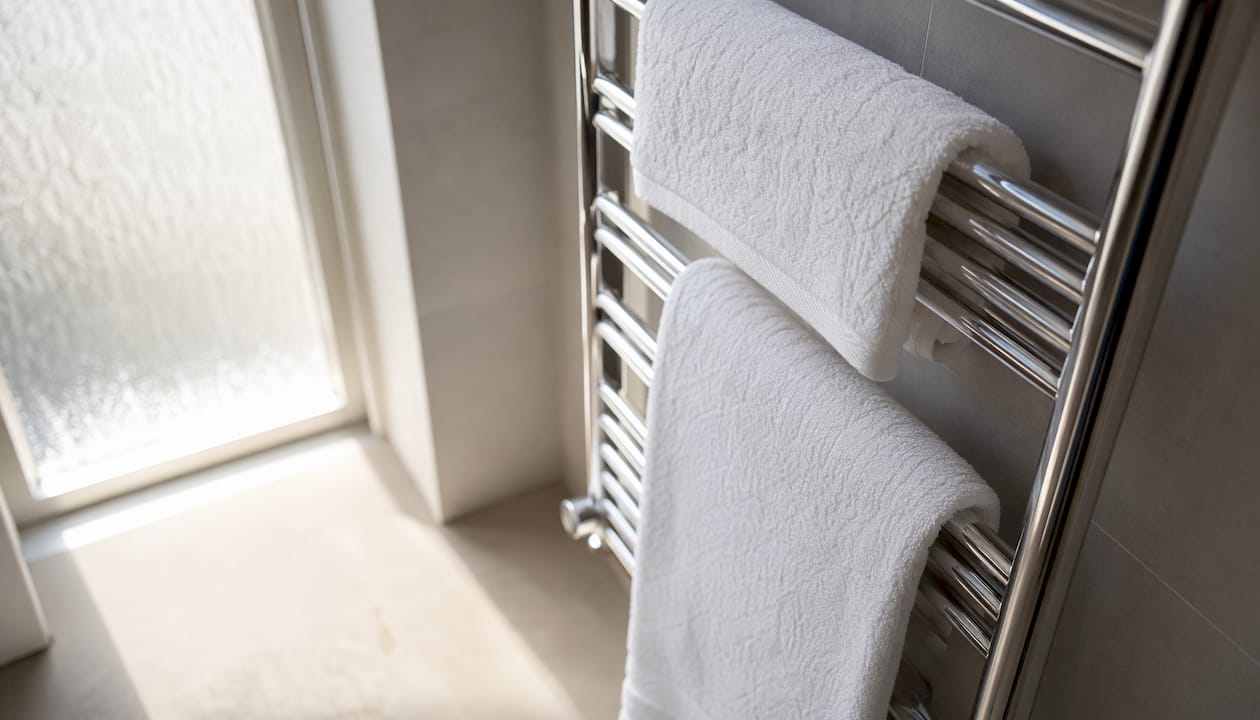
- Warm, dry towels on demand. Towels come off the rail dry and warm, not damp or cold.
- Hygiene improvement. Drying towels quickly prevents bacterial growth and mildew, reducing odors and improving bathroom air quality.
- Fabric protection. Gentle heat dries towels without the mechanical damage a tumble dryer causes, extending towel lifespan and reducing laundry frequency.
- Space-saving vertical design. The ladder structure uses wall space rather than floor area.
- Aesthetic value. Available in multiple finishes and sizes, towel radiators function as bathroom furnishings, not just heating equipment.
- Year-round use (electric models). Electric units operate independently of seasonal heating schedules.
Disadvantages
- Lower heat output than panel radiators. A towel radiator of similar dimensions produces less BTU output than a standard panel radiator, making it unsuitable as the sole heat source in larger bathrooms.
- Towel coverage reduces room heating. Covering the bars with thick damp towels redirects most heat to drying fabric, leaving less warmth for the room.
- Not a standalone solution for large spaces. Larger bathrooms typically need a supplementary panel radiator or underfloor heating alongside a towel radiator.
- Electric running costs. Electric models cost more to run than hydronic types connected to an efficient boiler system.
Typical US price range: Entry-level electric towel radiators start around $80–$150. Mid-range hydronic models with quality finishes run $200–$500. Designer or oversized units can exceed $800.
How towel radiators differ from heated towel racks
The terms towel radiator and heated towel rack (also called a heated towel rail) describe related but distinct products. Understanding the difference prevents a costly mismatch between what you buy and what your bathroom actually needs.
| Feature | Towel Radiator | Heated Towel Rack |
|---|---|---|
| Primary function | Dries towels + heats room | Warms towels only |
| Heat output | Higher (BTU-rated for room heating) | Lower (not rated for room heating) |
| Installation | Hydronic or electric | Typically electric plug-in |
| Size | Larger, taller ladder structure | Compact, wall-mounted or freestanding |
| Best for | Small to medium bathrooms needing heat | Towel warming only, no heating need |
A heated towel rack is essentially a low-wattage warming device. It keeps towels from getting cold but contributes little to raising room temperature. A towel radiator, by contrast, carries a BTU rating and is designed to contribute meaningfully to bathroom heating. For a small, well-insulated bathroom, a properly sized towel radiator can serve as the primary heat source. A heated towel rack cannot.
The towel ladder radiator is a specific style within the towel radiator category, named for its tall, narrow ladder silhouette. It’s the most common format sold in the US market.
Are towel radiators energy efficient?
Towel radiators are generally more energy efficient than tumble dryers for drying towels, and electric models allow precise control over when heat is used. That said, efficiency depends heavily on the operating type and how the unit is used.
Hydronic models run off the home’s existing boiler system. When the central heating is already running, adding a towel radiator to the circuit costs very little extra. Outside of heating season, they provide no function unless fitted with an electric element backup.
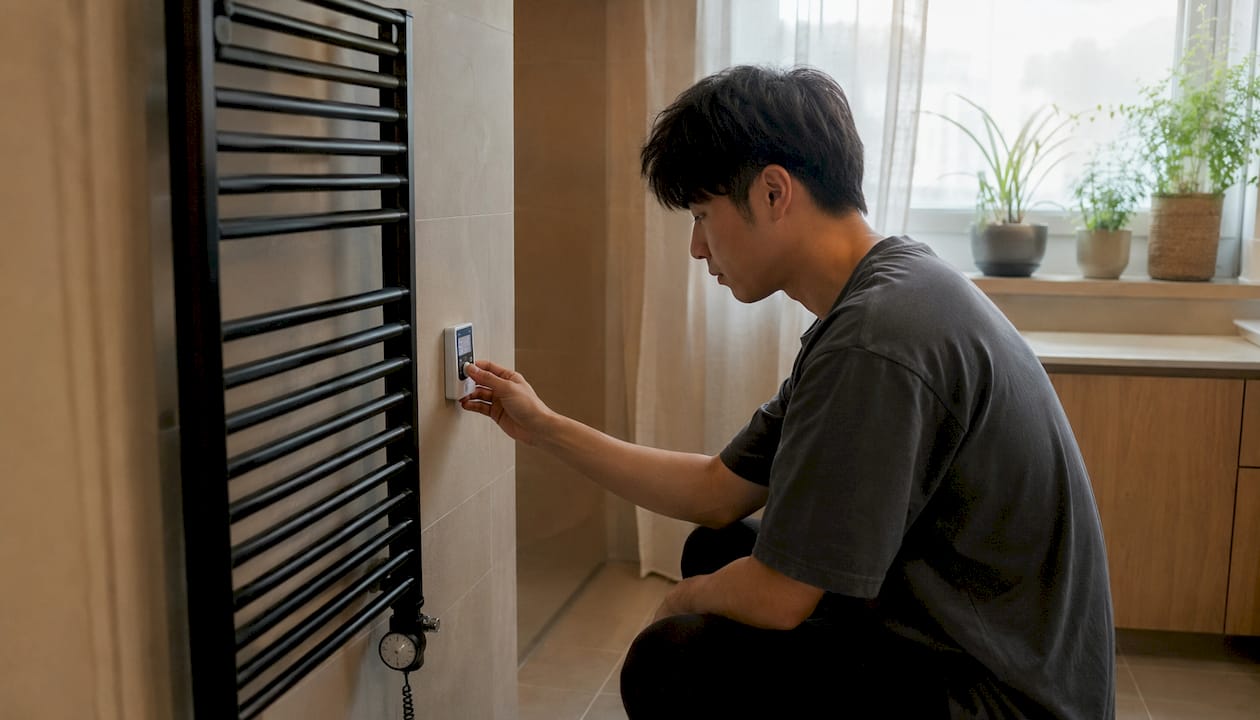
Electric models consume power directly. Wattage varies by size, but most residential units consume relatively low power. Running an electric towel radiator for a few hours daily is generally inexpensive at average US electricity rates.
The key efficiency caveat: covering a towel radiator with multiple thick towels routes most of its heat output into drying fabric rather than warming the room. If room heating is the priority, hang fewer towels or use a separate panel radiator for space heating.
Towel radiators produce lower BTU output than standard panel radiators of the same physical size. They work well as the primary heat source only in small, well-insulated bathrooms.
How to size and select a towel radiator for your bathroom
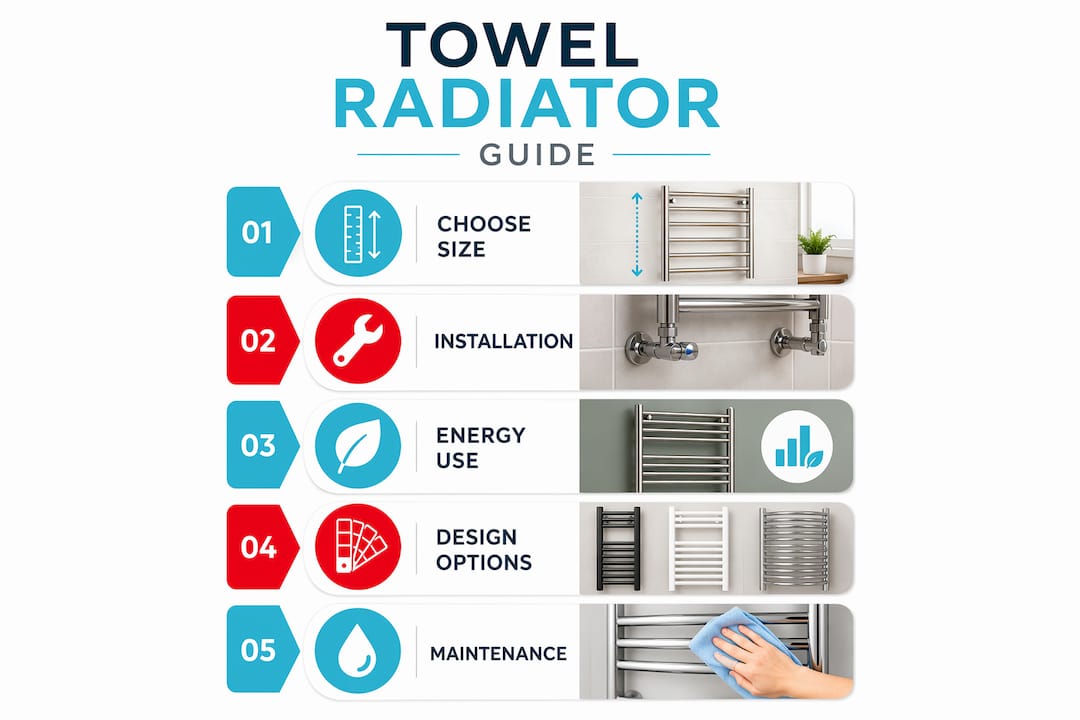
Sizing a towel radiator correctly is the step most buyers skip, and it’s the reason many end up with a cold bathroom. The process starts with a BTU calculation based on room volume, insulation quality, and the number of exterior walls.
Selection checklist:
- Calculate BTU requirements first. A small well-insulated bathroom typically needs a minimum BTU output calculated based on its volume and insulation, with a recommended addition of 10–20% to account for heat diverted to drying towels.
- Account for towel drying heat loss. Heating professionals recommend adding some extra BTU capacity to your target to compensate for heat diverted to drying towels.
- Choose hydronic if your home has a hot water heating system. It integrates cleanly and costs less to run long-term.
- Choose electric if you need year-round use or lack plumbing access. Electric units are also easier to install in bathrooms where running new pipes is impractical.
- Check available wall space. Towel radiators mount on the wall and need clear space above and below for airflow and towel hanging.
- Match bar spacing to towel size. Standard bath towels need sufficiently wide bar spacing to hang without bunching.
Pro Tip: Size up by one model when in doubt. A towel radiator running at 80% capacity stays warmer and dries towels faster than one pushed to its limit. The compact 300x1400mm format works well in narrow wall spaces while delivering adequate output for small bathrooms.
Design preference matters too. A matte black ladder radiator reads as a deliberate design choice in a modern bathroom. Chrome suits traditional tile schemes. Neither finish affects heat output, so choose based on the room’s existing fixtures.
Santehnikasveikals: radiator and bathroom heating products
Selecting the right towel radiator or panel radiator for your bathroom is straightforward when the product range is clear and the specifications are complete. Santehnikasveikals carries a broad catalog of bathroom heating solutions, including steel panel radiators in multiple sizes and output ratings, suited to bathrooms of varying dimensions and insulation levels.

The platform covers both hydronic and electric heating options, with product specifications listed by BTU output, dimensions, and connection type, so you can match a unit directly to your calculated room requirements. Pricing is transparent, and the catalog includes entry-level and mid-range models across multiple finishes.
Browse the full heating and bathroom product catalog at Santehnikasveikals to find the right radiator for your bathroom layout and heating needs.
Key Takeaways
A towel radiator is a dual-function bathroom fixture that warms towels and provides supplementary room heat, but correct BTU sizing is critical to avoid underheating the space.
| Point | Details |
|---|---|
| Dual function fixture | Towel radiators dry towels and heat the bathroom, unlike standard panel radiators. |
| Two operating types | Hydronic models connect to central heating; electric models run independently year-round. |
| BTU sizing matters | Professionals recommend adding 10–20% to your calculated BTU requirement to compensate for heat that will be used drying towels rather than warming the room. |
| Towel coverage reduces output | Thick damp towels covering the bars significantly reduce heat available to warm the room. |
| Santehnikasveikals product range | Santehnikasveikals offers steel panel and bathroom radiators in multiple sizes and output ratings. |
Recommended
- Why Upgrade Old Radiators: Efficiency and Savings | Santehnikasveikals.lv
- Apkures Radiators Termolux Compact Tips 11 500x400mm Ar Sānu Pieslēgumu - 9014016
- Apkures Radiators Termolux Compact Tips 11 500x700mm Ar Sānu Pieslēgumu - 9015007
- Apkures Radiators Termolux Compact Tips 11 500x500mm Ar Sānu Pieslēgumu - 9015005
Palikite komentarą