



















































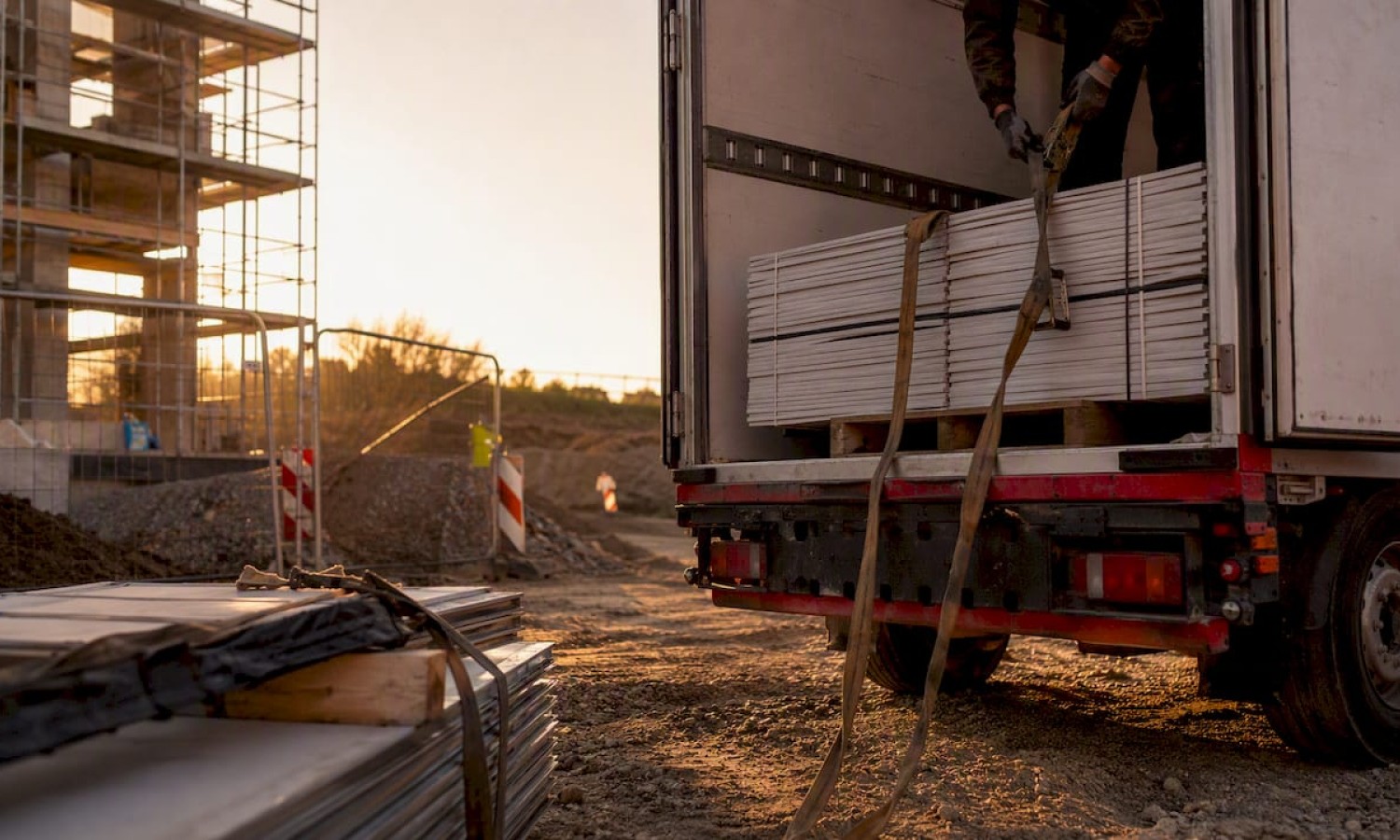

Delivery Costs for Building Materials in Latvia: Real Prices
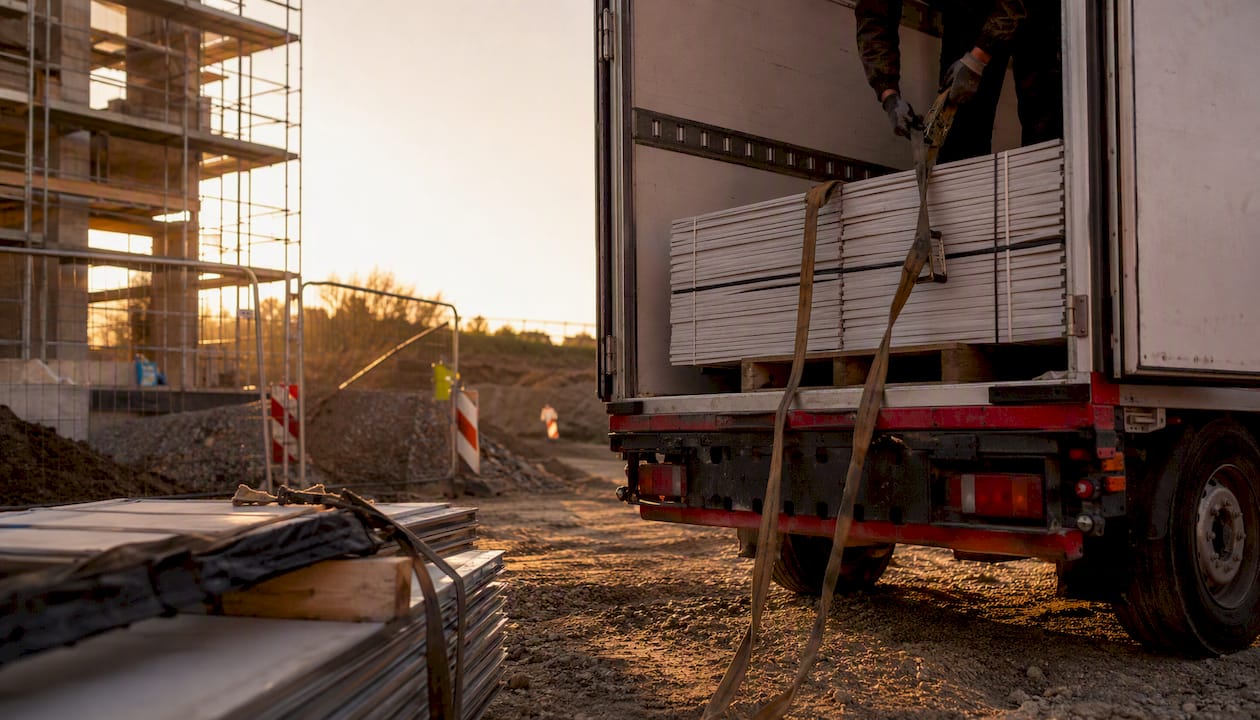
Small deliveries of building materials within a Latvian city typically run in a low price range, medium truckloads (2 to 5 tons) are moderately priced, and full truckload deliveries across longer distances can be significantly higher, depending on tonnage and route. Piegādes izmaksas būvmateriāliem dependē uz trīs lietām virs visiem citiem: the distance from the supplier’s warehouse to your site, how much you’re ordering relative to a full truck, and how easily the driver can access your address once they arrive.
A load that’s far below truck capacity gets hit with a short-load premium, since the driver’s fuel and time cost roughly the same whether the truck carries 8 tons or 18. Waiting time at a site with no clear unloading path can also turn a modest quote into an expensive one.
- Distance and delivery zone (Rīga vs. regional addresses)
- Load size relative to a full truck (the short-load premium)
- Site access and waiting time (narrow streets, no crane, blocked driveways)
If you’re planning an order now, the smartest next move is requesting a quote that already includes your address, access details, and total weight, rather than a vague per-kilometer estimate.
Key Takeaways
Piegādes izmaksas būvmateriāliem in Latvia are shaped less by distance alone than by load size, site access, and how clearly you communicate both to your supplier upfront.
| Point | Details |
|---|---|
| Know your price bracket | Small local deliveries run €25–€60, medium trucks €60, full loads —. |
| Fill the truck | Ordering near full capacity avoids the short-load premium that inflates per-ton cost. |
| Waiting time adds up fast | Site access delays can turn a low headline rate into a much higher final invoice. |
| Prepare access details upfront | Address, gate width, and unloading method prevent under-quoted, surprise-heavy invoices. |
| Santehnikasveikals prices by order | Delivery costs reflect your actual address, weight, and handling needs at checkout. |
Table of Contents
- How Suppliers Calculate Piegādes Izmaksas Būvmateriāliem
- Typical Delivery Rates and Examples Across Latvia
- What to Expect Ordering From Santehnikasveikals
- How to Lower Your Delivery Costs
- What to Prepare Before Requesting a Quote
- Extra Fees and Delivery-Day Risks to Watch For
- Weather and Seasonal Demand Push Prices Up
- Road Tolls and Regulatory Charges in the Final Price
- Comparing Delivery Costs Across Latvian Suppliers
- Get an Accurate Delivery Quote From Santehnikasveikals
- Sources
How Suppliers Calculate Piegādes Izmaksas Būvmateriāliem
A delivery quote is rarely just “distance times a rate.” Most Latvian suppliers build the final number from several stacked components, and knowing them lets you spot which line items are negotiable.
- Base trip fee — a flat charge covering dispatch and the driver’s minimum time, regardless of distance.
- Per-kilometer rate — charged for the round trip, not just the outbound leg, since the truck has to return empty.
- Per-ton or per-pallet charge — scales with how much you’re actually moving.
- Waiting or idle time — billed hourly once the driver exceeds a free window (often 15 to 30 minutes).
- Handling and unloading — extra when a crane, manipulator arm, or manual carry is required.
- Fuel surcharge — a percentage added on top of the subtotal, adjusted with fuel prices.
- VAT — applied to the full subtotal at Latvia’s standard rate.
Vehicle class changes the math significantly. A small van suits light pallets and short runs. A 2 to 5 ton truck covers most residential renovation orders. An 8 to 12 ton truck, tri-axle, or dump truck handles bulk aggregate or full pallet racks. A truck fitted with a manipulator crane costs more per trip but saves you a separate unloading fee.
A construction delivery calculator illustrates the formula clearly: base fee + (distance × rate per km) + (weight × rate per ton) + (waiting hours × waiting rate) + handling + site access + fuel surcharge percent, with tax applied last. In one worked example, a load that looked like a €500 job on paper landed at a significantly higher final fee once waiting time, handling, and fuel surcharge were added.
| Cost Component | What Drives It |
|---|---|
| Base trip fee | Fixed, regardless of load size |
| Per-km rate | Round-trip distance from warehouse |
| Per-ton/pallet | Total weight or pallet count |
| Waiting time | Site access, unloading delays |
| Fuel surcharge | Percentage of subtotal, fuel-price linked |
That gap between the headline rate and the final invoice is exactly where uncertainty lives, and it’s why comparing quotes purely on €/km misleads more than it helps.
Typical Delivery Rates and Examples Across Latvia
Piegādes izmaksas būvmateriāliem in Latvia generally follow one of two pricing models: flat delivery zones (common for Rīga and nearby municipalities) or a per-kilometer plus per-ton formula (more common for regional or long-distance orders). A supplier delivering within Rīga’s city limits might quote a flat €20 to €40 minimum, while the same order sent 80 kilometers to Valmiera or Liepāja shifts to a distance-based calculation.

These ranges echo patterns seen in aggregate delivery pricing generally, where small local deliveries sit at the low end and long-distance full loads climb into the hundreds. VAT applies on top of the delivery subtotal at Latvia’s standard rate, so always ask whether a quoted figure is with or without tax before comparing two suppliers.
A few practical notes worth remembering:
- Minimum fees exist specifically to cover a driver’s time on short trips, not to penalize small customers.
- Ordering half a pallet when a full pallet costs barely more per unit is the fastest way to overpay per ton.
- Fuel surcharges fluctuate with diesel prices and are usually disclosed as a percentage, not a flat add-on.
What to Expect Ordering From Santehnikasveikals
Santehnikasveikals structures delivery around clear, upfront information rather than a guessing game at checkout. When you place an order through the online catalog, the delivery cost is calculated based on your address, the weight and volume of your order, and any special handling your items require.
Here’s what shapes the process on the customer side:
- Delivery pricing is shown before you finalize checkout, tied to your specific address and order contents.
- Lead times depend on product availability and route, with most in-stock items dispatched within a standard window rather than same-day.
- Pickup is available as an alternative to delivery for customers near a collection point who want to skip the fee entirely.
- Site access details (gate width, floor level, parking restrictions) help avoid delivery-day surprises.
Bulkier items, like a large heated towel radiator or an accumulation tank, need more planning than a small parts order, since packaging dimensions affect which vehicle gets dispatched.
Pro Tip: When placing your order, note your floor number, whether there’s an elevator, and whether a crane or manipulator is needed. Including this in the order notes upfront avoids a callback that delays your delivery window.
How to Lower Your Delivery Costs
Cutting piegādes izmaksas būvmateriāliem rarely means finding a cheaper supplier. It usually means changing how and when you order.
- Consolidate orders. Combining two smaller deliveries into one truckload avoids paying two base fees and two short-load premiums.
- Fill the truck. Since a truck often costs roughly the same to run at 12 tons or 18, ordering closer to full capacity drops your per-ton cost sharply.
- Arrange on-site help. A worker ready to receive materials the moment the truck arrives eliminates most waiting-time charges.
- Ask about combined-delivery discounts. Suppliers will often shave a fee when you’re flexible on the exact delivery day.
- Offer a flexible window. Accepting any weekday morning instead of a fixed hour can unlock a lower rate.
Some suppliers can reduce delivery fees substantially simply because a customer asked the right questions instead of accepting the first number.
Pro Tip: Renting a manipulator-equipped truck costs more upfront but is almost always cheaper than paying a separate unloading crew, especially for heavy items like bathtubs or radiator packs.
What to Prepare Before Requesting a Quote
Under-quoting happens when suppliers don’t have the full picture. Give them these details upfront and your quote will match your actual invoice.
Site information:
- Full delivery address with precise coordinates or a map pin
- Access details: gate width, road surface, available parking
- Preferred unloading method (hand carry, pallet jack, crane)
- Delivery window preference (morning, afternoon, specific day)
Order information:
- Total weight in tons or volume in cubic meters
- Pallet count and packaging dimensions
- Any fragile or oversized items needing special handling
- Known road restrictions (weight limits, narrow bridges) on the route
Ask every supplier the same five questions so their quotes are actually comparable: What’s the base fee? What’s the per-kilometer rate? What’s the waiting-time rate after the free window? Is there a manipulator fee? What percentage is the fuel surcharge?
Extra Fees and Delivery-Day Risks to Watch For
Even a well-planned order can pick up unexpected charges. The most common ones: waiting time billed hourly, manipulator or crane fees, site-access surcharges for tight streets, short-load premiums, re-delivery fees when nobody’s present to receive the order, and night or weekend surcharges.
Delivery-day problems follow predictable patterns too. A driver who can’t access the site loses time that gets billed back to you, so confirm access in advance. A crane delay pushes the whole schedule, so book manipulator trucks a day ahead when possible. Material mismatches cause double-handling, so verify your order against the packing list before the truck leaves the warehouse.
A quoted rate of €0.80 per kilometer looks cheap until two hours of waiting time at €25 an hour turns a €60 delivery into a €110 one. The headline rate is rarely the whole story.
Weather and Seasonal Demand Push Prices Up
Latvian winters change delivery math in ways that catch first-time buyers off guard. Snow and ice slow trucks on regional roads, which extends trip time and, by extension, driver-hour costs baked into your quote. Suppliers sometimes add a seasonal handling charge for materials that need extra care in freezing temperatures, particularly tiles, adhesives, and anything liquid-based that can’t tolerate a hard freeze during transit.

Spring brings a different pressure: demand spikes. Once frost lifts and construction season opens in April and May, order volumes surge across Latvia and delivery slots tighten. Suppliers with limited truck fleets prioritize larger orders first, which can push smaller residential deliveries further down the queue or onto less convenient time windows.
Summer is generally the most predictable season for both pricing and lead times, since road conditions are stable and demand, while still elevated, doesn’t spike as sharply as the early spring rush. Late autumn sees a secondary bump as contractors race to finish exterior work before the ground freezes again.
If your project timeline has any flexibility, ordering in June or July rather than April typically means faster dispatch and fewer scheduling surcharges. Winter deliveries aren’t necessarily more expensive on paper, but the odds of a weather-related delay, and the waiting-time charges that come with it, rise noticeably between November and March.
Road Tolls and Regulatory Charges in the Final Price
Piegādes izmaksas būvmateriāliem also carry regulatory costs that have nothing to do with the supplier’s own pricing decisions. Heavy goods vehicles operating in Latvia are subject to road usage charges tied to vehicle weight and axle configuration, and suppliers factor these into their per-kilometer rates rather than listing them as a separate line item on your invoice.
Fuel taxation is baked into diesel prices at the pump, which is precisely why fuel surcharges on delivery quotes move up and down with market fuel costs rather than staying fixed. When diesel prices rise, expect the fuel surcharge percentage on your quote to follow within a billing cycle or two.
Emissions-related charges matter more for older, heavier vehicles used for bulk aggregate and full-truckload work. A supplier running a newer, more efficient fleet may quote slightly lower on long-distance jobs simply because their operating costs per kilometer are lower, not because they’re absorbing a loss. VAT, as covered earlier, applies to the delivery subtotal at Latvia’s standard rate and should always appear as a distinct line on any invoice you receive. If a quote doesn’t specify whether it’s VAT-inclusive, ask before you compare it against another supplier’s number.
Comparing Delivery Costs Across Latvian Suppliers
Delivery pricing structures vary more by supplier size and specialization than by region. Large national suppliers with their own truck fleets tend to offer more predictable per-kilometer rates because they’re not subcontracting the route to a third-party carrier. Smaller regional yards often rely on flat zone pricing for local deliveries, which can work in a customer’s favor for short trips but becomes less competitive once you’re ordering from outside their immediate zone.
Suppliers that stock heavier categories, structural steel, full pallet racks of tile, or bulk aggregate, generally price delivery separately from lighter product categories like fixtures and fittings, since the vehicle requirements differ so much. A supplier selling primarily plumbing fixtures and bathroom furniture, for instance, can often ship smaller, lighter orders more cheaply than one specialized in heavy construction aggregate, simply because the trucks and handling equipment involved are less specialized.
The practical takeaway: don’t assume the supplier with the lowest per-kilometer rate wins on your specific order. A supplier whose typical order matches your product mix, whether that’s plumbing fixtures, heating systems, or bulk material, usually prices delivery more competitively for that category than a generalist trying to cover everything.
A Quick Reality Check on Delivery Quotes
The most common mistake buyers make is treating delivery as a single fixed number instead of a set of separate charges. Ask for a full breakdown before you commit, and run your numbers against the checklist above every time.
Get an Accurate Delivery Quote From Santehnikasveikals
Santehnikasveikals gives you delivery pricing calculated against your actual order and address rather than a generic estimate pulled from a national average. That matters most for bulk or heavy orders, radiator packs, accumulation tanks, shower cabins, where the difference between a rough guess and a real quote can be significant.

When you’re ready to order, browse the full catalog and add your items to the cart. At checkout, include your delivery address, floor level, and any access notes (narrow street, no elevator, need for a manipulator). For larger orders like a Roth shower cabin or a full heating system setup, reaching out with your project details before ordering helps the team confirm delivery logistics ahead of time rather than after the truck’s already loaded.
Sources
For readers building their own cost model, the AMO Plant logistics guide explains scenario-based cost modeling in depth. The Aggregate Markets pricing guide breaks down per-mile and per-ton pricing patterns. Use a delivery fee calculator to test your own numbers, and check Google Maps to confirm real driving distance before requesting a quote.
- Kā aprēķināt loģistikas izmaksas būvniecībā - AMO Plant
- How much does aggregate delivery cost per mile/ton? | Aggregate Markets
- Delivery Fee Calculator for Construction Loads
- How to Negotiate Material Delivery Fees to Save Your Budget - Construction Edgez
Atstājiet komentāru