




















































A Homeowner’s Guide to Efficient Drainage
TL;DR:
- Proper drainage involves controlling water flow to prevent damage and promote healthy plant growth.
- Diagnosis through rain observation is essential to select the appropriate solution, such as regrading or French drains.
Efficient drainage is defined as the controlled movement of water away from structures, soil, and landscaping to prevent damage and support healthy plant growth. A well-designed system follows proven principles: understanding water flow paths, matching solutions to soil type, and applying standards like the 6-inch drop rule for foundation protection. This guide to efficient drainage walks you through diagnosing your property’s water problems, selecting the right fix, and building a system that holds up over time without overspending.
How to assess your property’s drainage conditions
Proper diagnosis is the single most important step in any drainage project. Incorrect drainage solutions cost time and money without fixing the root problem. Watching how water behaves during and right after a rain event tells you more than any tool.
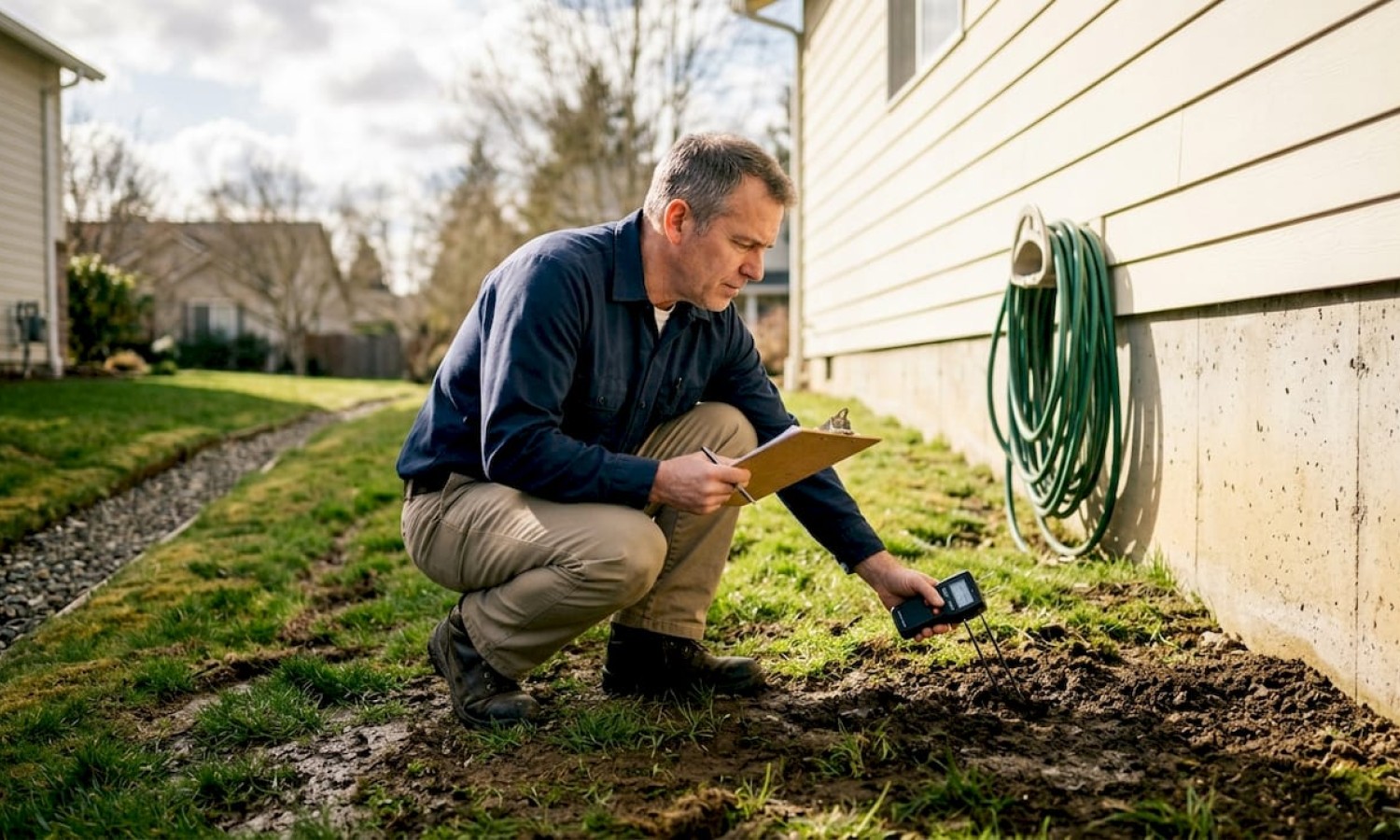
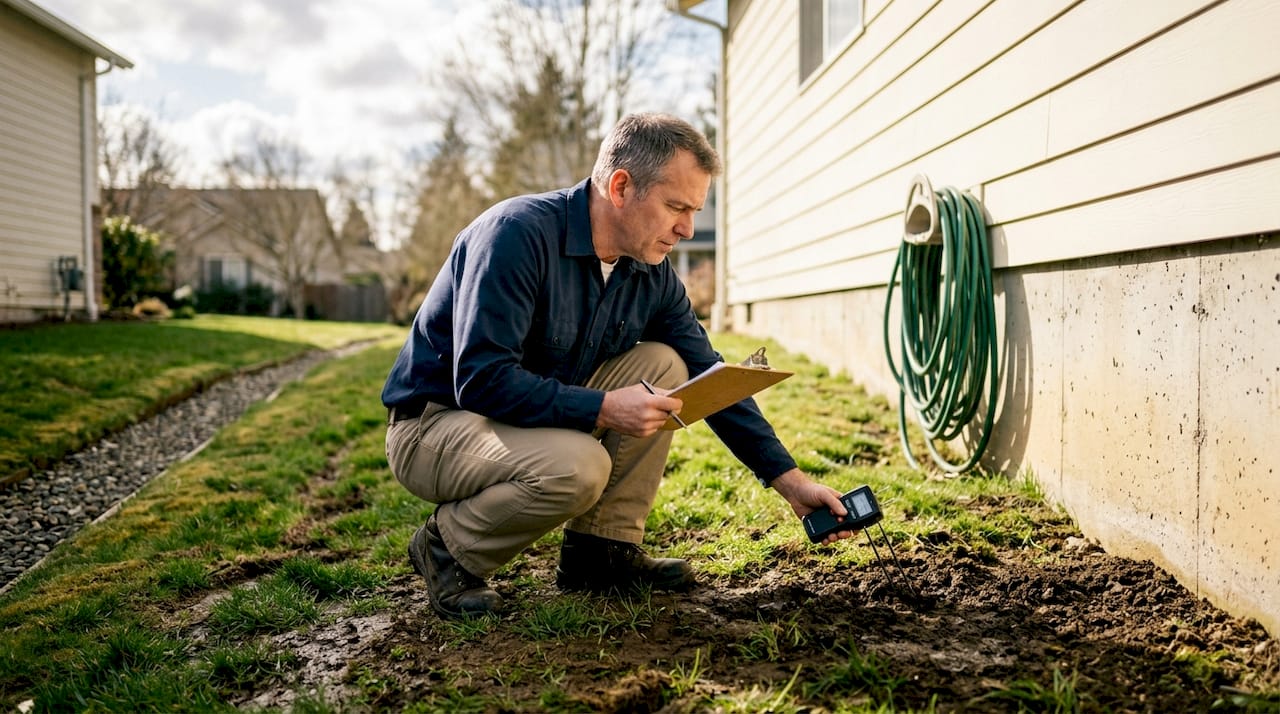
Stand outside during a moderate rain and note three things: where water collects, how long it stays, and which direction it moves. Water that disappears within 30 minutes points to a surface runoff issue. Water that lingers for hours or days signals subsurface saturation, which requires a completely different fix.
What to look for on your property
- Water path: Does runoff flow toward your foundation, a low spot in the yard, or a neighbor’s property?
- Duration of ponding: Surface water that drains within an hour is a grading problem. Water that stays is a soil permeability problem.
- Roof runoff: Check where downspouts discharge. A downspout dumping water against a foundation wall is one of the most common causes of basement moisture.
- Soil type: Clay soil absorbs water slowly and compacts over time. Sandy soil drains fast but may not hold enough moisture for plants. Rocky soil creates unpredictable runoff channels.
Testing soil type and compaction before digging is critical. Clay soils require steeper grading because they shrink and compact, which shifts your drainage slope over time.
Pro Tip: Dig a hole 12 inches deep and fill it with water. If it drains in under an hour, your soil handles infiltration well. If it takes several hours, you are dealing with clay or compacted soil and need a solution that moves water rather than absorbs it.
You can also use the drainage troubleshooting steps from Santehnikasveikals to document water paths and map your property’s drainage behavior systematically before spending a dollar.
What drainage solutions actually work for your situation?
The right solution depends entirely on your diagnosis. Fixes range from $200–$800 for grading to $1,500–$3,000 for French drains or rain gardens. Matching the fix to the actual problem prevents overspending on systems you do not need.
Surface grading and regrading
Regrading is the first solution to consider when water pools near your foundation. The standard requires a minimum 2% slope, which means the ground drops at least 2 inches for every 10 feet away from the structure. Foundation protection requires a 6-inch drop within the first 10 feet. This is not optional. Without it, water consistently migrates toward your foundation regardless of what other systems you install.
Swales and berms
A swale is a shallow, wide channel that redirects surface water across a yard toward a safe outlet. A berm is a raised mound of soil that blocks water from entering a specific area. Use swales when you need to redirect sheet flow across a large open area. Use berms when you need to protect a garden bed, structure, or low point from incoming runoff. Both work best when they follow the natural contours of your land rather than fighting them.
French drains
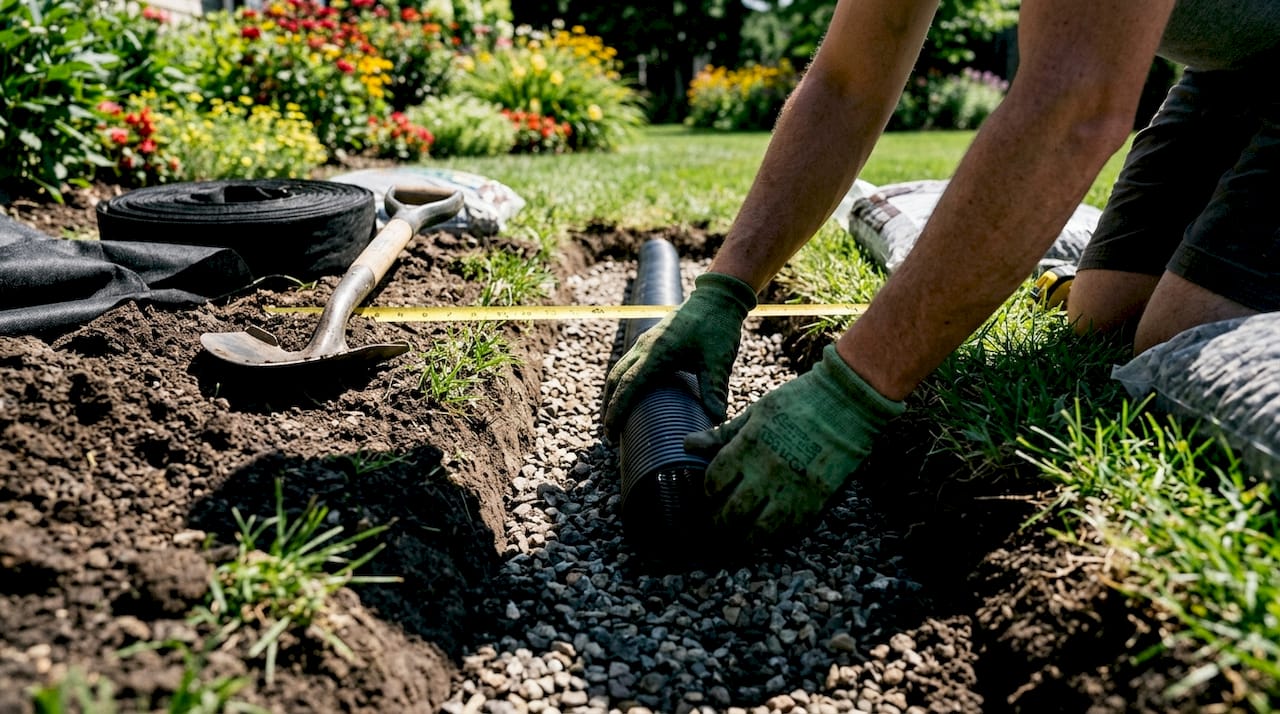
A French drain is a perforated pipe buried in a gravel-filled trench that collects subsurface water and carries it to a discharge point. This is the right solution when water saturates the soil below the surface rather than pooling on top. Installation basics include a trench at least 18 inches deep, a layer of filter fabric to prevent soil from clogging the gravel, and a minimum pipe slope of 1% to keep water moving.
Rain gardens and dry wells
A rain garden is a planted depression that captures runoff and lets it infiltrate slowly. A dry well is an underground chamber filled with gravel that stores water temporarily while it percolates into the surrounding soil. Both are excellent rainwater drainage solutions for properties where infiltration is possible and you want to reduce runoff volume rather than redirect it.
Pro Tip: Never install a French drain without first identifying your outlet. The outlet is where the pipe discharges water. Without a legal, downhill outlet, the pipe will back up and fail.
How to plan and install an efficient drainage system
Step 1: Map your water flow paths
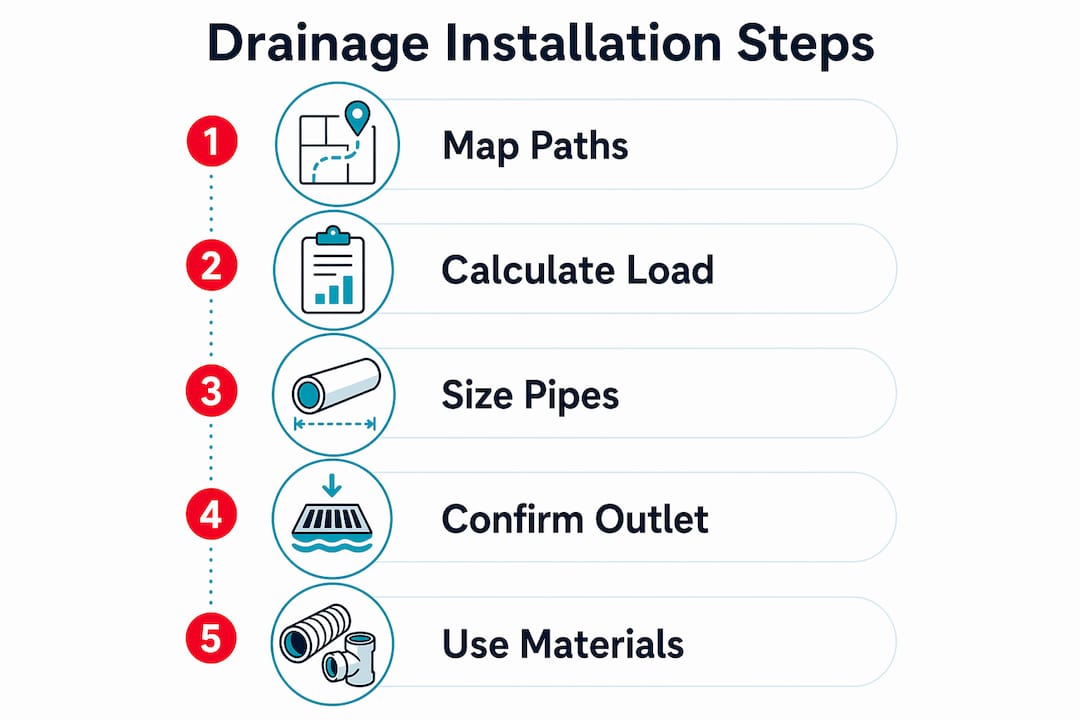
Walk your property and sketch where water enters, where it travels, and where it exits. Mark low points, high points, and any structures in the path. This map becomes your design blueprint.
Step 2: Calculate your hydraulic load
A 1-inch rain event produces about 623 gallons of water per 1,000 square feet of drainage area. That number is your baseline for sizing pipes and channels. Multiply your drainage area in square feet by 0.623 to get the gallons your system must handle per inch of rain.
Step 3: Size your pipes correctly
Pipe sizing depends on volume, slope, and flow velocity. Pipe slopes between 1:40 and 1:100 achieve the velocity needed to prevent sediment from settling and blocking the pipe. A 4-inch perforated pipe handles most residential French drain applications. For larger surface areas or higher runoff volumes, step up to a 6-inch pipe. Right-sizing drainage systems avoids unnecessary expense and builds in a 10–20% safety margin above calculated peak flows.
| Design element | Recommended standard |
|---|---|
| Foundation grading slope | 6-inch drop in first 10 feet |
| Minimum surface slope | 2% (2 inches per 10 feet) |
| French drain pipe slope | 1:40 to 1:100 |
| Hydraulic load baseline | 623 gallons per 1,000 sq ft per inch of rain |
| Safety margin above peak flow | 10–20% |
Step 4: Confirm your outlet
Verify that your discharge point is legal and does not redirect water onto a neighbor’s property. Many municipalities regulate where stormwater can be discharged. Check local codes before you dig.
Step 5: Install with the right materials
Use filter fabric around all gravel-filled trenches to prevent soil migration. Lay gravel at least 6 inches below and around the pipe. Install cleanout access points every 50–75 feet so you can flush the system when needed. For guidance on pipe slope standards, Santehnikasveikals covers the technical requirements in detail.
Pro Tip: Take photos of every trench before backfilling. You will want a record of pipe locations for future maintenance or repairs.
What mistakes cause drainage systems to fail?
Most drainage failures come from skipping the diagnosis phase or ignoring the outlet. Proper diagnosis through observation during rain events prevents costly, ineffective fixes. Here are the most common errors:
- No outlet plan: Installing pipes without a confirmed discharge point is the single most common cause of system failure. Water has nowhere to go and backs up into the area you were trying to drain.
- Ignoring soil compaction: Clay soil shifts over time. A grading slope that works in year one may flatten by year three as the soil settles.
- Over-engineering: Installing a complex French drain system when simple regrading would solve the problem wastes money and creates more maintenance points.
- Under-engineering: Sizing a pipe for average rainfall rather than peak storm events means the system overflows exactly when you need it most.
- No maintenance plan: French drains and catch basins clog with sediment and organic debris. A system with no cleanout access becomes impossible to service.
Signs your drainage system is underperforming: Water ponds in the same spots after every rain. Basement walls show moisture or efflorescence. Lawn areas stay soggy for more than 24 hours after a storm. Downspout extensions have separated or washed away. Any of these signs means the system needs inspection before the next heavy rain season.
Working with natural topography improves drainage design and prevents failure-prone complex systems. The simplest system that solves the problem is almost always the best one.
Key Takeaways
Efficient drainage requires accurate diagnosis first, then a solution sized to your soil type, water volume, and property layout.
| Point | Details |
|---|---|
| Diagnose before you dig | Observe water behavior during rain to separate surface runoff from subsurface saturation. |
| Match the fix to the problem | Grading solves foundation slope issues; French drains address subsurface saturation; rain gardens reduce runoff volume. |
| Size systems correctly | Use the 623-gallon-per-1,000-sq-ft baseline and add a 10–20% safety margin for peak storm events. |
| Confirm your outlet first | A drainage system without a legal, downhill discharge point will fail regardless of how well it is built. |
| Plan for maintenance | Install cleanout access points and inspect the system annually to prevent clogs and backups. |
What I have learned from watching drainage projects go wrong
I have seen homeowners spend thousands on French drain installations that failed within two years. In almost every case, the problem was not the pipe or the gravel. It was the outlet. The installer never confirmed a legal discharge point, so the system backed up every time it rained hard. The fix cost more than the original installation.
The other pattern I see constantly is skipping the soil test. You can read a yard’s slope perfectly and still install the wrong solution if you do not know what the soil does with water. A rain garden in clay soil does not infiltrate. It just becomes a pond with plants in it.
My honest advice: spend 30 minutes watching your yard during a real rain event before you buy a single fitting. That observation tells you more than any diagram. Sustainable stormwater management is about slowing, infiltrating, and retaining water rather than rushing it away. Work with your land’s natural contours instead of against them. The systems that last are the ones that follow the water’s natural preference, not the ones that fight it.
— Renate
Drainage components and materials from Santehnikasveikals
Getting the diagnosis right is only half the work. You also need quality materials that hold up over time.

Santehnikasveikals carries a full range of drainage system components including pipes, fittings, traps, and installation accessories suited for both DIY homeowners and professional contractors. Whether you are installing a French drain, regrading a surface, or managing roof runoff with proper downspout connections, the store offers the materials and product details you need to get the job done right. Delivery is available across Latvia, so you can order what you need and get started without delay.
FAQ
What is the minimum slope for yard drainage?
The minimum surface slope for effective drainage is 2%, which equals a 2-inch drop for every 10 feet of distance. Foundation grading requires a steeper 6-inch drop within the first 10 feet from the structure.
How do I know if I need a French drain or just regrading?
Regrading fixes surface water that pools near structures due to flat or reversed slopes. A French drain is the right choice when water saturates the soil below the surface and does not drain even when the surface slope is correct.
How much water does a 1-inch rain event produce?
A 1-inch rain event produces approximately 623 gallons of water per 1,000 square feet of drainage area. Use this figure to size pipes and channels for your specific drainage area.
How often should I maintain my drainage system?
Inspect your drainage system at least once a year, ideally before the rainy season. Flush cleanout points, clear debris from catch basins, and check that outlet pipes are unobstructed and intact.
Can I install a French drain myself?
Yes, a French drain is a realistic DIY project for most homeowners with basic tools. The critical steps are confirming a legal outlet, using filter fabric, maintaining the correct pipe slope, and installing cleanout access points for future maintenance.
Recommended
- The Role of Drainage Slopes in Property Water Management | Santehnikasveikals.lv
- Drainage System Troubleshooting Steps for Homeowners | Santehnikasveikals.lv
- What Is a Building Drainage System? A Clear Guide | Santehnikasveikals.lv
- Water Pipe Installation Guide for DIY Homeowners | Santehnikasveikals.lv
Palikite komentarą