







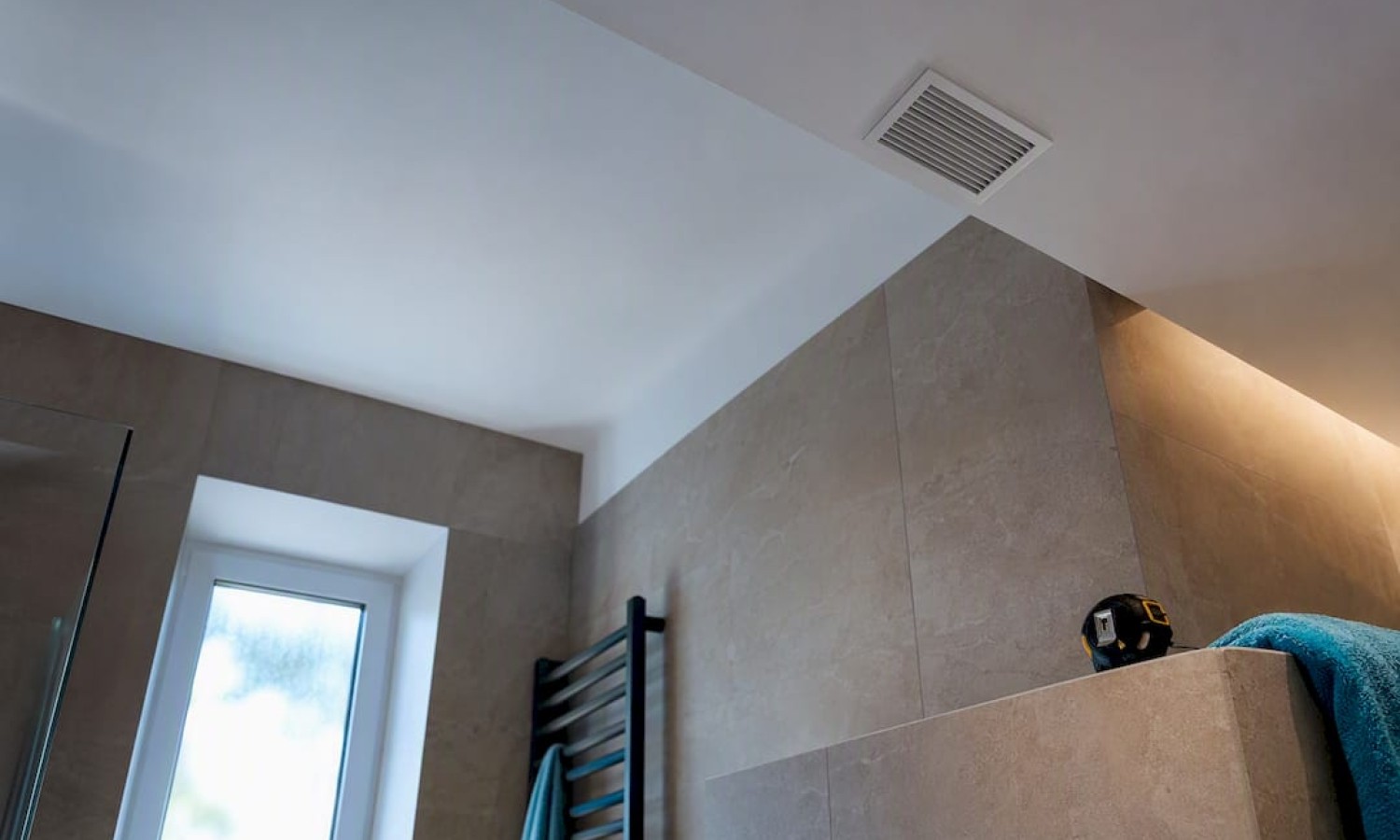

50–110 m3/h: Choose a Bathroom Fan That Fits Latvian Homes
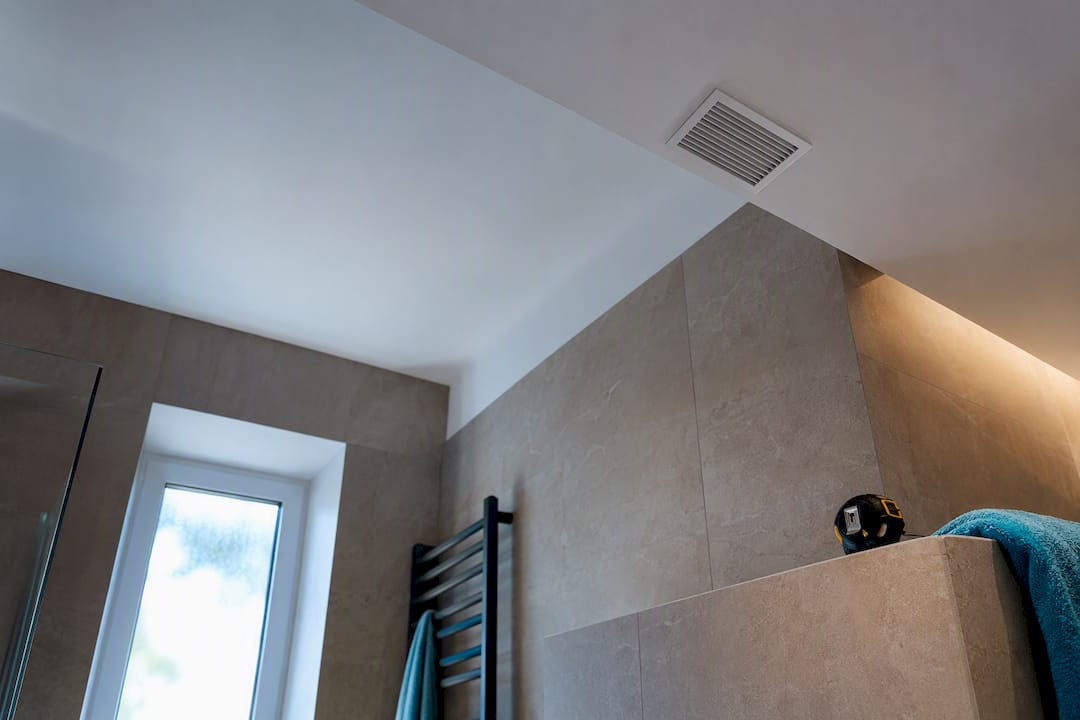
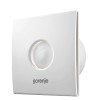
Pick a fan rated for your bathroom’s calculated m3/h and prioritize correct duct diameter plus a humidity sensor for automatic moisture control. Most selection mistakes come from ignoring duct size or buying on price alone. Get the airflow number right, match it to your existing shaft, and confirm at least IP44 protection before checking anything else on the spec sheet.
TL;DR:
- Always select a fan rated for at least 20% above your calculated required airflow to account for duct resistance and filters.
- A duct diameter of 100 or 120 mm generally outperforms smaller sizes, especially in larger bathrooms or with multiple bends.
- Humidity sensors are the most valuable feature, as they automatically run the fan until moisture levels drop, reducing mold risk.
- Proper installation requires measuring actual duct and grille sizes and minimizing bends to ensure maximum airflow and performance.
- Regular maintenance, such as cleaning the grille and inspecting for noise or vibrations, can extend the fan’s lifespan significantly.
Table of Contents
- Calculating ventilators vannas istabai izvēle: sizing your fan by room volume
- What do airflow, duct size, and noise specs actually mean?
- Which fan type fits your bathroom layout?
- Which extra features are worth paying for?
- Installation checklist and mistakes that cost you airflow
- How long do bathroom fans last, and when should you replace one?
- Finding the right specs on Santehnikasveikals product pages
- An installer’s honest take on choosing a bathroom fan
- Where to buy your bathroom fan and what to check first
- Sources
Calculating ventilators vannas istabai izvēle: sizing your fan by room volume
The math behind choosing the correct fan size is simpler than most product pages make it look. Multiply your bathroom’s length, width, and height in meters to get cubic volume. Then apply an air-change multiplier of 6 to 8 times per hour, a rate widely used in installer sizing guidance. Multiply the volume by that number to land on your target m3/h.
A bathroom measuring 2 meters by 1.5 meters with a 2.5-meter ceiling gives you 7.5 cubic meters. At 8 air changes per hour, that’s 60 m3/h, a modest target that most entry-level fans clear easily.
Pro Tip: Round up, not down. If your calculation lands at 58 m3/h, buy a fan rated for at least 70 m3/h. Ductwork, filters, and grille resistance all eat into the fan’s rated output, so a buffer keeps performance honest.
Three practical brackets cover most Latvian bathrooms:
- Small bathroom (up to 6 m²): target roughly 50-70 m3/h.
- Medium bathroom (6-10 m²): target roughly 80-110 m3/h.
- Large bathroom (over 10 m²) or one with a bathtub: target 110 m3/h or higher.
If your bathroom has a bathtub, serves more than one person at a time, or runs through long ductwork with several bends, size up rather than down. Higher airflow does mean a slightly louder fan at full speed, which is why the next section on noise ratings matters just as much as the m3/h number.
What do airflow, duct size, and noise specs actually mean?
Every fan listing throws four numbers at you: airflow, duct diameter, noise, and power draw. Here’s what each one tells you and where buyers most often misread it.
Airflow (m3/h) measures how much air the fan can move per hour under test conditions. Lab evaluations rate fans by running them through the same length of straight piping and measuring output and noise at a fixed distance, which is why comparing two fans’ airflow numbers only makes sense when both were tested under similar conditions.
Duct diameter is where most buying mistakes happen. Standard outlets run 100 mm, 120 mm, or 150 mm, and the same testing found that 4-inch (100 mm) duct fans generally outperform 3-inch models, often hitting 110 m3/h or more in larger bathrooms.
Noise is listed in decibels (dB) or sones. For a bathroom used at night, technical guidance points to 25 to 35 dB as the comfortable range, roughly the sound of a quiet library.
- Airflow: compare only under matched test conditions.
- Duct diameter: 100/120/150 mm are the common sizes.
- Noise: 25 to 35 dB is the target for nighttime comfort.
- IP rating: bathroom fans should carry IP44 or higher for wet-zone safety, per the same technical source.
DC motors tend to run quieter and use less power than older AC motor designs, largely because of better impeller balance and motor efficiency.
Which fan type fits your bathroom layout?
The physical fan design matters as much as the airflow rating, especially once ductwork gets complicated.
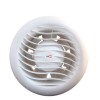
- Axial fans push air in a straight line and work best for short, straight duct runs in smaller bathrooms. They’re the cheapest option but lose efficiency fast once bends enter the picture.
- Centrifugal (radial) fans use a spinning wheel to generate stronger pressure, which makes them the better choice for longer duct runs or several bends. They cost more and run slightly louder at the motor, but they hold their airflow rating where an axial fan would stall.
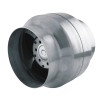
- Inline and remote-mounted fans sit in the duct run itself, away from the bathroom ceiling, so the noise source is physically farther from your ears. Installation is more involved since the fan unit needs access space along the duct path.
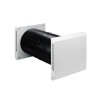
Ceiling mounting is standard for most residential bathrooms, but wall mounting near an exterior surface can shorten the duct run dramatically, which often matters more for performance than the fan model itself.
Which extra features are worth paying for?
Not every add-on earns its price tag. Humidity sensors are the one feature worth prioritizing: they keep the fan running exactly as long as the air needs it, rather than cutting off the moment someone flips the light switch off, which is the most common reason mold forms behind tile.
- Humidity sensors: run automatically until moisture drops to a safe level, no manual timing needed.
- Timers: useful for guest bathrooms; 15 to 20 minutes after the light turns off is a reasonable default.
- Motion sensors: practical for toilets used briefly and inconsistently throughout the day.
- Integrated lights or heaters: convenient, but they add points of failure and usually cost more to repair than a standalone fan.
Pro Tip: If you can only afford one upgrade over a basic model, choose the humidity sensor. It does more for mold prevention than any timer or motion feature combined.
Installation checklist and mistakes that cost you airflow
Buying the right fan is half the job. Installing it wrong erases every advantage on the spec sheet. Duct mismatches are the single biggest cause of underperformance in otherwise correctly sized fans.
- Measure the actual duct shaft, not the decorative grille, before buying a replacement. Grille diameter and duct diameter are frequently different, and assuming they match is how installations fail.
- Avoid forcing a mismatched outlet. Fitting a 150 mm fan onto a 100 mm shaft, or the reverse, reduces effective airflow and raises noise regardless of the fan’s rated output.
- Keep duct runs short and straight where possible. Every 90 degree bend adds resistance; smooth rigid ducting beats flexible corrugated tubing for airflow retention.
- Confirm electrical compatibility and earthing, and bring in a licensed electrician for anything beyond a simple swap, especially if humidity sensor wiring or new circuits are involved.
- Check for a backdraft damper and test both airflow and noise once installed, before closing up any wall or ceiling access.
How long do bathroom fans last, and when should you replace one?
A well-maintained fan can run for years, but continuous heavy use in high-humidity conditions shortens that lifespan noticeably compared to occasional use in a low-traffic bathroom.
- Wipe the grille and vacuum dust from the housing every few months to keep airflow from dropping off.
- Watch for rising noise, vibration, or a burning smell. All three signal a motor nearing failure.
- Persistent condensation or mold despite regular use usually means the fan’s airflow no longer matches the room, not that it needs cleaning again.
- Before calling a technician, check that the grille isn’t clogged and that the duct hasn’t come loose at a joint.
Finding the right specs on Santehnikasveikals product pages
Santehnikasveikals lists ventilation products with the technical specifications buyers need to confirm airflow rating and outlet diameter before ordering. Cross-check your calculated m3/h and measured duct size against each product page’s listed specs rather than relying on the fan’s box copy alone.
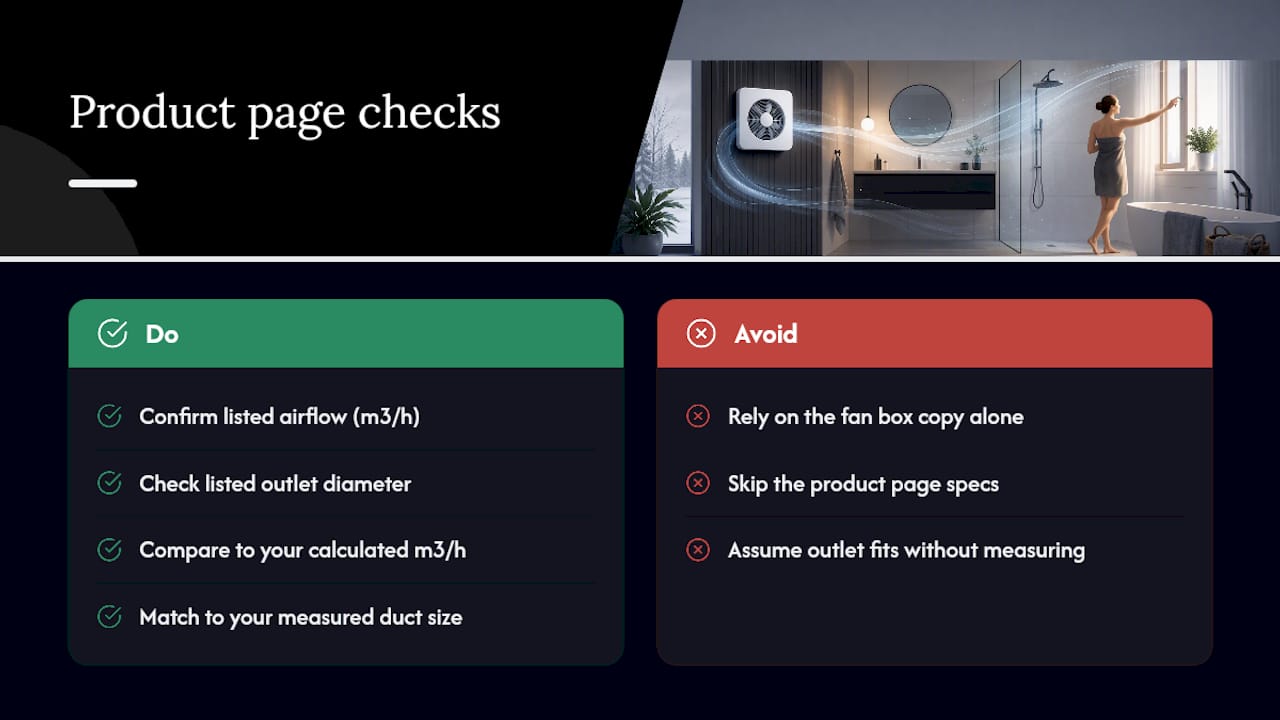
An installer’s honest take on choosing a bathroom fan
Get three things right and everything else is decoration: correct m3/h for your room volume, a duct diameter that actually matches your shaft, and reliable humidity control instead of a light-switch timer. Skip any of the three and you’ll be replacing the fan within a couple of years. If your project involves rewiring, moving a duct run, or cutting a new outlet through an exterior wall, hire a licensed electrician. Ventilation work looks simple until a mismatched duct or a bad connection turns into a mold problem behind the wall.
— Renate
Where to buy your bathroom fan and what to check first
You can find ventilation products and the fittings that go with them from suppliers offering delivery across Latvia, enabling you to order your fan and matching accessories from the same checkout instead of hunting across separate suppliers. That matters most when you’re also replacing a WC connection or radiator during the same renovation.
Start by measuring your bathroom’s dimensions and your existing duct diameter, the two numbers that determine everything else on this page. From there, use the ventilation category filters to match your calculated m3/h and outlet size, and check the WC connection fittings if your project includes plumbing changes alongside the fan swap. If you’re renovating the whole room, browse the stone-resin bathtub range while you’re at it, since a larger tub raises your humidity load and pushes your fan sizing toward the higher end of the range. Contact customer support directly if you’re unsure which duct size your bathroom actually has. Asking for product or sizing advice can help avoid returns.
Palikite komentarą