




















































What Is an Expansion Tank and Why You Need One
TL;DR:
- An expansion tank protects home plumbing by absorbing pressure increases caused by heated water expanding in a closed system. It uses a diaphragm to compress gas and prevent pressure spikes, reducing stress on pipes and fittings. Proper sizing and maintenance ensure the tank effectively prevents pressure issues and system damage.
An expansion tank is a small pressure vessel that protects your home’s plumbing and heating system from dangerous pressure buildup caused by heated water expanding inside a closed loop. Every time your water heater fires up, water volume increases. In a closed system with backflow preventers or check valves, that extra volume has nowhere to go. The result is pressure spikes that stress pipes, fittings, and your water heater itself. Understanding what an expansion tank does, and how to maintain one, is one of the most practical things a homeowner can do to protect a major home system.
What is an expansion tank and how does it protect your system?
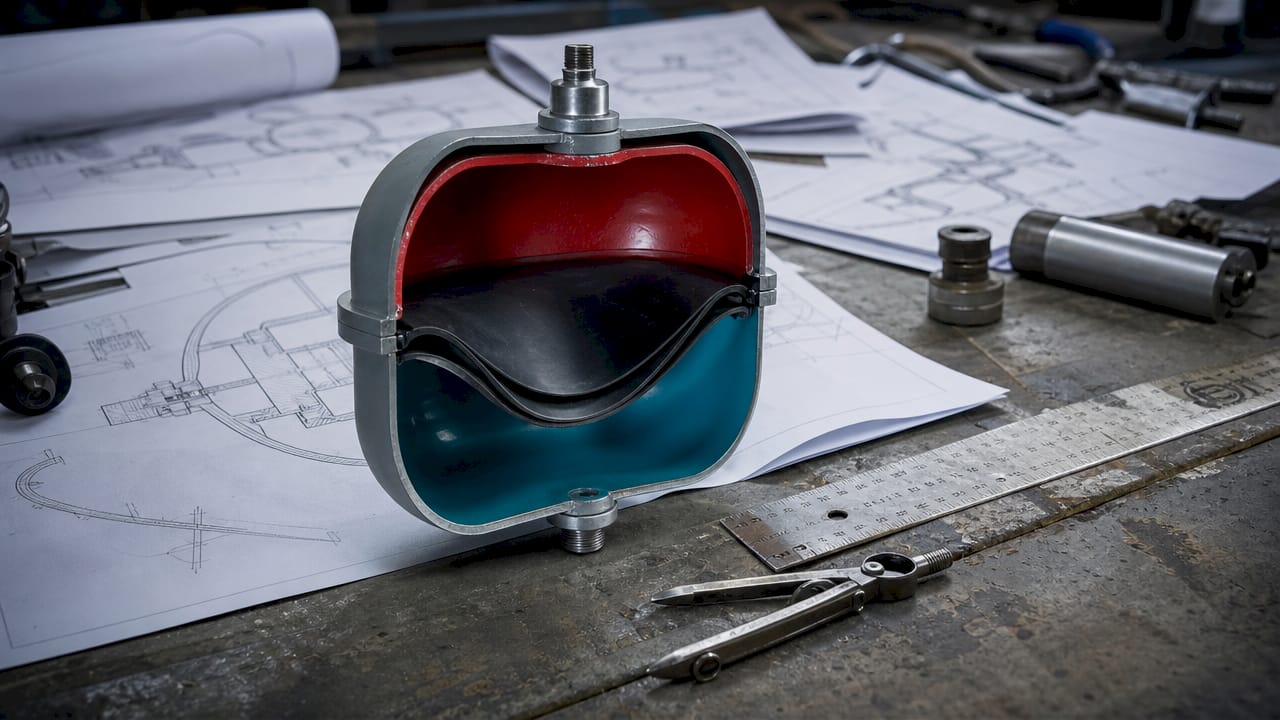
An expansion tank is a pressure vessel divided into two chambers by a flexible rubber diaphragm. One side holds water from your plumbing system. The other side holds a pre-charged cushion of air or nitrogen. When heated water expands and pressure rises, the diaphragm flexes toward the gas side, compressing the gas and absorbing the extra volume. When the water cools and contracts, the gas pushes back, restoring stable pressure throughout the system.
The industry term for this device is “expansion vessel” in many European markets, including those served by Altecnic, though American plumbers and building codes consistently use “expansion tank.” Both terms describe the same component. Santehnikasveikals carries expansion tanks suited to residential heating and domestic hot water systems.
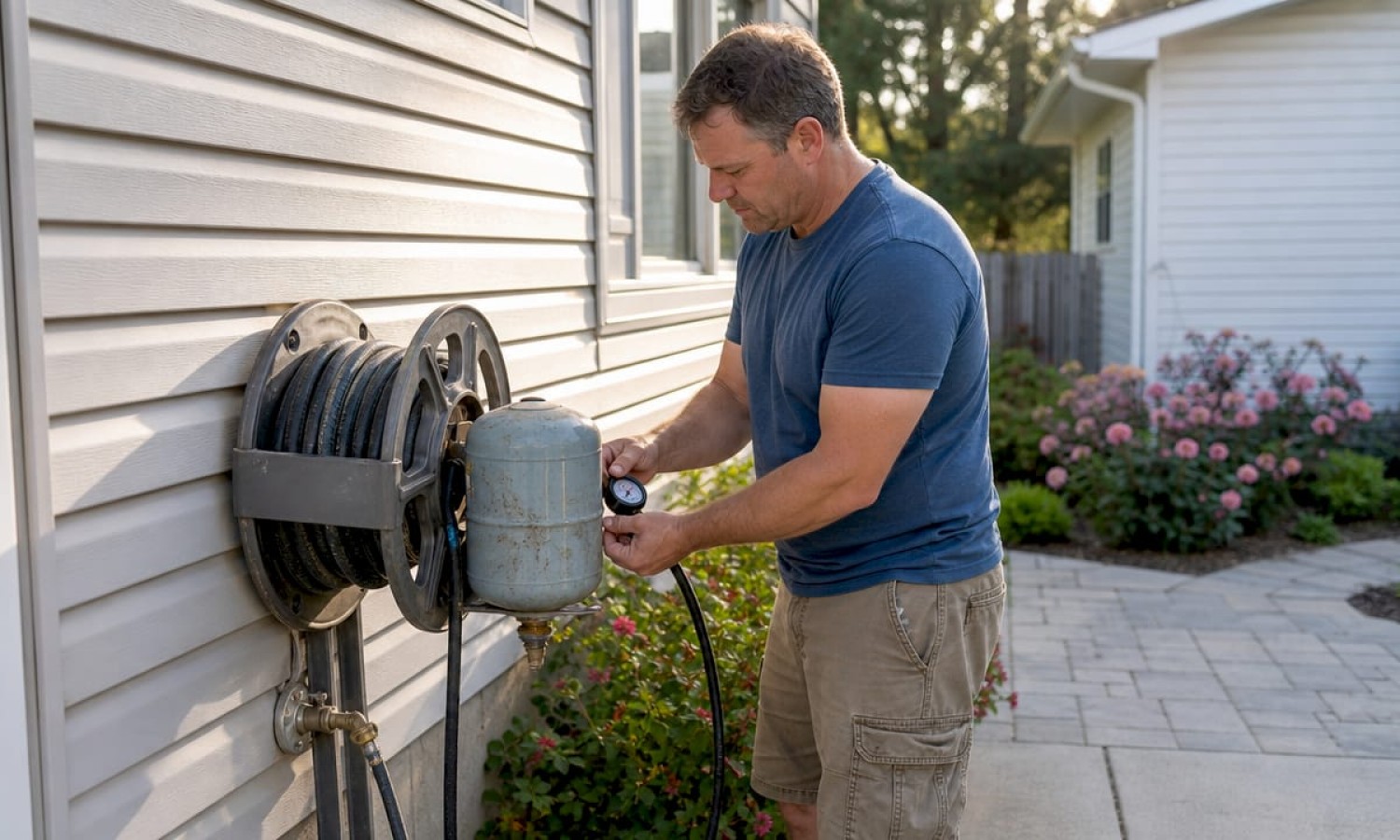
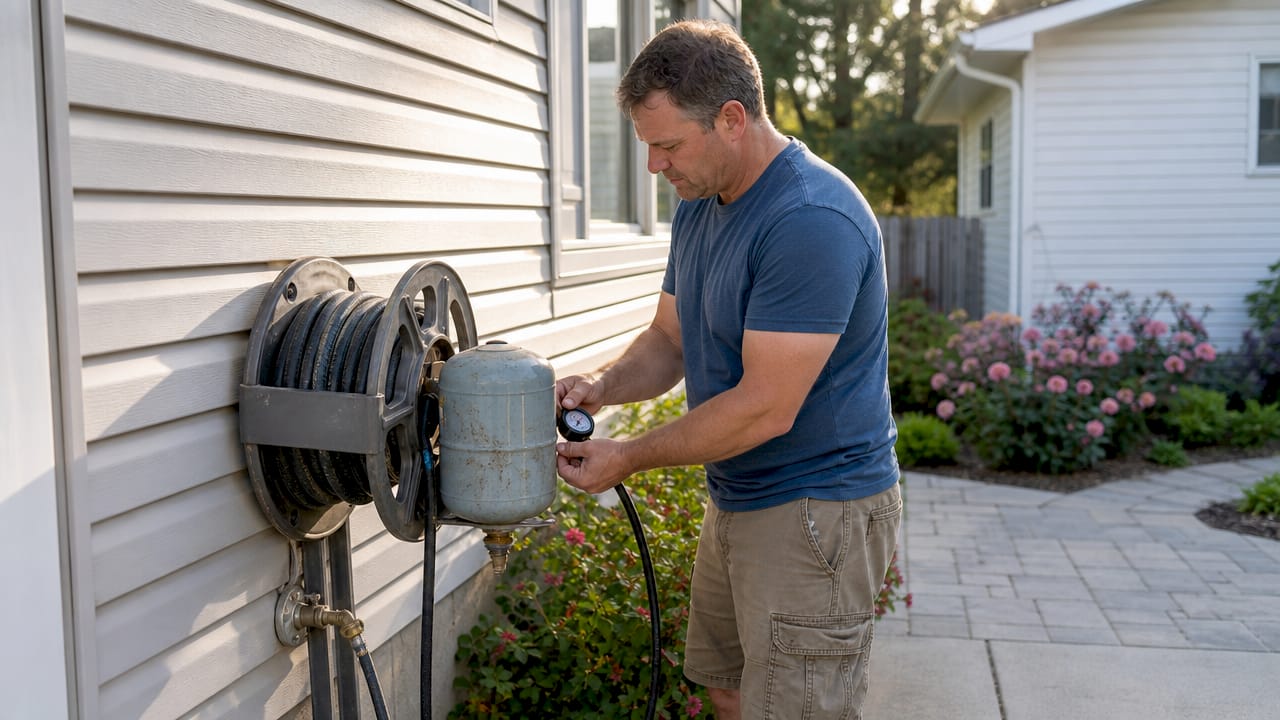
The Schrader valve on the gas side of the tank lets you check and adjust the pre-charge pressure with a standard tire gauge. That single feature makes field verification straightforward for any DIYer. Without the tank, your system has no buffer against thermal expansion at all.
Pro Tip: Think of the expansion tank as a shock absorber for your plumbing. Just as a car’s shock absorber cushions road bumps, the tank cushions pressure surges before they reach your pipes and fittings.
How does an expansion tank work to control pressure?
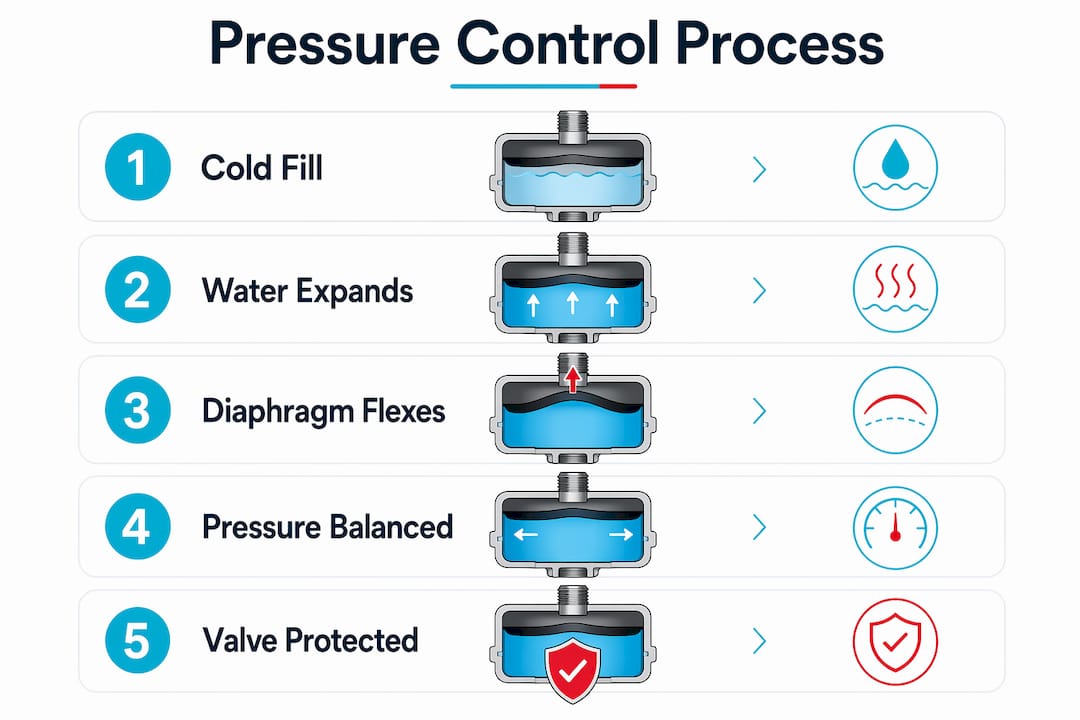
Water expands about 3.6% when heated from 40°F to 180°F. That percentage sounds small, but in a sealed system it translates directly into sharp pressure increases. The expansion tank’s compressible gas cushion absorbs that volume change before pressure can spike to damaging levels.
The mechanics work in three stages:
- Cold system at rest: The diaphragm sits near the center of the tank. Gas pressure on one side equals water pressure on the other.
- Water heats up: Water expands, pushing the diaphragm toward the gas side. The gas compresses, and system pressure rises only slightly instead of spiking.
- Water cools: The compressed gas pushes the diaphragm back, returning water to the supply side and keeping pressure stable.
The gas pre-charge must equal the system’s cold-fill static pressure for this to work correctly. If the pre-charge is too low, the tank fills with water immediately and loses its cushioning capacity. If the pre-charge is too high, the diaphragm blocks the water inlet at startup, leaving almost no acceptance volume until pressure builds dangerously. Both errors defeat the purpose of having a tank at all.
The tank also prevents water hammer, the banging noise caused by sudden pressure shocks in pipes. By absorbing rapid pressure changes, it protects gate valves, check valves, and pipe joints from repeated stress.
Pro Tip: Always measure system pressure at the tank connection point, not at a general house pressure gauge. Static head pressure from the water column height above the tank affects the correct pre-charge value.
What are the different types of expansion tanks?
The two main types are diaphragm or bladder tanks and older plain steel tanks. Modern diaphragm tanks dominate residential installations for good reason. The rubber barrier prevents air from transferring into the water side, which reduces oxygen-driven corrosion throughout the system. Older steel tanks had no such barrier, required regular air monitoring, and corroded faster.
| Type | Design | Pros | Cons | Typical use |
|---|---|---|---|---|
| Diaphragm tank | Two chambers, rubber diaphragm | Low maintenance, no oxygen ingress, adjustable pre-charge | Diaphragm can fail over time | Residential water heaters, boilers |
| Bladder tank | Replaceable internal bladder | Bladder is replaceable without replacing the whole tank | Slightly higher upfront cost | Commercial and larger residential systems |
| Plain steel tank | Single chamber, no barrier | Simple construction | Requires frequent air checks, higher corrosion risk | Older or legacy systems |
Sizing matters as much as type. A tank that is too small will hit its pressure limit quickly and fail to protect the system. Tank size depends on three variables: the total water volume in the system, the maximum operating temperature, and the system’s static fill pressure. Manufacturers like Altecnic and Red River publish sizing charts that cross-reference these variables.
Signs of an improperly sized or failing tank include:
- The pressure relief valve drips or discharges repeatedly
- System pressure swings widely between heating cycles
- The tank feels completely full of water when you tap it (no hollow sound from the gas side)
- The Schrader valve releases water instead of air when depressed
Pro Tip: Tap the tank with your knuckle. The bottom half should sound hollow (gas side). If the whole tank sounds solid, the diaphragm has likely failed and the tank is waterlogged.
Expansion tanks must be ASME-certified with pressure ratings that exceed the system’s relief valve setting by 10–15%. That margin keeps the tank operating safely within its design limits even during peak demand.
Why is installing an expansion tank required in closed systems?
A closed water system is any system where a device such as a pressure reducing valve, backflow preventer, or check valve blocks water from flowing back into the municipal main. Most modern homes have at least one of these devices. That makes them closed systems by definition, and closed systems require expansion tanks.
IRC 2024 Section P2903.4 mandates an ASME-listed thermal expansion tank on the cold-water inlet to water heaters in all closed systems. The code is not optional. Skipping the tank in a closed system creates real risks:
- The temperature and pressure (T&P) relief valve opens repeatedly to vent excess pressure, wasting water and eventually wearing out the valve seat
- Pipes and fittings experience repeated pressure spikes that fatigue joints and cause slow leaks
- The water heater itself ages faster because its tank and connections absorb stress that the expansion tank should handle
- Pressure buildup can cause sudden pipe bursts in extreme cases
The expansion tank acts as a pressure buffer so the T&P relief valve never needs to open during normal operation. That distinction matters. The T&P valve is an emergency safety device, not a pressure management tool. Relying on it for routine pressure relief is like using a circuit breaker as a light switch.
Tanks must carry ASME Section VIII Division 1 certification to meet code. Check the label on any tank before installation. An uncertified tank may not hold its rated pressure under real operating conditions.
How do you install and maintain an expansion tank?
Correct installation takes less than an hour for a confident DIYer, but the pre-charge step is where most mistakes happen. Follow these steps in order:
- Shut off the water supply and relieve system pressure by opening a faucet.
- Check the system’s cold-fill pressure using a gauge at the tank connection point on the cold-water line near the water heater.
- Set the tank’s gas pre-charge to match that cold-fill pressure using a bicycle pump or compressor through the Schrader valve. Do this before connecting the tank to water.
- Mount the tank on the cold-water supply line, as close to the water heater inlet as practical. Use a threaded tee fitting and a short nipple.
- Restore water supply and check all connections for leaks.
- Verify system pressure at operating temperature to confirm the tank is absorbing expansion correctly.
Maintenance is straightforward once the tank is installed. Check the pre-charge pressure annually with a tire gauge. The gas side should hold pressure; if it reads zero or releases water, the diaphragm has failed. Inspect the radiator shutoff valves and connections around the tank for any signs of weeping or corrosion at the same time.
Persistent relief valve weeping or pressure cycling is the most common sign of expansion tank failure. Many homeowners chase that symptom by replacing the T&P valve, which solves nothing. The tank is almost always the root cause. Properly maintained tanks typically last 15–25 years, though the diaphragm can fail earlier if the pre-charge is chronically incorrect.
Key Takeaways
An expansion tank is the single most important pressure-management component in a closed water heating system, and correct sizing and pre-charge setting determine whether it actually works.
| Point | Details |
|---|---|
| Core function | The tank absorbs thermal expansion volume, preventing pressure spikes in closed systems. |
| Pre-charge is critical | Set gas pre-charge to match cold-fill static pressure at the tank connection point, not a general house reading. |
| Code compliance | IRC 2024 Section P2903.4 requires an ASME-listed expansion tank on all closed residential water heating systems. |
| Failure signs | Dripping T&P valve, waterlogged tank, and pressure cycling all point to a failed or undersized expansion tank. |
| Maintenance schedule | Check pre-charge pressure annually and inspect connections for leaks to extend tank life to 15–25 years. |
What most homeowners get wrong about expansion tanks
The biggest misconception I see is that the T&P relief valve handles pressure. Homeowners often assume the T&P valve is the system’s pressure manager. It is not. It is a last-resort safety device that should never open during normal operation. When it does open regularly, the expansion tank has either failed or was never installed.
The second mistake is ignoring tank sizing. A tank that is too small will max out its acceptance volume on the first heating cycle and behave as if it were not there at all. I have seen homeowners install a tank, watch the T&P valve keep dripping, and conclude that expansion tanks do not work. The tank was simply the wrong size for the system volume and operating pressure.
The third mistake is skipping the annual pre-charge check. Gas slowly permeates through rubber diaphragms over years. A tank that was correctly charged at installation may be running at half its rated pre-charge five years later. That gradual loss quietly reduces the tank’s effectiveness until the system starts showing symptoms again. A two-minute check with a tire gauge every year prevents that entirely.
If you are unsure whether your system is closed, look for a pressure reducing valve where the water main enters the house, or a backflow preventer on the cold-water line. Either one makes your system closed. If you find one and there is no expansion tank on the cold-water line near the water heater, add one before the next heating season.
— Renate
Heating system components available at Santehnikasveikals
Santehnikasveikals stocks a full range of heating and plumbing components for homeowners tackling system upgrades or new installations.

Whether you need expansion tanks, steel panel radiators like the Purmo Ventil Compact series, or supporting hardware for a complete heating circuit, the catalog covers residential and commercial needs. The main Santehnikasveikals store includes product specifications, pricing, and delivery across Latvia. The team can help you match components to your system’s pressure and volume requirements so you buy the right size the first time.
FAQ
What does an expansion tank do in a water heater system?
An expansion tank absorbs the extra water volume created when a water heater heats cold water, preventing pressure from rising to dangerous levels in a closed plumbing system. Without it, that pressure has nowhere to go except through the T&P relief valve or into your pipes.
Where should an expansion tank be installed?
The tank mounts on the cold-water supply line as close to the water heater inlet as practical. IRC 2024 specifies the cold-water inlet side to intercept expanding water before it reaches the heater.
How do I know if my expansion tank has failed?
Tap the tank with your knuckle. A healthy tank sounds hollow on the gas side. If the entire tank sounds solid, or if the Schrader valve releases water instead of air, the diaphragm has failed and the tank needs replacement.
Does every home need an expansion tank?
Every home with a closed water system needs one. A closed system is any system with a pressure reducing valve, backflow preventer, or check valve that blocks water from returning to the municipal main. Most homes built after 2000 qualify.
How often should I check my expansion tank?
Check the gas pre-charge pressure annually using a standard tire gauge on the Schrader valve. Also inspect the tank body and connections for corrosion or leaks. Proper sizing and pre-charge are the two factors that determine whether the tank actually protects your system.
Recommended
- What Is a Building Drainage System? A Clear Guide | Santehnikasveikals.lv
- Apkures Radiators Purmo Ventil Compact Tips 22 500x700mm Ar Apakšas Pieslēgumu - 3422500070
- Apkures Radiators Purmo Ventil Compact Tips 22 500x800mm Ar Apakšas Pieslēgumu - 3422500080
- H-veida radiatoru noslēgvārsts RLV-KS radiatoriem, taisns G3/4x1/2 - 003L0220
Atstājiet komentāru