



















































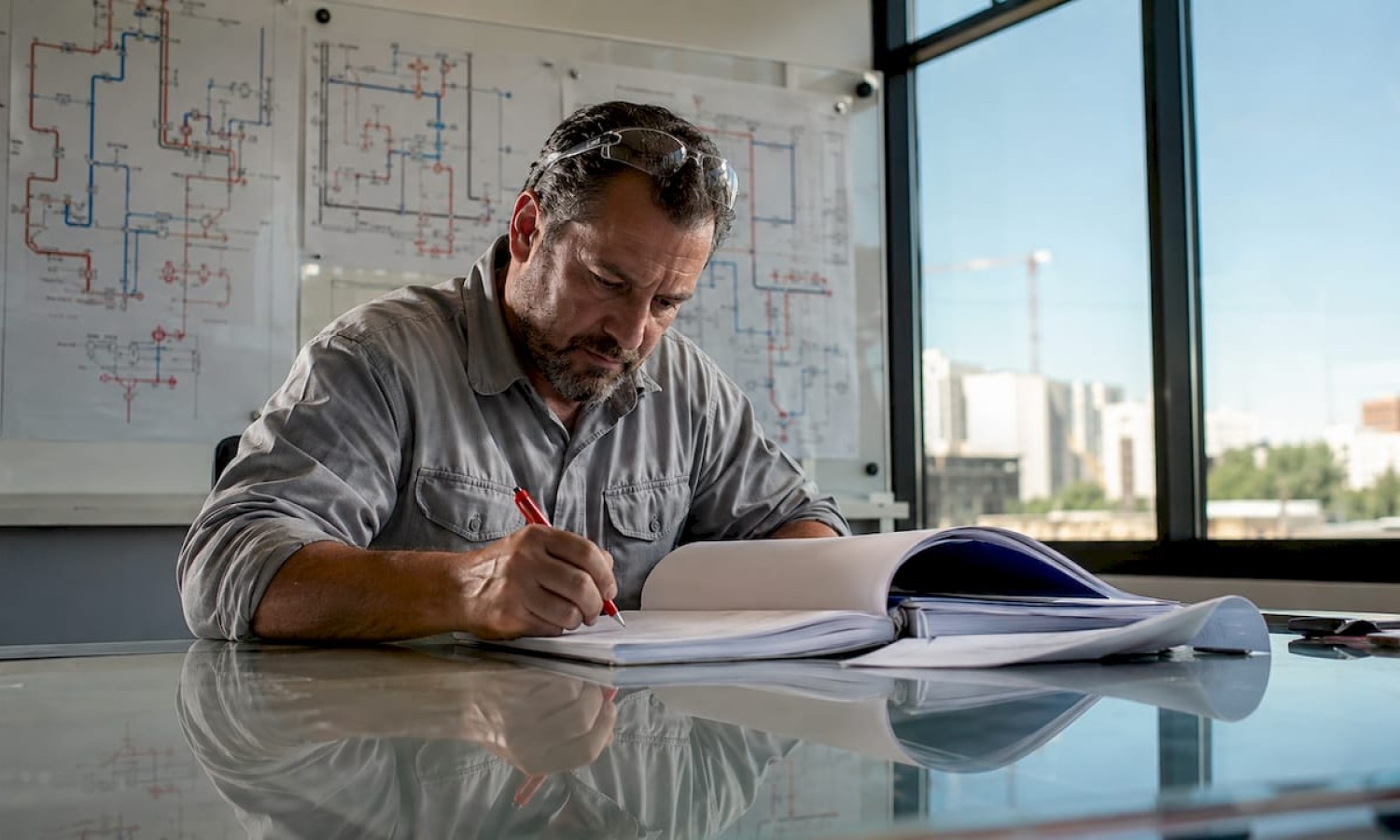

Plumbing Regulations 2026: What Builders Must Know
TL;DR:
- Plumbing regulations in 2026 enforce lead-free standards and system-wide energy efficiency for all projects. Contractors must refer to specific code editions, complete proper licensing, and ensure documentation to comply. These updates shift industry expectations from component replacement to whole-house system performance.
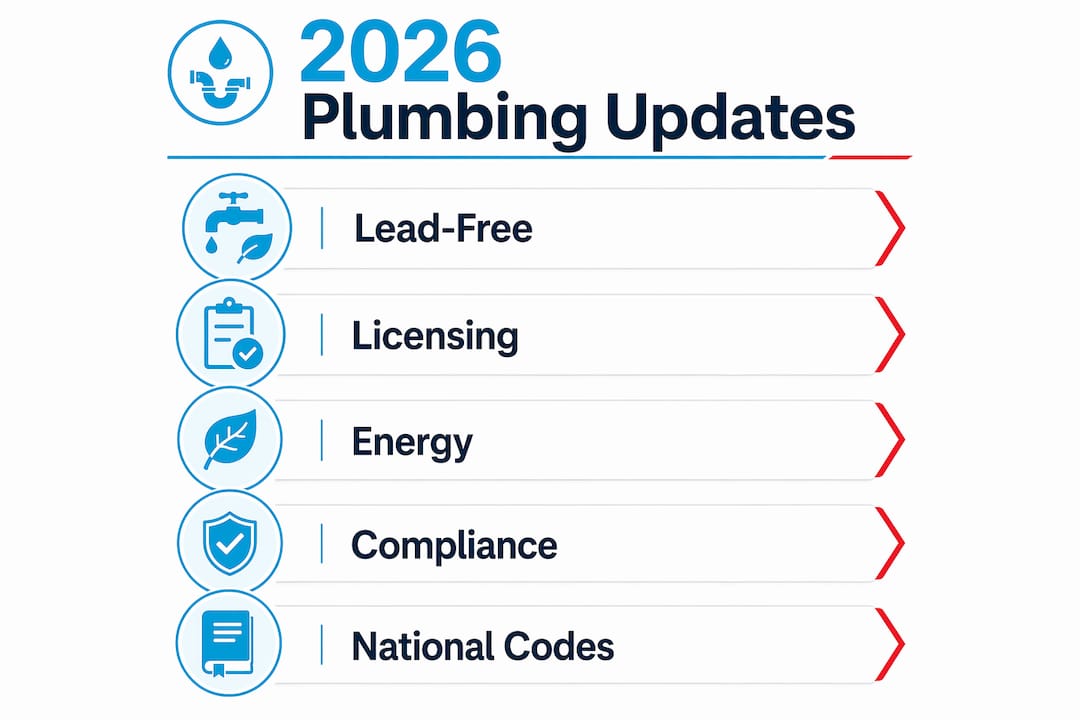
Plumbing regulations 2026 are legally enforceable standards governing installation safety, material performance, and system efficiency that every property owner, builder, and contractor must follow. This year brings some of the most significant code changes in recent memory, spanning lead-free material mandates in California and Victoria, energy system overhauls under Part L and Part F, licensing reforms in Louisiana, and a fundamental shift away from automatic standard adoption in national construction codes. Missing any one of these updates can mean failed inspections, legal liability, or costly rework. Here is what you need to know before your next project breaks ground.
What are the major plumbing code updates for 2026?
The 2026 plumbing code updates span multiple jurisdictions, each with distinct enforcement timelines and technical requirements. Understanding which rules apply to your project location is the first step toward compliance.
| Jurisdiction | Key Change | Effective Date |
|---|---|---|
| California | All endpoint plumbing devices must meet NSF/ANSI/CAN 61 lead-free standards | January 1, 2026 |
| Victoria, Australia | All regulated plumbing work must use lead-free products per National Construction Code 2025 | May 1, 2026 |
| Wisconsin | New plumbing safety codes published and enforceable statewide | September 1, 2026 |
| Louisiana | Licensing reform under HB 953, reduced training hours, oversight transfer | January 1, 2027 |
| Georgia | High-efficiency fixture waiver process introduced | January 1, 2026 |
California’s AB 100 is the most far-reaching lead-free mandate in the United States. All endpoint plumbing devices must meet NSF/ANSI/CAN 61 standards from january 1, 2026, covering new construction, remodels, and fixture replacements. Contractors who install non-compliant devices face direct liability exposure.
Victoria, Australia takes a similarly firm stance. Lead-free products are mandatory for all regulated plumbing work from may 1, 2026, and the mandate overrides any prior building permits or contract timelines already in place. That means projects approved before the deadline are not exempt.
Wisconsin’s updated codes are published june 29, 2026 and enforceable from september 1, 2026. The updates include new safety measures affecting plumbing work statewide, so contractors operating in Wisconsin need to review the published code before that date.
Pro Tip: Download the published code text for your jurisdiction before each new project. Regulations change mid-year, and referencing an outdated version is one of the most common causes of permit rejection.
How are plumbing licensing requirements evolving in 2026?
Licensing reform is one of the most debated aspects of the new plumbing laws in 2026. Louisiana’s HB 953 is the clearest example of where the industry is heading.
Under HB 953, effective january 1, 2027, the required on-the-job training hours are 2,500 hours for journeyman plumbers and 3,500 hours for master plumbers. Oversight transfers from the State Plumbing Board to the State Licensing Board for Contractors. That consolidation simplifies administration but has triggered a serious public safety debate.
The core tension is straightforward. Workforce expansion via reduced training hours is a contentious issue that balances project efficiency against public safety and trade quality. Critics argue that fewer required hours produce less experienced plumbers entering the workforce. Supporters say the change removes unnecessary barriers and brings more licensed tradespeople into the market faster.
For contractors operating across state lines, this creates a practical problem. Licensing requirements now vary more sharply between states, and a license valid in one jurisdiction may not satisfy the training hour requirements of another. Here is what to track:
- Confirm your current license status meets the requirements of the project state, not just your home state.
- Check whether your state has adopted similar consolidation or training changes in 2026.
- Maintain records of all completed training hours, since audits by licensing boards are becoming more common.
- Verify that any subcontractors you hire hold current, valid licenses under the applicable jurisdiction’s rules.
Pro Tip: Set a calendar reminder for the first week of each quarter to check your state licensing board’s website for regulatory updates. Boards often publish changes with limited advance notice.
What are the new energy efficiency requirements under 2026 regulations?
The 2026 Part L and Part F building regulations represent a fundamental shift in how plumbing work is evaluated. The focus moves away from individual component replacement and toward whole-house system performance.
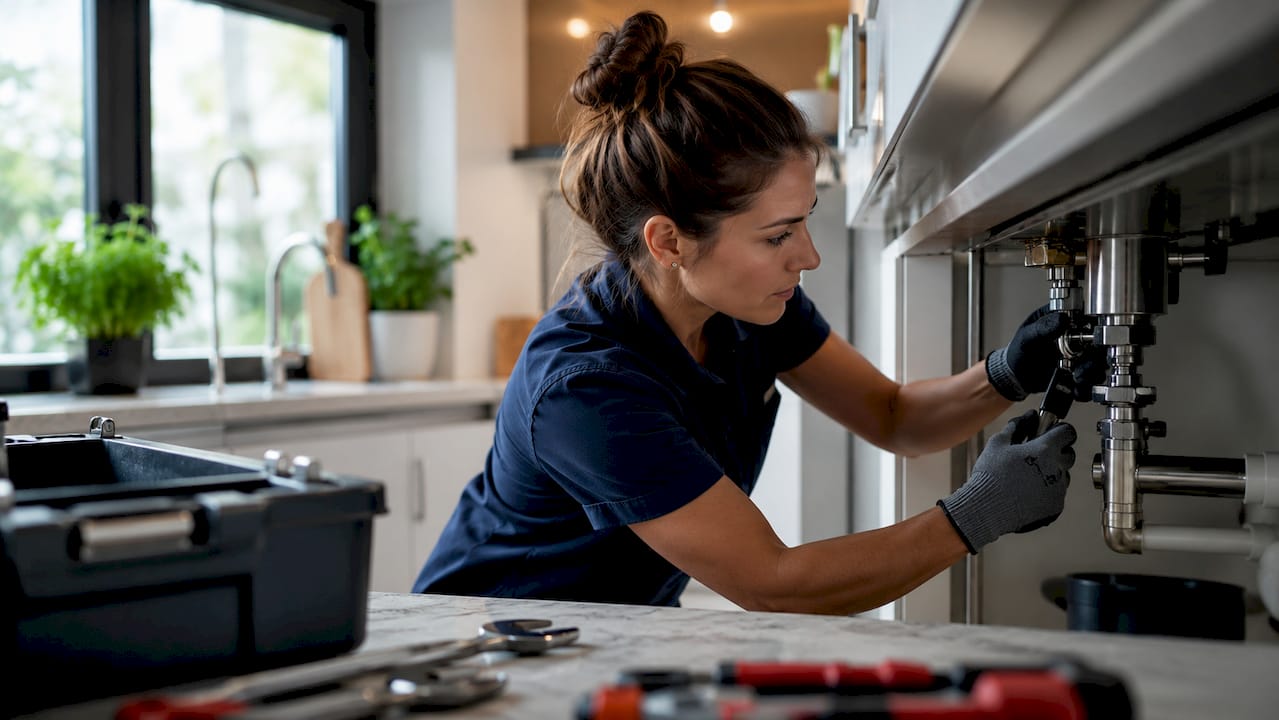
Like-for-like replacement is now discouraged, with a clear expectation that new components suit low-temperature, high-efficiency operation in airtight buildings. Swapping an old boiler for an identical model no longer satisfies the standard if the system as a whole fails to meet energy performance targets. Installers must now evaluate how each component interacts with the building’s heating, ventilation, and hot water systems.
This has direct consequences for how projects are scoped and priced. Consider a residential renovation where a contractor replaces a hot water cylinder. Under the new rules, that installer must assess whether the cylinder is compatible with the building’s heat pump or low-temperature heating circuit. If the building is airtight, ventilation integration becomes a compliance requirement, not an optional upgrade.
“The installer’s role in 2026 is evolving from component fitter to system designer, integrating plumbing design with thermal and ventilation systems in energy-efficient buildings.” — Installer Online
The numbered steps below reflect what compliance with Part L and Part F now requires in practice:
- Assess the whole building’s energy performance before specifying any heating or hot water component.
- Select components rated for low-temperature operation, particularly heat pumps, cylinders, and controls.
- Integrate ventilation design into the plumbing scope for airtight or near-airtight buildings.
- Document system performance calculations and submit them with permit applications.
- Confirm that final commissioning data matches the performance targets stated in the design submission.
In airtight construction, integrating plumbing with whole-house ventilation and heating design is not optional. Systems that fail to meet Part L and Part F targets at final inspection create costly delays and may require full redesign. Heating components like Purmo radiators need to be specified as part of a coordinated system, not selected in isolation.
How do national code shifts affect compliance in 2026?
One of the least-discussed but most consequential changes in 2026 is the removal of automatic adoption clauses in national construction codes. This change affects contractors in Australia most directly, but the principle applies wherever national codes are the primary compliance framework.
Previously, regulations often included language that automatically adopted the latest published version of a referenced standard. That clause is now removed. Plumbers must follow the exact code editions referenced by the current regulation, not the newest version of a standard that may have been updated since the code was published.
The practical risk is real. A contractor who applies a newer, unreferenced version of AS/NZS 3500 or AS 1851 in good faith may still fail a compliance inspection. The referenced edition is the legally binding one, regardless of what the standard body has published since.
Several key technical standards have also migrated from standalone regulations into the national construction codes themselves. This improves clarity in theory but requires contractors to know exactly where to look for each requirement.
| Standard | Previous Location | Current Location |
|---|---|---|
| AS/NZS 3500 (plumbing and drainage) | Standalone regulation reference | National Construction Code |
| AS 1851 (fire protection maintenance) | Standalone regulation reference | National Construction Code |
| Flexible joint design requirements | Project-level discretion | NSW regulation, April 2026 |
Flexible joints in sanitary drainage require design by recognized experts when installed in unstable or water-charged soil under NSW amendments effective april 2026. Designs must be submitted with the notice of work, and installation must follow the approved design exactly.
Pro Tip: Keep a version log for every standard referenced in your project documentation. Record the edition number, the date you accessed it, and the code or regulation that references it. This protects you during audits and dispute resolution.
What practical steps ensure compliance with 2026 plumbing regulations?
Compliance with the 2026 plumbing installation guidelines requires deliberate planning before a single pipe is cut. The following steps apply across jurisdictions and project types.
- Verify lead-free certification. Confirm that every endpoint plumbing device carries NSF/ANSI/CAN 61 certification before purchase. This applies in California from january 1, 2026, and in Victoria from may 1, 2026.
- Reference the correct code edition. Identify which edition of each standard your jurisdiction’s current code references. Do not assume the latest published version is the correct one.
- Design for system performance. Scope heating and hot water work as a system, not a component swap. Document energy performance calculations before submitting permit applications.
- Apply for waivers proactively. In Georgia, failing to file a waiver before installing non-high-efficiency fixtures results in automatic inspection failure. Apply before work begins, not after.
- Maintain current licensing. Track training hour requirements and board oversight changes in every state where you operate. Louisiana’s HB 953 changes take effect january 1, 2027, but preparation starts now.
- Engage recognized experts for specialized designs. Flexible joint installations in unstable soil require expert-designed submissions in NSW. Attempting these without qualified design documentation risks permit rejection.
- Document everything. Commissioning records, product certification sheets, and design calculations must be available for inspection. Missing documentation is treated the same as non-compliance in most jurisdictions.
Selecting certified fixtures from the start eliminates the most common compliance failure point. Products like the VIEGA shower drain are built to meet current installation standards and simplify the certification documentation process for contractors.
Key Takeaways
Compliance with plumbing regulations 2026 requires verified lead-free fixtures, correct code edition referencing, system-level energy design, current licensing, and complete documentation before inspection.
| Point | Details |
|---|---|
| Lead-free mandates are active now | California and Victoria require NSF/ANSI/CAN 61 certified fixtures for all new and replacement work. |
| Code edition matters, not the latest version | Reference the exact standard edition cited in your jurisdiction’s current code, not the newest published version. |
| Energy compliance is system-wide | Part L and Part F require whole-house performance assessment, not just component-level replacement. |
| Licensing rules are shifting | Louisiana HB 953 changes training hours and board oversight from january 1, 2027; other states may follow. |
| Waivers require advance action | Georgia’s high-efficiency fixture waiver must be filed before installation, or inspections fail automatically. |
Why 2026 is the year installers become system designers
The regulatory shift happening in 2026 is not just a paperwork update. It reflects a genuine change in what the industry expects from a qualified plumber or contractor.
For years, the dominant model was simple: identify the broken component, replace it with something equivalent, pass inspection. That model is ending. Decarbonization goals are pushing regulators to hold installers accountable for how an entire building performs, not just whether a single fixture meets a spec sheet.
I think the licensing debate in Louisiana reveals something the industry needs to confront honestly. Reducing training hours may bring more workers into the trade faster. But the new regulations simultaneously demand more from those workers, not less. You cannot ask installers to function as system designers and performance guarantors while also cutting the hours they spend learning the trade. Those two trends are on a collision course, and the industry has not resolved that tension yet.
The contractors who will thrive in this environment are the ones who invest in training now, before the requirements tighten further. That means understanding heat pump integration, ventilation design, and energy performance modeling, not just pipe fitting. The regulatory framework is already there. The workforce needs to catch up.
Property owners benefit from this shift too, even if the transition feels disruptive. A plumber who understands whole-house performance will deliver a system that costs less to run and fails less often. That is worth the short-term friction of adapting to new compliance standards.
— Renate
Find compliant plumbing fixtures for your 2026 project
Meeting the new plumbing standards starts with sourcing the right products before your project begins.

Santehnikasveikals carries a wide selection of plumbing fixtures and drainage components from trusted brands including VIEGA, ORAS, SCHELL, Roth, and Purmo. Every product in the catalog is selected to meet current installation standards, making it straightforward to source lead-free certified fixtures, drainage systems, and heating components in one place. Whether you are managing a residential renovation or a commercial build, the Santehnikasveikals plumbing store gives you access to compliant products with delivery across Latvia. Pair the right fixtures with accurate code referencing and you eliminate the two most common causes of failed inspections before work even starts.
FAQ
What does California AB 100 require from january 2026?
California AB 100 requires all endpoint plumbing devices to meet NSF/ANSI/CAN 61 lead-free performance standards. This applies to new construction, remodels, and fixture replacements, and contractors face direct liability for non-compliant installations.
When do Wisconsin’s new plumbing codes take effect?
Wisconsin’s updated plumbing safety codes are published june 29, 2026, and enforceable statewide from september 1, 2026. Contractors working in Wisconsin must review the published code before that enforcement date.
What is the Georgia high-efficiency fixture waiver?
Georgia introduced a waiver process for non-high-efficiency plumbing fixtures starting january 1, 2026. Installers must apply for the waiver before installation begins; failing to do so results in automatic inspection failure.
How does the removal of automatic adoption clauses affect contractors?
Contractors must now reference the exact code edition cited in their jurisdiction’s current regulation, not the newest published version of a standard. Applying an updated but unreferenced standard version can still result in a failed compliance inspection.
What do Part L and Part F regulations require from plumbers in 2026?
Part L and Part F require installers to design and commission plumbing systems that meet whole-house energy performance targets. Like-for-like component replacement no longer satisfies the standard if the overall system fails to meet efficiency and ventilation requirements.
Оставьте комментарий